Expandable Polystyrene Resin High Density
CN → US商品图片


AI分析
🏗️ Expandable Polystyrene (EPS) Resin – High Density
🌐 HS Code Reference & Customs Clearance Guide | 2026 Latest Tariff Analysis | Professional Entry Strategy
📌 I. Product Definition & Classification: Do You Truly Understand "High Density EPS"?
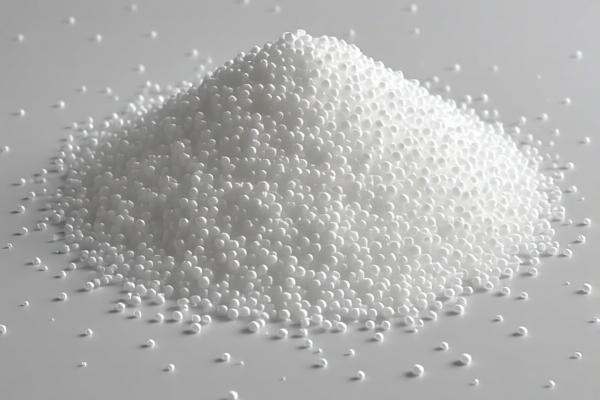
Expandable Polystyrene (EPS) is a versatile, lightweight thermoplastic foam material widely used in packaging, construction insulation, and consumer goods. In international trade, the classification of High Density EPS Resin depends critically on its state (raw granules vs. pre-expanded) and intended application.
Under the 2026 Harmonized System (HS), raw polymer resins are classified under Chapter 39 (Plastics and Articles Thereof). Specifically:
- Raw Resin Granules: Unprocessed polystyrene beads ready for expansion and molding → 3904.10
- Other Synthetic Polymers: If not strictly defined as standard polystyrene or intended for specialized industrial molding not covered elsewhere → 3904.90
⚠️ Key Distinction Point:
- If the product is standard Expandable Polystyrene (EPS) resin granules used for general foam production (packaging, insulation) → HS 3904.10
- If the product is a specialty unsaturated synthetic polymer or high-density variant not elsewhere specified, intended for industrial molding → HS 3904.90
📦 II. HS Code Classification Details (2026 Official Tariff Concordance)
| HS Code | Product Description | Application Scenario | Raw Material State |
|---|---|---|---|
3904.10 |
Expandable Polystyrene Resin, High Density | Packaging materials, building insulation, cold storage panels | ✅ Raw granules (pre-expanded or unexpanded) |
3904.90 |
Other Unsaturated Synthetic Polymers (incl. High-Density EPS for Industrial Use) | Specialized industrial molding, custom foam production, non-standard EPS variants | ✅ Raw resin/powder/beads not classified elsewhere |
🔍 Important Note:
- HS 3904.10 is the most common code for standard EPS resin beads. It covers polystyrene that can be expanded with steam to form foam.
- HS 3904.90 acts as a residual category. If your "high density" resin is chemically modified, contains other unsaturated polymers, or is marketed as a specialty industrial material outside standard EPS definitions, it may fall here.
- Do NOT classify finished foam products (e.g., molded boxes, insulation boards) under these codes. Finished goods belong to different chapters (e.g., 3926.90). These codes apply only to the raw resin material.
💰 III. 2026 Tariff Rate Analysis (Detailed Breakdown)
✅ Applicable Country: United States (US)
✅ Origin: China (CN)
✅ Effective Date: Post-November 2025 (Current 2026 Framework)
🎯 1. HS Code 3904.10 – Expandable Polystyrene Resin (High Density)
| Item | Content |
|---|---|
| Base Tariff Rate | 5.3% (General Ad Valorem) |
| USITC Additional Duty (Section 301) | +7.5% (Tier 4: Some plastics/resins) |
| IEEPA Additional Duty (China-Specific) | +10% (Effective from late 2025) |
| Total Effective Rate | ~22.8% |
| Calculation Basis | CIF Value × Total Rate |
| De Minimis Exemption Eligible? | ❌ No (Denied under Section 321 for goods from China exceeding $800 threshold if subject to 301 duties) |
| Legal Basis Path | USITC:3904.10.00 → FOOTNOTE:3904.10 → IEEPA:9903.01.24 → USITC:3904.10.00 |
📌 Explanation:
- Polystyrene resins are subject to Section 301 tariffs. The current rate for many plastics is 7.5%.
- The IEEPA 10% surcharge adds significant cost for Chinese-origin goods.
- Total ~22.8% is a moderate-to-high duty. Importers must budget for this in landed cost calculations.
🎯 2. HS Code 3904.90 – Other Synthetic Polymers (High-Density Industrial EPS)
| Item | Content |
|---|---|
| Base Tariff Rate | 5.7% (General Ad Valorem) |
| USITC Additional Duty (Section 301) | +7.5% (Residual plastics category) |
| IEEPA Additional Duty (China-Specific) | +10% |
| Total Effective Rate | ~23.2% |
| Calculation Basis | CIF Value × Total Rate |
| De Minimis Exemption Eligible? | ❌ No |
| Legal Basis Path | USITC:3904.90.00 → IEEPA:9903.01.24 → USITC:3904.90.00 |
📌 Note:
- The rate is nearly identical to3904.10due to similar tariff treatment under Section 301 for synthetic polymers.
- Misclassification here can lead to audits if customs determines the product fits the more specific3904.10definition.
🛠️ IV. Customs Clearance Operational Advice (Practical Pitfall Avoidance)
✅ 1. Required Documentation Checklist
| Document | Mandatory? | Description |
|---|---|---|
| ✅ Product Specification Sheet | Yes | Must state: "Expandable Polystyrene Resin," density (g/cm³), bead size, and expansion ratio potential. |
| ✅ Commercial Invoice | Yes | Clearly describe as "Raw Resin Granules – Not Finished Foam Products." Avoid vague terms like "foam material." |
| ✅ Packing List | Yes | Detail net/gross weight. Ensure no finished foam samples are mixed with raw resin in the same shipment. |
| ✅ Certificate of Origin (CO) | Yes | Essential for claiming any potential FTZ exemptions (if applicable). |
| ✅ Safety Data Sheet (SDS) | Yes | Required for customs and port authority compliance. Confirms non-hazardous nature. |
| ✅ Manufacturer’s Declaration | Optional but Recommended | Confirm chemical composition (100% Polystyrene vs. blended polymers). |
✅ 2. Declaration Tips (Golden Rules)
🔥 "Raw Resin, Not Foam; Density Matters; Origin is Key!"
| Scenario | Correct Declaration | Incorrect Practice |
|---|---|---|
| Standard EPS Beads | 3904.10 – "Expandable Polystyrene Resin, Granules" |
Mislabel as "Plastic Pellets" → May trigger additional scrutiny. |
| Specialty Industrial Resin | 3904.90 – "Other Unsaturated Synthetic Polymers" |
Use 3904.10 for non-standard resins → Risk of reclassification penalty. |
| Mixed Shipment (Resin + Finished Foam) | Split Line Items | Combine raw and finished goods → Customs may reject or audit entire shipment. |
| Chinese Origin | Declare "Made in China" | Hide origin → Severe penalties and seizure. |
✅ 3. Special Cases & Mitigation Strategies
| Situation | Handling Advice |
|---|---|
| Pre-Expanded Beads | Still classified under 3904.10 if chemically unmodified. Declare as "Pre-Expanded EPS Granules." |
| Recycled EPS Resin | If recycled, still 3904.10 if it meets virgin-grade specifications. Provide recycling documentation if requested. |
| High-Density Specialty Grade | If density > 100 g/m³ (expanded) but sold as unexpanded resin, it’s still 3904.10. If sold as expanded blocks, it’s 3926.90. |
| Supply Chain Diversification | Consider sourcing from Vietnam, Thailand, or Mexico to avoid IEEPA 10% surcharge and potentially reduce Section 301 exposure. |
🌍 V. Global Market Comparison (2026)
| Country/Region | Recommended HS Code | Estimated Duty (China Origin) | Certification Requirements | Notes |
|---|---|---|---|---|
| 🇺🇸 United States | 3904.10 |
~22.8% | No specific import certs, but SDS required | High duty due to Section 301 + IEEPA. |
| 🇨🇳 China (Import) | 3904.10 |
0–5% (Depending on FTAs) | CCC (for some plastics) | Low duty if sourced from ASEAN via RCEP. |
| 🇪🇺 European Union | 3904.10 |
6.5% | REACH Registration (Critical) | REACH compliance is mandatory for chemical substances. |
| 🇬🇧 United Kingdom | 3904.10 |
6.5% | UK REACH | Post-Brexit, UK-specific chemical regulations apply. |
| 🇯🇵 Japan | 3904.10 |
5.5% | JIS Standards | Low duty, but strict quality checks on chemical safety. |
📌 Conclusion:
- The US remains the most challenging market for Chinese EPS resin due to layered tariffs.
- EU/UK require REACH registration, which is costly but mandatory. Failure to register leads to customs seizure.
- Asia-Pacific (Japan, ASEAN) offers lower duties and simpler chemical compliance.
📌 VI. Common Mistakes & Pitfall Guide (Lessons Learned)
❌ Mistake 1: Declaring "EPS Foam" when shipping raw resin granules.
👉 Consequence: Incorrect HS code leads to misdeclaration penalties and potential seizure. Raw resin is not foam; it’s the precursor.
❌ Mistake 2: Omitting "High Density" or specific density metrics.
👉 Consequence: Customs may reclassify to a higher duty bracket or request additional testing.
❌ Mistake 3: Assuming "Plastic Pellets" is a sufficient description.
👉 Consequence: Too vague. Must specify "Polystyrene" and "Expandable."
❌ Mistake 4: Ignoring REACH (for EU) or SDS (for US/Global).
👉 Consequence: Shipment held at port for weeks pending chemical compliance review.
✅ Correct Declaration Example:
"Expandable Polystyrene Resin Granules, High Density, Unexpanded, 100% Polystyrene, for Foam Manufacturing Only. HS: 3904.10. Origin: China."
🎯 VII. Conclusion: Precise Classification for Cost Efficiency
🎯 Remember the Mantra:
🔹 "Raw Resin = 3904.10; Finished Foam = Different Chapter."
🔹 "US Imports Face ~23% Duty; EU Requires REACH."
🔹 "Never Mix Raw Resin and Finished Foam in One Line Item."
📌 Pro Tip:
If your EPS resin is sourced from non-China countries (e.g., South Korea, India), you may avoid the 10% IEEPA surcharge and potentially benefit from lower Section 301 rates, significantly reducing landed cost.
📣 Immediate Action:
📞 Consult a Customs Broker for a Pre-Ruling on your specific resin density and chemical formulation.
📄 Ensure SDS is up-to-date and includes REACH registration numbers (for EU exports).
🚀 Optimize Supply Chain: Consider nearshoring or diversifying origins to mitigate tariff risks.
✨ Professional Clearance Starts with Accurate Classification!
💼 Your Cost Savings Depend on Getting the HS Code Right on the First Try!
用户评价
关于 HS 编码归类
协调制度(HS)是由世界海关组织(WCO)制定的国际贸易商品分类标准。全球 200 多个国家采用 HS 系统作为海关关税、贸易统计和进出口监管的基础。
每个 HS 编码遵循以下层级结构:
- 章(2 位)——商品大类(例如:第 84 章:机器和机械设备)
- 品目(4 位)——章内的更具体分类
- 子目(6 位)——国际通用细分,所有 WCO 成员国统一使用
- 本国细分(8-10 位)——各国自行扩展的细分编码,如美国 HTSUS 10 位编码
正确的 HS 编码归类对于顺利通关、准确缴纳关税和遵守贸易法规至关重要。错误归类可能导致海关延误、多缴关税或罚款。
从CN进口到US时,适用的关税税率可能包括:
- 最惠国(MFN)税率——适用于 WTO 成员国的标准关税税率
- 普通税率——适用于无贸易协定国家
- 贸易救济关税——附加关税,如 301 条款(反倾销)、232 条款(国家安全)或反补贴税
本页内容仅供参考。如需正式归类,请咨询当地海关或持牌报关代理。