Expansion Board
CN → US| HS编码 | 关税税率 | 原产国 | 目的国 | 文档 |
|---|---|---|---|---|
| 8473302000 | 85.0% | CN | US | 官方文档 |
| 8542390090 | 60.0% | CN | US | 官方文档 |
| 8542900000 | 60.0% | CN | US | 官方文档 |
| 3926909989 | 22.8% | CN | US | 官方文档 |
| 8473301180 | 35.0% | CN | US | 官方文档 |
| 3926909987 | 22.8% | CN | US | 官方文档 |
商品图片
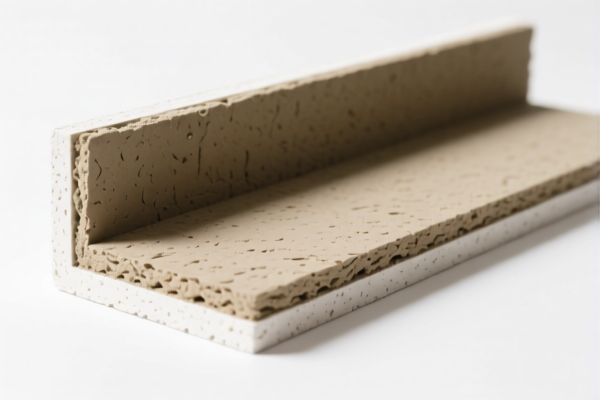
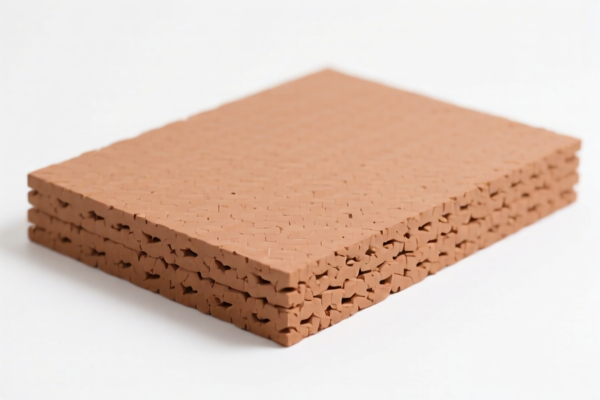
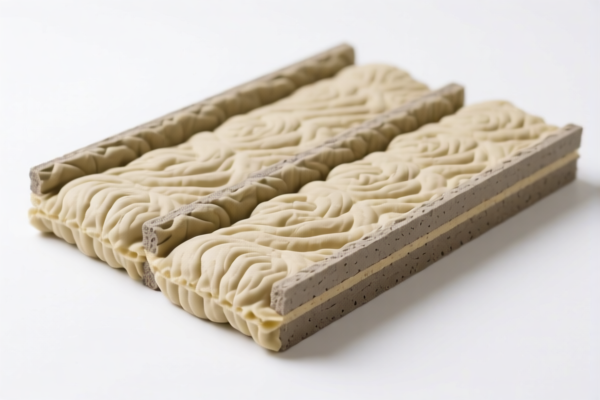
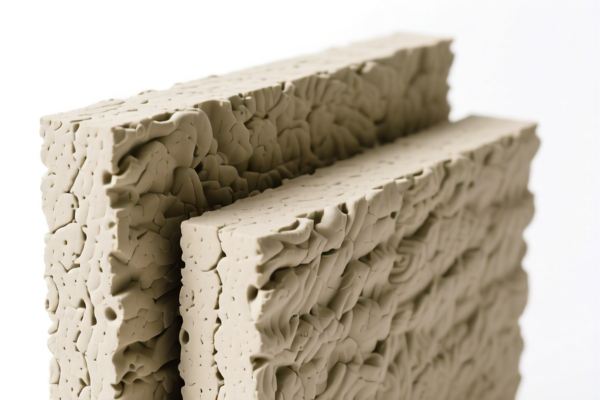
AI分析
🔌 Expansion Board (Electronic Circuit Components)
🌐 HS Code Reference & Customs Clearance Guide | 2026 Latest Tariff Analysis | Professional Clearance Strategy
📌 I. Product Definition & Classification: What Exactly Is an "Expansion Board"?
An Expansion Board is a generic term in the electronics industry referring to a printed circuit board (PCB) designed to plug into a motherboard or chassis to add functionality. In international trade, its classification depends heavily on material composition, electronic integration, and specific application.
⚠️ Key Classification Distinction:
- Is it a functional electronic component with integrated circuits? → Likely Chapter 85 (Electrical Machinery).
- Is it a structural/mechanical accessory for machinery? → Likely Chapter 84 (Machinery Parts).
- Is it primarily a plastic/composite housing with minimal electronics? → Likely Chapter 39 (Plastics).
📦 II. HS Code Classification Details (2026 Latest Tariff Alignment)
Based on the provided data, here are the potential HS Codes, their logical reasoning, and associated tax implications.
| HS Code | Product Description | Logical Reason for Classification | Total Tax Rate | Tax Details |
|---|---|---|---|---|
8473.30.20.00 |
Parts and accessories of automatic data processing machines (Printed Circuit Assemblies) | Usage-Based Match: The board is considered a component of a circuit assembly, fitting the definition of parts/accessories for printing circuit assemblies. | 85.0% | Base: 0.0% Additional: 25.0% Section 301 (Steel/Aluminum/Copper): 50% |
8542.39.00.90 |
Electronic Integrated Circuits (Other) | Product Name Inference: The name "Expansion Board" implies an electronic circuit component, reasonably inferred as a type of PCB related to electronic integrated circuits. | 60.0% | Base: 0.0% Additional: 50.0% Section 301 (10%): 10% |
8542.90.00.00 |
Parts and Accessories of Electronic Integrated Circuits | Inferred Purpose: Based on the board's function, it is inferred as a circuit board or functional component in the electronic field, matching the form characteristics of parts for electronic ICs. | 60.0% | Base: 0.0% Additional: 50.0% Section 301 (10%): 10% |
3926.90.99.89 |
Other Articles of Plastics (Not Specifically Listed) | Material Inference: Based on the name, it is reasonably inferred to be made of plastic or composite materials, falling under unlisted other articles. | 22.8% | Base: 5.3% Additional: 7.5% Section 301 (10%): 10% |
8473.30.11.80 |
Parts and Accessories of Automatic Data Processing Machines (Printed Circuit Assemblies) | Form & Common Sense: The board exhibits the form of a printed circuit assembly. Common sense suggests a PCB material, consistent with the purpose and form of other printed circuit assemblies. | 35.0% | Base: 0.0% Additional: 25.0% Section 301 (10%): 10% |
3926.90.99.87 |
Other Articles of Plastics (Not Specifically Listed) | Generic Inference: The name "Expansion Board" suggests a component/semi-finished product in electronics or mechanics, with no obvious conflict in material or form with other plastic articles. | 22.8% | Base: 5.3% Additional: 7.5% Section 301 (10%): 10% |
💰 III. Detailed Tariff Rate Breakdown (Including Surcharges & Policy Add-ons)
✅ Applicable Country: United States (US)
✅ Origin: China (CN) (Implied by Section 301/122 tariffs in data)
✅ Effective Date: 2025-2026 Period
🎯 1. High-Tariff Scenario: 8473.30.20.00 (Total: 85.0%)
- Base Tariff: 0.0%
- USITC Additional Tariff (Section 301): 25.0%
- Section 122 Tariff (Steel/Aluminum/Copper Products): 50.0%
- Total: 85.0%
- ⚠️ Critical Note: This is the highest possible rate in the dataset. It triggers an additional 50% levy under Section 122 if the board contains significant steel, aluminum, or copper content. Avoid this classification unless absolutely necessary.
🎯 2. Medium-High Tariff Scenario: 8542.39.00.90 / 8542.90.00.00 (Total: 60.0%)
- Base Tariff: 0.0%
- USITC Additional Tariff (Section 301): 50.0%
- Section 301 (10%): 10.0%
- Total: 60.0%
- Explanation: These codes classify the board as a core electronic component (Integrated Circuit related). While lower than the 85% bracket, the 50% additional tariff remains substantial.
🎯 3. Medium Tariff Scenario: 8473.30.11.80 (Total: 35.0%)
- Base Tariff: 0.0%
- USITC Additional Tariff (Section 301): 25.0%
- Section 301 (10%): 10.0%
- Total: 35.0%
- Explanation: Classified as a part of machinery/data processing equipment. Slightly more favorable than the integrated circuit classification.
🎯 4. Low-Tariff Scenario: 3926.90.99.89 / 3926.90.99.87 (Total: 22.8%)
- Base Tariff: 5.3%
- USITC Additional Tariff (Section 301): 7.5%
- Section 301 (10%): 10.0%
- Total: 22.8%
- Explanation: Classified as a plastic article. This offers the lowest cost but requires the product to be predominantly plastic or lack significant electronic functionality to avoid reclassification by customs.
🛠️ IV. Customs Clearance Practical Advice (Real-World Pitfall Guide)
✅ 1. Documentation Checklist (Mandatory)
| Document | Required? | Explanation |
|---|---|---|
| ✅ Product Specification Sheet | ✔️ | Must detail material composition (Plastic vs. PCB), dimensions, and interfaces. |
| ✅ Circuit Diagram/Schematic | ✔️ | Crucial for distinguishing between 8473/8542 (Electronic) vs. 3926 (Plastic). |
| ✅ Product Photos (Including Labels) | ✔️ | Show branding, model numbers, and connector types. |
| ✅ Commercial Invoice | ✔️ | Clearly state "Expansion Board" and intended use (e.g., "For Computer Motherboard"). |
| ✅ Material Composition Report | ✔️ | If claiming 3926 (Plastic), provide proof that electronics are minimal or secondary. |
✅ 2. Declaration Strategy (Key Mnemonics)
🔥 "Define the Core: Electronics or Plastic? Name Accurately, Tax Drops Half!"
| Scenario | Correct Declaration | Incorrect Practice | Consequence |
|---|---|---|---|
| Highly Integrated PCB (Has chips, resistors, capacitors) | 8542.39.00.90 or 8542.90.00.00 |
Declare as "Plastic Plate" | High risk of audit, back taxes + penalty |
| Simple PCB Plate (No active components, just traces) | 8473.30.11.80 |
Declare as 3926 |
Customs may reclassify as electronic part (60%) |
| Plastic Mounting Bracket (With minimal wiring) | 3926.90.99.89 |
Declare as 8542 |
Unnecessary high tax burden |
| Board with Copper/Aluminum Heat Sinks | Avoid 8473.30.20.00 if possible |
Ignore material content | Triggers 50% Section 122 surcharge → 85% Total |
✅ 3. Special Situations
| Situation | Handling Advice |
|---|---|
| OEM Custom Boards | Provide client design files. Prove it's a "part of machinery" rather than a standalone electronic good if possible. |
| Mixed Materials | If the board has both plastic housing and heavy copper traces, customs will likely lean towards 8542 or 8473. |
| Minimal Electronics | If the "board" is primarily a structural plastic piece with negligible circuitry, fight for 3926 classification with material reports. |
🌍 V. Global Market Comparison (2026 Outlook)
| Country/Region | Recommended HS Code | Tariff Rate | Certification | Remarks |
|---|---|---|---|---|
| 🇺🇸 USA | 3926.90.99.89 (If plastic) |
22.8% | FCC/ROHS | Best rate if defensible as plastic. |
| 🇺🇸 USA | 8473.30.20.00 (If metal-heavy) |
85.0% | FCC/ROHS | Avoid! Highest cost. |
| 🇨🇳 China | Varies | Low/Moderate | CCC | No Section 301/122 tariffs. |
| 🇪🇺 EU | Varies | Low | CE/RoHS | No Section 301 equivalent. |
| 🇦🇺 Australia | Varies | Low | RCM | No Section 301 equivalent. |
📌 Conclusion:
- The USA is the critical market due to the Section 301 and Section 122 surcharges.
- Classification as Plastic (3926) offers the lowest cost (22.8%) but is the most contested.
- Classification as Electronic (8542) is safer for complex boards but costs 60%.
- Avoid8473.30.20.00if the product contains significant ferrous/non-ferrous metals, as the 85% rate is prohibitive.
📌 VI. Common Mistakes & Pitfall Guide (Lessons Learned)
❌ Mistake 1: Declaring a complex PCB as a "Plastic Sheet" (3926)
👉 Result: Customs audit. Customs will demand circuit diagrams. If found, back taxes of 37.2% difference + penalties.
❌ Mistake 2: Ignoring material composition in 8473.30.20.00
👉 Result: Unexpected 50% Section 122 tariff on copper/aluminum components. Total tax jumps to 85%.
❌ Mistake 3: Vague Product Description ("Expansion Card")
👉 Result: Customs uses "Best Available Information," often defaulting to higher electronic component rates (8542 or 8473).
✅ Correct Approach:
"PCB Expansion Board, Model XYZ, Used for Computer Motherboard, Plastic Housing with Copper Traces, No Integrated Circuits on Main Board"
(Use specific language to guide classification towards8473or3926depending on actual complexity.)
🎯 VII. Conclusion: Precision in Classification Saves Millions!
🎯 Remember the Mnemonic:
🔹 "Electronics = 60%, Metal-Heavy = 85%, Plastic = 22.8%."
🔹 "Check the Material, Check the Circuit, Choose the Code, Save the Cost!"
🔹 "Don't let Section 122 (50%) eat your profit margin!"
📌 Pro Tip:
If your product is indeed primarily a plastic structural component with minimal circuitry, invest in a Material Composition Report and Customs Advance Ruling to lock in the 22.8% rate. For complex electronic boards, budget for the 60% rate and ensure FCC compliance is perfect to avoid clearance delays.
📣 Immediate Action:
📞 Consult a Customs Broker + Provide Circuit Diagrams + Request Pre-Classification Ruling
🚀 Clear Customs Smoothly, Control Costs, Maximize Profit!
✨ Professional Clearance Starts with Accurate Classification!
💼 Every Percentage Point of Tax Matters!
用户评价
关于 HS 编码归类
协调制度(HS)是由世界海关组织(WCO)制定的国际贸易商品分类标准。全球 200 多个国家采用 HS 系统作为海关关税、贸易统计和进出口监管的基础。
每个 HS 编码遵循以下层级结构:
- 章(2 位)——商品大类(例如:第 84 章:机器和机械设备)
- 品目(4 位)——章内的更具体分类
- 子目(6 位)——国际通用细分,所有 WCO 成员国统一使用
- 本国细分(8-10 位)——各国自行扩展的细分编码,如美国 HTSUS 10 位编码
正确的 HS 编码归类对于顺利通关、准确缴纳关税和遵守贸易法规至关重要。错误归类可能导致海关延误、多缴关税或罚款。
从CN进口到US时,适用的关税税率可能包括:
- 最惠国(MFN)税率——适用于 WTO 成员国的标准关税税率
- 普通税率——适用于无贸易协定国家
- 贸易救济关税——附加关税,如 301 条款(反倾销)、232 条款(国家安全)或反补贴税
本页内容仅供参考。如需正式归类,请咨询当地海关或持牌报关代理。