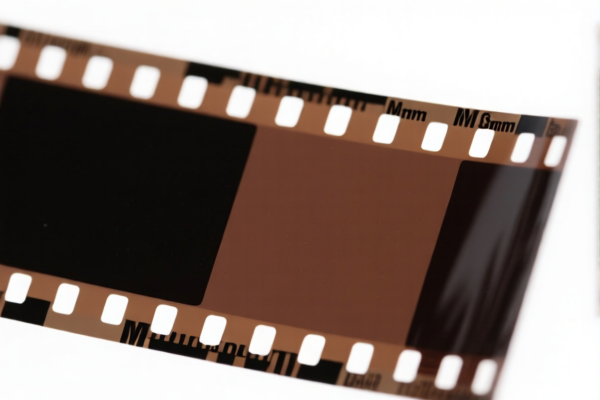
Exposed and Developed 35mm Film, No Tape
CN → US商品图片



AI分析
🎞️ Exposed & Developed 35mm Film Strips (Un-taped / Loose)
🌐 HS Code Reference & Customs Clearance Guide | 2026 Latest Tariff Analysis | Professional-Level Clearance Strategy
📌 I. Product Definition and Classification: What Exactly Is "Developed 35mm Film"?
Exposed and developed 35mm film strips refer to photographic materials that have already undergone chemical processing to become visible images (negative or slide). The specific condition "No Tape" (meaning un-taped, loose ends, or not yet secured in plastic cansisters/appraisals) is a critical differentiator in customs classification, affecting whether it is viewed as a "raw material" for further processing or a "finished photographic good."
In international trade, these are generally categorized under Heading 3706 (Photographic film, already exposed and developed, whether or not cut to size or in the form of plates or slides).
⚠️ Key Distinction Point:
- If the film is unexposed → It falls under 3702 (e.g., 3702.31, 3702.41).
- If the film is exposed and developed → It falls under 3706 (e.g., 3706.10).
- "No Tape" Implication: Loose strips may be considered more prone to damage or dust, potentially triggering stricter inspection for quality (e.g., fogging, damage) compared to professionally spooled film. However, the HS Code remains 3706 regardless of whether it is in a canister or loose, as long as it is cut or continuous strips of standard 35mm width.
📦 II. HS Code Classification Details (2026 Latest Tariff Authority Comparison)
| HS Code | Product Description | Application Scenario | Condition: Taped vs. Untaped |
|---|---|---|---|
3706.10.10.00 |
Color negative film, already exposed and developed, in rolls | Standard consumer film (Kodak Portra, Fuji C200), loose strips or in cans | ✅ Applicable (No Tape/Loose) |
3706.10.90.00 |
Other color negative film, already exposed and developed | Professional film, slide film (E6 process), loose strips | ✅ Applicable (No Tape/Loose) |
3706.90.10.00 |
Other photographic film, already exposed and developed | Black & White film (B&W), specialty films, loose strips | ✅ Applicable (No Tape/Loose) |
3701.99.90.00 |
Other photographic plates and films, unexposed | WRONG CATEGORY: Do not confuse with unexposed film | ❌ Not Applicable |
9608.10.00.00 |
Ballpoint pens, felt-tipped pens... | WRONG CATEGORY: Do not confuse with "markers" | ❌ Not Applicable |
🔍 Important Reminder:
- All "Exposed and Developed" film must be classified under 3706.
- The "No Tape" condition does not change the HS Code but affects the description in the commercial invoice. You must explicitly state "Exposed and Developed 35mm Film Strips, Un-taped/Loose" to avoid confusion with "Unexposed Film" (which has different tax rates and regulations).
- If the film is cut into specific lengths (e.g., for contact sheets) but not mounted, it still falls under 3706.
💰 III. 2026 Latest Tariff Rate Details (Including Surtaxes, Policy Add-ons)
✅ Applicable Country: United States (US)
✅ Country of Origin: China (CN)
✅ Effective Date: November 10, 2025 (and subsequent imports)
🎯 1. 3706.10.10.00 —— Color Negative Film, Already Exposed and Developed
| Item | Content |
|---|---|
| Base Tariff Rate | 0% (ad valorem) |
| USITC Surtax | 0% (No 301 Tariff for this subheading) |
| IEEPA Surtax | +10% (For China/Hong Kong products, effective Nov 10, 2025) |
| Total Tariff Rate | 10% |
| Tax Calculation | CIF Value × 10% |
| De Minimis Eligibility | ❌ Not Eligible (deny_de_minimis) for IEEPA surtax if value exceeds $800? Note: IEEPA surtaxes generally apply regardless of de minimis if the product is on the list, but for film, the base rate is 0%. The 10% IEEPA applies. Check specific de minimis rules for chemical/photographic goods. |
| Legal Basis Path | IEEPA:9901.25 → USITC:3706.10.10.00 |
📌 Explanation:
- Unlike electronics or steel, photographic film is not subject to the additional 25% Section 301 tariff.
- However, the 10% IEEPA surcharge applies to all Chinese-origin goods unless specifically exempted.
- Total Cost Impact: 10% on the CIF value.
🎯 2. 3706.10.90.00 —— Other Color Negative Film (e.g., Slide Film/E6)
| Item | Content |
|---|---|
| Base Tariff Rate | 0% |
| USITC Surtax | 0% |
| IEEPA Surtax | +10% |
| Total Tariff Rate | 10% |
| Tax Calculation | CIF Value × 10% |
| De Minimis Eligibility | ❌ Not Eligible for exemption from IEEPA |
| Legal Basis Path | IEEPA:9901.25 → USITC:3706.10.90.00 |
📌 Note:
- Slide films (E6) and professional color films follow the same 10% IEEPA rule.
- Even if "No Tape," the chemical nature of the film places it in this category.
🎯 3. 3706.90.10.00 —— Black and White (B&W) Film, Already Developed
| Item | Content |
|---|---|
| Base Tariff Rate | 0% |
| USITC Surtax | 0% |
| IEEPA Surtax | +10% |
| Total Tariff Rate | 10% |
| Tax Calculation | CIF Value × 10% |
| De Minimis Eligibility | ❌ Not Eligible |
| Legal Basis Path | IEEPA:9901.25 → USITC:3706.90.10.00 |
📌 Note:
- B&W film is also subject to the 10% IEEPA surcharge.
- No additional 25% tariff applies.
🛠️ IV. Customs Clearance Practical Advice (Battle-Tested Pitfall Avoidance Guide)
✅ 1. Required Documentation Checklist (None Can Be Missing)
| Document | Must Provide | Description |
|---|---|---|
| ✅ Commercial Invoice | ✔️ | Must clearly state: "Exposed and Developed 35mm Film, 35mm Width, Un-taped/Loose Strips, Color Negative/B&W, Origin: China" |
| ✅ Packing List | ✔️ | Detail the number of strips, rolls, or reels. Note: "Loose strips may be damaged if not protected." |
| ✅ Certificate of Origin (CO) | ✔️ | To prove Origin: China for IEEPA calculation. |
| ✅ Product Photos | ✔️ | Show the film ends, lack of tape, and packaging (if any). |
| ✅ MSDS (Material Safety Data Sheet) | ✔️ | Critical: Developed film contains residual chemicals (developer/fixer). US Customs and CBP may request MSDS to ensure it is not hazardous waste. |
| ✅ FCC Declaration? | ❌ | Not required for film itself, but if sold with scanners, those devices need FCC. |
✅ 2. Declaration Tips (Key Mantra)
🔥 “Explain ‘Developed’, State ‘No Tape’, Provide ‘MSDS’!”
| Scenario | Correct Declaration | Wrong Practice |
|---|---|---|
| Loose Strips | "Exposed and Developed 35mm Film, Loose Strips, Un-taped" | "Photographic Film" (Vague, leads to inspection) |
| Unexposed Film | "Unexposed 35mm Film" | "Developed Film" (Wrong HS Code: 3706 vs 3702) |
| Chemical Residue | Include MSDS stating "Non-Hazardous, Residual Chemicals Present" | Ignoring MSDS (Risk of Hazmat rejection) |
| Packaging | "Wrapped in anti-static bags, placed in rigid containers to prevent bending" | "Loose in box" (Risk of damage claims or inspection delays) |
✅ 3. Special Case Handling
| Situation | Handling Advice |
|---|---|
| OEM Branding | If the film is branded for a specific client, include the brand name and model in the invoice. |
| Sample Shipments | Even for samples, declare accurately as "Developed Film." Do not label as "Free Sample" to avoid duty evasion flags. |
| Damaged Film | If the "No Tape" condition leads to damage, ensure the invoice reflects the actual value (not inflated) to avoid over-duty issues. |
| Bulk Shipments | For large quantities, consider pre-shipment inspection by a third party to ensure quality (fogging, scratching) since "No Tape" increases risk. |
🌍 V. Global Main Market Clearance Comparison (2026 Latest)
| Country/Region | Recommended HS Code | Tariff | Certification Requirement | Remarks |
|---|---|---|---|---|
| 🇺🇸 USA | 3706.10.10.00 |
10% (IEEPA) | MSDS Required | No 301 tariff. IEEPA 10% applies. |
| 🇨🇳 China | 3706.10.10.00 |
0% | N/A | No import tariff on developed film. |
| 🇪🇺 EU | 3706.10.10.00 |
0% | REACH Compliance | Chemical residues must comply with REACH. |
| 🇬🇧 UK | 3706.10.10.00 |
0% | UKCA (if applicable) | Post-Brexit rules similar to EU. |
| 🇯🇵 Japan | 3706.10.10.00 |
0% | PSE (if electronic) | No tariff on film. |
📌 Conclusion:
- USA is the only major market imposing a 10% IEEPA surcharge on Chinese-origin developed film.
- EU and Japan have 0% tariffs, but strict chemical compliance (REACH/PSE) may apply due to residual developers/fixers.
- Documentation (MSDS) is critical for all markets to prove the film is not hazardous waste.
📌 VI. Common Mistakes & Pitfall Guide (Blood-Learned Lessons)
❌ Mistake 1: Declaring "Photographic Film" without specifying "Exposed and Developed"
👉 Consequence: Customs may assume it is unexposed (3702), leading to misclassification and potential penalties or delays.
👉 Correction: Always use "Exposed and Developed" in the description.
❌ Mistake 2: Omitting MSDS for Developed Film
👉 Consequence: CBP may hold the shipment for chemical inspection, suspecting hazardous waste.
👉 Correction: Always attach an MSDS showing residual chemicals are within safe limits.
❌ Mistake 3: Using "No Tape" as a justification for lower value
👉 Consequence: Undervaluation flags.
👉 Correction: Declare the true market value of the developed film, regardless of packaging.
❌ Mistake 4: Confusing "35mm Film" with "35mm Camera Parts"
👉 Consequence: Wrong HS Code (9006 vs 3706).
👉 Correction: Film is a chemical/photographic good (3706), not a machine part (9006).
✅ Correct Practice:
“35mm Color Negative Film, Exposed and Developed, Loose Strips, Un-taped, Origin: China, MSDS Attached”
🎯 VII. Conclusion: Professional Declaration, Save Time and Money!
🎯 Remember the Mantra:
🔹 “Exposed = 3706, No Tape = Loose, MSDS = Mandatory, IEEPA = 10%!”
🔹 “HS Code is Key, Tariff is Low (10%), But Docs are High (MSDS Required).”
📌 Pro Tip:
If your film is exposed but NOT developed, it falls under 3702 (unexposed) or 3707 (development chemicals)?
- Actually, unexposed film is 3702.
- Developed film is 3706.
- Unexposed film has 0% IEEPA (usually).
- Developed film has 10% IEEPA.
- Strategy: If you are shipping unexposed film, declare it as "Unexposed 35mm Film" to save 10%! Only declare as "Developed" if it has already been processed by the lab.
📣 Immediate Action:
📞 Contact a licensed customs broker + Provide Product Photos + Submit MSDS
🚀 Let your film clear customs smoothly, efficiently, and profitably!
✨ Professional Clearance Starts with Accurate Classification!
💼 Every Cent of Duty Counts!
用户评价
关于 HS 编码归类
协调制度(HS)是由世界海关组织(WCO)制定的国际贸易商品分类标准。全球 200 多个国家采用 HS 系统作为海关关税、贸易统计和进出口监管的基础。
每个 HS 编码遵循以下层级结构:
- 章(2 位)——商品大类(例如:第 84 章:机器和机械设备)
- 品目(4 位)——章内的更具体分类
- 子目(6 位)——国际通用细分,所有 WCO 成员国统一使用
- 本国细分(8-10 位)——各国自行扩展的细分编码,如美国 HTSUS 10 位编码
正确的 HS 编码归类对于顺利通关、准确缴纳关税和遵守贸易法规至关重要。错误归类可能导致海关延误、多缴关税或罚款。
从CN进口到US时,适用的关税税率可能包括:
- 最惠国(MFN)税率——适用于 WTO 成员国的标准关税税率
- 普通税率——适用于无贸易协定国家
- 贸易救济关税——附加关税,如 301 条款(反倾销)、232 条款(国家安全)或反补贴税
本页内容仅供参考。如需正式归类,请咨询当地海关或持牌报关代理。