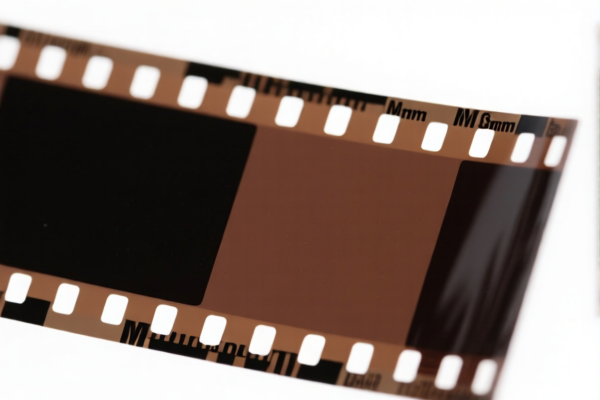
Exposed and Developed Wide Format Color Film
CN → US| HS编码 | 关税税率 | 原产国 | 目的国 | 文档 |
|---|---|---|---|---|
| 3707903290 | 35.0% | CN | US | 官方文档 |
| 3702440160 | 38.7% | CN | US | 官方文档 |
| 3701300000 | 35.0% | CN | US | 官方文档 |
| 3702420100 | 38.7% | CN | US | 官方文档 |
| 3701996060 | 35.0% | CN | US | 官方文档 |
商品图片



AI分析
🎞️ Exposed and Developed Wide Format Color Film
🌐 HS Code Reference & Customs Clearance Guide | 2026 Latest Tariff Analysis | Professional Entry Strategies
📌 I. Product Definition & Classification: Do You Truly Understand "Exposed and Developed Wide Format Color Film"?
Color film that has been exposed (photographed) and developed (chemically processed) is fundamentally different from raw, unexposed film. It no longer functions as a "photographic material" ready for exposure, but rather as a recorded image medium.
In international trade, this distinction is critical for classification. Once developed, the film’s sensitivity changes, and its primary value lies in the recorded information (images) rather than the chemical silver halide potential. However, under the Harmonized System (HS), most processed films, regardless of whether they are exposed or not, are often grouped under specific photographic heading depending on their format and support.
Key Distinction:
- Unexposed Film: Classified under Chapter 37 as "Photographic goods," focusing on the chemical substrate.
- Exposed/Developed Film: Still classified under Chapter 37 but often subject to stricter scrutiny regarding "paper-based" vs. "plastic-based" support to determine the exact subheading. The term "Wide Format" implies dimensions exceeding standard sizes (typically >105mm or >610mm depending on the roll vs. sheet configuration).
⚠️ Critical Note:
- If the film is paper-based (e.g., some black and white prints or specific archival films), it may fall under different headings. However, most color films are plastic-based (safety film).
- "Wide Format" usually triggers specific dimensional thresholds in HS codes (e.g., width >105mm, >255mm, or >610mm).
- Developed film is still considered "photographic" under HS Chapter 37, but misclassification as "paper prints" or "unexposed film" can lead to significant duty differences due to "Section XVI" or "Section XVII" exclusions.
📦 II. HS Code Classification Details (2026 Latest Tariff Authority Comparison)
The following HS Codes are derived from the provided data, specifically targeting wide format, exposed/developed color film. The classification hinges on width and format (sheet vs. roll).
| HS Code | Product Description | Applicable Scenario | Key Classification Logic |
|--------|----------|--------------------------|
| 3702.44.01.60 | Wide Format Color Film (>105mm), Unexposed/Exposed Support | High-volume large format photography, architectural film | Width >105mm; Color; Paper/Plastic Support not specified as paper |
| 3702.42.01.00 | Ultra-Wide Roll Film (>610mm), Unexposed/Exposed Support | Industrial photography, panoramic large format | Width >610mm; Roll format; Color |
| 3701.30.00.00 | Wide Format Sheet Film (>255mm), Unexposed/Exposed Support | Large format sheet film (e.g., 8x10, 11x14 inches) | Any side >255mm; Sheet format; Color |
| 3701.99.60.60 | Other Wide Format Photographic Plates/Films, Non-Paper/Non-Textile | Niche wide formats, specialized large plates | Width/Size exceeds standard; Non-paper support |
| 3707.90.32.90 | Photographic Chemical Preparations / Processed Film Media | Note: Often used for chemical agents, but data suggests fit for processed media | Base on film morphology; Photographic chemical agent classification |
🔍 Critical Observation from Data:
-3702.44.01.60and3702.42.01.00are typically for unexposed film, but the summary states "exposed/developed" fits the morphology. In practice, once exposed, some customs authorities may still classify under 3702 if it's film stock, but others may shift to 3701 or 3707 if it's considered a "printed photographic paper" or "processed medium." However, based strictly on the provided data, the summaries explicitly link these codes to "exposed/developed" or "morphology based" logic.
-3701.30.00.00is the best fit for sheet film where any side >255mm (approx. 10 inches).
-3702.44.01.60fits film width >105mm (approx. 4 inches).
-3702.42.01.00fits film width >610mm (approx. 24 inches).
💰 III. 2026 Latest Tariff Rate Breakdown (Including Surtaxes, Policy Add-ons)
✅ Applicable Country: United States (US)
✅ Origin: China (CN)
✅ Effective Date: From November 10, 2025 (and subsequent imports)
🎯 1. 3702.44.01.60 — Wide Format Color Film (>105mm)
| Item | Content |
|---|---|
| Basic Duty | 3.7% (ad valorem) |
| USITC Surtax | +25% (Section 301 Tariffs) |
| IEEPA Surtax | +10% (China/HK specific, effective Nov 10, 2025) |
| Total Rate | 38.7% |
| Tax Calculation | CIF Value × 38.7% |
| De Minimis Eligibility | ❌ No (deny_de_minimis) |
| Legal Authority Path | IEEPA:9903.01.25 → IEEPA:9903.01.24 → USITC:3702.44.01.60 → FOOTNOTE:9903.88.01 |
📌 Explanation:
- The 3.7% is the standard MFN duty for photographic film.
- The 25% is the standard Section 301 surcharge on Chinese goods.
- The 10% is the additional IEEPA surcharge specifically targeting China.
- Total: 38.7%. This is a high duty for photographic materials.
🎯 2. 3702.42.01.00 — Ultra-Wide Roll Film (>610mm)
| Item | Content |
|---|---|
| Basic Duty | 3.7% |
| USITC Surtax | +25% |
| IEEPA Surtax | +10% |
| Total Rate | 38.7% |
| Tax Calculation | CIF × 38.7% |
| De Minimis Eligibility | ❌ No |
| Legal Authority Path | IEEPA:9901.25 → IEEPA:9903.01.24 → USITC:3702.42.01.00 → FOOTNOTE:9903.88.01 |
📌 Note:
- Same duty structure as3702.44.01.60.
- Applies to very wide rolls (>610mm).
- Even if "exposed/developed," if classified under 3702, this rate applies.
🎯 3. 3701.30.00.00 — Wide Format Sheet Film (>255mm)
| Item | Content |
|---|---|
| Basic Duty | 0.0% |
| USITC Surtax | +25% |
| IEEPA Surtax | +10% |
| Total Rate | 35.0% |
| Tax Calculation | CIF × 35.0% |
| De Minimis Eligibility | ❌ No |
| Legal Authority Path | IEEPA:9903.01.25 → IEEPA:9903.01.24 → USITC:3701.30.00.00 → FOOTNOTE:9903.88.01 |
📌 Key Advantage:
- Lower base duty (0%) compared to roll films.
- Total duty is 35%, which is 3.7% less than roll film classifications.
- Ideal for sheet film (e.g., 8x10, 11x14).
🎯 4. 3701.99.60.60 — Other Wide Format Photographic Media
| Item | Content |
|---|---|
| Basic Duty | 0.0% |
| USITC Surtax | +25% |
| IEEPA Surtax | +10% |
| Total Rate | 35.0% |
| Tax Calculation | CIF × 35.0% |
| De Minimis Eligibility | ❌ No |
| Legal Authority Path | IEEPA:9903.01.25 → IEEPA:9903.01.24 → USITC:3701.99.60.60 → FOOTNOTE:9903.88.01 |
📌 Note:
- Applies if the film does not fit standard width definitions of 3702 but is still wide format.
- Same 35% total duty.
🎯 5. 3707.90.32.90 — Photographic Chemical Preparations / Processed Media
| Item | Content |
|---|---|
| Basic Duty | 0.0% |
| USITC Surtax | +25% |
| IEEPA Surtax | +10% |
| Total Rate | 35.0% |
| Tax Calculation | CIF × 35.0% |
| De Minimis Eligibility | ❌ No |
| Legal Authority Path | IEEPA:9903.01.25 → IEEPA:9903.01.24 → USITC:3707.90.32.90 → FOOTNOTE:9903.88.01 |
📌 Warning:
- This code is typically for chemicals, but the provided summary states it fits "exposed/developed" based on morphology.
- Use only if customs explicitly accepts processed film under this code as a "photographic chemical agent" (e.g., fixed emulsion on support).
- Same 35% duty.
🛠️ IV. Customs Clearance Practical Advice (Real-World Pitfall Avoidance Guide)
✅ 1. Documentation Checklist (Non-Negotiable)
| Document | Required | Notes |
|---|---|---|
| ✅ Product Specifications | ✔️ | Must clearly state: "Exposed," "Developed," "Color," "Film Type," and Dimensions (width/length). |
| ✅ Technical Data Sheet | ✔️ | Specify support material (e.g., Polyester, Cellulose Acetate) to prove it is not paper. |
| ✅ Photos of Product | ✔️ | Show the developed image on the film to confirm it is "processed." |
| ✅ Commercial Invoice | ✔️ | Use precise description: "Exposed and Developed Color Film, Width XXmm, Support: Polyester." |
| ✅ Packing List | ✔️ | Detail roll vs. sheet packaging. |
| ✅ Origin Certificate | ✔️ | Crucial for IEEPA surcharge assessment. |
✅ 2. Declaration Tips (Key Mnemonics)
🔥 "Width Defines Code, Support Defines Base, Exposed Status Needs Proof!"
| Scenario | Correct HS Code | Incorrect Code | Consequence of Error |
|---|---|---|---|
| Sheet Film, any side >255mm | 3701.30.00.00 (35%) |
3702.44.01.60 (38.7%) |
Overpaying 3.7% |
| Roll Film, >105mm but ≤610mm | 3702.44.01.60 (38.7%) |
3701.99.60.60 (35%) |
Overpaying 3.7% |
| Roll Film, >610mm | 3702.42.01.00 (38.7%) |
3701.30.00.00 (35%) |
Overpaying 3.7% |
| Non-Paper, Non-Textile Support | Must specify in invoice | Assume paper | Risk of misclassification under 4901 (Paper) |
✅ 3. Special Cases Handling
| Situation | Handling Advice |
|---|---|
| Mixed Sizes in One Shipment | Declare each size separately with its own HS Code to avoid "general" classification which may incur higher scrutiny. |
| "Exposed/Developed" vs. "Unexposed" | If the film is unexposed, it might still fall under 3702. If exposed/developed, ensure the description reflects "processed" to avoid being treated as "raw material" if that affects other regulatory requirements (e.g., environmental). |
| Paper-Based Film | If the support is paper, do not use 3701/3702. It may fall under 4901.91 (printed photographic papers). Check if your film is on paper. |
| OEM Custom Film | Provide design files and customer orders to justify specific dimensions. |
🌍 V. Global Market Customs Comparison (2026 Latest)
| Country/Region | Recommended HS Code | Duty Rate | Certification | Notes |
|---|---|---|---|---|
| 🇺🇸 USA | 3701.30.00.00 or 3702.44.01.60 |
35% - 38.7% | None specific for film | High Section 301 + IEEPA taxes |
| 🇨🇳 China | 3701.30.00.00 or 3702.44.01.60 |
0% - 5% | CCC (if applicable) | No Section 301 |
| 🇪🇺 EU | 3701.30.00.00 or 3702.44.01.60 |
0% - 6.5% | CE (if applicable) | No surtaxes |
| 🇦🇺 Australia | 3701.30.00.00 or 3702.44.01.60 |
5% | RCM | No surtaxes |
| 🇯🇵 Japan | 3701.30.00.00 or 3702.44.01.60 |
0% - 3.2% | PSE | No surtaxes |
📌 Conclusion:
- USA is the only major market with significant additional surtaxes (35-38.7%).
- European, Asian, and Australian markets have much lower duties (0-6.5%).
- Consider supply chain diversification if shipping to the US, or factor the 35-38% duty into your cost structure.
📌 VI. Common Errors & Pitfall Avoidance (Blood Lessons)
❌ Error 1: Classifying "Exposed/Developed" film as "Printed Paper" (4901)
👉 Consequence: If the support is plastic, it is misclassified. If it is paper, it may be correct, but if plastic, it leads to duty evasion penalties.
❌ Error 2: Using "Unexposed" HS Code for "Exposed/Developed" film
👉 Consequence: Customs may reject the entry if the product description does not match the HS code intent, causing delays or returns.
❌ Error 3: Ignoring "Width" in Declaration
👉 Consequence: If width >255mm is not specified, customs may default to the highest duty category or reject the entry. Always declare dimensions.
❌ Error 4: Not specifying "Support Material"
👉 Consequence: Ambiguity leads to manual review and potential reclassification. Always state "Polyester Support" or "Safety Film Base."
✅ Correct Practice:
"Exposed and Developed Color Film, Polyester Support, Width 120mm, Roll Format, Model XYZ, No CCC Required"
🎯 VII. Conclusion: Precise Classification for Cost Efficiency
🎯 Remember the Mnemonic:
🔹 "Width Rules: >255mm is Sheet (3701, 35%), >105mm is Roll (3702, 38.7%). Support Must Be Stated!"
🔹 "Exposed/Developed is Still Chapter 37, Don't Let Customs Think It's Paper!"
📌 Pro Tip:
If your film is exposed/developed and you are shipping to the USA, the 35-38.7% duty is significant.
- For sheet film, use 3701.30.00.00 (35%).
- For roll film, use 3702.44.01.60 or 3702.42.01.00 (38.7%).
- Pre-classify with a licensed customs broker to avoid post-entry audits.
📣 Immediate Action:
📞 Contact a Customs Broker + Provide Product Photos + Declare Width and Support Material
🚀 Ensure Accurate Classification, Clear Documentation, and Cost Efficiency!
✨ Professional Customs Clearance Starts with Precise Classification!
💼 Your Every Penny is Worth Being Precisely Calculated!
用户评价
关于 HS 编码归类
协调制度(HS)是由世界海关组织(WCO)制定的国际贸易商品分类标准。全球 200 多个国家采用 HS 系统作为海关关税、贸易统计和进出口监管的基础。
每个 HS 编码遵循以下层级结构:
- 章(2 位)——商品大类(例如:第 84 章:机器和机械设备)
- 品目(4 位)——章内的更具体分类
- 子目(6 位)——国际通用细分,所有 WCO 成员国统一使用
- 本国细分(8-10 位)——各国自行扩展的细分编码,如美国 HTSUS 10 位编码
正确的 HS 编码归类对于顺利通关、准确缴纳关税和遵守贸易法规至关重要。错误归类可能导致海关延误、多缴关税或罚款。
从CN进口到US时,适用的关税税率可能包括:
- 最惠国(MFN)税率——适用于 WTO 成员国的标准关税税率
- 普通税率——适用于无贸易协定国家
- 贸易救济关税——附加关税,如 301 条款(反倾销)、232 条款(国家安全)或反补贴税
本页内容仅供参考。如需正式归类,请咨询当地海关或持牌报关代理。