Extra Wide Synchronous Belts
CN → US| HS编码 | 关税税率 | 原产国 | 目的国 | 文档 |
|---|---|---|---|---|
| 8483901050 | 37.8% | CN | US | 官方文档 |
| 8483908080 | 37.8% | CN | US | 官方文档 |
| 4010359000 | 38.3% | CN | US | 官方文档 |
| 4010369000 | 38.3% | CN | US | 官方文档 |
| 5910001020 | 39.0% | CN | US | 官方文档 |
商品图片
AI分析
🏭 Extra Wide Synchronous Belts (Power Transmission Components)
🌐 HS Code Reference & Customs Clearance Guide | 2026 Latest Tariff Analysis | Professional Clearance Strategy
📌 1. Product Definition and Classification: Do You Really Understand "Synchronous Belts"?
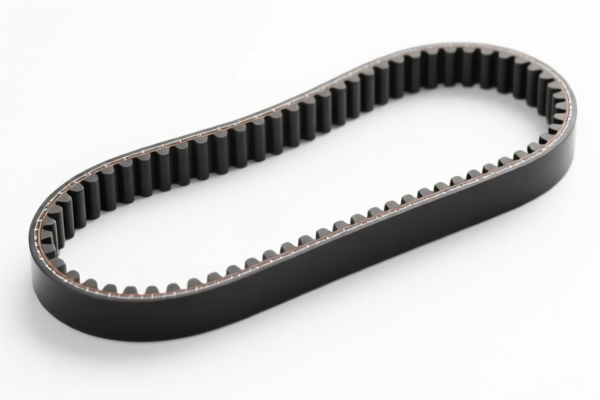
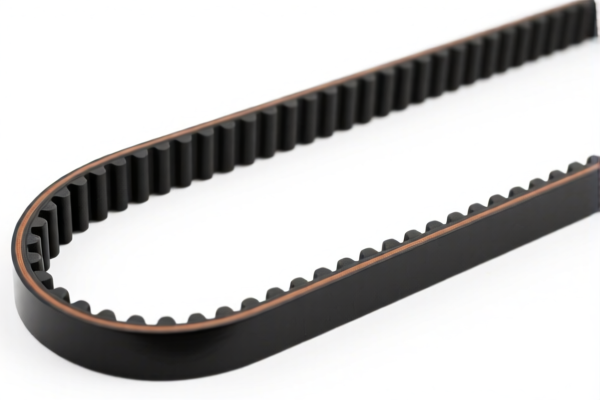
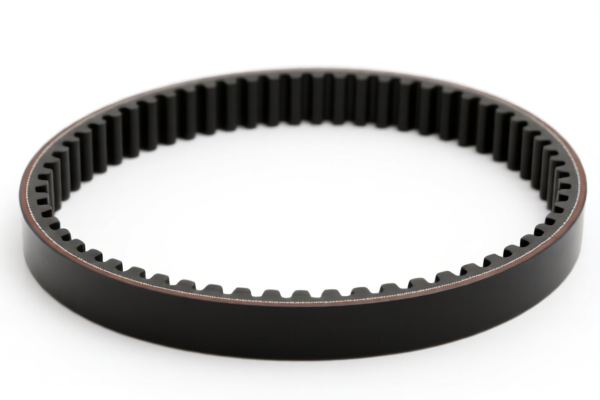
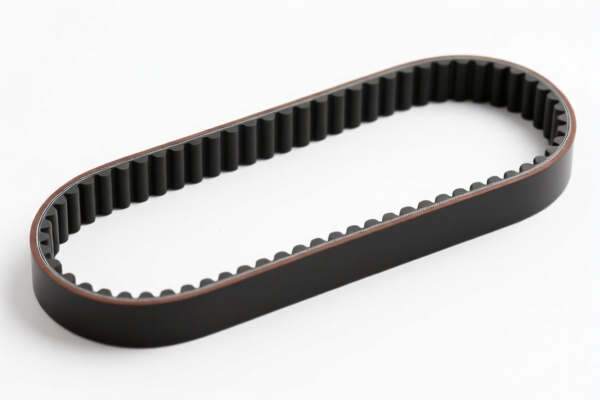
Synchronous belts, also known as timing belts, are critical transmission components that ensure precise motion control without slippage. In international trade, their classification depends heavily on material composition (Rubber vs. Textile/Fabric) and structural function (Mechanical Transmission Component vs. Rubber Product).
Key Distinction Points: - Mechanical Transmission Component: If classified under Chapter 84, it is viewed as a machine part. - Rubber Product: If classified under Chapter 40, it is viewed as a manufactured rubber article. - Textile/Fabric Product: If classified under Chapter 59, it is viewed as a textile-reinforced article.
⚠️ Critical Warning:
- Misclassification can lead to significant tariff differences (up to 1.2% base rate difference) and potential customs disputes regarding material declaration.
- "Extra Wide" does not change the HS Code category but may impact valuation and inspection requirements.
📦 2. HS Code Classification Details (2026 Latest Tariff Authority Comparison)
Based on the provided data, here are the four valid HS Code options for Extra Wide Synchronous Belts, depending on their primary material and functional classification:
| HS Code | Product Description & Logic | Applicable Scenario | Material/State |
|---|---|---|---|
| 8483.90.10.50 | Other Transmission Components: Classified as a mechanical transmission element. No material conflict. | General industrial machinery transmission. | Mechanical Component |
| 8483.90.80.80 | Other Transmission Components (Catch-all): Classified under "Other" for transmission devices and pulleys. | Broad categorization for transmission parts not elsewhere specified. | Mechanical Component |
| 4010.35.90.00 | Rubber Timing Belts: Form matches; inferred rubber material. No vulcanized rubber conflict. | Standard rubber-coated toothed belts. | Rubber (Vulcanized) |
| 4010.36.90.00 | Other Rubber Belts: Form matches; inferred rubber material. No other category conflicts. | Non-standard rubber belts or specific rubber formulations. | Rubber (Vulcanized) |
| 5910.00.10.20 | Textile/Artificial Fiber Belts: Purpose matches perfectly. Inferred textile/artificial fiber material. | Belts reinforced with fabric, nylon, or polyester cords. | Textile/Fiber |
🔍 Key Insight:
- 8483 Codes: Focus on the function (transmission).
- 4010 Codes: Focus on the material (Rubber).
- 5910 Code: Focus on the reinforcement (Textile/Fiber).
- Selection Strategy: Choose the code that best matches the dominant material and technical specification of your specific belt.
💰 3. 2026 Latest Tariff Rate Breakdown (Including Surtaxes & Policy Add-ons)
✅ Applicable Country: United States (US)
✅ Country of Origin: China (CN)
✅ Effective Date: Current rates apply (Based on provided data structure)
All categories below share similar surtax structures due to US-China trade policies.
🎯 A. Mechanical Transmission Components (Chapter 84)
1. 8483.90.10.50 – Other Transmission Components
| Item | Detail |
|---|---|
| Base Tariff | 2.8% |
| Surtax (Section 301) | +25.0% |
| 122 Clause Tariff | +10.0% |
| Total Tax Rate | 37.8% |
| Tax Calculation | CIF Value × 37.8% |
| Legal Basis | Harmonized Tariff Schedule (HTS) + Trade Policy Footnotes |
📌 Explanation:
- Base 2.8%: Standard MFN rate for machine parts.
- 25% Surtax: Applies to Chinese origin goods under Section 301.
- 10% 122 Clause: Specific additional duty applicable to this category.
- Total: 37.8% is the effective duty rate.
2. 8483.90.80.80 – Other Transmission Components (Catch-all)
| Item | Detail |
|---|---|
| Base Tariff | 2.8% |
| Surtax (Section 301) | +25.0% |
| 122 Clause Tariff | +10.0% |
| Total Tax Rate | 37.8% |
| Tax Calculation | CIF Value × 37.8% |
| Legal Basis | Harmonized Tariff Schedule (HTS) + Trade Policy Footnotes |
📌 Note:
- Identical tax structure to8483.90.10.50.
- Use this code if the belt does not fit the specific sub-category of10.50but still functions as a mechanical transmission part.
🎯 B. Rubber Products (Chapter 40)
3. 4010.35.90.00 – Rubber Timing Belts
| Item | Detail |
|---|---|
| Base Tariff | 3.3% |
| Surtax (Section 301) | +25.0% |
| 122 Clause Tariff | +10.0% |
| Total Tax Rate | 38.3% |
| Tax Calculation | CIF Value × 38.3% |
| Legal Basis | Harmonized Tariff Schedule (HTS) + Trade Policy Footnotes |
📌 Explanation:
- Base 3.3%: Slightly higher than mechanical parts.
- Total: 38.3% (0.5% higher than Chapter 84 codes).
- Material: Confirmed rubber composition.
4. 4010.36.90.00 – Other Rubber Belts
| Item | Detail |
|---|---|
| Base Tariff | 3.3% |
| Surtax (Section 301) | +25.0% |
| 122 Clause Tariff | +10.0% |
| Total Tax Rate | 38.3% |
| Tax Calculation | CIF Value × 38.3% |
| Legal Basis | Harmonized Tariff Schedule (HTS) + Trade Policy Footnotes |
📌 Note:
- Same tax rate as4010.35.90.00.
- Use if the belt does not fit the specific "Timing Belt" sub-heading but is still rubber.
🎯 C. Textile/Fiber Products (Chapter 59)
5. 5910.00.10.20 – Textile/Artificial Fiber Belts
| Item | Detail |
|---|---|
| Base Tariff | 4.0% |
| Surtax (Section 301) | +25.0% |
| 122 Clause Tariff | +10.0% |
| Total Tax Rate | 39.0% |
| Tax Calculation | CIF Value × 39.0% |
| Legal Basis | Harmonized Tariff Schedule (HTS) + Trade Policy Footnotes |
📌 Explanation:
- Base 4.0%: Highest base rate among the options.
- Total: 39.0% (Highest total rate).
- Material: Textile or artificial fiber reinforcement is dominant.
🛠️ 4. Customs Clearance Practical Advice (Real-World Pitfall Avoidance)
✅ 1. Documentation Checklist (Non-Negotiable)
| Document | Required | Purpose |
|---|---|---|
| ✅ Product Specification Sheet | ✔️ | Must detail: Material (Rubber/Fiber), Tooth Profile, Width, Length, Tensile Strength. |
| ✅ Material Declaration | ✔️ | Explicitly state: "Vulcanized Rubber," "Nylon Cord," or "Polyester Fabric" to justify HS Code. |
| ✅ Product Photos | ✔️ | Close-up of teeth, cross-section (to show internal reinforcement), and overall dimensions. |
| ✅ Commercial Invoice | ✔️ | Must match HS Code description exactly. Avoid vague terms like "Belt." |
| ✅ Packing List | ✔️ | Detail package weight and dimensions. |
| ✅ Certificate of Origin (CO) | ✔️ | Essential for proving Chinese origin and applying surtaxes. |
✅ 2. Declaration Tips (Key Mantra)
🔥 "Material Defines Code, Function Supports It!"
| Scenario | Correct Declaration | Risk of Wrong Declaration |
|---|---|---|
| Rubber Belt with Fabric Cords | 4010.35.90.00 (if rubber is primary) or 5910.00.10.20 (if fiber is primary) |
Misclassification → Delayed Release + Potential Penalty |
| Heavy-Duty Industrial Belt | 8483.90.10.50 (Emphasize "Transmission Component") |
If declared as 4010, customs may argue for higher base rate |
| Custom/OEM Synchronous Belt | 8483.90.80.80 (If unique design) |
Ensure "Other" classification is justified |
| Wide Belts for Printing/Packaging | 5910.00.10.20 (If textile-heavy) |
Misidentifying material leads to incorrect duty |
📌 Key Advice:
- If the belt is primarily rubber (even with cords), Chapter 40 is often safer for mechanical integrity claims.
- If the belt is primarily textile/fabric (e.g., flat belts with fabric layers), Chapter 59 is appropriate.
- If the belt is a standard mechanical part for a machine, Chapter 84 is strong for "machine component" status.
✅ 3. Special Cases & Handling
| Situation | Handling Strategy |
|---|---|
| OEM/Custom Sizes | Provide engineering drawings. If non-standard, 8483.90.80.80 is best. |
| Mixed Materials | Declare the principal material. If rubber > 50% by weight, use 4010. |
| Belts with Metal Cores | Still generally classified under 4010 or 8483 depending on function. Do NOT classify as metal parts. |
| Returns/Replacements | Ensure original HS Code is maintained. Provide original invoice for reference. |
🌍 5. Global Market Comparison (2026 Latest)
| Country/Region | Recommended HS Code | Estimated Total Duty (China Origin) | Key Certification |
|---|---|---|---|
| 🇺🇸 USA | 8483.90.10.50 / 4010.35.90.00 / 5910.00.10.20 |
37.8% - 39.0% | No specific cert required, but material proof is key |
| 🇨🇳 China | 8483.90.10.50 / 4010.35.90.00 |
Low (Imported into China) | CCC (if applicable) |
| 🇪🇺 EU | 8483.90.10 / 4010.35 |
Varies (0-10%) | REACH, RoHS |
| 🇯🇵 Japan | 8483.90 / 4010.35 |
Varies (0-5%) | JIS Standards |
📌 Conclusion:
- USA has the highest effective duty due to 301 tariffs and 122 clauses.
- Material declaration is critical in the US to avoid re-classification penalties.
- Chapter 84 offers the lowest base rate (2.8%), making it cost-effective if functionally justified.
📌 6. Common Errors & Pitfalls (Lessons Learned)
❌ Error 1: Declaring "Rubber Belt" without specifying "Synchronous" or "Timing"
👉 Consequence: Customs may misclassify as generic rubber goods → Audit Risk.
❌ Error 2: Using 5910 for a purely rubber belt
👉 Consequence: Tariff overpayment (39.0% vs 37.8% or 38.3%).
❌ Error 3: Not providing material proof for 8483 vs 4010 debate
👉 Consequence: Customs delays for material verification → Supply Chain Disruption.
❌ Error 4: Ignoring "122 Clause" implications
👉 Consequence: Underestimating total landed cost by 10%.
✅ Correct Practice:
"Synchronous Timing Belt, Extra Wide, Vulcanized Rubber with Nylon Cord, For Industrial Machinery, Model XYZ, Made in China"
🎯 7. Conclusion: Precise Classification, Cost Efficiency!
🎯 Remember the Mantra:
🔹 "Function to 84, Rubber to 40, Fiber to 59!"
🔹 "Base Rate Matters: 2.8% (84) < 3.3% (40) < 4.0% (59)"
🔹 "Total Duty is King: 37.8% to 39.0% for US Imports from China!"
📌 Pro Tip:
If you are exporting to the USA, consider pre-clearance consultations or Advance Rulings if your belt has unique material compositions.
For other markets, EU and Japan offer significantly lower duties, making global supply chain diversification a key strategy.
📣 Immediate Action:
📞 Consult Customs Broker + Provide Material Specs + Confirm HS Code
🚀 Ensure Smooth Clearance, Minimize Duties, Maximize Profit!
✨ Professional Clearance Starts with Accurate Classification!
💼 Every Percent of Duty Saved is Pure Profit!
用户评价
关于 HS 编码归类
协调制度(HS)是由世界海关组织(WCO)制定的国际贸易商品分类标准。全球 200 多个国家采用 HS 系统作为海关关税、贸易统计和进出口监管的基础。
每个 HS 编码遵循以下层级结构:
- 章(2 位)——商品大类(例如:第 84 章:机器和机械设备)
- 品目(4 位)——章内的更具体分类
- 子目(6 位)——国际通用细分,所有 WCO 成员国统一使用
- 本国细分(8-10 位)——各国自行扩展的细分编码,如美国 HTSUS 10 位编码
正确的 HS 编码归类对于顺利通关、准确缴纳关税和遵守贸易法规至关重要。错误归类可能导致海关延误、多缴关税或罚款。
从CN进口到US时,适用的关税税率可能包括:
- 最惠国(MFN)税率——适用于 WTO 成员国的标准关税税率
- 普通税率——适用于无贸易协定国家
- 贸易救济关税——附加关税,如 301 条款(反倾销)、232 条款(国家安全)或反补贴税
本页内容仅供参考。如需正式归类,请咨询当地海关或持牌报关代理。