Farnesene Resin
CN → US| HS编码 | 关税税率 | 原产国 | 目的国 | 文档 |
|---|---|---|---|---|
| 2902190050 | 35.0% | CN | US | 官方文档 |
| 2902909000 | 35.0% | CN | US | 官方文档 |
| 3913901000 | 35.0% | CN | US | 官方文档 |
| 3913902090 | 40.8% | CN | US | 官方文档 |
商品图片
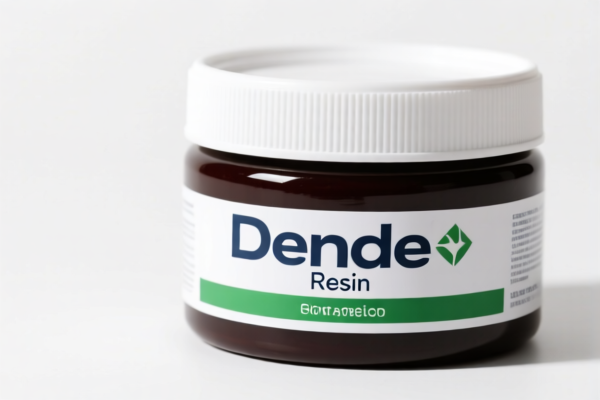
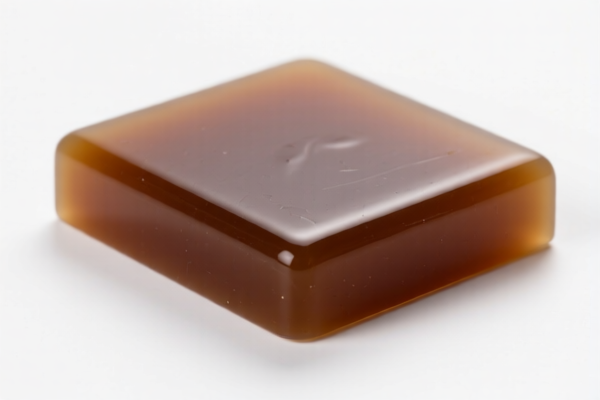
AI分析
🧪 Farnesene Resin (Farnesene-Based Polymer)
🌐 HS Code Reference & Customs Clearance Guide | 2026 Latest Tariff Analysis | Professional Compliance Strategy
📌 Part I: Product Definition & Classification: What Exactly is "Farnesene Resin"?
Farnesene Resin is a specialized polymer derived from farnesene, a natural terpene found in various plants (such as citronella, wormwood, and citrus oils). It is often categorized under chemical derivatives of natural rubber or modified natural polymers.
In international trade, the classification depends on the primary form (e.g., powder, liquid, block) and the degree of modification. It is generally not classified as a simple aromatic hydrocarbon but rather as a natural polymer derivative due to its origin from natural terpenes and its polymeric structure.
⚠️ Key Distinction Point:
- If it is a chemical derivative of natural rubber or a polysaccharide derivative in primary forms → Classified under Chapter 39 (Plastics and Articles Thereof)
- If it is a pure cyclic hydrocarbon (unreacted farnesene) → Classified under Chapter 29 (Organic Chemicals)
Note: Based on the provided data, we focus on the polymer/derivative aspect (Chapter 39) and the hydrocarbon aspect (Chapter 29) as they appear in the dataset.
📦 Part II: HS Code Classification Details (2026 Latest Tariff Authoritative Comparison)
| HS Code | Product Description | Applicable Scenario | Tax Rate (CN→US) |
|---|---|---|---|
3913.90.10.00 |
Natural polymers/modified natural polymers: Chemical derivatives of natural rubber | Farnesene resin used as a binder, adhesive, or plasticizer, derived from natural rubber chemistry | 25.0% |
3913.90.20.90 |
Natural polymers/modified natural polymers: Polysaccharides and their derivatives, Other | Farnesene-based resins used in food, pharmaceutical, or coating applications, classified under other polysaccharide derivatives | 30.8% |
2902.19.00.50 |
Cyclic hydrocarbons: Cyclanes, cyclenes and cycloterpenes, Other | If the product is pure farnesene (a cycloterpene) and not polymerized, or a specific cyclic hydrocarbon derivative | 25.0% |
2902.90.90.00 |
Cyclic hydrocarbons: Other | Other cyclic hydrocarbons not specified elsewhere, possibly if misclassified as simple hydrocarbons | 25.0% |
🔍 Critical Reminder:
- Farnesene Resin is most commonly classified under 3913.90 if it is in a polymeric form (primary form).
- If it is pure farnesene (monomer), it may fall under 2902.19.00.50 (Cycloterpenes).
- Do not confuse with synthetic resins (Chapter 39 other headings) if it is derived from natural sources.
💰 Part III: 2026 Latest Tariff Rate Details (Including Surtaxes & Policy Add-ons)
✅ Applicable Country: United States (US)
✅ Origin: China (CN)
✅ Effective Date: 2025年11月10日起 (Including subsequent imports)
🎯 1. 3913.90.10.00 —— Chemical Derivatives of Natural Rubber
| Item | Content |
|---|---|
| Base Tariff | 0.0% (ad valorem) |
| Additional Tariff (Section 301) | +25.0% |
| Total Tariff | 25.0% |
| Tax Calculation | CIF Value × 25% |
| De Minimis Exemption | ❌ Not Available (deny_de_minimis) |
| Legal Basis Path | USITC:3913.90.10.00 → SECTION_301:FOOTNOTE:9903.88.01 |
📌 Explanation:
- "Chemical derivatives of natural rubber" includes modified natural polymers. Farnesene resin, if derived from natural sources and modified, fits here. - Total 25% is a high tariff, requiring careful cost planning.
🎯 2. 3913.90.20.90 —— Other Polysaccharides and Their Derivatives
| Item | Content |
|---|---|
| Base Tariff | 5.8% (ad valorem) |
| Additional Tariff (Section 301) | +25.0% |
| Total Tariff | 30.8% |
| Tax Calculation | CIF Value × 30.8% |
| De Minimis Exemption | ❌ Not Available (deny_de_minimis) |
| Legal Basis Path | USITC:3913.90.20.90 → SECTION_301:FOOTNOTE:9903.88.01 |
📌 Note:
- This is the highest tariff among the options due to the base rate of 5.8%.
- Only apply if the resin is specifically classified as a polysaccharide derivative (less common for farnesene, but possible if mixed or categorized broadly).
🎯 3. 2902.19.00.50 —— Cyclanes, Cyclenes, and Cycloterpenes (Other)
| Item | Content |
|---|---|
| Base Tariff | 0.0% (ad valorem) |
| Additional Tariff (Section 301) | +25.0% |
| Total Tariff | 25.0% |
| Tax Calculation | CIF Value × 25% |
| De Minimis Exemption | ❌ Not Available (deny_de_minimis) |
| Legal Basis Path | USITC:2902.19.00.50 → SECTION_301:FOOTNOTE:9903.88.01 |
📌 Explanation:
- If the product is pure farnesene (a cycloterpenes), it falls here.
- Total 25%, same as3913.90.10.00.
🎯 4. 2902.90.90.00 —— Cyclic Hydrocarbons (Other)
| Item | Content |
|---|---|
| Base Tariff | 0.0% (ad valorem) |
| Additional Tariff (Section 301) | +25.0% |
| Total Tariff | 25.0% |
| Tax Calculation | CIF Value × 25% |
| De Minimis Exemption | ❌ Not Available (deny_de_minimis) |
| Legal Basis Path | USITC:2902.90.90.00 → SECTION_301:FOOTNOTE:9903.88.01 |
📌 Note:
- This is a catch-all for cyclic hydrocarbons not specified elsewhere.
- Total 25%, same as other hydrocarbon options.
🛠️ Part IV: Customs Clearance Practical Advice (Pitfall Avoidance Guide)
✅ 1. Preparation Checklist (All Required)
| Document | Required | Description |
|---|---|---|
| ✅ Product Specification Sheet | ✔️ | Must clarify: Is it pure farnesene (monomer) or polymerized resin? Chemical structure, CAS number. |
| ✅ Chemical Structure Diagram | ✔️ | To distinguish between cyclic hydrocarbons (Ch. 29) and natural polymer derivatives (Ch. 39). |
| ✅ Product Photos | ✔️ | Clear images of the product, packaging, and labels. |
| ✅ Certificate of Analysis (COA) | ✔️ | To prove purity and composition. |
| ✅ Commercial Invoice | ✔️ | Clearly state "Farnesene Resin" or "Farnesene" with precise description. |
| ✅ Certificate of Origin (CO) | ✔️ | If applicable, for potential preferential treatment (not available for US from CN). |
| ✅ Packing List | ✔️ | Detail net/gross weight, dimensions. |
✅ 2. Declaration Tips (Key Mantra)
🔥 "Monomer or Polymer? Clarify First, Tax Second!"
| Scenario | Correct Declaration | Incorrect Practice |
|---|---|---|
| Pure Farnesene (Monomer) | 2902.19.00.50 (Cycloterpenes) |
Misdeclare as "Resin" → Risk of misclassification penalties |
| Polymerized Farnesene Resin | 3913.90.10.00 (Chemical Derivative of Natural Rubber) |
Misdeclare as simple hydrocarbon → Risk of higher duty if classified as polysaccharide |
| Farnesene in Solution | Depends on solvent; if solvent dominates, may change HS Code | Declare as "Resin" without specifying solvent |
| Mixed with Other Polymers | May fall under 3913.90.20.90 if polysaccharide-based |
Declare as pure farnesene resin |
✅ 3. Special Case Handling
| Scenario | Handling Advice |
|---|---|
| OEM Custom Farnesene Resin | Provide client order + chemical formula to justify HS Code |
| Farnesene in Food/Pharma Grade | If classified as polysaccharide derivative, beware of 30.8% tariff |
| Farnesene in Coatings | Ensure it is declared as "Chemical Derivative of Natural Rubber" if applicable to get 25% |
| Import for R&D Only | May qualify for personal use exemption if under de minimis, but not available for commercial imports |
🌍 Part V: Global Market Comparison (2026 Latest)
| Country/Region | Recommended HS Code | Tariff | Certification Requirements | Remarks |
|---|---|---|---|---|
| 🇺🇸 USA | 3913.90.10.00 or 2902.19.00.50 |
25.0% | None specific, but COA required | High tariff due to Section 301 |
| 🇨🇳 China | 3913.90.10.00 or 2902.19.00.50 |
0% (Base) + No Surtax | GB Standards if applicable | No additional tariffs |
| 🇪🇺 EU | 3913.90.10.00 or 2902.19.00.50 |
0% (If REACH compliant) | REACH Registration | No surtaxes |
| 🇯🇵 Japan | 3913.90.10.00 or 2902.19.00.50 |
0% | PSE if electrical | No surtaxes |
📌 Conclusion:
- USA imposes a 25% tariff on both natural polymer derivatives and cyclic hydrocarbons from China.
- China, EU, Japan do not impose additional surtaxes, making them more cost-effective for imports.
📌 Part VI: Common Errors & Pitfall Avoidance (Lessons Learned)
❌ Error 1: Declaring "Farnesene Resin" as "Synthetic Resin" (e.g., 3907.xx)
👉 Consequence: Misclassification, penalties, and potential higher duty if base rate is higher.
❌ Error 2: Not specifying if it is monomer or polymer
👉 Consequence: Customs may choose the highest duty rate or delay shipment for clarification.
❌ Error 3: Using vague terms like "Natural Resin"
👉 Consequence: Ambiguity leads to arbitrary classification, possibly 3913.90.20.90 (30.8%).
✅ Correct Practice:
"Farnesene Resin (Polymerized Farnesene), CAS No. 502-61-4, Primary Form, Chemical Derivative of Natural Rubber, for Use in Adhesives"
🎯 Part VII: Conclusion: Precise Classification, Cost Efficiency
🎯 Remember the Mantra:
🔹 "Monomer = 2902.19.00.50 (25%)", "Polymer = 3913.90.10.00 (25%)"
🔹 "Polysaccharide Derivative = 3913.90.20.90 (30.8%)"
🔹 "Always specify CAS Number and Form!"
📌 Tips:
- If your farnesene resin is sourced from non-China countries, check for FTA benefits (e.g., USMCA, RCEP).
- Apply for Advance Ruling before shipment to avoid clearance delays.
📣 Immediate Action:
📞 Contact a licensed customs broker + Provide CAS Number + Apply for HS Code Pre-Ruling
🚀 Ensure smooth clearance, reduce costs, and enhance profit margins!
✨ Professional Clearance Starts with Accurate Classification!
💼 Every cent of your cost deserves precise calculation!
用户评价
关于 HS 编码归类
协调制度(HS)是由世界海关组织(WCO)制定的国际贸易商品分类标准。全球 200 多个国家采用 HS 系统作为海关关税、贸易统计和进出口监管的基础。
每个 HS 编码遵循以下层级结构:
- 章(2 位)——商品大类(例如:第 84 章:机器和机械设备)
- 品目(4 位)——章内的更具体分类
- 子目(6 位)——国际通用细分,所有 WCO 成员国统一使用
- 本国细分(8-10 位)——各国自行扩展的细分编码,如美国 HTSUS 10 位编码
正确的 HS 编码归类对于顺利通关、准确缴纳关税和遵守贸易法规至关重要。错误归类可能导致海关延误、多缴关税或罚款。
从CN进口到US时,适用的关税税率可能包括:
- 最惠国(MFN)税率——适用于 WTO 成员国的标准关税税率
- 普通税率——适用于无贸易协定国家
- 贸易救济关税——附加关税,如 301 条款(反倾销)、232 条款(国家安全)或反补贴税
本页内容仅供参考。如需正式归类,请咨询当地海关或持牌报关代理。