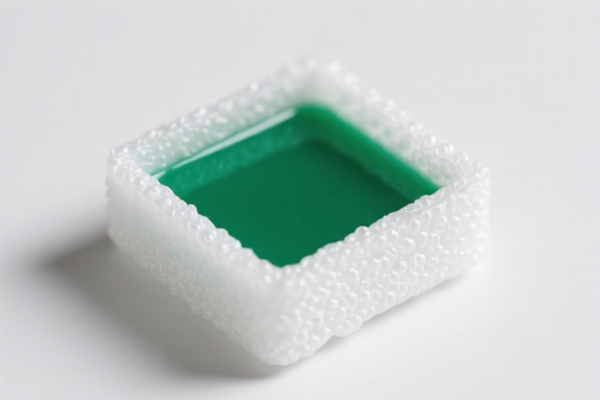
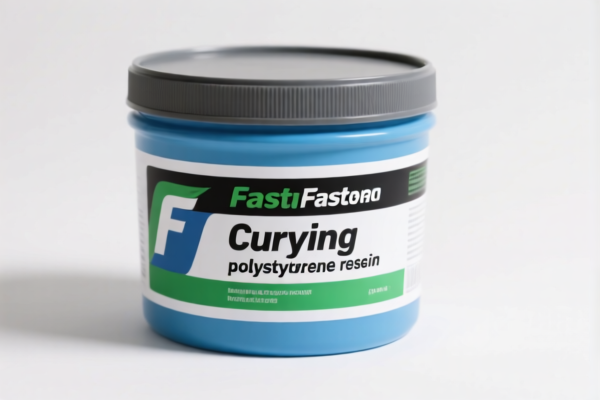
Fast curing adhesive for casting
CN → US| HS编码 | 关税税率 | 原产国 | 目的国 | 文档 |
|---|---|---|---|---|
| 3506915000 | 37.1% | CN | US | 官方文档 |
| 3506990000 | 37.1% | CN | US | 官方文档 |
商品图片


AI分析
🧪 Fast Curing Adhesive for Casting (Industrial & Retail)
🌐 HS Code Reference & Customs Clearance Guide | 2026 Latest Tariff Analysis | Professional Strategy
📌 I. Product Definition & Classification: What Exactly is "Fast Curing Adhesive for Casting"?
Adhesives designed for casting applications are specialized chemical formulations engineered to bond materials rapidly, withstand structural stresses, and cure efficiently in molding or assembly processes. In international trade, these products are classified based on their chemical base and packaging type.
Key Distinction: * Polymer-Based Adhesives (Headings 3901–3913): Adhesives primarily composed of polymers (e.g., epoxy, acrylic, polyurethane, cyanoacrylate) derived from chapters 39. * Rubber-Based Adhesives: Adhesives where the main constituent is rubber. * Retail Packaging: Products put up for retail sale in net weights not exceeding 1 kg are often subject to specific sub-heading considerations, but the core chemical classification remains paramount.
⚠️ Critical Classification Point:
- If the adhesive is based on polymers of headings 3901 to 3913 (e.g., epoxy resins, acrylics) → It falls under 3506.91.
- If the adhesive is of other types (not specified elsewhere, e.g., certain inorganic binders, or rubber-based not covered under specific polymer headings) → It falls under 3506.99.
📦 II. HS Code Classification Details (2026 Latest Tariff Authority Comparison)
| HS Code | Product Description | Applicable Scenario | Chemical Base |
|---|---|---|---|
3506.91.50.00 |
Other prepared adhesives: Adhesives based on polymers of headings 3901 to 3913 or on rubber: Other | Fast-curing epoxy, acrylic, or polyurethane castings adhesives; polymer-based industrial glues | ✅ Polymer/Rubber-Based (Headings 3901-3913) |
3506.99.00.00 |
Other prepared adhesives: Other | Adhesives not based on headings 3901-3913; inorganic binders; other unspecified prepared glues | ❌ Non-Polymer (Headings 3901-3913) / Other |
🔍 Key Reminder:
- The term "Fast Curing" refers to the performance characteristic, not the chemical composition. Customs classification relies on the chemical base.
- Most high-performance "casting adhesives" (epoxies, cyanoacrylates, methacrylates) are polymer-based and thus fall under 3506.91.
- If the product description is vague ("other prepared adhesives") and cannot be definitively linked to polymer headings 3901-3913, it defaults to 3506.99.
💰 III. 2026 Latest Tariff Rate Detailed Analysis (Including Additional Taxes, Policy Surcharges)
✅ Applicable Country: United States (US)
✅ Country of Origin: China (CN)
✅ Effective Date: 2025 November 10 onwards (including subsequent imports)
🎯 1. 3506.91.50.00 —— Adhesives Based on Polymers (Headings 3901-3913)
| Item | Content |
|---|---|
| Basic Tariff Rate | 0% (ad valorem) |
| Additional Tariff (Section 301) | 0% |
| Total Tax Rate | 0.0% |
| Tax Calculation | CIF Value × 0% = $0 |
| De Minimis Applicability | ✅ Eligible (if under $800) |
| Legal Basis Path | HTSUS:3506.91.50.00 → No Section 301 Footnote Applies |
📌 Explanation:
- This HS code is notably exempt from the Section 301 additional tariffs imposed on many Chinese goods.
- Total tax is 0%, making it a highly favorable classification for cost optimization.
- This applies specifically to adhesives based on polymers such as epoxy, acrylic, or polyurethane (covered under Chapters 3901-3913).
🎯 2. 3506.99.00.00 —— Other Prepared Adhesives
| Item | Content |
|---|---|
| Basic Tariff Rate | 2.1% (ad valorem) |
| Additional Tariff (Section 301) | +25% |
| Total Tax Rate | 27.1% |
| Tax Calculation | CIF Value × 27.1% |
| De Minimis Applicability | ❌ Not Eligible (deny_de_minimis) |
| Legal Basis Path | HTSUS:3506.99.00.00 → USITC:3506.99.00.00 → FOOTNOTE:9903.01.25 |
📌 Note:
- The 2.1% basic tariff is standard for "other" adhesives not specified elsewhere.
- The 25% additional tariff applies due to Section 301 measures on certain Chinese chemical products.
- Total tax of 27.1% is significantly higher than polymer-based adhesives.
- This classification is risky if the product can be proven to be polymer-based (which most casting adhesives are).
🛠️ IV. Customs Clearance Practical Advice (Battle-Tested Pitfall Avoidance Guide)
✅ 1. Required Documentation List (Non-Negotiable)
| Document | Must Provide | Explanation |
|---|---|---|
| ✅ Product Specification Sheet | ✔️ | Must explicitly state chemical composition (e.g., "Epoxy Resin Based," "Acrylic Polymer"). Avoid vague terms like "strong glue." |
| ✅ Technical Data Sheet (TDS) | ✔️ | Shows curing time, viscosity, and chemical constituents. Crucial for proving "polymer-based" status. |
| ✅ Safety Data Sheet (SDS) | ✔️ | Section 3 must list chemical ingredients. Confirms whether it falls under HTS chapters 3901-3913. |
| ✅ Commercial Invoice | ✔️ | Must clearly describe the product as "Prepared Adhesive, Polymer-Based, Fast Curing, for Casting." |
| ✅ Packaging Details | ✔️ | Confirm net weight. If ≤1 kg, it may still fall under 3506, but ensure the chemical basis is clear. |
| ✅ Certificate of Origin (CO) | ✔️ | Essential for determining origin-based tariff applicability (e.g., US vs. China). |
✅ 2. Declaration Strategy (Key Mnemonics)
🔥 “Chemistry First, Name Second. Polymer-Based, Tariff Zero! Other Stuff, Tax Bites!”
| Scenario | Correct Declaration | Wrong Approach |
|---|---|---|
| Epoxy/Cyanoacrylate Acrylic Glue | 3506.91.50.00 (Polymer-Based) |
Misdeclaring as "Other Adhesive" → 27.1% |
| Rubber-Based Adhesive | 3506.91.50.00 (if based on rubber covered under 3901-3913 context) |
Misdeclaring as "Other" → 27.1% |
| Inorganic/Mineral Binder | 3506.99.00.00 |
Incorrectly claiming polymer status → Fraud Risk |
| Retail Pack (<1kg) | Still 3506.91.50.00 if polymer-based |
Assuming small weight changes chemical classification |
✅ 3. Special Cases Handling
| Case | Handling Advice |
|---|---|
| OEM/Private Label Adhesives | Ensure the supplier’s TDS/SDS matches the declared HS Code. Do not rely on marketing names like "Fast-Cast Pro." |
| Mixed Chemical Bases | If the adhesive contains both polymer and non-polymer components, the principal character determines classification. Polymer usually prevails in adhesives. |
| "For Casting" Specific Use | The use case ("casting") does not change the chemical classification. It remains an adhesive. |
| Pre-shipment Inspection | Provide SDS to customs broker before filing entry to avoid delays or audits. |
🌍 V. Global Market Customs Comparison (2026 Latest)
| Country/Region | Recommended HS Code | Tariff Rate | Certification Requirements | Remarks |
|---|---|---|---|---|
| 🇺🇸 United States | 3506.91.50.00 |
0% | TSCA (EPA) | Best Option: 0% tariff if polymer-based. |
| 🇺🇸 United States | 3506.99.00.00 |
27.1% | TSCA (EPA) | Avoid if product is polymer-based. |
| 🇨🇳 China | 3506.91.50.00 |
5-6% | CCC (if applicable) | Standard import duty. |
| 🇪🇺 European Union | 3506.91.00 |
0% | REACH | No VAT in some cases if registered. |
| 🇬🇧 United Kingdom | 3506.91.00 |
0% | UK REACH | Post-Brexit alignment with EU. |
| 🇦🇺 Australia | 3506.91.00 |
5% | AICIS | Standard duty. |
📌 Conclusion:
- The US is the most critical market due to the stark difference between 0% and 27.1% tariffs.
- Misclassification is costly: Declaring a polymer-based adhesive as "other" (3506.99) results in a 27.1% penalty.
- Correct classification saves money: Ensure your product is classified under 3506.91.50.00 by proving its polymer base.
📌 VI. Common Errors & Pitfall Guide (Lessons from the Field)
❌ Error 1: Using vague descriptions like "Industrial Glue" on the invoice.
👉 Consequence: Customs may default to 3506.99.00.00 (27.1%) due to lack of specificity.
✅ Fix: Explicitly state "Epoxy Resin Adhesive" or "Polymer-Based Adhesive."
❌ Error 2: Assuming "Fast Curing" implies a different HS code.
👉 Consequence: No such HS code exists. Curing speed is a performance trait, not a classification basis.
✅ Fix: Focus on chemical composition (Polymer vs. Other).
❌ Error 3: Ignoring the SDS/Technical Data Sheet.
👉 Consequence: Inability to prove polymer base → Audit risk, back taxes, and penalties.
✅ Fix: Always have the SDS ready for customs examination.
❌ Error 4: Misidentifying Rubber-Based Adhesives.
👉 Consequence: If based on rubber but not linked to headings 3901-3913, it might be misclassified.
✅ Fix: Check if the rubber is derived from polymers covered under Chapters 3901-3913.
🎯 VII. Conclusion: Precise Classification, Cost Savings, Compliance!
🎯 Remember the Mnemonic:
🔹 "Polymer Base, Zero Tax. Other Base, Twenty-Seven Percent!"
🔹 "SDS is King, TDS is Queen. Declare Accurate, Stay Clean!"
📌 Pro Tip:
If your fast-curing adhesive is epoxy, acrylic, or polyurethane-based, it is almost certainly a polymer-based adhesive under HTS 3506.91. Always opt for 3506.91.50.00 to enjoy the 0% tariff.
For any uncertainty, request an Advance Ruling from U.S. Customs and Border Protection (CBP) before shipment.
📣 Immediate Action Required:
📞 Contact your customs broker with the SDS and TDS.
📄 Update your invoice description to reflect the chemical basis (e.g., "Epoxy Adhesive").
🚀 Declare under3506.91.50.00to maximize profit margins and ensure smooth customs clearance!
✨ Professional Clearance Starts with Accurate Classification!
💼 Every Percent Saved is Pure Profit!
用户评价
关于 HS 编码归类
协调制度(HS)是由世界海关组织(WCO)制定的国际贸易商品分类标准。全球 200 多个国家采用 HS 系统作为海关关税、贸易统计和进出口监管的基础。
每个 HS 编码遵循以下层级结构:
- 章(2 位)——商品大类(例如:第 84 章:机器和机械设备)
- 品目(4 位)——章内的更具体分类
- 子目(6 位)——国际通用细分,所有 WCO 成员国统一使用
- 本国细分(8-10 位)——各国自行扩展的细分编码,如美国 HTSUS 10 位编码
正确的 HS 编码归类对于顺利通关、准确缴纳关税和遵守贸易法规至关重要。错误归类可能导致海关延误、多缴关税或罚款。
从CN进口到US时,适用的关税税率可能包括:
- 最惠国(MFN)税率——适用于 WTO 成员国的标准关税税率
- 普通税率——适用于无贸易协定国家
- 贸易救济关税——附加关税,如 301 条款(反倾销)、232 条款(国家安全)或反补贴税
本页内容仅供参考。如需正式归类,请咨询当地海关或持牌报关代理。