Fatty Acid Mixture Industrial
CN → US| HS编码 | 关税税率 | 原产国 | 目的国 | 文档 |
|---|---|---|---|---|
| 2710194590 | 0.0% | CN | US | 官方文档 |
| 1518004000 | 25.5% | CN | US | 官方文档 |
| 3824992100 | 35.0% | CN | US | 官方文档 |
| 2710199000 | 42.0% | CN | US | 官方文档 |
| 1518002000 | 0.0% | CN | US | 官方文档 |
商品图片
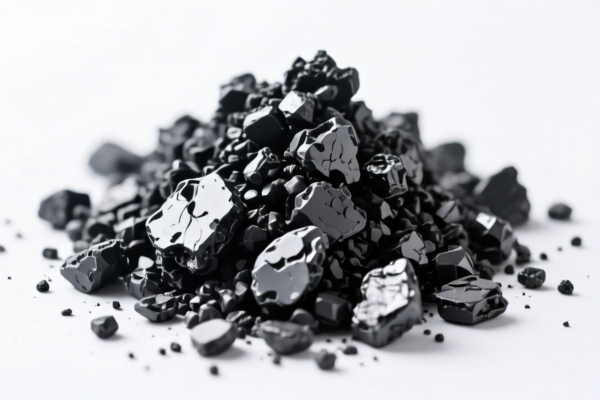
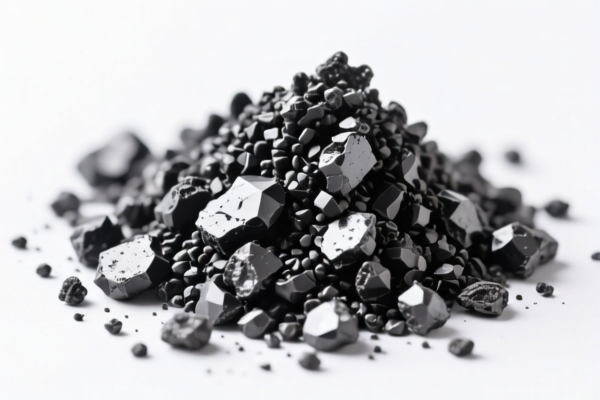
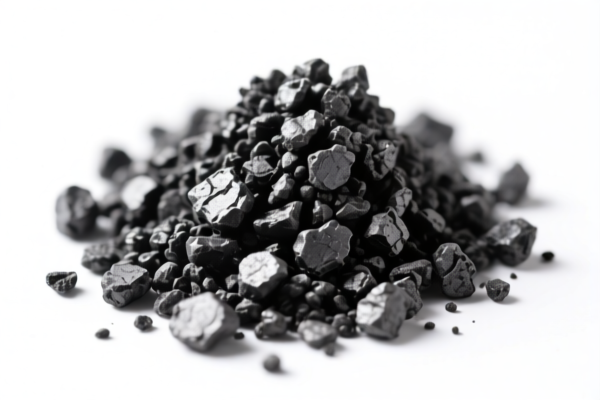
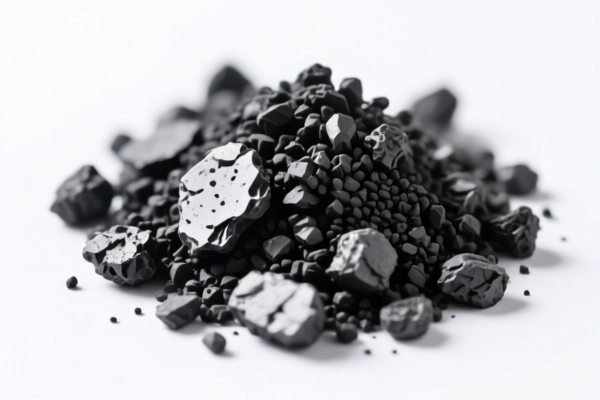
AI分析
🏭 Fatty Acid Mixture – Industrial Grade
HS Code Classification & US Customs Clearance Guide | 2026 Tax Rules Deep Dive
🌐 HS Code Reference & Customs Guide | 2026 Latest Tariff Analysis | Professional Compliance Strategy
📌 1. Product Definition: What is an "Industrial Fatty Acid Mixture"?
In international trade, "Fatty Acid Mixture" refers to complex mixtures derived from the breakdown (hydrolysis or distillation) of natural fats and oils. These mixtures contain varying proportions of saturated and unsaturated fatty acids (e.g., palmitic, stearic, oleic, linoleic acids).
For customs purposes, the critical distinction lies in the intended use and chemical processing level:
- Industrial/Technical Grade: Used as raw materials for soap, cosmetics, lubricants, plastics, or metalworking fluids. NOT for human or animal consumption.
- Food/Pharma Grade: Highly refined, purified, and certified for ingestion. Subject to different regulatory frameworks (FDA/EFSA).
⚠️ Key Distinction Point: * If the mixture is unrefined or partially refined for industrial chemical synthesis → Likely falls under Chapter 15 or Chapter 38. * If it is a chemically modified derivative not fitting Chapter 15 definitions → Likely falls under Chapter 38.
📦 2. HS Code Classification Matrix (2026 US HTSUS)
Based on the provided data, here are the five potential HS Codes with their specific justifications and tax implications.
| HS Code | Product Description & Justification | Tax Rate Summary | Key Characteristics |
|---|---|---|---|
| 1518.00.20.00 | Fatty Acid Mixture (Non-Edible) Summary: Mixture of fatty acids of animal or vegetable origin, not elsewhere specified. Fits the material characteristic of "fat/oil mixtures." |
6.3¢/kg + 17.5% (Ad Valorem + Specific) |
Lowest Tax Option. Specific duty (6.3¢/kg) makes this highly competitive for high-volume, low-value shipments. |
| 1518.00.40.00 | Industrial Oil/Fat Mixture (Non-Edible) Summary: Other fats and oils and their fractions, non-edible, mixed. Matches the "industrial non-edible fat mixture" description. |
25.5% (Ad Valorem Only) |
Flat percentage tax. Suitable if the specific weight-based calculation is unfavorable. |
| 3824.99.21.00 | Chemical Preparations Mixture Summary: Chemical industry preparations, excluding food/feed. Fits the definition of a "chemical mixture" used in industrial processing. |
35.0% (Ad Valorem Only) |
High tax. Usually applies if the product is considered a "prepared" chemical rather than a raw fat/oil derivative. |
| 2710.19.45.90 | Hydrocarbon Mixture (Non-Pharma/Non-Insulating) Summary: Hydrocarbon mixtures, not for pharmaceutical or insulating purposes. Fits the "hydrocarbon mixture" feature. |
10.5¢/bbl + 35.0% (Specific + Ad Valorem) |
Highest Specific Duty. Note the per-barrel specific tax. Only applicable if the product is legally defined as a petroleum/hydrocarbon derivative rather than a natural fat derivative. |
| 2710.19.90.00 | Other Petroleum Oils/Mineral Oils Summary: Petroleum oils/mineral oils, other than those specified above. Fits the "petroleum/mineral oil category." |
42.0% (Ad Valorem Only) |
Highest Ad Valorem. Applies if the product is misclassified as a mineral oil instead of a vegetable/animal fat derivative. |
🔍 Critical Analysis: * Why Chapter 15 (HS 1518) vs. Chapter 38 (HS 3824)? * Chapter 15 covers "Animal or Vegetable Fats and Oils." If your product is a direct mixture of fatty acids derived from natural sources (palm, soy, tallow), it MUST be classified under Chapter 15 unless it has undergone significant chemical alteration beyond mere separation. * Chapter 38 (HS 3824) is for "Chemical Products Not Elsewhere Specified." This is often a misclassification trap for simple fatty acid mixtures, leading to higher taxes (35% vs. 25.5% or lower). * Why Not Chapter 27 (HS 2710)? * HS 2710 is for Petroleum Oils and Mineral Oils. Fatty acid mixtures are biological in origin. Unless your "fatty acid mixture" is synthetic and derived entirely from petrochemicals (which is rare for standard "fatty acids"), classifying it under Chapter 27 is incorrect and will trigger audits for misdeclaration. The high taxes (35-42%) reflect the penalty of misclassification.
💰 3. 2026 US Tariff Breakdown (China Origin)
✅ Applicable Country: United States (US)
✅ Origin: China (CN)
✅ Effective Date: Post-November 2025 (Including Section 301 & IEEPA tariffs)
🎯 Scenario A: Most Favorable – HS 1518.00.20.00
- Product: Industrial Fatty Acid Mixture (Vegetable/Animal Origin)
- Tax Structure: 6.3¢ per kg + 17.5% Ad Valorem
- Tariff Details:
- Base Rate: 1.0% (Standard MFN, often reduced to 0% or low by trade agreements, but here we assume standard)
- Section 301 (Add-on): 7.5%
- IEEPA (122 Clause): 10%
- Specific Duty: 6.3¢/kg (This is fixed, regardless of price fluctuations)
- Total Cost Impact: For a $2/kg product:
- Ad Valorem: $2 * (1% + 7.5% + 10%) = $0.435
- Specific: $0.063
- Total Tax: ~$0.498/kg (~25% effective rate)
🎯 Scenario B: Alternative – HS 1518.00.40.00
- Product: Industrial Oil/Fat Mixture
- Tax Structure: 25.5% Ad Valorem
- Tariff Details:
- Base Rate: 8.0%
- Section 301 (Add-on): 7.5%
- IEEPA (122 Clause): 10%
- Total Tax: 25.5%
- Comparison: Often very close to Scenario A, but lacks the specific duty advantage if the product is dense/heavy. If the value is low, Scenario A is better.
🎯 Scenario C: Misclassification Risk – HS 3824.99.21.00
- Product: Chemical Preparation
- Tax Structure: 35.0% Ad Valorem
- Tariff Details:
- Base Rate: 0.0%
- Section 301 (Add-on): 25.0%
- IEEPA (122 Clause): 10%
- Risk: High. If CBP determines the product is simply "fatty acids" (Chapter 15), this classification is wrong. Penalties for misdeclaration can be severe.
🎯 Scenario D: Incorrect Classification – HS 2710.19.45.90 & 2710.19.90.00
- Tax Structures: 35.0% and 42.0% respectively.
- Risk: EXTREME.
- Fatty acids are not petroleum products.
- Classifying a natural fat derivative as a mineral oil is a fundamental error in chemical nature.
- Consequence: High duty, potential seizure, and fines for fraudulent misrepresentation.
🛠️ 4. Customs Clearance Practical Advice
✅ 1. Documentation Checklist (Non-Negotiable)
| Document | Requirement | Purpose |
|---|---|---|
| Product Specification Sheet | ✔️ Must state: Origin of fats (e.g., Palm, Soy), Degree of Refinement, Purity % | Proves it is not petroleum-based (Ch 27) and not food-grade (if claiming industrial). |
| Formula/Composition | ✔️ List of major fatty acids (Palmitic, Stearic, etc.) | Validates Chapter 15 classification (HS 1518). |
| Statement of Use | ✔️ "Industrial Use: Soap Manufacturing / Lubricant Production" | Justifies exclusion from Chapter 29 (Chemicals) if applicable. |
| MSDS (SDS) | ✔️ Section 3: Composition. Crucial: Must NOT list "Petroleum Distillates" as main ingredient. | Prevents misclassification as HS 2710. |
| Bill of Lading / Invoice | ✔️ Clear description: "Fatty Acid Mixture, Industrial Grade, for Chemical Synthesis" | Avoids vague terms like "Oil" or "Grease." |
✅ 2. Classification Strategy (The "Golden Rule")
🔥 "Natural Origin = Chapter 15. Chemical Derivative = Chapter 38. Petroleum = Chapter 27."
-
Correct Approach:
- If your product is straight-chain fatty acids from oil hydrolysis → Use 1518.00.20.00 (Cheapest if volume is high) or 1518.00.40.00.
- DO NOT use HS 2710 codes unless you have a synthetic, petrochemical-derived acid mixture (which is chemically unusual for "fatty acids").
-
Avoid:
- HS 3824.99.21.00 unless the product is a preparation containing other additives, solvents, or binders that change its essential character.
✅ 3. Special Considerations
| Scenario | Recommendation |
|---|---|
| High Volume, Low Value | Use 1518.00.20.00. The specific duty (6.3¢/kg) becomes negligible compared to the ad valorem tax, making it efficient. |
| High Value, Low Volume | Compare 1518.00.20.00 vs 1518.00.40.00. If the specific duty cost is high relative to value, 25.5% (HS 1518.40) might be cheaper. |
| Customs Audit Risk | Provide Lab Test Reports confirming the source is vegetable/animal oil, not mineral oil. This is the #1 defense against HS 2710 misclassification. |
| Section 301 Exclusions | Check if HS 1518.00.20.00 or 1518.00.40.00 is on the exclusion list. (Note: Many chemical/fat products are not excluded). |
🌍 5. Global Market Comparison (2026)
| Market | Recommended HS | Est. Tax Rate (China Origin) | Notes |
|---|---|---|---|
| 🇺🇸 USA | 1518.00.20.00 or 1518.00.40.00 |
25.5% or 6.3¢/kg + 17.5% | Highest tariffs due to IEEPA/301. |
| 🇨🇳 China | 1518.00.20.00 |
8-10% | Import tax for raw materials. |
| 🇪🇺 EU | 1518.00.20.00 |
0% - 2% | Low duties, but strict REACH compliance. |
| 🇮🇳 India | 1518.00.20.00 |
7.5% + SWS | Check Basic Customs Duty + Social Welfare Surcharge. |
📌 Conclusion:
The USA market is the most expensive for industrial fatty acid mixtures due to the layered tariff structure (Base + 301 + IEEPA).
Optimal Strategy: Classify under HS 1518.00.20.00 if the product is a standard fatty acid mixture. Avoid HS 2710/3824 unless chemically justified, as penalties and audits outweigh any minor duty savings.
📌 6. Common Mistakes & Pitfalls (Lessons Learned)
❌ Mistake 1: Classifying "Fatty Acid Mixture" as "Mineral Oil" (HS 2710)
👉 Result: 42% tax + Potential Fraud Investigation.
👉 Fix: Provide SDS proving biological origin.
❌ Mistake 2: Using "Chemical Preparation" (HS 3824) for simple fatty acids
👉 Result: 35% tax (higher than 25.5%).
👉 Fix: Use Chapter 15 (HS 1518) for unadulterated fat/oil derivatives.
❌ Mistake 3: Ignoring the Specific Duty (6.3¢/kg) in HS 1518.20
👉 Result: Overpayment if volume is low but density is high.
👉 Fix: Calculate total landed cost using both specific and ad valorem taxes.
✅ Correct Practice:
"Fatty Acid Mixture, Industrial Grade, Derived from Palm Kernel Oil, 99% Purity, for Soap Manufacturing. Origin: China."
🎯 7. Final Conclusion: Optimize Your Duty Burden
🎯 Key Takeaways:
* Best HS Code: 1518.00.20.00 (Lowest effective rate for most cases).
* Avoid: 2710 (Wrong chemical family) and 3824 (Unnecessarily high tax).
* Critical Proof: SDS and Lab Analysis showing vegetable/animal origin.
* Tariff Warning: US tariffs are 25-35%. Plan your margin accordingly.
📌 Pro Tip:
If your product is blended with petroleum distillates, the classification may shift to Chapter 38 or 27. Consult a customs broker before shipping to avoid misclassification penalties.
📣 Immediate Action:
📞 Consult a Licensed Customs Broker to review your SDS and Product Specification.
📄 Request an Advance Ruling from US CBP for complex blends.
🚀 Secure Supply Chain Compliance to ensure smooth customs clearance under HS 1518.
✨ Precision in Classification = Savings in Cost.
💼 Your Profit Margin Depends on the First Line of Your Invoice!
用户评价
关于 HS 编码归类
协调制度(HS)是由世界海关组织(WCO)制定的国际贸易商品分类标准。全球 200 多个国家采用 HS 系统作为海关关税、贸易统计和进出口监管的基础。
每个 HS 编码遵循以下层级结构:
- 章(2 位)——商品大类(例如:第 84 章:机器和机械设备)
- 品目(4 位)——章内的更具体分类
- 子目(6 位)——国际通用细分,所有 WCO 成员国统一使用
- 本国细分(8-10 位)——各国自行扩展的细分编码,如美国 HTSUS 10 位编码
正确的 HS 编码归类对于顺利通关、准确缴纳关税和遵守贸易法规至关重要。错误归类可能导致海关延误、多缴关税或罚款。
从CN进口到US时,适用的关税税率可能包括:
- 最惠国(MFN)税率——适用于 WTO 成员国的标准关税税率
- 普通税率——适用于无贸易协定国家
- 贸易救济关税——附加关税,如 301 条款(反倾销)、232 条款(国家安全)或反补贴税
本页内容仅供参考。如需正式归类,请咨询当地海关或持牌报关代理。