Faux Leather Powder Compact
CN → US| HS编码 | 关税税率 | 原产国 | 目的国 | 文档 |
|---|---|---|---|---|
| 7326903500 | 92.8% | CN | US | 官方文档 |
| 8306300000 | 87.7% | CN | US | 官方文档 |
| 3926904510 | 38.5% | CN | US | 官方文档 |
| 3926400090 | 15.3% | CN | US | 官方文档 |
| 7326908688 | 87.9% | CN | US | 官方文档 |
商品图片
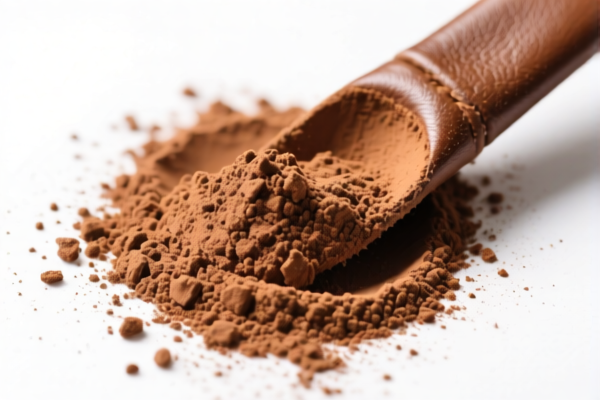
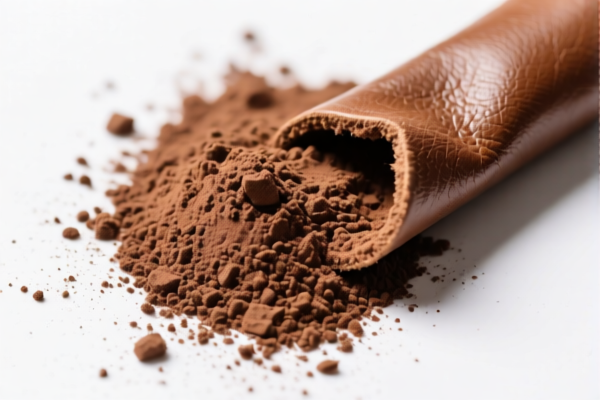
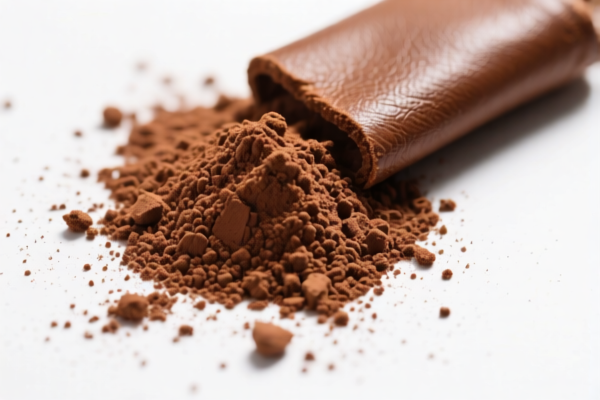
AI分析
📦 Faux Leather Powder Compact: HS Code Classification & Duty Breakdown (2026)
🌐 HS Code Reference & Customs Clearance Guide | 2026 Latest Tariff Analysis | Professional Clearance Strategy
📌 I. Product Definition & Classification: What Exactly is a "Faux Leather Powder Compact"?
A Faux Leather Powder Compact is a portable cosmetic case used for storing pressed powder, foundation, or blush. Unlike rigid metal or plastic cases, it is characterized by its outer shell material (imitation leather/Vegan leather) which often mimics the texture and appearance of genuine leather but is made from synthetic materials such as PVC, PU, or other polymers.
Key Classification Dilemma:
The core challenge in customs clearance lies in determining whether the item is classified primarily as:
1. A Plastic Article (if the structure/material is deemed predominantly plastic/synthetic resin).
2. A Metal/Steel Article (if the internal frame/structure is metal and the outer layer is just a coating/fabric).
3. A Decorative/Accessory Item (depending on the specific construction and primary function).
⚠️ Critical Distinction Point:
- If the compact is mostly plastic/synthetic resin in nature (even with leather-like finish) → It often falls under Chapter 39 (Plastics).
- If the compact has a metal core/structure with a decorative outer layer → It may be classified under Chapter 73 (Iron/Steel) or Chapter 83 (Miscellaneous Articles of Base Metal).
- Do not assume it is "Gold/Silver" or "Precious Metal" unless specified. Most faux leather compacts are base materials.
📦 II. Detailed HS Code Breakdown (Based on Provided Data)
According to the provided data, the following HS Codes have been identified for "Faux Leather Powder Compact" items. Note that the classification varies significantly based on the primary material and structure inferred by customs authorities.
| HS Code | Summary / Classification Logic | Total Tax Rate |
|---|---|---|
| 7326.90.35.00 | Steel/Metal Classification: Inferred as a container shape, assuming material is metal or steel-based. Fits under "Articles of Iron/Steel." |
92.8% |
| 8306.30.00.00 | Base Metal Decorative Article: Inferred as metal material, classified under decorative articles or containers of base metal. Fits under "Miscellaneous Articles of Base Metal." |
87.7% |
| 3926.90.45.10 | Plastic Finished Product: Identified as a finished consumer plastic article. Based on common inference, the "faux leather" is treated as a plastic/polymer product. |
38.5% |
| 3926.40.00.90 | Plastic Ornament/Accessory: Classified as a plastic-made ornament or daily use item. This specific code has 0% Additional Tariff impact from the 301 list (see note below). |
15.3% |
| 7326.90.86.88 | Other Steel/Plastic Mix: Inferred as plastic or metal, categorized as other articles of steel/plastic containers/shells. |
87.9% |
🔍 Key Insight:
- Plastic-based classifications (39xx) generally result in significantly lower tariffs (15.3% - 38.5%) compared to Metal/Steel-based classifications (73xx/83xx) (87.7% - 92.8%).
- This is due to the application of Section 301 tariffs and 122 Clauses which heavily penalize steel/aluminum/copper products from China.
💰 III. 2026 Tariff Rate Detailed Explanation
✅ Applicable Country: United States (US)
✅ Origin: China (CN)
✅ Effective Date: 2025/2026 (Based on current trade policies)
🎯 1. High-Tariff Scenarios: Metal/Steel Based (HS 7326 & 8306)
These codes trigger the maximum punitive tariffs due to the "122 Clause" and Section 301 duties.
Case A: HS 7326.90.35.00 (Steel Container)
- Base Duty: 7.8%
- Section 301 Tariff (Additional): 25.0%
- 122 Clause Tariff (Steel/Aluminum/Copper): 50.0%
- Total Tax: 92.8%
- Calculation: CIF Value × 92.8%
- Legal Basis: Steel/Aluminum/Copper products face an additional 50% under the 122 Clause,叠加 on top of the 25% Section 301 duty and the base duty.
Case B: HS 8306.30.00.00 (Base Metal Decorative)
- Base Duty: 2.7%
- Section 301 Tariff (Additional): 25.0%
- 122 Clause Tariff (Steel/Aluminum/Copper): 50.0%
- Total Tax: 87.7%
- Calculation: CIF Value × 87.7%
- Note: Even though it’s a "decorative" item, if deemed base metal, it suffers the same heavy penalties.
Case C: HS 7326.90.86.88 (Other Steel/Plastic Mix)
- Base Duty: 2.9%
- Section 301 Tariff (Additional): 25.0%
- 122 Clause Tariff (Steel/Aluminum/Copper): 50.0%
- Total Tax: 87.9%
- Calculation: CIF Value × 87.9%
- Reasoning: Despite the "plastic or metal" inference, if classified under Chapter 73, the 122 Clause steel penalty applies.
🎯 2. Low-Tariff Scenarios: Plastic Based (HS 3926)
These codes are highly recommended if the product can be substantiated as primarily plastic/synthetic.
Case D: HS 3926.90.45.10 (Plastic Finished Article)
- Base Duty: 3.5%
- Section 301 Tariff (Additional): 25.0%
- 122 Clause Tariff: None (Plastics are not subject to the 50% steel/aluminum penalty)
- Total Tax: 38.5%
- Calculation: CIF Value × 38.5%
- Advantage: Significantly lower than metal classifications.
Case E: HS 3926.40.00.90 (Plastic Ornament/Daily Use)
- Base Duty: 5.3%
- Section 301 Tariff (Additional): 0.0% (Note: This specific subheading may be excluded from the 25% list or has a zero rate applied in this dataset)
- 122 Clause Tariff: None
- Total Tax: 15.3%
- Calculation: CIF Value × 15.3%
- Advantage: Lowest possible tax rate. This is the optimal classification if the product fits the description of a "plastic ornament" or "daily use plastic article" without triggering Section 301.
📌 Explanation of Tariffs:
- Base Duty: The standard MFN (Most Favored Nation) rate.
- Section 301 Tariff (25% or 0%): Applied to Chinese goods under Trade Act Section 301. Some plastic subheadings may have different treatment.
- 122 Clause Tariff (50%): Applied specifically to Steel, Aluminum, and Copper products. Plastics are NOT subject to this.
- Total Tax: Sum of Base + Section 301 + 122 Clause.
🛠️ IV. Customs Clearance Practical Advice (Avoiding Pitfalls)
✅ 1. Preparation Checklist (Must-Haves)
| Document | Required | Reason |
|---|---|---|
| Product Composition Statement | ✔️ | Must explicitly state: "Outer shell: 100% Polyurethane (PU) Faux Leather; Interior: Plastic tray." Avoid vague terms like "leather." |
| Material Safety Data Sheet (MSDS) | ✔️ | Proves the "faux leather" is synthetic (PU/PVC), not animal hide or metal. |
| Product Photos (Clear) | ✔️ | Show the texture to prove it is not metal/plating. Show the interior to confirm plastic base. |
| Commercial Invoice | ✔️ | Describe as "Cosmetic Compact Case, Synthetic Leather Exterior, Plastic Interior" to align with HS 3926. |
| Packing List | ✔️ | Ensure no mixed shipments that could trigger random inspections. |
✅ 2. Declaration Strategy (Key Mantra)
🔥 "Declare as Plastic, Not Metal! Provoke Synthetic, Not Steel!"
| Scenario | Recommended HS Code | Estimated Tax | Risk Level |
|---|---|---|---|
| True Faux Leather (PU/PVC + Plastic Core) | 3926.90.45.10 or 3926.40.00.90 | 15.3% - 38.5% | ✅ Low |
| Metal Core with Leather-Like Coating | 7326.90.35.00 or 7326.90.86.88 | 87.9% - 92.8% | ⚠️ High Cost |
| Unclear Material / Mixed Media | 8306.30.00.00 | 87.7% | ⚠️ Medium Cost |
Actionable Advice: 1. Prioritize HS 3926.40.00.90 if the product is purely plastic/synthetic with no metal structural frame. This offers the 15.3% rate. 2. Use HS 3926.90.45.10 if it’s a general plastic cosmetic case, resulting in 38.5%. 3. Avoid HS 73xx/83xx unless the compact has a significant metal structure (e.g., hinges, frame) that dictates its essential character. If you use these, expect ~88-93% tax.
✅ 3. Special Considerations
| Situation | Advice |
|---|---|
| OEM Custom Orders | Provide design specs proving the use of PU/PVC materials. Custom claims do not override material facts. |
| "Vegan Leather" Labeling | Emphasize "Vegan/Synthetic" on invoices to support plastic classification. Avoid "Leather" alone. |
| Metal Hinges/Clasps | Minor metal parts (hinges) usually do not change the classification to Chapter 73 if the body is plastic. Ensure documentation states "Metal parts are negligible." |
| Random Inspection | If audited, Customs may request a physical sample. Ensure samples match the documented material composition. |
🌍 V. Global Market Comparison (2026)
| Country/Region | Recommended HS Code | Est. Tax (China Origin) | Notes |
|---|---|---|---|
| 🇺🇸 USA | 3926.90.45.10 | 38.5% | Best to avoid 73xx/83xx due to 122 Clause. |
| 🇨🇳 China | 3926.90.90.00 | ~6-9% | Domestic tariff is much lower; no Section 301. |
| 🇪🇺 EU | 4202.32.00 (approx.) | ~2-5% | EU often classifies cosmetic cases under 4202 (Travel Goods). |
| 🇬🇧 UK | 4202.32.00 | ~5% | Post-Brexit, similar to EU rules. |
📌 Conclusion for US Market:
The 122 Clause is the biggest threat. By classifying the "Faux Leather Compact" as a Plastic Product (Chapter 39) rather than a Steel/Base Metal Product (Chapter 73/83), you save ~50% in additional tariffs.
- Metal Classification: ~90% Tax
- Plastic Classification: ~15-38% Tax
Savings: ~50-75% on duty costs!
📌 VI. Common Mistakes & Pitfalls (Lessons Learned)
❌ Mistake 1: Declaring "Leather Compact" without specifying "Faux/Synthetic."
👉 Consequence: Customs may classify it as genuine leather (Chapter 42) or reject it if documentation is missing, or misclassify as metal if texture looks metallic.
👉 Fix: Always declare "Synthetic Leather (PU/PVC)."
❌ Mistake 2: Using HS 7326.90.35.00 for a plastic compact.
👉 Consequence: Paying 92.8% tax instead of 15.3%.
👉 Fix: Verify material composition. If >50% by weight/value is plastic/synthetic, use Chapter 39.
❌ Mistake 3: Ignoring the 122 Clause.
👉 Consequence: Unexpected 50% additional tax on steel-based items.
👉 Fix: Avoid any classification under Chapter 73, 72, 74, 76 unless absolutely necessary.
🎯 VII. Conclusion: Optimize Clearance, Minimize Tax
🎯 Remember the Mantra:
🔹 "Plastic is King, Steel is Heavy!"
🔹 "Faux Leather = Synthetic = Plastic (3926), NOT Steel (7326)."
🔹 "Save 50% by choosing 3926.40.00.90 (15.3% Tax)!"
📌 Pro Tip:
If your product is shipped from Vietnam, Mexico, or Malaysia, it may be eligible for IEEPA Exemptions or lower Section 301 rates.
For US-bound shipments from China, always prioritize HS Code 3926.40.00.90 or 3926.90.45.10 to avoid the punitive 122 Clause steel tariffs.
📣 Immediate Action Required:
📞 Consult your customs broker with material composition sheets.
📄 Ensure your invoice reads: "Cosmetic Case, Synthetic Leather, Plastic Interior."
🚀 Classify under HS 3926 to save up to 75% in duties!
✨ Professional clearance starts with accurate classification!
💼 Every percentage point of tax saved is pure profit!
用户评价
关于 HS 编码归类
协调制度(HS)是由世界海关组织(WCO)制定的国际贸易商品分类标准。全球 200 多个国家采用 HS 系统作为海关关税、贸易统计和进出口监管的基础。
每个 HS 编码遵循以下层级结构:
- 章(2 位)——商品大类(例如:第 84 章:机器和机械设备)
- 品目(4 位)——章内的更具体分类
- 子目(6 位)——国际通用细分,所有 WCO 成员国统一使用
- 本国细分(8-10 位)——各国自行扩展的细分编码,如美国 HTSUS 10 位编码
正确的 HS 编码归类对于顺利通关、准确缴纳关税和遵守贸易法规至关重要。错误归类可能导致海关延误、多缴关税或罚款。
从CN进口到US时,适用的关税税率可能包括:
- 最惠国(MFN)税率——适用于 WTO 成员国的标准关税税率
- 普通税率——适用于无贸易协定国家
- 贸易救济关税——附加关税,如 301 条款(反倾销)、232 条款(国家安全)或反补贴税
本页内容仅供参考。如需正式归类,请咨询当地海关或持牌报关代理。