Fax Machine Paper Roll
CN → US| HS编码 | 关税税率 | 原产国 | 目的国 | 文档 |
|---|---|---|---|---|
| 4911998000 | 17.5% | CN | US | 官方文档 |
| 4811908030 | 35.0% | CN | US | 官方文档 |
| 4811909030 | 35.0% | CN | US | 官方文档 |
| 4802201000 | 35.0% | CN | US | 官方文档 |
| 4802202000 | 10.0% | CN | US | 官方文档 |
商品图片
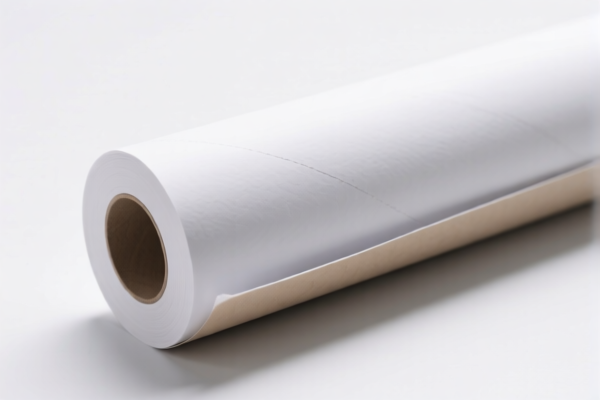
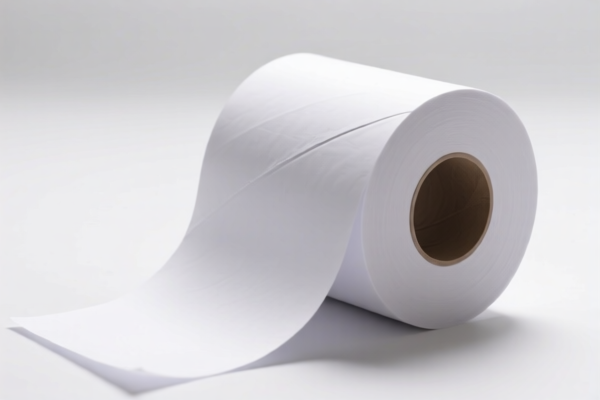
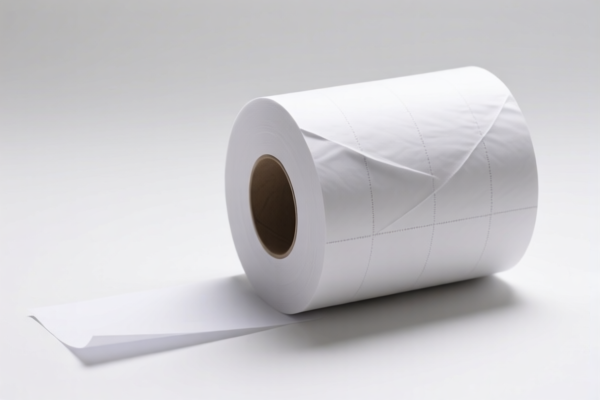

AI分析
🖨️ Thermal Paper Rolls (Fax Machine Paper)
🌐 HS Code Reference & Customs Clearance Guide | 2026 Latest Tariff Analysis | Professional Clearance Strategy
📌 I. Product Definition & Classification: What Exactly is "Thermal Paper"?
Thermal paper rolls, commonly referred to as "Fax Machine Paper," are a specialized type of paper coated with a heat-sensitive chemical layer. When heat is applied (via thermal print heads in fax machines, POS systems, or label printers), the coating reacts to produce an image or text.
In international trade, the classification depends heavily on the material structure and the primary function. It sits at the intersection of printing materials and specialized coated paper.
⚠️ Key Distinction:
- If classified as "Printed Matter" (finished goods with images/content): Lower base duty, but subject to specific trade remedy tariffs.
- If classified as "Coated Paper" (raw material/blank rolls): Higher base duty due to "Section 301" and "Section 122" tariffs on Chinese-origin goods.
📦 II. HS Code Classification Details (2026 Latest Tariff Authority Match)
Based on the product name "Fax Machine Paper Roll" and its attributes, here are the 5 most relevant HS Codes with specific justifications for classification:
| HS Code | Product Description & Justification | Summary of Classification Logic |
|---|---|---|
| 4911.99.80.00 | Other Printed Matter | "Thermal paper belongs to the printing category, matching the material attributes of other printed matter." (This code treats the roll as a finished printing product rather than raw paper.) |
| 4811.90.80.30 | Other Coated/Impregnated Paper | "The product name directly corresponds to the core attribute 'Thermal', matching the definition of thermal coated paper." (Focuses on the chemical coating process.) |
| 4811.90.90.30 | Other Coated/Impregnated Paper | "Product name 'Thermal Paper' is fully consistent with the material and core usage in this classification." (Another variation for coated thermal paper.) |
| 4802.20.10.00 | Uncoated Paper for Writing/Printing | "Matches material and usage; preliminary judgment based on consistency of material and name." (Used if the thermal aspect is considered secondary to the paper base.) |
| 4802.20.20.00 | Uncoated Paper for Writing/Printing | "Product name 'Thermal Paper' is fully consistent with the usage and material attributes in this classification." |
💰 III. 2026 Latest Tariff Rate Details (Including Additional Taxes & Policies)
✅ Applicable Country: United States (US)
✅ Origin: China (CN)
✅ Effective Time: Current trade regime (Section 301 & Section 122)
🎯 1. 4911.99.80.00 — Other Printed Matter (The "Lower Tax" Option)
This classification views the thermal paper as a finished good (printable surface) rather than just raw coated paper.
| Item | Details |
|---|---|
| Base Duty | 0.0% (Ad Valorem) |
| Section 301 Duty | 7.5% (List 4B - Higher tier for certain paper products) |
| Section 122 Duty | 10.0% (Additional duty on certain textile/paper goods from China) |
| Total Tax Rate | 17.5% |
| Tax Calculation | CIF Value × 17.5% |
| Legal Basis Path | USITC:4911.99.80.00 → Section 301: 7.5% → Section 122: 10% |
📌 Analysis:
- This is the most cost-effective classification if the customs authority accepts the "Printed Matter" argument.
- Total burden: 17.5%, which is significantly lower than the alternative.
🎯 2. 4811.90.80.30 & 4811.90.90.30 — Coated Thermal Paper (The "Higher Tax" Option)
These codes classify the item based on its chemical coating as a raw material for printing, triggering higher trade remedy tariffs.
| Item | Details |
|---|---|
| Base Duty | 0.0% |
| Section 301 Duty | 25.0% (Standard high-tier duty on Chinese coated papers) |
| Section 122 Duty | 10.0% |
| Total Tax Rate | 35.0% |
| Tax Calculation | CIF Value × 35.0% |
| Legal Basis Path | USITC:4811.90.80.30 / 4811.90.90.30 → Section 301: 25% → Section 122: 10% |
📌 Analysis:
- If classified as "Coated Paper," the tariff nearly doubles to 35%.
- Key Risk: Customs may challenge a 4911 classification if the paper is blank/uncertified.
🎯 3. 4802.20.10.00 & 4802.20.20.00 — Uncoated/Basic Paper
| Item | Details |
|---|---|
HS 4802.20.20.00 |
Total Tax: 10.0% (Base 0% + Sec 122 10%) Note: Requires strong argument that thermal coating is incidental. |
HS 4802.20.10.00 |
Total Tax: 35.0% (Base 0% + Sec 301 25% + Sec 122 10%) Note: High risk of re-classification. |
🛠️ IV. Customs Clearance Practical Advice (Avoid Pitfalls)
✅ 1. Documentation Checklist (Must-Haves)
| Document | Required? | Purpose |
|---|---|---|
| ✅ Product Specification Sheet | Yes | Must explicitly state: "Thermal Paper," "Uncoated," "Diameter," "Core Size," and "Blank/No Pre-printed Content" (if claiming 4811/4802). |
| ✅ Material Safety Data Sheet (MSD S) | Yes | Proves the chemical coating composition. Critical for 4811 classification. |
| ✅ Commercial Invoice | Yes | Clear description: "Thermal Paper Rolls for Fax Machines, Blank, Chinese Origin." |
| ✅ Packing List | Yes | Details weight and dimensions to verify volume-based checks. |
| ✅ Certificate of Origin (CO) | Yes | To confirm Chinese origin and apply/verify Section 301 & 122 duties. |
✅ 2. Declaration Strategy (Key Tips)
🔥 "Define the Core: Is it Paper (48xx) or Print (49xx)?"
| Scenario | Recommended HS Code | Why? |
|---|---|---|
| Blank Thermal Rolls (No images) | 4811.90.80.30 / 4811.90.90.30 | Most accurate for "Coated Paper." Expect 35% tax. |
| Pre-printed Thermal Rolls (With logos/text) | 4911.99.80.00 | Classified as "Printed Matter." Expect 17.5% tax. |
| Generic "Fax Paper" | 4802.20.20.00 | Risky. If customs sees thermal coating, they may move you to 4811 (35%). |
📌 Critical Warning:
- Do NOT simply declare as "Paper" or "Office Supplies."
- If you declare 4911.99.80.00 (17.5%) for blank thermal paper, customs may audit the chemical composition. If they deem it "coated paper" (4811), you will owe the difference (35%) + penalties.
- Best Practice: If the rolls are blank, consider the 35% rate for 4811 codes to ensure compliance. If you have pre-printed rolls, aggressively argue for 4911 to save 17.5%.
✅ 3. Special Considerations for "Section 122"
- Section 122 applies specifically to certain goods from China. It is a 10% additional duty layered on top of base and Section 301 duties.
- It affects ALL HS codes listed above (4911, 4811, 4802).
- Calculation:
- For 4911: 0% + 7.5% + 10% = 17.5%
- For 4811: 0% + 25% + 10% = 35.0%
🌍 V. Global Market Comparison (2026)
| Market | Recommended HS Code | Total Tax (China Origin) | Key Requirement |
|---|---|---|---|
| 🇺🇸 USA | 4911.99.80.00 (Pre-printed) or 4811.90.80.30 (Blank) |
17.5% or 35.0% | Strict origin verification; Section 122 & 301 apply. |
| 🇨🇳 China | 4811.90.90.30 |
5% (Import Duty) | Standard import VAT + Consumption Tax (if applicable). |
| 🇪🇺 EU | 4811.90.90 |
6.5% | No Section 301/122. CE/RoHS not typically required for paper, but chemical safety (REACH) applies. |
| 🇬🇧 UK | 4811.90.90 |
6.5% | Post-Brexit tariffs. REACH compliance mandatory. |
📌 Conclusion:
- The US market is the most complex due to multiple layers of tariffs (Base + 301 + 122).
- Cost Saving Tip: If your product is pre-printed (e.g., with company logos, thermal labels with pre-printed text), push for 4911.99.80.00 to reduce the rate from 35% to 17.5%.
📌 VI. Common Mistakes & Pitfalls
❌ Mistake 1: Declaring "Thermal Paper" as 4802.20.10.00 (Basic Paper) to avoid coating duties.
👉 Consequence: Customs will request an MSDS. If thermal coating is detected, re-classification to 4811.90.80.30 occurs → Back taxes (35%) + Interest.
❌ Mistake 2: Ignoring Section 122.
👉 Consequence: Many brokers forget the 10% Section 122 duty. This leads to underpayment and potential audits.
❌ Mistake 3: Mixing "Blank" and "Pre-printed" rolls in one shipment without clear separation.
👉 Consequence: Customs may apply the highest rate (35%) to the entire shipment if they cannot distinguish.
✅ Correct Approach:
"Thermal Paper Roll, Blank, Diameter 80mm, Core 12mm, Coated with Leuco Dye, Origin China. HS: 4811.90.80.30."
🎯 VII. Conclusion: Precision Saves Money
🎯 Key Takeaway:
🔹 Blank Rolls = 4811.90.80.30 → 35.0% Total Tax (Safe, Compliant).
🔹 Pre-Printed Rolls = 4911.99.80.00 → 17.5% Total Tax (Cost-Effective).
🔹 Never Ignore Section 122 (10%) – it applies to all.
📌 Pro Tip:
For high-volume imports, consider applying for a Binding Ruling from US Customs (CBP) to lock in the 4911 classification if your rolls have any pre-printed content. This provides legal certainty and shields you from future retroactive audits.
📣 Immediate Action:
📞 Contact Your Customs Broker: Provide the MSDS and Product Photos.
📄 Prepare Invoice: Clearly state "Thermal" and "Blank/Pre-printed."
🚀 Optimize Cost: Choose the right HS Code from the table above to avoid the 35% trap.
✨ Accurate Classification = Predictable Costs.
💼 Don't let tax ambiguity eat your profit margin!
用户评价
关于 HS 编码归类
协调制度(HS)是由世界海关组织(WCO)制定的国际贸易商品分类标准。全球 200 多个国家采用 HS 系统作为海关关税、贸易统计和进出口监管的基础。
每个 HS 编码遵循以下层级结构:
- 章(2 位)——商品大类(例如:第 84 章:机器和机械设备)
- 品目(4 位)——章内的更具体分类
- 子目(6 位)——国际通用细分,所有 WCO 成员国统一使用
- 本国细分(8-10 位)——各国自行扩展的细分编码,如美国 HTSUS 10 位编码
正确的 HS 编码归类对于顺利通关、准确缴纳关税和遵守贸易法规至关重要。错误归类可能导致海关延误、多缴关税或罚款。
从CN进口到US时,适用的关税税率可能包括:
- 最惠国(MFN)税率——适用于 WTO 成员国的标准关税税率
- 普通税率——适用于无贸易协定国家
- 贸易救济关税——附加关税,如 301 条款(反倾销)、232 条款(国家安全)或反补贴税
本页内容仅供参考。如需正式归类,请咨询当地海关或持牌报关代理。