Fiber Reinforced Tape for Indoor Use
CN → US| HS编码 | 关税税率 | 原产国 | 目的国 | 文档 |
|---|---|---|---|---|
| 3919905020 | 40.8% | CN | US | 官方文档 |
| 3926909989 | 22.8% | CN | US | 官方文档 |
| 3926905500 | 40.1% | CN | US | 官方文档 |
| 3919102010 | 40.8% | CN | US | 官方文档 |
| 5603110070 | 35.0% | CN | US | 官方文档 |
商品图片
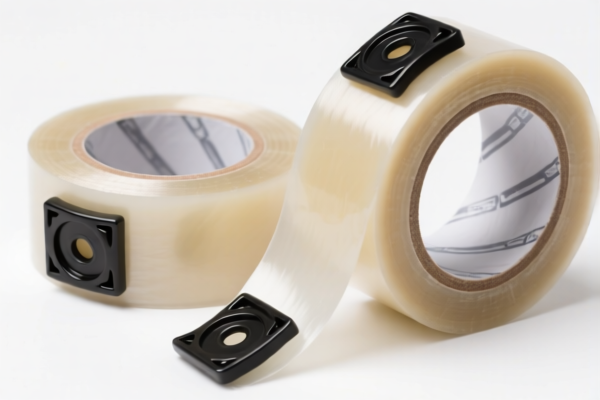
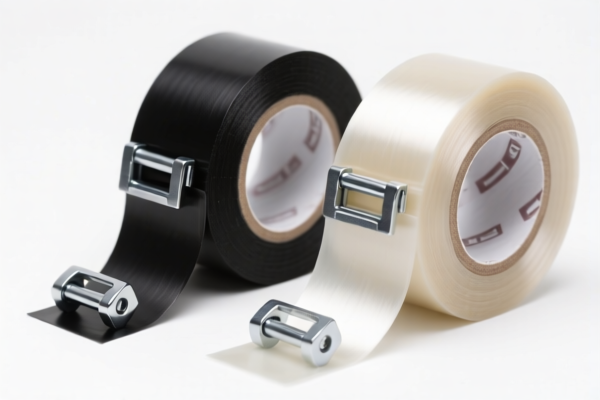
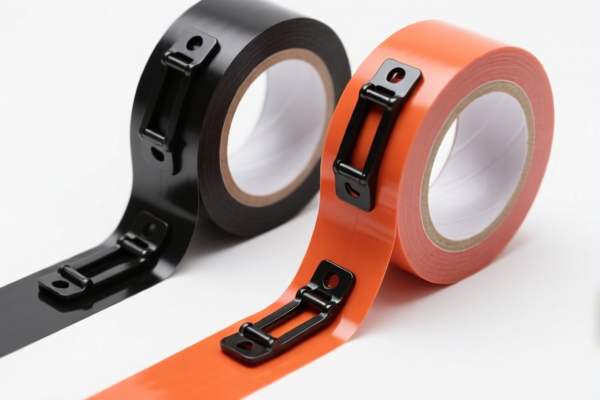
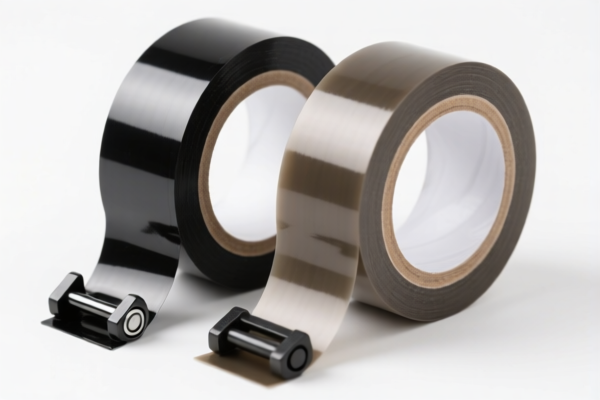
AI分析
🛡️ Fiber Reinforced Tape for Indoor Use (Indoor Applications)
🌐 HS Code Reference & Customs Clearance Guide | 2026 Latest Tariff Analysis | Professional-Level Clearance Strategy
📌 I. Product Definition & Classification: Do You Truly Understand "Fiber Reinforced Tape"?
Fiber Reinforced Tape, specifically designed for indoor use, is a composite material combining a plastic base (usually PVC or acrylic) with reinforcing fibers (glass, polyester, or paper) to provide high tensile strength and dimensional stability. In international trade, its classification depends heavily on its form (roll vs. cut), primary material, and presence of adhesive.
Key Distinction Points: * Self-Adhesive Rolls: If the tape is on a roll and already has an adhesive layer applied, it generally falls under HS 3919. * Non-Adhesive/Plastic Articles: If the tape is not self-adhesive, or if it is a finished article made of mixed materials (plastic + textile fibers) without a dominant plastic self-adhesive function, it may fall under HS 3926 or HS 5603.
⚠️ Critical Classification Logic:
- Primary Material Test: Does the plastic polymer constitute the essential character? → HS 3919/3926.
- Form Factor: Is it in rolls? → HS 3919.
- Composition: Does it contain textile fibers embedded in plastic? → HS 3926.90.55.
- Non-woven Base: Is the reinforcing layer a non-woven fabric? → HS 5603.
📦 II. HS Code Classification Details (2026 Latest Tariff Authority Comparison)
| HS Code | Product Description | Application Scenario | Key Characteristics |
|---|---|---|---|
3919.90.50.20 |
Fiber-reinforced tape, material and form match | General indoor reinforcement, duct sealing, packaging | ✅ Plastic base, reinforced, self-adhesive, rolls |
3926.90.99.89 |
Plastic and other articles of plastic, containing polymer | General plastic articles, composite tapes not elsewhere specified | ✅ Mixed material, finished article, non-adhesive or limited adhesive |
3926.90.55.00 |
Plastic/other material articles containing textile fibers | Heavy-duty indoor tapes with visible fiber mesh | ✅ Plastic + Textile Fiber mix, finished article |
3919.10.20.10 |
Fiber-reinforced rolled self-adhesive tape | Specific high-strength indoor tapes on rolls | ✅ Self-adhesive, rolled, fiber-reinforced, specific subheading match |
5603.11.00.70 |
Man-made filament/synthetic fiber non-wovens | Tapes where non-woven fabric is the primary component | ✅ Non-woven base, synthetic fibers, may be impregnated |
🔍 Key Reminder:
- Self-adhesive tapes are predominantly classified under Chapter 3919.
- Non-adhesive or composite articles fall under Chapter 3926.
- The presence of textile fibers in a plastic matrix triggers HS 3926.90.55.00 in some interpretations, but if it’s clearly a "tape" in rolls with adhesive, HS 3919 is often preferred for simplicity unless specific national rules dictate otherwise.
💰 III. 2026 Latest Tariff Rate Details (Including Surtaxes & Policy Surcharges)
✅ Applicable Country: United States (US)
✅ Country of Origin: China (CN)
✅ Effective Date: From November 10, 2025 (including subsequent imports)
🎯 1. 3919.90.50.20 —— Fiber Reinforced Tape, Material & Form Match
| Item | Content |
|---|---|
| Base Tariff | 5.8% (ad valorem) |
| Section 301 Surtax | +25.0% (from USITC Footnote 9903.88.01) |
| Section 122 Tariff | +10.0% (Specific policy surcharge) |
| Total Tariff Rate | 40.8% |
| Tax Calculation | CIF Value × 40.8% |
| De Minimis Eligibility | ❌ No (deny_de_minimis) |
| Legal Basis Path | IEEPA:9903.01.25 → USITC:3919.90.50.20 → FOOTNOTE:9903.88.01 |
📌 Explanation:
- The 25% Section 301 surtax applies to almost all Chinese-origin plastic products;
- The 10% Section 122 surcharge is an additional policy-driven tax;
- Total 40.8% is a high-cost barrier, requiring precise cost accounting.
🎯 2. 3926.90.99.89 —— Plastic and Other Articles of Plastic
| Item | Content |
|---|---|
| Base Tariff | 5.3% |
| Section 301 Surtax | +7.5% (Reduced/Exempted portion under specific exclusions or different rule application) |
| Section 122 Tariff | +10.0% |
| Total Tariff Rate | 22.8% |
| Tax Calculation | CIF Value × 22.8% |
| De Minimis Eligibility | ❌ No |
| Legal Basis Path | IEEPA:9903.01.24 → USITC:3926.90.99.89 → FOOTNOTE:9903.88.01 |
📌 Note:
- This code offers a significantly lower total tariff (22.8%) compared to HS 3919 (40.8%).
- Suitable for finished plastic articles that are not strictly defined as "self-adhesive rolls" under HS 3919.
- Strategy: If the tape can be classified as a "plastic article" rather than a "self-adhesive tape," this route saves ~18%.
🎯 3. 3926.90.55.00 —— Plastic/Other Articles Containing Textile Fibers
| Item | Content |
|---|---|
| Base Tariff | 5.1% |
| Section 301 Surtax | +25.0% |
| Section 122 Tariff | +10.0% |
| Total Tariff Rate | 40.1% |
| Tax Calculation | CIF Value × 40.1% |
| De Minimis Eligibility | ❌ No |
| Legal Basis Path | IEEPA:9903.01.25 → USITC:3926.90.55.00 → FOOTNOTE:9903.88.01 |
📌 Explanation:
- Despite being a "mixed material," the 25% Section 301 surtax still applies heavily.
- Total rate is 40.1%, similar to HS 3919.
- Caution: Do not assume "textile content" automatically lowers tariffs; the surtax dominates.
🎯 4. 3919.10.20.10 —— Fiber-Reinforced Rolled Self-Adhesive Tape
| Item | Content |
|---|---|
| Base Tariff | 5.8% |
| Section 301 Surtax | +25.0% |
| Section 122 Tariff | +10.0% |
| Total Tariff Rate | 40.8% |
| Tax Calculation | CIF Value × 40.8% |
| De Minimis Eligibility | ❌ No |
| Legal Basis Path | IEEPA:9903.01.25 → USITC:3919.10.20.10 → FOOTNOTE:9903.88.01 |
📌 Note:
- This is the most direct classification for standard fiber-reinforced self-adhesive tapes on rolls.
- High tariff risk (40.8%) is inherent to this specific subheading.
- Optimization Opportunity: Can the product be redesigned or declared to fit HS 3926.90.99.89 (22.8%) to save costs?
🎯 5. 5603.11.00.70 —— Man-made Filament Non-Wovens
| Item | Content |
|---|---|
| Base Tariff | 0.0% |
| Section 301 Surtax | +25.0% |
| Section 122 Tariff | +10.0% |
| Total Tariff Rate | 35.0% |
| Tax Calculation | CIF Value × 35.0% |
| De Minimis Eligibility | ❌ No |
| Legal Basis Path | IEEPA:9903.01.25 → USITC:5603.11.00.70 → FOOTNOTE:9903.88.01 |
📌 Explanation:
- If the tape is primarily made of non-woven fabric with minimal plastic coating, this code applies.
- Base tariff is 0%, but surtaxes still apply, resulting in 35.0%.
- Savings: 5.8% lower than HS 3919/3926.90.55.
🛠️ IV. Customs Clearance Practical Advice (Avoid Pitfalls)
✅ 1. Document Checklist (Must-Haves)
| Document | Required | Notes |
|---|---|---|
| ✅ Product Specification Sheet | ✔️ | Detail materials (PVC/ACRYLIC + GLASS/POLYESTER FIBER), thickness, width, adhesive type |
| ✅ Photos (Label & Cross-Section) | ✔️ | Show fiber reinforcement structure to prove classification |
| ✅ Commercial Invoice | ✔️ | Clearly state "Fiber Reinforced Tape, Indoor Use" + HS Code |
| ✅ Packing List | ✔️ | Indicate roll count, dimensions, gross/net weight |
| ✅ Origin Certificate (CO) | ✔️ | Confirm China origin for surtax calculation |
| ✅ Third-Party Test Report | ✔️ | Optional: Proof of indoor use (non-toxic, low VOC) if claiming exemptions |
✅ 2. Classification Strategy (Critical Tips)
🔥 “Adhesive = 3919, Composite = 3926, Non-Woven = 5603”
| Scenario | Recommended HS Code | Tariff Rate | Action |
|---|---|---|---|
| Standard self-adhesive roll with visible fiber mesh | 3919.90.50.20 or 3919.10.20.10 |
40.8% | High cost; consider alternative classification |
| Finished plastic tape article, not strictly "self-adhesive roll" | 3926.90.99.89 |
22.8% | ✅ Best for cost savings if legally defensible |
| Tape with dominant textile fiber content | 3926.90.55.00 |
40.1% | Avoid unless necessary |
| Non-woven fabric base with light plastic coating | 5603.11.00.70 |
35.0% | ✅ Mid-range option if structure allows |
📌 Key Strategy:
- Can you classify as3926.90.99.89(22.8%) instead of3919(40.8%)?
- If the tape is sold as a "finished article" rather than a "raw self-adhesive material," this can save 18% on duties.
- Risk: CBP may challenge if it’s clearly a standard self-adhesive tape.
- Solution: Provide technical data showing it’s a composite article, not just a standard tape.
✅ 3. Special Cases
| Situation | Handling Advice |
|---|---|
| OEM Custom Tape | Provide client order + design specs to prove "finished article" status |
| Indoor-Specific Claims | Provide non-toxic/low-VOC reports to avoid additional chemical regulations |
| Mixed Containers | Declare each HS code separately; do not combine |
| Small Samples | Even for de minimis, surtaxes apply; no exemption |
🌍 V. Global Market Clearance Comparison (2026 Latest)
| Country/Region | Recommended HS Code | Tariff Rate | Certification | Notes |
|---|---|---|---|---|
| 🇺🇸 USA | 3926.90.99.89 |
22.8% | None specific | Avoid 3919 (40.8%) if possible |
| 🇨🇳 China | 3919.10.20.10 |
5% - 10% | CCC (if electrical) | Low surtaxes |
| 🇪🇺 EU | 3919.10.00 |
0% - 6.5% | CE (if applicable) | No US-style surtaxes |
| 🇬🇧 UK | 3919.10.00 |
0% - 5% | UKCA | Post-Brexit rules |
| 🇯🇵 Japan | 3919.10.00 |
0% - 6% | PSE (if electrical) | Low barriers |
📌 Conclusion:
- USA has the highest tariff burden due to Section 301 and 122 surtaxes.
- EU/UK/Japan offer much lower tariff environments.
- Strategy: If exporting to the US, optimize classification to3926.90.99.89to save ~18%.
📌 VI. Common Mistakes & Pitfalls (Lessons Learned)
❌ Mistake 1: Using HS 3919 for all tapes, ignoring 3926
👉 Result: Overpaying 18% in duties (40.8% vs 22.8%)
❌ Mistake 2: Misdeclaring "Plastic Tape" without specifying "Fiber Reinforced"
👉 Result: CBP may reclassify to 3926.90.55 (40.1%) or impose penalties for misclassification
❌ Mistake 3: Assuming De Minimis applies
👉 Result: All surtaxes apply regardless of value; no exemption
✅ Correct Approach:
"Fiber Reinforced Plastic Tape, Indoor Use, Self-Adhesive, Roll Form, Model XYZ, Material: PVC/Glass Fiber"
🎯 VII. Conclusion: Precision Classification, Cost Optimization
🎯 Key Takeaways:
🔹 "Adhesive Rolls = 3919 (40.8%), Composite Articles = 3926 (22.8%)"
🔹 "Section 301 + 122 = High Tariffs; Optimization is Key"
🔹 "De Minimis Does Not Apply to Surtaxes"
📌 Pro Tip:
If your tape can be legally classified as a finished plastic article (3926.90.99.89) rather than a self-adhesive tape (3919), you can save $18,000 per $100,000 shipment.
Recommendation: Consult a customs broker to review product structure before shipping.
📣 Immediate Action:
📞 Contact a licensed customs broker
📄 Provide product specs + photos
🚀 Optimize HS Code for Cost Efficiency
✨ Professional Clearance Starts with Accurate Classification!
💼 Every percentage point saved is profit earned!
用户评价
关于 HS 编码归类
协调制度(HS)是由世界海关组织(WCO)制定的国际贸易商品分类标准。全球 200 多个国家采用 HS 系统作为海关关税、贸易统计和进出口监管的基础。
每个 HS 编码遵循以下层级结构:
- 章(2 位)——商品大类(例如:第 84 章:机器和机械设备)
- 品目(4 位)——章内的更具体分类
- 子目(6 位)——国际通用细分,所有 WCO 成员国统一使用
- 本国细分(8-10 位)——各国自行扩展的细分编码,如美国 HTSUS 10 位编码
正确的 HS 编码归类对于顺利通关、准确缴纳关税和遵守贸易法规至关重要。错误归类可能导致海关延误、多缴关税或罚款。
从CN进口到US时,适用的关税税率可能包括:
- 最惠国(MFN)税率——适用于 WTO 成员国的标准关税税率
- 普通税率——适用于无贸易协定国家
- 贸易救济关税——附加关税,如 301 条款(反倾销)、232 条款(国家安全)或反补贴税
本页内容仅供参考。如需正式归类,请咨询当地海关或持牌报关代理。