Film Developing Tank
CN → US| HS编码 | 关税税率 | 原产国 | 目的国 | 文档 |
|---|---|---|---|---|
| 3707906000 | 35.0% | CN | US | 官方文档 |
| 3822190080 | 10.0% | CN | US | 官方文档 |
| 3707100090 | 38.0% | CN | US | 官方文档 |
| 3822190030 | 10.0% | CN | US | 官方文档 |
商品图片
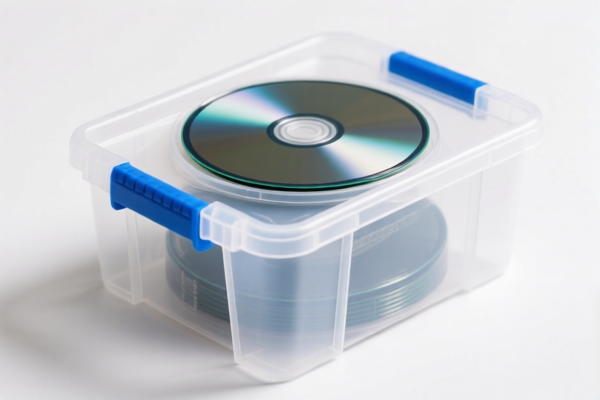
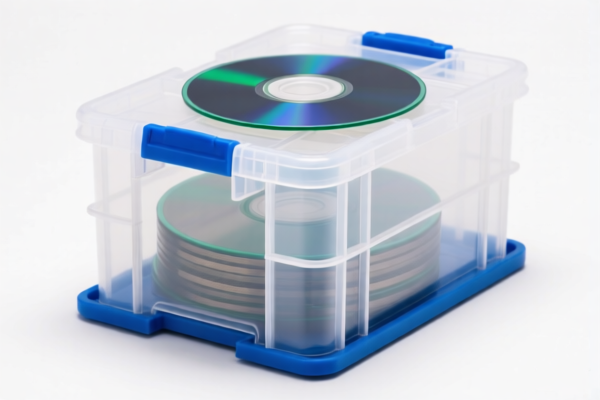
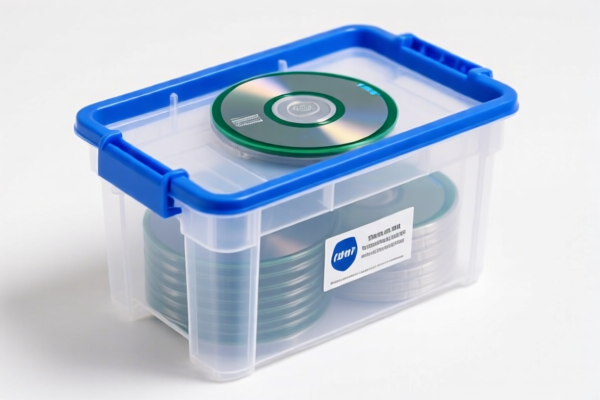
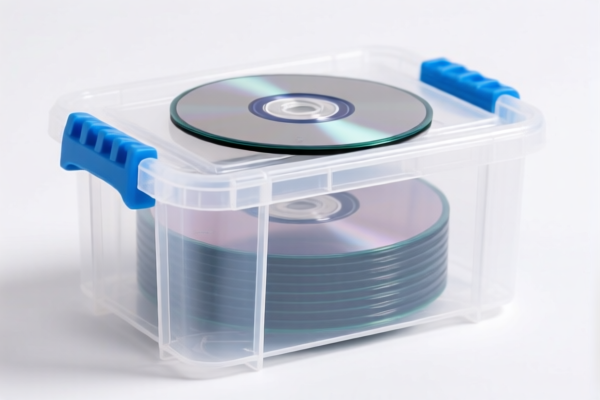
AI分析
🎞️ Film Developing Tank & Solutions (Photographic Chemical Preparations)
🌐 HS Code Reference & Customs Clearance Guide | 2026 Latest Tariff Analysis | Professional Transit Strategy
📌 I. Product Definition & Classification: Do You Really Understand "Film Developing Chemicals"?
Film developing solutions are specialized chemical preparations used in the photographic industry to process photographic film. In international trade, they are primarily categorized based on their specific application and composition:
Photographic Chemical Products (Headings 3707): Specifically designed for the development, fixing, or bleaching of photographic films or plates. These are defined as "unmixed products for photographic use." Diagnostic or Laboratory Reagents (Headings 3822): Chemical reagents prepared for diagnostic or laboratory use, which may include general-purpose developer solutions if not specifically classified under photographic headings due to formulation differences.
⚠️ Key Distinction Point:
- If the product is explicitly marketed and formulated exclusively for photographic film processing (developing/fixing), it falls under Chapter 37 (Photographic Products).
- If the product is a general chemical reagent used in a laboratory setting for analytical purposes, it may fall under Chapter 38 (Other Chemical Products).
- Crucial Note: The presence of "tank" in the user query might refer to the chemical solution used in a tank. If the item is the plastic container itself, it would fall under plastics (Chapter 39). However, based on the provided data, we are analyzing the chemical contents/solutions for film development.
📦 II. HS Code Classification Details (2026 Latest Tariff Authority Comparison)
| HS Code | Product Description | Application Scenario | Tax Category |
|---|---|---|---|
3707.90.60.00 |
Photographic chemical preparations (unmixed), for developing/fixing film | Standard film development, black & white or color film processing | Photographic Use |
3822.19.00.80 |
Diagnostic or laboratory reagents, other | General laboratory reagents, non-specific chemical solutions for film | Lab/Diagnostic Reagent |
3707.10.00.90 |
Photographic chemical preparations, for developing/fixing film (other) | Specific photographic emulsion sensitizers or specialized developers | Photographic Use |
3822.19.00.30 |
Diagnostic or laboratory reagents, other (specific subcategory) | Chemical developer solutions classified under broader lab reagents | Lab/Diagnostic Reagent |
🔍 Important Reminder:
- HS 3707 is generally preferred for dedicated photographic chemicals. If the product is strictly for photography, Class 37 is more accurate.
- HS 3822 applies if the chemical is considered a general laboratory reagent rather than a dedicated photographic product, though this can be contested if the primary use is clearly photographic.
- Misclassification Risk: Declaring photographic chemicals as general lab reagents (3822) to avoid higher tariffs is a common compliance risk. Customs may reclassify based on product labeling and intended use.
💰 III. 2026 Latest Tariff Rate Breakdown (Including Surtaxes & Policy Add-ons)
✅ Applicable Country: United States (US)
✅ Origin: China (CN)
✅ Effective Date: From November 10, 2025 (including subsequent imports)
🎯 1. 3707.90.60.00 – Photographic Chemical Preparations (Unmixed)
| Item | Details |
|---|---|
| Base Tariff | 0% (ad valorem) |
| USITC Surcharge (Section 301) | +25% |
| IEEPA Surcharge (Section 122) | +10% |
| Total Tariff Rate | 35.0% |
| Tax Calculation | CIF Value × 35% |
| De Minimis Exemption Eligibility | ❌ Not Eligible (deny_de_minimis) |
| Legal Basis Path | USITC:3707.90.60.00 → FOOTNOTE:9903.88.01 → IEEPA:9903.01.25 → IEEPA:9903.01.24 |
📌 Explanation:
- This classification falls under Chapter 37 (Photographic Goods).
- The 25% Section 301 tariff applies to most Chinese-origin goods.
- The 10% IEEPA tariff applies specifically to Chinese products under emergency economic powers.
- Total 35% is a significant cost driver. Correct classification is critical to avoid penalties.
🎯 2. 3822.19.00.80 – Diagnostic or Laboratory Reagents (Other)
| Item | Details |
|---|---|
| Base Tariff | 0% |
| USITC Surcharge (Section 301) | 0% |
| IEEPA Surcharge (Section 122) | +10% |
| Total Tariff Rate | 10.0% |
| Tax Calculation | CIF Value × 10% |
| De Minimis Exemption Eligibility | ❌ Not Eligible (deny_de_minimis) |
| Legal Basis Path | USITC:3822.19.00.80 → IEEPA:9903.01.24 |
📌 Note:
- This classification benefits from a 0% Section 301 surcharge.
- However, it is only applicable if the product can be legitimately classified as a general laboratory reagent rather than a dedicated photographic chemical.
- Risk: If Customs determines the product is for photographic use, they may reclassify it to HS 3707, leading to back taxes and penalties.
🎯 3. 3707.10.00.90 – Photographic Chemical Preparations (Other)
| Item | Details |
|---|---|
| Base Tariff | 3% |
| USITC Surcharge (Section 301) | +25% |
| IEEPA Surcharge (Section 122) | +10% |
| Total Tariff Rate | 38.0% |
| Tax Calculation | CIF Value × 38% |
| De Minimis Exemption Eligibility | ❌ Not Eligible (deny_de_minimis) |
| Legal Basis Path | USITC:3707.10.00.90 → FOOTNOTE:9903.88.01 → IEEPA:9903.01.25 → IEEPA:9903.01.24 |
📌 Note:
- This is the highest tariff category (38%).
- It applies to specific photographic chemicals that do not fit the "unmixed" definition of 3707.90.60.00 or are classified as other photographic preparations.
- Avoid this classification if 3707.90.60.00 is applicable, as it increases costs by 3%.
🎯 4. 3822.19.00.30 – Diagnostic or Laboratory Reagents (Other, Specific)
| Item | Details |
|---|---|
| Base Tariff | 0% |
| USITC Surcharge (Section 301) | 0% |
| IEEPA Surcharge (Section 122) | +10% |
| Total Tariff Rate | 10.0% |
| Tax Calculation | CIF Value × 10% |
| De Minimis Exemption Eligibility | ❌ Not Eligible (deny_de_minimis) |
| Legal Basis Path | USITC:3822.19.00.30 → IEEPA:9903.01.24 |
📌 Note:
- Same tariff rate as3822.19.00.80(10%).
- The distinction between.80and.30is minor in terms of tariff but may matter for statistical or regulatory reporting.
- Both benefit from 0% Section 301, making them cost-effective if the classification is defensible.
🛠️ IV. Customs Clearance Practical Advice (Pitfall Avoidance Guide)
✅ 1. Documentation Checklist (Mandatory)
| Document | Required | Description |
|---|---|---|
| ✅ Product Specification Sheet | ✔️ | Must explicitly state: "Chemical preparation for photographic film development," ingredients, and concentration. |
| ✅ MSDS (Material Safety Data Sheet) | ✔️ | Required for all chemical imports. Must match the declared HS code. |
| ✅ Product Photos (Labeled) | ✔️ | Clear images showing packaging, labels, and "For Photographic Use" claims. |
| ✅ Commercial Invoice | ✔️ | Accurate description: "Photographic Developing Chemicals" or "Laboratory Reagents" based on classification. |
| ✅ Certificate of Origin (CO) | ✔️ | To confirm Chinese origin for surtax calculation. |
| ✅ Packaging List | ✔️ | Details net/gross weight, volume, and number of containers. |
✅ 2. Declaration Tips (Key Mantras)
🔥 “Photographic Goods, Chapter 37; Lab Reagents, Chapter 38. Misclassification Leads to Fines!”
| Scenario | Correct Declaration | Wrong Practice |
|---|---|---|
| Dedicated Film Developer | 3707.90.60.00 (35%) |
Declaring as 3822.19.00.80 (10%) → High Risk of Audit & Penalties |
| General Lab Chemical | 3822.19.00.80 (10%) |
Declaring as 3707.10.00.90 (38%) → Unnecessary Cost Increase |
| Mixed/Unmixed Photographic Chem | 3707.90.60.00 (35%) |
Vague description "Chemical Liquid" → Customs Rejection/Reclassification |
| Plastic Tank (Empty) | 3923.30.00.00 (Plastics) |
Including tank value in chemical declaration → Undervaluation Risk |
✅ 3. Special Case Handling
| Scenario | Handling Advice |
|---|---|
| OEM Branded Developer | Provide customer order and design specs. Labeling must be consistent with classification. |
| "Kit" (Chemicals + Tank) | Declare chemicals and tank separately if possible. If bundled, consult customs broker on primary purpose. |
| Small Quantity for Testing | If under de minimis threshold, still ensure correct HS code. Note: Chemicals are generally denied de minimis (Section 321). |
| Change in Formulation | If the product is modified to be non-photographic, update classification to 3822. Document the change. |
🌍 V. Global Market Comparison for Photographic Chemicals (2026)
| Country/Region | Recommended HS Code | Tariff (China Origin) | Certification Requirements | Notes |
|---|---|---|---|---|
| 🇺🇸 USA | 3707.90.60.00 |
35% (Total) | None specific, but MSDS required | High surtax. 3822 path (10%) is risky. |
| 🇨🇳 China | 3707.90.60.00 |
8% (Import Duty) | CCC (if applicable) | Lower tariffs. |
| 🇪🇺 EU | 3822.19.00.80 |
6.5% | REACH Compliance | REACH registration required for chemicals. |
| 🇬🇧 UK | 3822.19.00.80 |
6.5% | UK REACH | Post-Brexit rules apply. |
| 🇯🇵 Japan | 3707.90.00.00 |
5% | PRTR Act | Standard chemical import rules. |
📌 Conclusion:
- USA imposes the highest barriers due to Section 301 and IEEPA tariffs.
- EU/UK focus on chemical safety (REACH) rather than high tariffs.
- Misclassification in the US is the biggest financial risk.
📌 VI. Common Mistakes & Pitfall Guide (Lessons Learned)
❌ Mistake 1: Declaring photographic chemicals as "General Lab Reagents" to save 25%.
👉 Consequence: Customs audits the product, finds it’s for photography, and demands back taxes + penalties. Cost increases by 25%.
❌ Mistake 2: Ignoring the IEEPA 10% surcharge.
👉 Consequence: Underpayment of duties. Back taxes + interest apply.
❌ Mistake 3: Including the plastic tank in the chemical value.
👉 Consequence: Incorrect valuation. Undervaluation penalties may apply.
❌ Mistake 4: Vague description: "Chemical Liquid."
👉 Consequence: Customs delays for additional information. Storage fees accrue.
✅ Correct Practice:
"Photographic Developing Solution, Unmixed, for Black & White Film Processing, Contains Chemical X and Y, MSDS Attached, Model XYZ, Made in China"
🎯 VII. Conclusion: Precise Classification Saves Money!
🎯 Remember the Mantra:
🔹 "Photographic = Ch37 (35%), Lab = Ch38 (10%). Risk is high for Ch38 if used for photos!"
🔹 "MSDS is mandatory. De minimis is denied. Surtax is 35% (301+IEEPA)."
📌 Pro Tip:
If your photographic chemicals are originating from Vietnam, Mexico, or Thailand, you may be eligible for lower tariffs due to Free Trade Agreements (FTA).
Recommend Applying for a Pre-Ruling (Advance Ruling) from US Customs and Border Protection (CBP) to confirm the HS code and tariff liability before shipment.
📣 Immediate Action:
📞 Contact a licensed customs broker.
📄 Prepare MSDS and Product Specs.
🚀 Ensure accurate classification to avoid 25% penalties and ensure smooth customs clearance.
✨ Professional Clearance Starts with Accurate Classification!
💼 Every percent of tariff matters in the age of trade wars!
用户评价
关于 HS 编码归类
协调制度(HS)是由世界海关组织(WCO)制定的国际贸易商品分类标准。全球 200 多个国家采用 HS 系统作为海关关税、贸易统计和进出口监管的基础。
每个 HS 编码遵循以下层级结构:
- 章(2 位)——商品大类(例如:第 84 章:机器和机械设备)
- 品目(4 位)——章内的更具体分类
- 子目(6 位)——国际通用细分,所有 WCO 成员国统一使用
- 本国细分(8-10 位)——各国自行扩展的细分编码,如美国 HTSUS 10 位编码
正确的 HS 编码归类对于顺利通关、准确缴纳关税和遵守贸易法规至关重要。错误归类可能导致海关延误、多缴关税或罚款。
从CN进口到US时,适用的关税税率可能包括:
- 最惠国(MFN)税率——适用于 WTO 成员国的标准关税税率
- 普通税率——适用于无贸易协定国家
- 贸易救济关税——附加关税,如 301 条款(反倾销)、232 条款(国家安全)或反补贴税
本页内容仅供参考。如需正式归类,请咨询当地海关或持牌报关代理。