Film Roll Welding Inspection Machine
CN → US| HS编码 | 关税税率 | 原产国 | 目的国 | 文档 |
|---|---|---|---|---|
| 9031499000 | 35.0% | CN | US | 官方文档 |
| 9031909195 | 85.0% | CN | US | 官方文档 |
| 8543709860 | 37.6% | CN | US | 官方文档 |
| 8543906800 | 35.0% | CN | US | 官方文档 |
商品图片
AI分析
🔬 Film Roll Welding Inspection Machine (Optical Detection System)
🌐 HS Code Reference & Customs Clearance Guide | 2026 Latest Tariff Analysis | Professional Clearance Strategy
📌 I. Product Definition & Classification: What is a "Film Roll Welding Inspection Machine"?
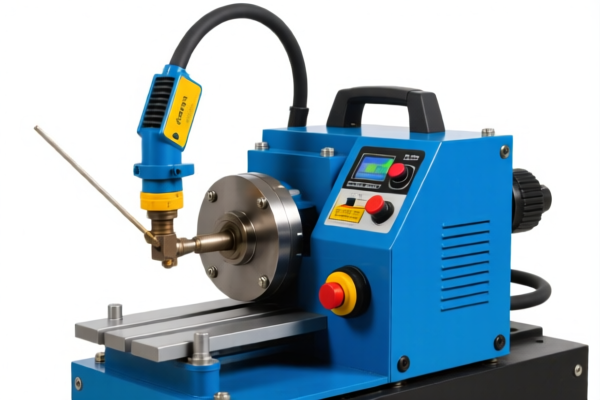
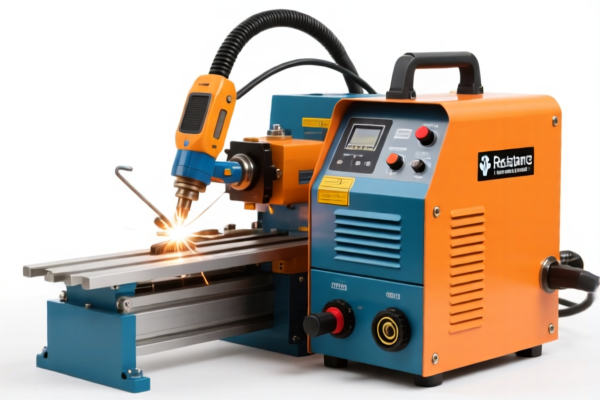
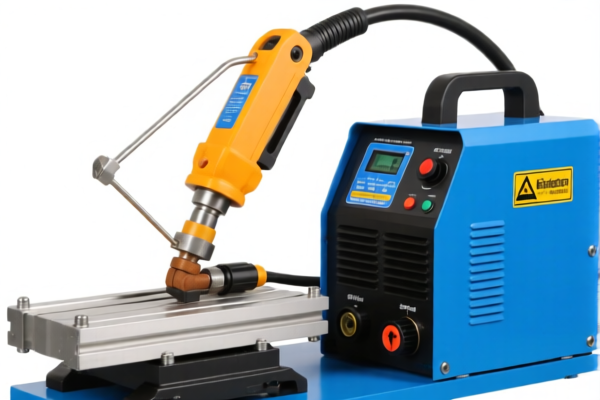
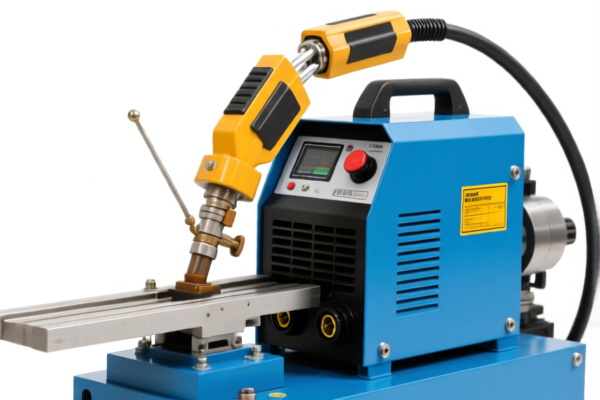
A Film Roll Welding Inspection Machine is a specialized industrial device used in packaging, printing, and non-woven fabric manufacturing. Its primary function is to perform optical detection and quality control on welded seams of plastic films or rolls.
In international trade, this equipment is not classified as a simple "welding machine" (which would fall under Chapter 85). Instead, because its core value and function lie in measurement, inspection, and optical analysis, it falls under Chapter 90 (Optical, Photographic, Cinematographic, Measuring, Checking, Precision, Medical or Surgical Instruments and Apparatus) or potentially Chapter 85 (Electrical Machinery and Equipment) depending on the specific technological integration.
⚠️ Key Distinction:
- If the device’s primary function is visual inspection, optical scanning, or measurement of weld integrity → It belongs to HS 9031 (Measuring/Checking Instruments).
- If the device is primarily a generic electrical control unit without specialized optical sensors → It may be classified under HS 8543 (Other Electrical Machines).
- Note: The "Welding" aspect is secondary to the "Inspection" function for customs classification purposes.
📦 II. HS Code Classification Details (2026 Latest Tariff Authority Comparison)
Based on the provided data, there are four potential HS Codes. Below is the detailed breakdown of why each applies and the associated tax implications.
| HS Code | Product Description | Reason for Classification | Total Tax Rate |
|---|---|---|---|
| 9031.49.90.00 | Optical Testing Instruments | This is the most accurate classification. The machine uses optical detection to inspect welds. HS 9031 covers "Measuring or Checking Instruments, Appliances and Machines," specifically including optical testing devices. | 35.0% |
| 9031.90.91.95 | Other Measuring/Checking Instruments | This is a residual category under Chapter 90. It applies if the machine does not fit the specific sub-heading for optical testing but still functions as a generic inspection device. Note: Higher risk of additional duties due to "Steel/Aluminum/Copper" classification triggers. | 85.0% |
| 8543.70.98.60 | Other Electrical Machines with Individual Functions | This classification applies if the machine is viewed primarily as an electrical apparatus with a specific detection function that doesn't fit the strict "optical instrument" definition of Chapter 90. It falls under "Machines and Apparatus having individual functions." | 37.6% |
| 8543.90.68.00 | Other Electrical Appliances | This is a broad "catch-all" for electrical devices not elsewhere specified. It applies if the device is considered a generic electric assembly with independent function, lacking specific optical measurement capabilities recognized under Chapter 90. | 35.0% |
🔍 Critical Analysis:
- HS 9031.49.90.00 is generally the preferred and safest classification for "Optical Inspection" machines, as it directly matches the "Optical Detection" summary.
- HS 9031.90.91.95 carries a significantly higher effective tax rate (85%) due to potential Section 301 and Section 232 duties applying to steel/aluminum components or specific industrial machinery.
- HS 8543 codes are alternatives if the optical component is deemed secondary to the electrical processing unit.
💰 III. 2026 Latest Tariff Rate Details (Including Additional Taxes & Policy Surcharges)
✅ Applicable Country: United States (US)
✅ Country of Origin: China (CN)
✅ Effective Time: 2025–2026 (Subject to ongoing trade policy)
🎯 1. HS Code: 9031.49.90.00 (Optical Testing Instruments)
The most logical classification for Optical Welding Inspection.
| Item | Content |
|---|---|
| Base Tariff | 0.0% |
| Section 301 Additional Duty | +25.0% |
| Section 122 Duty | +10.0% |
| Total Effective Tax Rate | 35.0% |
| Tax Calculation | CIF Value × 35% |
| De Minimis Eligibility | ❌ Not Eligible (High-value industrial equipment) |
| Legal Basis Path | HTSUS:9031.49.90 → USITC:Section301:Footnote9903.88.01 → IEEPA:Section122 |
📌 Explanation:
- The base tariff is 0%, but the 25% Section 301 duty is standard for Chinese-origin industrial machinery.
- The 10% Section 122 duty may apply depending on specific trade remedy investigations or national security provisions.
- Total: 35%. This is the most balanced rate among the options.
🎯 2. HS Code: 9031.90.91.95 (Other Measuring/Checking Instruments)
Higher Risk due to material composition triggers.
| Item | Content |
|---|---|
| Base Tariff | 0.0% |
| Section 301 Additional Duty | +25.0% |
| Section 122 Duty | +10.0% |
| Steel/Aluminum/Copper Surtax | +50.0% (Conditional) |
| Total Effective Tax Rate | 85.0% |
| Tax Calculation | CIF Value × 85% |
| De Minimis Eligibility | ❌ Not Eligible |
| Legal Basis Path | HTSUS:9031.90.91 → USITC:Section232 (if metal components) → Section301 → Section122 |
📌 Warning:
- The 85% rate is driven by the potential 50% surtax on Steel, Aluminum, or Copper products.
- If your inspection machine contains significant metal structural components (frames, rails, casings) classified under Section 232, this rate applies.
- Avoid this classification unless absolutely necessary, as it is prohibitively expensive.
🎯 3. HS Code: 8543.70.98.60 (Other Electrical Machines)
| Item | Content |
|---|---|
| Base Tariff | 2.6% |
| Section 301 Additional Duty | +25.0% |
| Section 122 Duty | +10.0% |
| Total Effective Tax Rate | 37.6% |
| Tax Calculation | CIF Value × 37.6% |
| De Minimis Eligibility | ❌ Not Eligible |
| Legal Basis Path | HTSUS:8543.70.98 → USITC:Section301 → IEEPA:Section122 |
📌 Explanation:
- The base rate is slightly higher (2.6%) than Chapter 90.
- The additional duties remain the same (25% + 10%).
- Total: 37.6%. This is a viable alternative if Chapter 90 is contested.
🎯 4. HS Code: 8543.90.68.00 (Other Electrical Appliances)
| Item | Content |
|---|---|
| Base Tariff | 0.0% |
| Section 301 Additional Duty | +25.0% |
| Section 122 Duty | +10.0% |
| Total Effective Tax Rate | 35.0% |
| Tax Calculation | CIF Value × 35% |
| De Minimis Eligibility | ❌ Not Eligible |
| Legal Basis Path | HTSUS:8543.90.68 → USITC:Section301 → IEEPA:Section122 |
📌 Explanation:
- Similar to HS 9031.49.90.00 in total rate (35%).
- However, the base tariff is 0%, making it marginally simpler in structure, but less specific to the "optical" nature of the device.
🛠️ IV. Customs Clearance Practical Advice (Expert Pitfall Avoidance)
✅ 1. Documentation Checklist (Mandatory)
| Document | Required? | Purpose |
|---|---|---|
| ✅ Product Technical Manual | ✔️ | Must explicitly state: "Optical Detection System," "Weld Seam Inspection," "Image Processing." Avoid vague terms like "Welder." |
| ✅ Circuit/Block Diagrams | ✔️ | To prove the primary function is measurement/inspection (Chapter 90) rather than just power transmission (Chapter 85). |
| ✅ Product Photos (Internal & External) | ✔️ | Show optical sensors, cameras, lenses, and screens. |
| ✅ Commercial Invoice | ✔️ | Describe as: "Optical Inspection Machine for Film Roll Weld Quality Control" |
| ✅ Certificate of Origin | ✔️ | Essential for determining Section 301 applicability. |
| ✅ Software Description | ✔️ | If the machine relies on AI/Algorithm for defect detection, detail this to support "Intelligent Inspection" classification. |
✅ 2. Declaration Strategy (Key Principles)
🔥 "Focus on Function, Not Process: Emphasize 'Inspection,' Not 'Welding'!"
| Scenario | Recommended HS Code | Risk Level |
|---|---|---|
| Primary Function: Optical Quality Control | 9031.49.90.00 |
🟢 Low Risk (Most accurate) |
| Primary Function: General Electrical Control | 8543.70.98.60 |
🟡 Medium Risk (Acceptable) |
| Contains Heavy Metal Frames/Structures | 9031.90.91.95 |
🔴 High Risk (85% Tax!) |
| Vague Description: "Welding Machine" | 8515/8516 |
❌ Incorrect (Will be reclassified & penalized) |
📌 Important Note:
- Do NOT declare as "Welding Machine" (HS 8515). This would trigger different duties and likely be rejected for misclassification.
- The machine inspects the weld; it does not create it (or if it does, the inspection unit is the dominant feature for customs).
✅ 3. Special Case Handling
| Situation | Recommendation |
|---|---|
| Machine includes both welding & inspection | If the welding function is minor (e.g., laser marking vs. fusion welding), classify as Inspection Machine (9031). If welding is the primary function, consult a customs broker immediately for potential 8515 classification (higher risk). |
| Software-heavy AI Inspection | Highlight the software's role in "Optical Data Analysis" to support Chapter 90 classification. |
| Metal-Rich Construction | Avoid 9031.90.91.95 to prevent the 50% steel/aluminum surtax. Use 9031.49.90.00 or 8543.70.98.60. |
| Pre-Ruling Request | Highly recommended. Submit a Binding Tariff Information (BTI) or U.S. CBP Ruling Request with technical specs to lock in the 35% rate. |
🌍 V. Global Market Comparison (2026)
| Country/Region | Recommended HS Code | Est. Duty (China Origin) | Certification | Notes |
|---|---|---|---|---|
| 🇺🇸 USA | 9031.49.90.00 |
35% (25% Sec301 + 10% Sec122) | FCC, CE | Avoid 9031.90.91.95 (85%) |
| 🇪🇺 EU | 9031.49.90 |
0% - 2.7% | CE, RoHS | No Section 301/122 |
| 🇨🇳 China | 9031.49.90 |
0% - 5% | CCC | Import duty may be low, but VAT 13% applies |
| 🇯🇵 Japan | 9031.49.90 |
0% - 3.2% | PSE | No additional punitive tariffs |
📌 Conclusion:
- The US market is the most challenging due to punitive tariffs.
- Precision in declaration is critical. Misclassification as a generic electrical device (8543) or a metal-heavy instrument (9031.90) can double your costs.
📌 VI. Common Errors & Pitfalls (Lessons Learned)
❌ Error 1: Declaring as "Welding Machine" (HS 8515)
👉 Result: Customs reclassifies to 9031 or 8543, issues penalty for misdeclaration, and may apply higher retrospective duties.
❌ Error 2: Using HS 9031.90.91.95 without justification
👉 Result: 85% tariff due to Section 232 metal surtax. Financial catastrophe.
❌ Error 3: Ignoring the "Optical" component in documentation
👉 Result: Customs doubts the Chapter 90 classification, leading to delays and audits.
✅ Correct Approach:
"Optical Weld Inspection System for Plastic Films, Model XYZ, with Camera-Based Defect Detection, FCC Certified"
🎯 VII. Conclusion: Smart Classification, Lower Costs
🎯 Remember:
🔹 "Inspection over Welding: Chapter 90 is your friend."
🔹 "Avoid the 85% Trap: Steer clear of 9031.90.91.95."
🔹 "Optical = 35%: The sweet spot for compliance and cost."
📌 Pro Tip:
If you are shipping to the US, pre-clearance ruling is worth the fee. It provides legal certainty and protects you from future retroactive duty hikes.
For EU/Asia, the duty is minimal, so focus on CE/RoHS/PSE certifications for smooth entry.
📣 Immediate Action:
📞 Engage a licensed customs broker.
📤 Provide full technical specs emphasizing optical inspection capabilities.
🚀 Secure the 35% Rate (HS 9031.49.90.00) and avoid the 85% Trap!
✨ Professional Clearance Starts with Precise Classification!
💼 Your Margins Depend on the Right HS Code!
用户评价
关于 HS 编码归类
协调制度(HS)是由世界海关组织(WCO)制定的国际贸易商品分类标准。全球 200 多个国家采用 HS 系统作为海关关税、贸易统计和进出口监管的基础。
每个 HS 编码遵循以下层级结构:
- 章(2 位)——商品大类(例如:第 84 章:机器和机械设备)
- 品目(4 位)——章内的更具体分类
- 子目(6 位)——国际通用细分,所有 WCO 成员国统一使用
- 本国细分(8-10 位)——各国自行扩展的细分编码,如美国 HTSUS 10 位编码
正确的 HS 编码归类对于顺利通关、准确缴纳关税和遵守贸易法规至关重要。错误归类可能导致海关延误、多缴关税或罚款。
从CN进口到US时,适用的关税税率可能包括:
- 最惠国(MFN)税率——适用于 WTO 成员国的标准关税税率
- 普通税率——适用于无贸易协定国家
- 贸易救济关税——附加关税,如 301 条款(反倾销)、232 条款(国家安全)或反补贴税
本页内容仅供参考。如需正式归类,请咨询当地海关或持牌报关代理。