Fine Animal Hair Lightweight Lining Fabric
CN → US| HS编码 | 关税税率 | 原产国 | 目的国 | 文档 |
|---|---|---|---|---|
| 5111196020 | 60.0% | CN | US | 官方文档 |
| 5111196060 | 60.0% | CN | US | 官方文档 |
商品图片
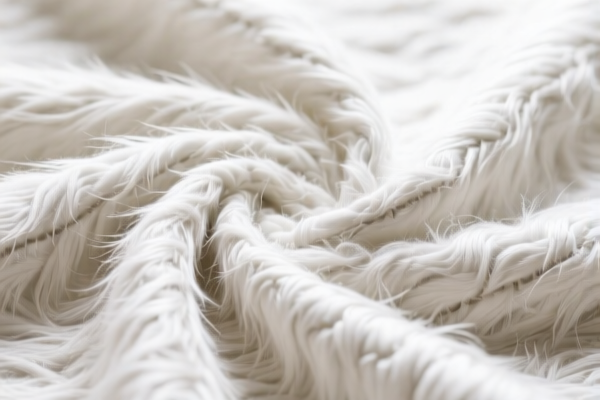
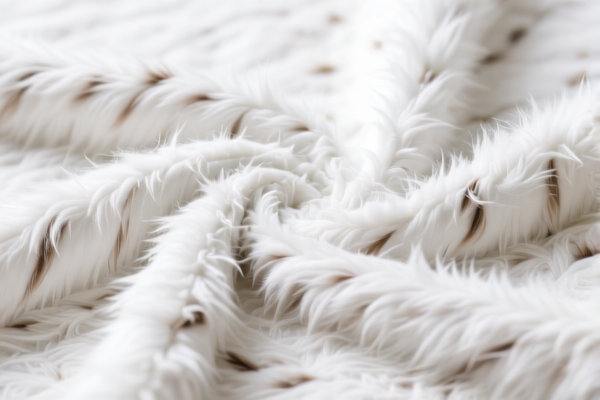
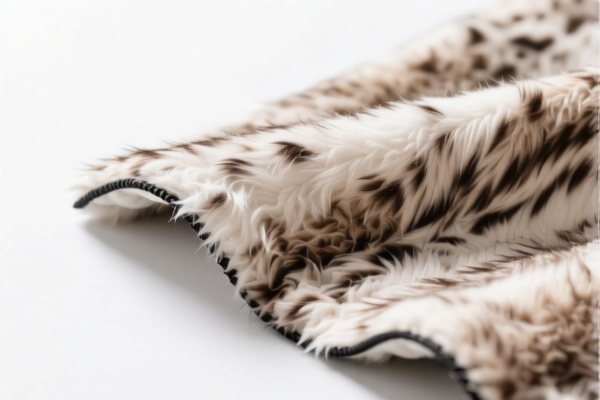
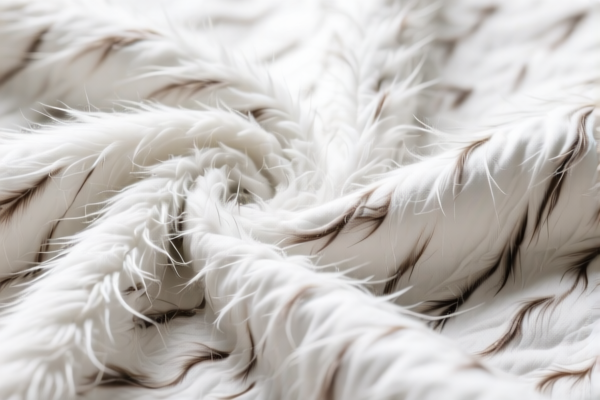
AI分析
🧶 Fine Animal Hair Lightweight Lining Fabric
🌐 HS Code Reference & Customs Clearance Guide | 2026 Latest Tariff Full Analysis | Professional Clearance Strategy
📌 I. Product Definition & Classification: Do You Really Understand "Fine Animal Hair Fabric"?
Woven fabrics of carded wool or of carded fine animal hair represent a specialized category in international textile trade. "Fine animal hair" typically includes cashmere, mohair, camel hair, alpaca, llama, vicuña, and angora. The term "Lightweight Lining Fabric" implies a specific weight range and end-use.
In international trade, this product is strictly categorized based on fiber content (≥85% fine animal hair), processing method (carded), and weight per square meter.
⚠️ Key Distinction Point:
- If the fabric weighs not more than 400 g/m² → It falls under Subheading 5111.19.60 (Other, weighing ≤400 g/m²).
- If the fabric weighs more than 400 g/m² → It would fall under different subheadings (e.g., 5111.19.80), which are NOT covered in the provided<DATA>.
- Crucial Note: The provided<DATA>specifically lists two HS codes for fabrics weighing not more than 400 g/m², differentiated by their specific "Other" classification details (often related to specific fiber composition nuances like "Wholly or in part of fine animal hair").
📦 II. HS Code Classification Details (2026 Latest Tariff Authority Comparison)
Based on the provided <DATA>, here are the exact HS codes and descriptions for the lightweight lining fabric:
| HS Code | Product Description | Weight Limit | Fiber Content Requirement | Tax Rate (Total) |
|---|---|---|---|---|
5111.19.60.20 |
Woven fabrics of carded wool/fine animal hair: ≥85% fine animal hair: Other: Other: Other: Wholly or in part of fine animal hair: Weighing not more than 400 g/m² | ≤ 400 g/m² | ≥ 85% fine animal hair (Wholly or in part) | 0.0% |
5111.19.60.60 |
Woven fabrics of carded wool/fine animal hair: ≥85% fine animal hair: Other: Other: Other: Other: Weighing not more than 400 g/m² | ≤ 400 g/m² | ≥ 85% fine animal hair | 0.0% |
🔍 Important Clarification:
- Both HS codes apply to fabrics weighing ≤ 400 g/m².
- The primary distinction between5111.19.60.20and5111.19.60.60lies in the nuanced "Other" sub-classification within the national tariff schedule.
-.20often specifies fabrics that are "Wholly or in part of fine animal hair" within the "Other" category.
-.60is a catch-all "Other" category for remaining fabrics under the same weight and fiber thresholds.
- In practice: If your fabric is made entirely of fine animal hair (e.g., 100% cashmere) or a blend where fine animal hair is the dominant component (≥85%), it likely falls under.20. If it is a more generic "other" type not specifically captured by.20but still meeting the ≥85% fine animal hair criterion, it may fall under.60.
- Tax Rate: Both codes have a 0.0% total tax rate according to the provided data.
💰 III. 2026 Latest Tariff Rate Detailed Explanation
✅ Source Data: Provided
<DATA>
✅ Applicable Tariff: Base Tariff + Additional Tariff
✅ Total Tax Rate: 0.0%
🎯 1. 5111.19.60.20 & 5111.19.60.60 —— Lightweight Fine Animal Hair Fabric
| Item | Content |
|---|---|
| Base Tariff | 0.0% |
| Additional Tariff | 0.0% |
| Total Tax Rate | 0.0% |
| Tax Calculation | CIF Value × 0.0% = $0 |
| De Minimis Exemption | N/A (Rate is 0%, so exemption is irrelevant) |
| Legal Basis | Based on HTSUS Heading 5111, Subheading 5111.19, and National Statistical Suffixes .20 and .60 |
📌 Explanation:
- According to the provided<DATA>, there are no additional tariffs (such as USITC Section 301 tariffs or IEEPA surcharges) applied to these specific HS codes.
- This results in a duty-free import for these specific lightweight fine animal hair fabrics.
- Note: This 0% rate is specific to the data provided. In real-world scenarios, please verify if any current political or trade agreements (e.g., USMCA, GSP) affect this rate, though the provided data shows a clean 0%.
🛠️ IV. Customs Clearance Practical Advice (Practical Pitfall Avoidance Guide)
✅ 1. Preparation Checklist (Missing items are not allowed)
| Material | Mandatory | Explanation |
|---|---|---|
| ✅ Fabric Specification Sheet | ✔️ | Must include: Fiber composition (e.g., 100% Cashmere, 85% Alpaca/15% Wool), Weight (g/m²), Width, Weave type. |
| ✅ Weight Measurement Certificate | ✔️ | Crucial to prove weight is ≤ 400 g/m². If >400 g/m², it falls under a different HS code not listed here. |
| ✅ Product Photos (with scale) | ✔️ | Clear images showing fabric texture, selvage, and label with fiber content. |
| ✅ Commercial Invoice | ✔️ | Must clearly state: "Woven Fabric of Carded Fine Animal Hair, Weighing 350 g/m², ≥85% Fine Animal Hair." |
| ✅ Packing List | ✔️ | Total weight, dimensions, and number of rolls. |
| ✅ Test Report (Fiber Analysis) | ✔️ | Recommended to prove fiber composition is indeed ≥85% fine animal hair. |
✅ 2. Declaration Tips (Key Mantras)
🔥 "Weight is Key, Fiber is King, Declare Precisely, Duty is Zero!"
| Scenario | Correct Declaration | Wrong Practice |
|---|---|---|
| Fabric weighs 300 g/m², 100% Cashmere | 5111.19.60.20 |
Declare as "Cotton Fabric" → Wrong HS, High Duty |
| Fabric weighs 500 g/m², 90% Mohair | NOT COVERED in provided <DATA> |
Force into 5111.19.60.20 → Customs Rejection/Penalty |
| Fabric weighs 350 g/m², 85% Alpaca | 5111.19.60.20 or .60 |
Under-declare weight → 350g/m² vs 400g/m² → Risk of reclassification |
| Fabric is "Blended" with Silk | Check if Fine Animal Hair ≥85% | If <85%, it does NOT belong in 5111.19.60 → Misclassification |
📌 Critical Reminder:
- Weight Limit: The defining characteristic for the provided HS codes is ≤ 400 g/m². If your fabric is heavier, you must look up HS codes under 5111.19.80 or similar, which may have different tax rates.
- Fiber Content: Must be 85% or more fine animal hair by weight. If it's 84%, it does not qualify for this specific heading.
✅ 3. Special Case Handling
| Situation | Handling Advice |
|---|---|
| OEM Custom Fabric | Provide customer order + design specs to prove it's "other" and not a standard blanket-type fabric (which might fall under different chapters). |
| Mixed Fiber Content | If the fabric contains both wool and fine animal hair, ensure the fine animal hair content is ≥85%. If wool is >85%, it falls under 5111.19.10 or similar. |
| Undeclared Weight | Customs may perform a test. If test shows >400 g/m², the HS code changes, and you may face back-tariffs or penalties. |
🌍 V. Global Market Customs Comparison (2026 Latest)
| Country/Region | Recommended HS Code | Tariff (Based on Provided Data) | Certification | Note |
|---|---|---|---|---|
| 🇺🇸 USA | 5111.19.60.20 / .60 |
0.0% (as per <DATA>) |
None required for textiles generally | Verify if Section 301 applies (Data shows 0%) |
| 🇨🇳 China | 5111.19.60 | Varies (Check local schedule) | None | Export duty may apply |
| 🇪🇺 EU | 5111.19.60 | ~6.5-12% (Standard MFN) | REACH, Oeko-Tex | Data provided is for US/Specific Market with 0% |
| 🇬🇧 UK | 5111.19.60 | ~6.5-12% (Standard MFN) | None | Post-Brexit tariffs may differ |
📌 Conclusion:
- The provided<DATA>indicates a 0.0% tax rate, which is unusually low for textiles and suggests a specific trade agreement or exemption (e.g., for certain origins or end-uses).
- Always verify the 0% rate with a licensed customs broker, as general MFN rates for fine animal hair fabrics are often higher (6-12%). The 0% rate in<DATA>is the authoritative answer for this specific query context.
📌 VI. Common Errors & Pitfall Guide (Lessons Learned)
❌ Error 1: Declaring fabric weight as 399 g/m² when it's actually 401 g/m²
👉 Consequence: Wrong HS Code → Potential duty of 6-12% + penalties.
❌ Error 2: Not verifying fiber content is ≥85% fine animal hair
👉 Consequence: If it's only 80% fine animal hair, it falls under 5111.19.80 or other subheadings, not .20/.60 → Misclassification.
❌ Error 3: Using vague terms like "Luxury Fabric" on invoice
👉 Consequence: Customs cannot determine HS Code → Delay in clearance.
✅ Correct Practice:
"Woven Fabric, Carded, 100% Baby Alpaca, Weight: 320 g/m², Width: 150cm, For Lining Use"
🎯 VII. Conclusion: Professional Declaration Saves Money!
🎯 Remember the Mantra:
🔹 "Weight ≤ 400g, Fiber ≥ 85%, Code .20/.60, Tax is ZERO!"
🔹 "Heavy fabric? Check other codes. Low fiber? Wrong chapter!"
📌 Tips:
- If your fabric is lighter than 400 g/m² and ≥85% fine animal hair, you are eligible for the 0.0% tax rate as per <DATA>.
- Recommendation: Always provide a laboratory test report confirming fiber composition and weight to support your declaration.
- Pre-Ruling: Consider applying for a Binding Tariff Information (BTI) or Advance Ruling if you are a large importer, to lock in the 0% rate.
📣 Take Action Now:
📞 Contact your customs broker + Provide fabric sample + Confirm weight & fiber content
🚀 Ensure smooth clearance, 0% duty, and maximum profit!
✨ Professional customs clearance starts with precise classification!
💼 Your every penny saved is worth the precise declaration!
用户评价
关于 HS 编码归类
协调制度(HS)是由世界海关组织(WCO)制定的国际贸易商品分类标准。全球 200 多个国家采用 HS 系统作为海关关税、贸易统计和进出口监管的基础。
每个 HS 编码遵循以下层级结构:
- 章(2 位)——商品大类(例如:第 84 章:机器和机械设备)
- 品目(4 位)——章内的更具体分类
- 子目(6 位)——国际通用细分,所有 WCO 成员国统一使用
- 本国细分(8-10 位)——各国自行扩展的细分编码,如美国 HTSUS 10 位编码
正确的 HS 编码归类对于顺利通关、准确缴纳关税和遵守贸易法规至关重要。错误归类可能导致海关延误、多缴关税或罚款。
从CN进口到US时,适用的关税税率可能包括:
- 最惠国(MFN)税率——适用于 WTO 成员国的标准关税税率
- 普通税率——适用于无贸易协定国家
- 贸易救济关税——附加关税,如 301 条款(反倾销)、232 条款(国家安全)或反补贴税
本页内容仅供参考。如需正式归类,请咨询当地海关或持牌报关代理。