Fine Goat Skin or Kid Goat Skin
CN → US商品图片

AI分析
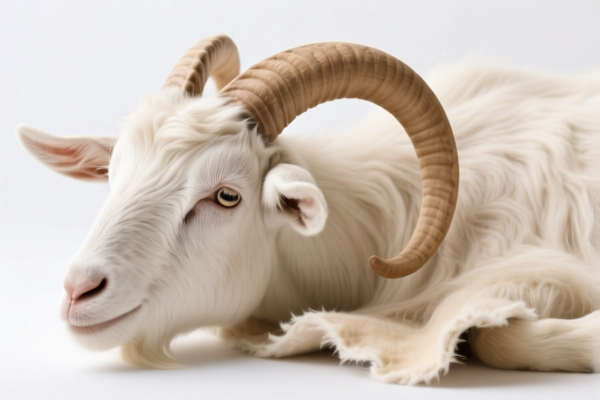
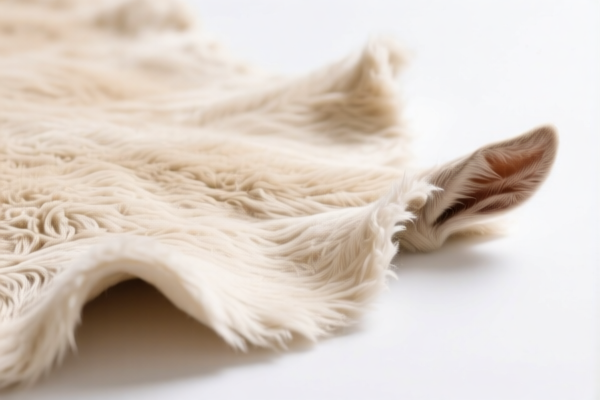
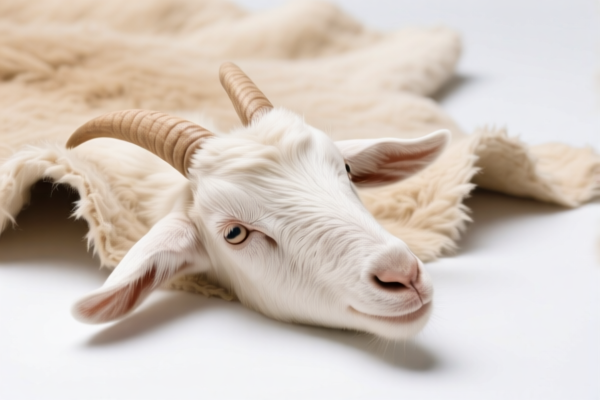
🐐 Fine Goat Skin or Kid Goat Skin (Chamois & Kidskin)
🌐 HS Code Reference & Clearance Guide | 2026 Latest Tariff Analysis | Professional Customs Strategy
📌 I. Product Definition & Classification: Do You Truly Understand "Goat Skin"?
"Fine Goat Skin" and "Kid Goat Skin" are premium leather materials widely used in high-end fashion, luxury accessories, automotive interiors, and fine bookbinding. In international trade, they are primarily classified under Chapter 41 (Animal Skins and Hides), specifically focusing on goatskins and kidskins.
Key Distinctions: * Kid Goat Skin (Kidskin): Leather derived from young goats (usually under 6 months). It is finer, softer, and more durable, commanding a higher price. * Fine Goat Skin: Leather from mature goats but processed to a high standard (fine grain). It is slightly thicker than kidskin but still considered premium compared to coarse goat leather.
⚠️ Critical Classification Point:
- If the skin is tanned or further prepared (leather) → Classify under 4103.30 or 4103.40.
- If the skin is raw, fresh, salted, or dried (unfinished) → Classify under 4101.20 or 4102.20 (depending on weight and processing).
- Note: The vast majority of commercial trade involves tanned leather.
📦 II. HS Code Classification Details (2026 Latest Tariff Authority)
| HS Code | Product Description | Application Scenario | Processing State |
|---|---|---|---|
4103.30.00.00 |
Other goatskins and kidskins, tanned or crusted | High-end shoes, gloves, luxury bags, upholstery | ✅ Tanned/Crusted |
4103.40.00.00 |
Other goatskins and kidskins, further prepared | Pigmented, finished, or dyed leather for fashion | ✅ Further Prepared |
4101.20.00.00 |
Goatskins/kidskins, raw, weighed < 1.7kg | Raw hides for local tanning or export to tanneries | ❌ Unprocessed |
4102.20.00.00 |
Other goatskins, raw, salted/dried | Bulk raw material trade | ❌ Unprocessed |
🔍 Key Reminder:
-4103.30vs4103.40: The distinction lies in the degree of processing. "Crusted" leather (tanned but not fully finished) goes to4103.30. "Further prepared" (dyed, pigmented, coated) goes to4103.40.
- Misclassification Risk: Declaring "tanned leather" as "raw skin" to avoid higher tariffs is a major red flag and leads to penalties.
💰 III. 2026 Latest Tariff Rate Breakdown (Including Surtaxes & Policy Add-ons)
✅ Applicable Country: United States (US)
✅ Country of Origin: China (CN)
✅ Effective Date: November 10, 2025 (and subsequent imports)
🎯 1. 4103.30.00.00 —— Tanned Goat/Kid Leather (Crusted)
| Item | Content |
|---|---|
| Base Tariff Rate | 3.7% (ad valorem) |
| USITC Surtax | +25% (Under USITC Footnote 9903.88.01, Section 301) |
| IEEPA Surtax | +10% (Targeting Chinese/Hong Kong products, effective Nov 10, 2025) |
| Total Effective Rate | 38.7% |
| Tax Calculation | CIF Value × 38.7% |
| De Minimis Exemption? | ❌ No (deny_de_minimis) |
| Legal Path | IEEPA:9903.01.25 → IEEPA:9903.01.24 → USITC:4103.30.00.00 → FOOTNOTE:9903.88.01 |
📌 Explanation:
- Leather products are heavily scrutinized due to environmental and trade policies.
- The 25% Section 301 surtax is standard for most leather goods from China.
- The 10% IEEPA surtax is an additional layer added in late 2025, pushing the total cost significantly higher.
🎯 2. 4103.40.00.00 —— Further Prepared Goat/Kid Leather
| Item | Content |
|---|---|
| Base Tariff Rate | 3.7% |
| USITC Surtax | +25% |
| IEEPA Surtax | +10% |
| Total Effective Rate | 38.7% |
| Tax Calculation | CIF Value × 38.7% |
| De Minimis Exemption? | ❌ No |
| Legal Path | IEEPA:9901.25 → IEEPA:9903.01.24 → USITC:4103.40.00.00 → FOOTNOTE:9903.88.01 |
📌 Note:
- "Further prepared" leather often faces stricter environmental compliance checks (chromium content, chemical restrictions).
- Even if the base rate is the same, the customs scrutiny is higher due to chemical safety regulations.
🛠️ IV. Clearance Practical Advice (Battle-Tested Pitfall Avoidance)
✅ 1. Documentation Checklist (Non-Negotiable)
| Document | Required | Explanation |
|---|---|---|
| ✅ Product Specification Sheet | ✔️ | Must include type of tanning (vegetable, chrome, alum), finish type, weight, and dimensions. |
| ✅ Tanning Certificate | ✔️ | Proof of tanning process (crucial for distinguishing from raw hides). |
| ✅ Chemical Compliance Report | ✔️ | REACH (EU) or CPSIA (US) compliance for chromium VI, AZO dyes, etc. |
| ✅ Commercial Invoice | ✔️ | Must clearly state "Goat Skin Leather, Tanned" and HS Code. |
| ✅ Origin Certificate | ✔️ | If originating from Vietnam/Indonesia, may qualify for lower tariffs (if applicable). |
| ✅ Packing List | ✔️ | Detail weight per bale, number of hides, and any packaging materials. |
✅ 2. Declaration Tips (Key Mnemonics)
🔥 "Tanned is Key, Finish Determines, Chrome is Checked, De Minimis is Dead!"
| Scenario | Correct Declaration | Wrong Practice |
|---|---|---|
| Tanned, Crusted Leather | 4103.30.00.00 |
Misdeclare as "Raw Skin" → 0% base rate but high penalty |
| Dyed/Finished Leather | 4103.40.00.00 |
Declare as "Crusted" → Underpayment of tariff |
| Small Samples (<800g) | Still 4103.30 |
Assume De Minimis applies → Seizure Risk |
| Mixed Batch (Goat + Cow) | Split by HS Code | Declare as "Mixed Leather" → Custom Valuation Delay |
✅ 3. Special Handling Cases
| Situation | Handling Advice |
|---|---|
| Chromium-Based Tanning | Must provide Chromium VI test reports. If >0.005%, may be banned in EU/US. |
| Luxury Brand OEM | Provide authorization letters to avoid IP disputes. |
| Leather for Automotive | May require FMVSS or SAE standard compliance. |
| Small Quantity (<200 lbs) | Still subject to Section 301 if from China. Do not rely on informal entry. |
🌍 V. Global Market Clearance Comparison (2026 Latest)
| Country/Region | Recommended HS Code | Tariff (China Origin) | Certification Requirements | Remarks |
|---|---|---|---|---|
| 🇺🇸 USA | 4103.30.00.00 |
38.7% | CPSIA, REACH (if EU origin) | High scrutiny on chrome content |
| 🇨🇳 China | 4103.30.00.00 |
5% | None for import | Low base rate |
| 🇪🇺 EU | 4103.30.00.00 |
6.5% (if not GSP) | REACH, Chromium VI < 3ppm | Strict chemical limits |
| 🇦🇺 Australia | 4103.30.00.00 |
5% | None | Moderate |
| 🇯🇵 Japan | 4103.30.00.00 |
3.5% | None | Low tariff |
📌 Conclusion:
- The US has the highest effective tariff (38.7%) for Chinese-origin fine goat/kid leather.
- EU focuses on chemical safety (REACH) rather than just tariffs.
- China/Asia markets offer lower barriers but require high-quality consistency.
📌 VI. Common Mistakes & Pitfalls (Blood-Teaching Lessons)
❌ Mistake 1: Declaring "Tanned Leather" as "Raw Skins" to save tariffs
👉 Consequence: Customs detects tanning agents → Seizure + Fine + Blacklisting
❌ Mistake 2: Ignoring Chromium VI levels
👉 Consequence: Shipment rejected in US/EU due to toxicity concerns
❌ Mistake 3: Assuming De Minimis ($800) applies
👉 Consequence: Leather is explicitly excluded from de minimis under Section 321 → Full Duty + Storage Fees
❌ Mistake 4: Confusing Goatskin with Sheepskin
👉 Consequence: Wrong HS Code (4104 vs 4103) → Incorrect Tariff Application
✅ Correct Practice:
"Fine Goat Skin Leather, Chrome-Tanned, Crusted, Weight: 2.5kg, Thickness: 1.2mm, Model: GSK-2026, Compliant with CPSIA"
🎯 VII. Conclusion: Professional Classification, Time-Saving, Cost-Efficient!
🎯 Remember the Mnemonic:
🔹 "Tanned is 38.7%, Raw is 0% but risky. Chrome is checked, De Minimis is dead."
🔹 "HS Code decides your fate, 35% difference, one wrong move costs you dearly."
📌 Pro Tip:
If your leather originates from Vietnam, Indonesia, or Turkey, you may qualify for lower Section 301 rates or GSP benefits (check latest FTAs).
Recommend Applying for an Advance Ruling from CBP to avoid clearance delays.
📣 Immediate Action:
📞 Contact a licensed customs broker + Provide Tanning Certificate + Apply for HS Code Advance Ruling
🚀 Ensure your fine goat/kid leather clears smoothly, avoids penalties, and maximizes profit!
✨ Professional clearance starts with precise classification!
💼 Every dollar of cost deserves accurate calculation!
用户评价
关于 HS 编码归类
协调制度(HS)是由世界海关组织(WCO)制定的国际贸易商品分类标准。全球 200 多个国家采用 HS 系统作为海关关税、贸易统计和进出口监管的基础。
每个 HS 编码遵循以下层级结构:
- 章(2 位)——商品大类(例如:第 84 章:机器和机械设备)
- 品目(4 位)——章内的更具体分类
- 子目(6 位)——国际通用细分,所有 WCO 成员国统一使用
- 本国细分(8-10 位)——各国自行扩展的细分编码,如美国 HTSUS 10 位编码
正确的 HS 编码归类对于顺利通关、准确缴纳关税和遵守贸易法规至关重要。错误归类可能导致海关延误、多缴关税或罚款。
从CN进口到US时,适用的关税税率可能包括:
- 最惠国(MFN)税率——适用于 WTO 成员国的标准关税税率
- 普通税率——适用于无贸易协定国家
- 贸易救济关税——附加关税,如 301 条款(反倾销)、232 条款(国家安全)或反补贴税
本页内容仅供参考。如需正式归类,请咨询当地海关或持牌报关代理。