Finger jointed Pine Board
CN → US| HS编码 | 关税税率 | 原产国 | 目的国 | 文档 |
|---|---|---|---|---|
| 4408100145 | 35.0% | CN | US | 官方文档 |
| 4408100125 | 35.0% | CN | US | 官方文档 |
| 4407110001 | 35.0% | CN | US | 官方文档 |
| 4407190001 | 35.0% | CN | US | 官方文档 |
| 4418300100 | 38.2% | CN | US | 官方文档 |
商品图片
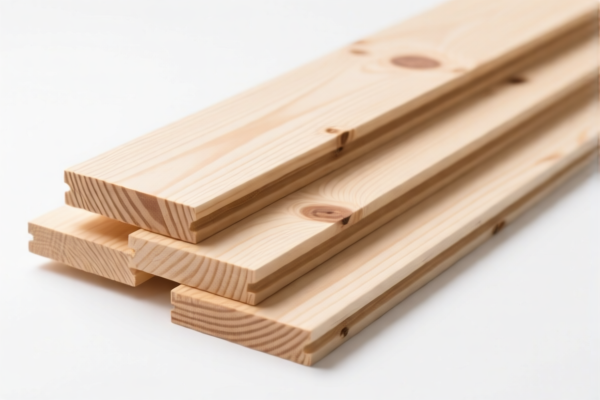
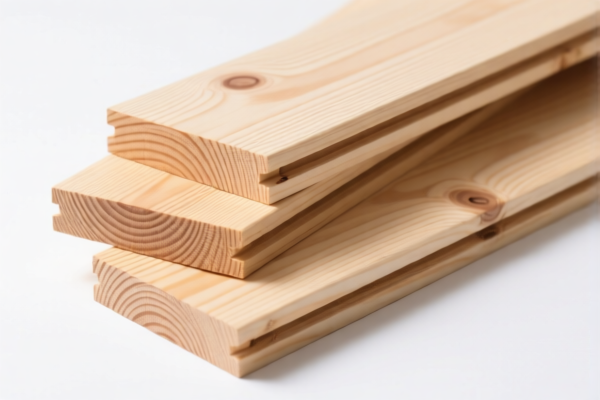
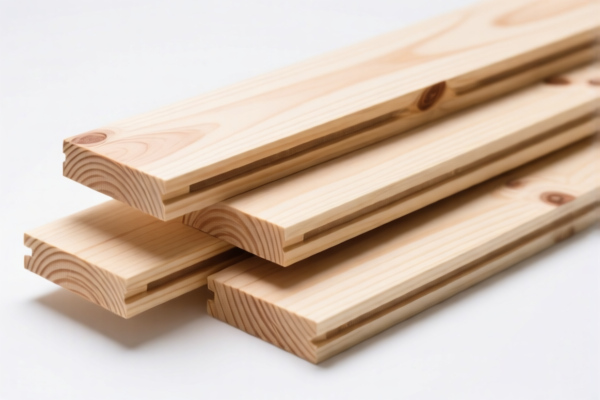
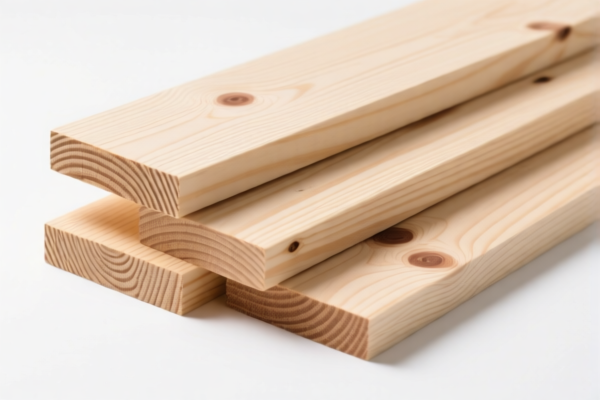
AI分析
🪵 Finger Jointed Pine Board (Softwood Plywood & Architectural Woodwork)
🌐 HS Code Reference & Customs Clearance Guide | 2026 Latest Tariff Analysis | Professional Clearance Strategy
📌 I. Product Definition & Classification: What Exactly is "Finger Jointed Pine Board"?
Finger Jointed Pine Boards are engineered wood products created by joining short pieces of pine lumber together using interlocking "finger" joints, then sanding the surface smooth. In international trade, their classification depends heavily on whether they are classified as basic processed wood (sawn/laminated) or finished wood products (architectural/work).
Key Distinction:
- Section 44 (Wood and Wood Products): Generally covers sawn wood, plywood, and basic laminated boards.
- Section 44 (Specific Subheadings): Differentiates between raw/semi-processed wood (Ch 44.07/44.08) and finished architectural items (Ch 44.18).
⚠️ Critical Classification Point:
- If the board is simply sawn, planed, and sanded (even if finger-jointed) but not yet assembled into a final architectural component (like a door or window frame), it often falls under Chapter 44.07 (Sawed wood) or 44.08 (Veneers/Sliced wood/Sheets).
- If it is explicitly marketed as a finished panel/board for construction or furniture making where the "finger-jointing" defines its final form as a specific type of panel, customs may classify it under 44.18 (Built-in furniture, doors, windows, etc., but note: some jurisdictions classify specific "wood panels" here if they are considered "woodwork").
- Note: In the provided data, specific variants are mapped to 4407, 4408, and 4418. We must follow these specific mappings.
📦 II. HS Code Classification Matrix (2026 Latest Tariff Authority)
Based on the provided data, here is the exact mapping for Finger Jointed Pine Boards:
| HS Code | Product Description (Summary) | Key Characteristics | Processing State |
|---|---|---|---|
4407.11.00.01 |
Finger Jointed Pine Board | Matches pine material & finger-jointed form; Thickness > 6mm | Sawn/Planed/Sanded Wood |
4407.19.00.01 |
Finger Jointed Pine Board | Matches coniferous material & finger-jointed form; Wood product | Sawn/Planed/Sanded Wood |
4408.10.01.25 |
Pine Finger Jointed Sanded Board | Matches coniferous material & Single Ply Wood/Finger-Jointed Board form | Veneer/Sheets/Thin Plywood-like |
4408.10.01.45 |
Pine Finger Jointed Sanded Board | Matches coniferous material & Processing Wood Thin Board form | Veneer/Sheets/Thin Plywood-like |
4418.30.01.00 |
Pine Sanded Finger-Jointed Board | Matches pine material & finger-jointed board form; Architectural/Woodwork | Finished Wood Product |
🔍 Important Note:
- The difference between4407and4408often lies in the thickness and specific processing (e.g., whether it's considered a "thin board" or veneer-like product).
-4418is reserved for the board when it is treated as a finished wood product (e.g., for use in construction or specific woodworking applications).
💰 III. 2026 Latest Tariff Rate Detail (Including Surcharges & Policy Add-ons)
✅ Applicable Country: United States (US)
✅ Origin: China (CN)
✅ Effective Date: Includes imports after 2025-11-10
🎯 1. 4407.11.00.01 & 4407.19.00.01 – Finger Jointed Pine Boards (Thick/Sawn Wood)
| Item | Content |
|---|---|
| Base Tariff | 0.0% |
| USITC Additional Tariff (Section 301) | +25.0% |
| IEEPA Additional Tariff (Section 122) | +10.0% |
| Total Tariff Rate | 35.0% |
| Tax Calculation | CIF Value × 35% |
| De Minimis Exemption | ❌ Not Available (deny_de_minimis) |
| Legal Basis Path | IEEPA:9903.01.25 → USITC:4407.11.00.01 → FOOTNOTE:9903.88.01 |
📌 Explanation:
- Base Tariff 0%: Softwood sawn wood often has a low base rate.
- 25% Additional Tariff: Standard Section 301 tariff on Chinese wood products.
- 10% Additional Tariff: IEEPA Section 122 tariff on Chinese goods.
- Total 35%: This is a significant cost factor. Do not assume "wood products" are exempt.
🎯 2. 4408.10.01.25 & 4408.10.01.45 – Pine Finger Jointed Sanded Boards (Thin/Sheet Form)
| Item | Content |
|---|---|
| Base Tariff | 0.0% |
| USITC Additional Tariff (Section 301) | +25.0% |
| IEEPA Additional Tariff (Section 122) | +10.0% |
| Total Tariff Rate | 35.0% |
| Tax Calculation | CIF Value × 35% |
| De Minimis Exemption | ❌ Not Available (deny_de_minimis) |
| Legal Basis Path | IEEPA:9903.01.25 → USITC:4408.10.01.25 → FOOTNOTE:9903.88.01 |
📌 Note:
- Despite being "thin" or "sanded," these fall under the same tariff structure as the thicker boards if they are considered processed wood veneers/sheets.
- The classification hinges on whether the product is defined as a "single-ply wood" or "processing wood thin board."
🎯 3. 4418.30.01.00 – Pine Sanded Finger-Jointed Board (Architectural/Woodwork)
| Item | Content |
|---|---|
| Base Tariff | 3.2% |
| USITC Additional Tariff (Section 301) | +25.0% |
| IEEPA Additional Tariff (Section 122) | +10.0% |
| Total Tariff Rate | 38.2% |
| Tax Calculation | CIF Value × 38.2% |
| De Minimis Exemption | ❌ Not Available (deny_de_minimis) |
| Legal Basis Path | IEEPA:9903.01.25 → USITC:4418.30.01.00 → FOOTNOTE:9903.88.01 |
📌 Key Difference:
- This HS Code has a higher base tariff (3.2%) compared to the 0% base for Chapters 44.07/44.08.
- This is because it is classified as a finished wood product (Architectural Woodwork), which carries a higher duty burden.
- Total 38.2% is the highest rate among the options.
🛠️ IV. Customs Clearance Practical Advice (Real-World Pitfall Avoidance)
✅ 1. Required Documentation Checklist (Mandatory)
| Document | Mandatory? | Description |
|---|---|---|
| ✅ Product Specification Sheet | ✔️ | Must specify: Wood type (Pine/Coniferous), Dimensions, Thickness, Joint Type (Finger), Finish (Sanded). |
| ✅ Product Photos | ✔️ | Clear images showing the finger-joint pattern, sanded surface, and any markings. |
| ✅ Commercial Invoice | ✔️ | Must clearly state: "Finger Jointed Pine Board," HS Code, Value, Country of Origin (China). |
| ✅ Packing List | ✔️ | Weight, dimensions, number of packages. |
| ✅ Certificate of Origin (CO) | ✔️ | Essential for verifying origin as China (to confirm tariff applicability). |
| ✅ Formal Letter of Explanation | ✔️ | If classifying under 4418, explain why it is "Architectural Woodwork." If under 4407/4408, explain it is "Sawn/Sanded Wood." |
✅ 2. Declaration Tips (Key Mnemonic)
🔥 “Thickness Matters, Joint Type Counts, Form Defines Tax!”
| Scenario | Correct HS Code | Incorrect Action | Consequence |
|---|---|---|---|
| Thick Pine Board (>6mm), Sawn/Sanded, Finger-Jointed | 4407.11.00.01 |
Declared as 4418 |
Overpay by 3.2% base tax |
| Thin Pine Board, Sanded, Finger-Jointed (Veneer-like) | 4408.10.01.25 / 4408.10.01.45 |
Declared as 4407 |
Misclassification risk, potential audit |
| Finished Pine Panel for Construction/Furniture | 4418.30.01.00 |
Declared as 4407 |
Under-declaration of tax, penalties |
| Any Pine Finger-Jointed Board from China | All above | Assume "Wood is Exempt" | Pay 35-38.2% tariff! |
✅ 3. Special Handling Cases
| Case | Handling Advice |
|---|---|
| Mixed Shipments (Pine + Other Woods) | Declare separately! Pine has specific subheadings (4407.11, 4407.19). Mixing with hardwoods (4407.91) may complicate clearance. |
| Untreated vs. Treated Wood | If the wood is treated (e.g., fire-retardant), additional regulations may apply. For standard finger-jointed boards, ensure no pests are present (IPPC marking). |
| Customs Query on "Finger-Jointed" | Provide technical diagrams showing the interlocking joint. This proves it is an engineered wood product, not solid sawn lumber, which helps avoid misclassification under "Solid Wood" codes if applicable. |
| Value Declaration | Ensure the declared value includes all costs up to the US port (CIF). Under-declaring can lead to severe penalties. |
🌍 V. Global Market Clearance Comparison (2026 Latest)
| Country/Region | Recommended HS Code | Tariff Rate (China Origin) | Certification Required | Notes |
|---|---|---|---|---|
| 🇺🇸 USA | 4407.11.00.01 / 4418.30.01.00 |
35.0% - 38.2% | No specific certification | High tariffs due to Section 301 & 122 |
| 🇨🇳 China | 4407.11.00.01 / 4418.30.01.00 |
Varies (5-10%) | FSC (if requested) | Lower tariffs, but this guide focuses on US exports |
| 🇪🇺 EU | 4407.10 / 4408.10 |
~6-12% | FSC/PEFC (often required) | No Section 301/122 equivalent tariffs |
| 🇬🇧 UK | 4407.10 / 4408.10 |
~6-12% | FSC/PEFC | Post-Brexit tariffs similar to EU |
📌 Conclusion:
- USA is the most expensive market for Chinese pine finger-jointed boards due to additional tariffs.
- Accuracy in HS Code selection (4407 vs. 4408 vs. 4418) is critical to avoid overpaying (e.g., paying 38.2% when 35% applies).
📌 VI. Common Errors & Pitfall Guide (Lessons Learned)
❌ Error 1: Declaring all pine boards under one HS Code regardless of thickness/form.
👉 Consequence: Customs audit, delays, and potential misclassification penalties.
❌ Error 2: Ignoring the "Finger-Jointed" description.
👉 Consequence: If declared as "Solid Pine Lumber," it may be subject to different phytosanitary rules or tariffs.
❌ Error 3: Assuming "Wood Products" are exempt from Section 301 tariffs.
👉 Consequence: Pay 35%+ unexpectedly. Wood products are heavily targeted.
❌ Error 4: Using 4418 for simple sanded boards without architectural intent.
👉 Consequence: Overpaying the 3.2% base tariff. If it's just a sanded panel, 4407 or 4408 is more accurate.
✅ Correct Practice:
"Pine Finger Jointed Sanded Board, 12mm Thick, Coniferous Wood, for Furniture Making, Model XYZ, Origin: China"
🎯 VII. Conclusion: Professional Declaration, Save Cost, Ensure Speed!
🎯 Remember the Mnemonic:
🔹 "Pine is Soft, Tariff is Hard (35-38%)!"
🔹 "Thickness Decides: >6mm (4407) vs Thin (4408) vs Finished (4418)."
🔹 "Don't Guess, Specify: 'Finger Jointed' is Key!"
📌 Pro Tip:
- If you are exporting to the US, calculate the landed cost including the 35-38.2% tariff.
- Consider pre-classification rulings from CBP if the product's form (thin vs. thick) is ambiguous.
- FSC Certification is highly recommended for Western markets, even if not mandatory for customs, as it boosts marketability.
📣 Immediate Action:
📞 Contact a licensed customs broker.
📄 Provide product samples and technical specs.
🚀 Get a Binding Ruling if your shipment volume is high.
✨ Professional Customs Clearance Starts with Accurate Classification!
💼 Every Percentage Point of Tariff Matters!
用户评价
关于 HS 编码归类
协调制度(HS)是由世界海关组织(WCO)制定的国际贸易商品分类标准。全球 200 多个国家采用 HS 系统作为海关关税、贸易统计和进出口监管的基础。
每个 HS 编码遵循以下层级结构:
- 章(2 位)——商品大类(例如:第 84 章:机器和机械设备)
- 品目(4 位)——章内的更具体分类
- 子目(6 位)——国际通用细分,所有 WCO 成员国统一使用
- 本国细分(8-10 位)——各国自行扩展的细分编码,如美国 HTSUS 10 位编码
正确的 HS 编码归类对于顺利通关、准确缴纳关税和遵守贸易法规至关重要。错误归类可能导致海关延误、多缴关税或罚款。
从CN进口到US时,适用的关税税率可能包括:
- 最惠国(MFN)税率——适用于 WTO 成员国的标准关税税率
- 普通税率——适用于无贸易协定国家
- 贸易救济关税——附加关税,如 301 条款(反倾销)、232 条款(国家安全)或反补贴税
本页内容仅供参考。如需正式归类,请咨询当地海关或持牌报关代理。