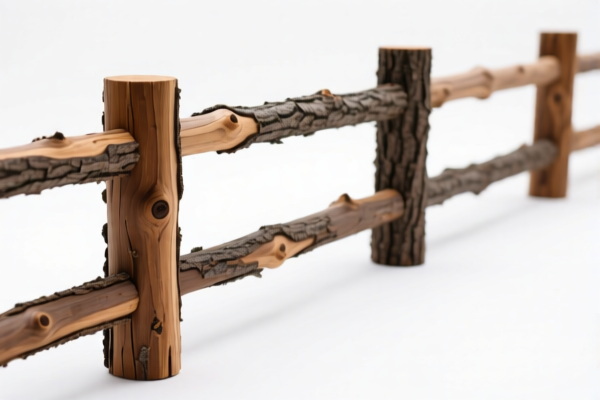
Fir and Spruce Rough Wood Guardrail Posts
CN → US| HS编码 | 关税税率 | 原产国 | 目的国 | 文档 |
|---|---|---|---|---|
| 4421997040 | 35.0% | CN | US | 官方文档 |
| 4403220115 | 35.0% | CN | US | 官方文档 |
| 4403210115 | 35.0% | CN | US | 官方文档 |
商品图片



AI分析
🌲 Fir and Spruce Rough Wood Guardrail Posts
🌐 HS Code Reference & Customs Clearance Guide | 2026 Latest Tariff Analysis | Professional Clearance Strategy
📌 I. Product Definition and Classification: Do You Truly Understand "Wood Guardrail Posts"?
Fir and Spruce Rough Wood Guardrail Posts are essential components in outdoor construction, agricultural fencing, and landscaping projects. In international trade, these products are classified based on their material composition (softwood: Fir/Spruce) and form/processing level (rough wood, shaped into posts/piles).
Key Distinctions:
- Rough Wood (4403 Series): Wood that has been merely peeled, chipped, or roughly squared, without being transformed into finished timber products like beams or boards for general construction. This includes posts cut from logs specifically for fencing.
- Wood Articles (4421 Series): This category applies to wood articles (made-up products) not specified elsewhere. However, primary processing like cutting into posts often falls under Chapter 44 Section I if it's still in the "log/post" stage.
⚠️ Critical Classification Logic:
- If the product is simply a log or post cut to length from Fir/Spruce timber → It falls under Chapter 44, Heading 4403 (Wood prepared for use as posts/piles).
- If it were a complex, pre-assembled fence panel or a highly processed wooden article not mentioned elsewhere, it might fall under 4421. However, "Rough Wood Posts" are explicitly recognized as prepared wood under 4403.
📦 II. HS Code Classification Details (2026 Latest Tariff Authority Comparison)
Based on the provided data, the following HS Codes are matched. Note that while the data suggests multiple codes, 4403.21.01.15 and 4403.22.01.15 are the most accurate for rough wood posts, while 4421.99.70.40 is a potential but less precise alternative for "wooden articles" if specific post classifications are disputed.
| HS Code | Product Description | Matching Logic | Applicable Scenario |
|---|---|---|---|
4403.21.01.15 |
Fir/Spruce Wood Prepared for Use as Posts/Piles | Best Match: The summary explicitly states the product name "Fir and Spruce" matches the material requirement, and "Guardrail Posts" matches the shape/usage requirement for prepared wood. | Raw/rough wooden posts cut from Fir or Spruce logs, used for fencing. |
4403.22.01.15 |
Other Softwood Wood Prepared for Use as Posts/Piles | Match: Similar to above. "Spruce" and "Fir" are both softwoods. This code covers prepared wood of other softwoods if "Fir" is not specifically singled out in a different subheading, but generally covers the same category of rough posts. | Rough wood posts made from Spruce or other unspecified softwoods. |
4421.99.70.40 |
Other Made-Up Wooden Articles | Partial Match: The summary mentions "Pine" (often grouped with Fir/Spruce in broad terms) and "Posts". This code is for "Sawn piles, rails, and posts". It is a broader category for wooden articles. Note: Usually, primary processed posts go to 4403, but if considered an "article" rather than "prepared wood", 4421 is used. | If customs interprets the item as a finished "wooden article" rather than just "prepared wood material". |
🔍 Key Reminder:
- 4403.21.01.15 is the most precise for Fir/Spruce prepared as posts.
- The term "Rough Wood" confirms it is not plywood or veneer (which would be Chapter 44 Section II or III).
- Ensure the wood is not impregnated with chemicals for preservation. If treated, the HS Code changes entirely (to 4403.10 or similar). The data assumes natural/rough wood.
💰 III. 2026 Latest Tariff Rate Breakdown (Including Surcharges & Policy Add-ons)
✅ Applicable Country: United States (US)
✅ Origin: China (CN) (Assumed based on the "122 Clause" and "Section 301" context in the data)
✅ Effective Date: Post-2025 policies including Section 301 and IEEPA add-ons.
🎯 1. 4403.21.01.15 / 4403.22.01.15 —— Prepared Wood Posts (Fir/Spruce)
| Item | Content |
|---|---|
| Base Tariff Rate | 0% (ad valorem) for these specific HS codes under normal MFN rates. |
| Section 301 Tariff (USITC) | +25% (List 3/4A items, typically applies to wood products of Chinese origin). |
| IEEPA Tariff (Section 122 / 301 Add-on) | +10% (Specific surcharge for certain Chinese goods, referenced as "122 Clause" in data). |
| Total Tariff Rate | 35.0% |
| Tax Calculation | CIF Value × 35% |
| De Minimis Eligibility | ❌ No (deny_de_minimis) — Wood products of this type are subject to strict scrutiny and high duties. |
| Legal Basis Path | USITC:4403.21.01.15 → FOOTNOTE:Section301 → IEEPA:9903.01.25 (for the 10% add-on). |
📌 Explanation:
- The 0% base rate is misleadingly low; the 35% total is the real cost.
- The 25% is the standard Section 301 tariff on many Chinese wood products.
- The 10% is an additional layer of tariff on specific Chinese origin goods (often referred to as the "122" or IEEPA add-on in recent trade actions).
- Total: 35%. This is a significant cost factor.
🎯 2. 4421.99.70.40 —— Other Wooden Articles (Posts/Piles)
| Item | Content |
|---|---|
| Base Tariff Rate | 0% |
| Section 301 Tariff (USITC) | +25% |
| IEEPA Tariff | +10% |
| Total Tariff Rate | 35.0% |
| Tax Calculation | CIF Value × 35% |
| De Minimis Eligibility | ❌ No |
📌 Note:
- The tax rate is identical to the 4403 codes.
- However, the classification risk is higher. If Customs argues these are "prepared wood" (4403) and not "articles" (4421), the 4403 code is legally more accurate for raw posts. If they argue 4421, the rate is the same, but the description requirements differ.
🛠️ IV. Customs Clearance Operational Advice (Practical Pitfall Avoidance Guide)
✅ 1. Required Documentation Checklist (Non-Negotiable)
| Document | Mandatory? | Description |
|---|---|---|
| ✅ Product Specification Sheet | ✔️ | Must state: Material (Fir/Spruce), Form (Rough Post), Dimensions, Treatment (Untreated/Natural). |
| ✅ Photo of Goods | ✔️ | Clear photos showing the rough texture and the cut ends of the posts to prove they are not processed timber (e.g., not planed or glued). |
| ✅ Commercial Invoice | ✔️ | Must accurately describe as "Fir and Spruce Rough Wood Guardrail Posts". Do not use vague terms like "Wooden Fence Parts". |
| ✅ Packing List | ✔️ | Include weight, volume, and quantity. |
| ✅ Wood Treatment Certificate | ✔️ | Crucial: Must confirm the wood is NOT treated with preservatives, creosote, or other chemicals. If treated, HS Code changes. |
| ✅ Phytosanitary Certificate | ✔️ | Often required by USDA/APHIS for raw wood imports to prevent pest introduction. |
✅ 2. Declaration Tips (Key Mantras)
🔥 “Be Specific on Material, Clear on Form, Prove it’s Rough!”
| Scenario | Correct Declaration | Common Mistake |
|---|---|---|
| Rough Posts | "Fir/Spruce Rough Wood Posts, Untreated, for Fence Construction" | "Wooden Fence Posts" (Too vague) |
| Treated Posts | "Creosote-Treated Wooden Posts" | Failing to disclose treatment → Seizure/Fine |
| Mixed Origins | Declare actual Country of Origin | Claiming "Made in Vietnam" if wood was processed in China → Fraud |
✅ 3. Special Handling Advice
| Situation | Recommendation |
|---|---|
| Importing from China | Expect 35% total duty. Budget accordingly. Ensure the supplier provides accurate HS Code confirmation. |
| Untreated vs. Treated | If the wood is pressure-treated, it may fall under 4403.10 (Impregnated wood), which has different rules. Do not misdeclare treated wood as rough/natural. |
| Phytosanitary Risk | USDA may inspect for beetles/borers. Ensure wood is kiln-dried or meets ISPM 15 standards if it were plywood, but for rough logs, phytosanitary certificates are key. |
| Customs Dispute | If Customs questions the classification, provide technical drawings or industry standards showing that "Guardrail Posts" are classified as "Prepared Wood for Posts" under 4403. |
🌍 V. Global Market Comparison (2026)
| Country/Region | Recommended HS Code | Estimated Tariff (China Origin) | Notes |
|---|---|---|---|
| 🇺🇸 USA | 4403.21.01.15 |
35% | High tariffs due to Section 301 + IEEPA. |
| 🇨🇳 China | 4403.21.01.15 |
5-10% | Import duty applies, but no anti-dumping. |
| 🇪🇺 EU | 4403.21.00 |
6-8% | Standard MFN rate. No additional sanctions. |
| 🇯🇵 Japan | 4403.21.00 |
3.2% | Low tariffs. Requires phytosanitary cert. |
📌 Conclusion:
- The USA is the most costly market for Chinese-origin wood posts due to political tariffs.
- Consider supply chain diversification if exporting to the US, or explore tariff engineering (e.g., ensuring wood is processed in a third country, if rules of origin allow).
📌 VI. Common Errors & Pitfalls (Lessons Learned)
❌ Mistake 1: Declaring "Wooden Fence" instead of "Wood Posts"
👉 Consequence: Customs may misclassify, leading to delays or incorrect duty assessment.
❌ Mistake 2: Ignoring the "Untreated" status
👉 Consequence: If wood is treated and not declared, it violates EPA and USDA regulations → Heavy Fines.
❌ Mistake 3: Assuming "Rough Wood" means "Log"
👉 Consequence: If posts are cut to specific lengths and smoothed, they may be seen as "Sawn Timber" (4407), which has different tariffs. Ensure documentation reflects "Rough/Raw" state.
✅ Best Practice:
"Fir and Spruce Rough Wood Guardrail Posts, Untreated, Natural Finish, Cut to Length, For Outdoor Fencing, HS Code 4403.21.01.15"
🎯 VII. Conclusion: Professional Declaration Saves Money!
🎯 Remember:
🔹 "Rough Wood = 4403, Not 4421 (if possible)."
🔹 "35% Duty for China to USA is unavoidable for these goods."
🔹 "Untreated is Key: Declare 'Natural' to avoid EPA penalties."
📌 Pro Tip:
If you are importing large quantities, consider applying for an HTS Exclusion (if applicable) or seek an Advance Ruling from U.S. Customs and Border Protection (CBP) to confirm the 35% rate and avoid post-clearance audits.
📣 Act Now:
📞 Contact a licensed customs broker.
📄 Prepare phytosanitary certificates and detailed specs.
💰 Budget for the 35% total tax burden.
✨ Professional Clearance Starts with Accurate Classification!
💼 Every percentage point counts in wood trade!
用户评价
关于 HS 编码归类
协调制度(HS)是由世界海关组织(WCO)制定的国际贸易商品分类标准。全球 200 多个国家采用 HS 系统作为海关关税、贸易统计和进出口监管的基础。
每个 HS 编码遵循以下层级结构:
- 章(2 位)——商品大类(例如:第 84 章:机器和机械设备)
- 品目(4 位)——章内的更具体分类
- 子目(6 位)——国际通用细分,所有 WCO 成员国统一使用
- 本国细分(8-10 位)——各国自行扩展的细分编码,如美国 HTSUS 10 位编码
正确的 HS 编码归类对于顺利通关、准确缴纳关税和遵守贸易法规至关重要。错误归类可能导致海关延误、多缴关税或罚款。
从CN进口到US时,适用的关税税率可能包括:
- 最惠国(MFN)税率——适用于 WTO 成员国的标准关税税率
- 普通税率——适用于无贸易协定国家
- 贸易救济关税——附加关税,如 301 条款(反倾销)、232 条款(国家安全)或反补贴税
本页内容仅供参考。如需正式归类,请咨询当地海关或持牌报关代理。