Fire Cut off Switch
CN → US| HS编码 | 关税税率 | 原产国 | 目的国 | 文档 |
|---|---|---|---|---|
| 8537109120 | 37.7% | CN | US | 官方文档 |
| 8537200020 | 37.7% | CN | US | 官方文档 |
| 8536509031 | 35.0% | CN | US | 官方文档 |
| 8536509032 | 35.0% | CN | US | 官方文档 |
商品图片
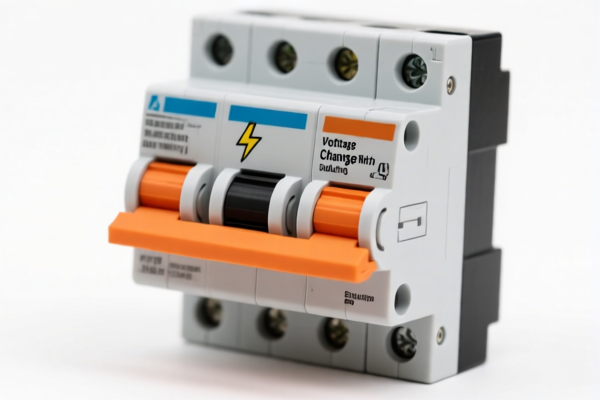
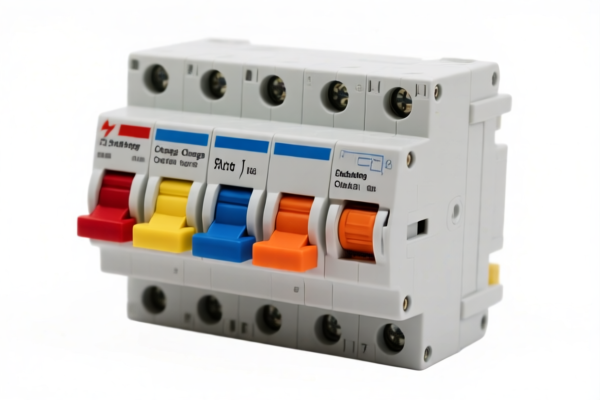
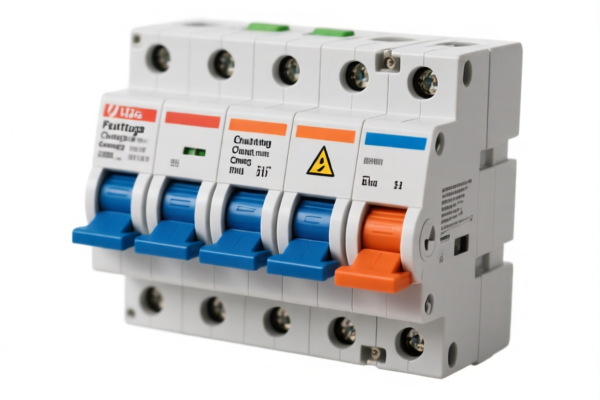
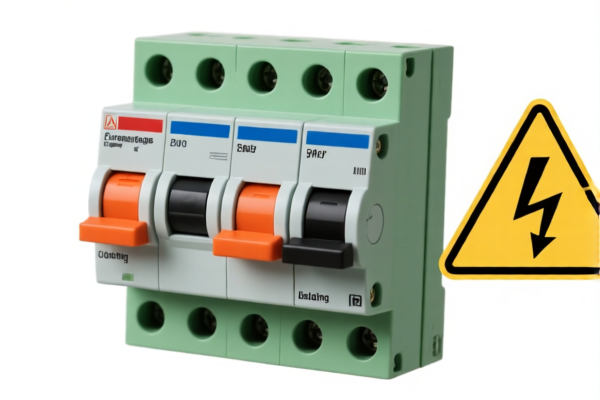
AI分析
🚨 Fire Cut-off Switch (Emergency Stop & Power Disconnection Switch)
🌐 HS Code Classification & Customs Clearance Guide | 2026 Updated Tariff Analysis | Critical Safety Compliance
📌 Part I: Product Definition & Classification Strategy
A Fire Cut-off Switch is a critical safety device used in electrical systems to immediately disconnect power to non-essential loads (such as HVAC, lighting, and general power outlets) during a fire emergency. It is typically triggered by a fire alarm system or a manual pull station.
In international trade and customs classification, these devices fall under Chapter 85, specifically Heading 8536 ("Electrical apparatus for switching or protecting electrical circuits...") or Heading 8537 ("Boards, panels... equipped with apparatus of 8535 or 8536").
The key distinction for classification lies in: 1. Voltage Rating: Is it rated for ≤ 1,000 V or > 1,000 V? 2. Configuration: Is it a standalone switch/device (Heading 8536) or part of a larger control panel/consoles with multiple apparatus (Heading 8537)? 3. Switch Type: Is it a general switch or a specific push-button/contactor assembly?
⚠️ Critical Note for Fire Cut-off Switches: Most standard fire cut-off switches are low-voltage devices (≤ 1,000 V). Therefore, they are predominantly classified under 8536.50.90 (Other switches) or 8537.10.91 (if part of a larger control panel).
- If the switch is a standalone unit (e.g., a relay module or simple switch integrated into a fire alarm control panel interface), it may fall under 8536.50.90.
- If the "Fire Cut-off Switch" is a complete assembly comprising multiple relays, breakers, and control logic housed in a cabinet/panel, it is classified under 8537.10.91 or 8537.20.00.
📦 Part II: HS Code Classification Details (Based on Provided Data)
Below are the specific HS Codes from the provided dataset, explaining why a Fire Cut-off Switch might fall into each category.
1. Standalone Switch / Relay Module (Low Voltage, ≤ 1,000 V)
HS Code: 8536.50.90.31 & 8536.50.90.32
| HS Code | Product Description | Application Scenario | Tax Rate (Total) |
|---|---|---|---|
8536.50.90.31 |
Push-button Switch: Rated at not over 5 A, Momentary contact | Simple manual emergency stop buttons, momentary fire alarm interface switches | 25.0% |
8536.50.90.32 |
Push-button Switch: Other, gang switches (Rated at not over 5 A) | Multi-gang switches, complex control panels with multiple push-buttons for fire shutdown | 25.0% |
📌 Why this classification? - The device is an "apparatus for switching... electrical circuits" (Heading 8536). - It is rated for ≤ 1,000 V. - It is identified as a "Push-button" type switch (common for emergency stops). - Tax Implication: These attract a 25.0% total tariff (0% Base + 25% Additional). This is a high tariff rate due to Section 301/USITC duties on Chinese-origin electrical components.
2. Control Panel / Switchboard Assembly (Low Voltage, ≤ 1,000 V)
HS Code: 8537.10.91.20
| HS Code | Product Description | Application Scenario | Tax Rate (Total) |
|---|---|---|---|
8537.10.91.20 |
Switchgear Assemblies and Switchboards: For voltage ≤ 1,000 V, Other | Complete Fire Command Center panels, integrated fire cut-off control units with multiple breakers/relays | 27.7% |
📌 Why this classification? - The product is a "Board, panel, console, desk, cabinet... equipped with two or more apparatus of heading 8535 or 8536." - Fire cut-off systems often consist of a main panel containing multiple relays, contactors, and fuses (Heading 8535/8536 apparatus). - It is used for "electric control or distribution of electricity." - Tax Implication: 27.7% Total Tariff (2.7% Base + 25% Additional). This is higher than the standalone switch due to the "panel" classification and higher base duty.
3. Control Panel / Switchboard Assembly (High Voltage, > 1,000 V)
HS Code: 8537.20.00.20
| HS Code | Product Description | Application Scenario | Tax Rate (Total) |
|---|---|---|---|
8537.20.00.20 |
Switchgear Assemblies and Switchboards: For voltage exceeding 1,000 V | Large industrial fire shutdown systems for high-voltage distribution centers (rare for standard building fire cut-offs) | 0.0% |
📌 Why this classification? - The device is a panel/assembly for voltage > 1,000 V. - Tax Implication: 0.0% Total Tariff (0% Base + 0% Additional). This is a significant cost advantage if the system operates at high voltage. However, most building fire cut-off switches are low voltage.
💰 Part III: 2026 Tariff Rate Detailed Explanation
✅ Applicable Country: United States (US)
✅ Origin: China (CN) (Assumed based on high additional tariffs in data)
✅ Effective Date: Current US Trade Policy (Section 301 + IEEPA)
🎯 Scenario A: Standalone Switch (8536.50.90.31 / .32)
- Base Tariff: 0.0%
- Additional Tariff (USITC/Section 301): 25.0%
- Total Effective Rate: 25.0%
- Calculation: CIF Value × 25%
- De Minimis: ❌ Not Eligible for $800 de minimis exemption (commercial import).
- Legal Basis: USITC Footnotes for Heading 8536.
🎯 Scenario B: Control Panel - Low Voltage (8537.10.91.20)
- Base Tariff: 2.7%
- Additional Tariff (USITC/Section 301): 25.0%
- Total Effective Rate: 27.7%
- Calculation: CIF Value × 27.7%
- De Minimis: ❌ Not Eligible.
- Legal Basis: USITC Footnotes for Heading 8537.
🎯 Scenario C: Control Panel - High Voltage (8537.20.00.20)
- Base Tariff: 0.0%
- Additional Tariff: 0.0%
- Total Effective Rate: 0.0%
- Calculation: CIF Value × 0%
- Note: Only applicable if the switchgear is explicitly rated for > 1,000 V. Misclassification here can lead to severe penalties.
📌 Key Insight: - The 25% additional tariff is the dominant cost driver for low-voltage electrical equipment from China. - High-voltage switchgear (
8537.20) is duty-free, making it highly attractive for industrial projects, but requires strict voltage verification.
🛠️ Part IV: Customs Clearance Practical Advice
✅ 1. Documentation Requirements (Mandatory)
| Document | Required? | Purpose |
|---|---|---|
| Product Specification Sheet | ✔️ | Must clearly state Voltage Rating (Critical for HS Code choice: ≤1kV vs >1kV) and Amperage. |
| Wiring Diagram / Schematic | ✔️ | To prove if the device is a "standalone switch" (8536) or a "panel with multiple apparatus" (8537). |
| Commercial Invoice | ✔️ | Must describe the item accurately (e.g., "Fire Cut-off Control Panel, 480V, UL Listed"). |
| UL/Intertek/CSA Listing Report | ✔️ | Fire cut-off switches often require safety certifications. Customs may request proof of compliance. |
| Packing List | ✔️ | Separate packing for switches vs. panels to avoid confusion. |
✅ 2. Classification Strategy & Risk Mitigation
| Situation | Recommended HS Code | Risk/Note |
|---|---|---|
| Simple Emergency Stop Button | 8536.50.90.31 |
Low risk, but high tariff (25%). Ensure it's not part of a larger panel. |
| Integrated Fire Control Panel | 8537.10.91.20 |
Higher tariff (27.7%). Ensure it contains ≥2 apparatus of 8535/8536. |
| High-Voltage Industrial Switchgear | 8537.20.00.20 |
Zero Duty. Must provide certified voltage rating > 1,000 V. High scrutiny from customs. |
| Misclassification | N/A | Classifying a 480V panel as 120V switch → Penalty + Back Duties. |
🔥 Pro Tip: If your fire cut-off switch is a simple relay or contactor that mounts inside an existing panel, declare it as 8536 (switch/relay). If it is a pre-assembled cabinet with multiple relays, breakers, and wiring, declare it as 8537 (panel). The boundary is critical for duty savings and compliance.
✅ 3. Special Considerations for Fire Safety Equipment
- UL Certification: US Customs may withhold release if the product lacks proper safety certifications (UL, ETL, CSA). Ensure all documentation is ready.
- Dual-Use Concerns: While rare for fire switches, ensure the product is not classified as "military" or "dual-use" if it has advanced control logic. Stick to standard electrical descriptions.
- Labeling: Labels must be in English and clearly state: "Fire Cut-off Switch," Voltage, Amperage, and Manufacturer info.
🌍 Part V: Global Market Comparison (Brief)
| Market | HS Code (Typical) | Estimated Duty (China Origin) | Notes |
|---|---|---|---|
| 🇺🇸 USA | 8536.50.90 / 8537.10 |
25.0% - 27.7% | High Section 301 tariffs. High-voltage (8537.20) is 0%. |
| 🇨🇳 China | 8536.50.90 / 8537.10 |
0% - 5% | Standard MFN rates. No additional duties for imports into China. |
| 🇪🇺 EU | 8536.50 / 8537.10 |
0% - 4% | Standard EU duties. No US-style Section 301 equivalents. |
| 🇬🇧 UK | 8536.50 / 8537.10 |
0% - 4% | Post-Brexit tariffs similar to EU. |
📌 Conclusion: - US Market: Duty-free only if High Voltage (>1,000 V) (
8537.20). Low-voltage items face 25-27.7% tariffs. - Other Markets: Generally lower duties (0-5%), but require CE/UKCA certification.
📌 Part VI: Common Errors & Pitfalls
❌ Error 1: Declaring a 480V Control Panel as a 120V Switch. 👉 Consequence: Underpayment of duty + Penalty. Customs will audit voltage ratings.
❌ Error 2: Declaring a Panel as a Switch to avoid the 2.7% base duty. 👉 Consequence: The 25% additional duty applies to both, but the description mismatch leads to delays and potential seizure.
❌ Error 3: Ignoring the "≥2 Apparatus" rule for Heading 8537. 👉 Consequence: A panel with only one relay/switch is classified as a switch (8536), not a panel (8537). Misclassification leads to incorrect tax reporting.
✅ Correct Practice:
"Fire Cut-off Control Panel, 480V AC, UL 508A Listed, containing 4 relays and 2 circuit breakers, Model FC-100."
- Clearly states voltage.
- Specifies "Panel" and lists internal components (relays/breakers) to justify Heading 8537.
- Mentions certification (UL) for compliance.
🎯 Part VII: Conclusion & Action Plan
🎯 Key Takeaway:
- Low Voltage (≤1,000 V): Expect 25-27.7% total duty. Choose between 8536.50.90 (switch) or 8537.10.91 (panel) based on complexity.
- High Voltage (>1,000 V): 0% Duty under 8537.20.00. Highly recommended for industrial applications to save costs, if technically feasible.
📌 Action Items: 1. Verify Voltage: Confirm if your system is ≤1,000 V or >1,000 V. 2. Document Components: List all internal switches/relays to determine if it's a "panel" (8537) or "switch" (8536). 3. Prepare Certifications: Ensure UL/ETL reports are ready for customs inspection. 4. Consult a Broker: For high-value fire safety systems, a pre-shipment ruling is advised.
✨ Accurate Classification Saves Money and Ensures Compliance!
💼 Don't let duty misclassification burn your profits!
用户评价
关于 HS 编码归类
协调制度(HS)是由世界海关组织(WCO)制定的国际贸易商品分类标准。全球 200 多个国家采用 HS 系统作为海关关税、贸易统计和进出口监管的基础。
每个 HS 编码遵循以下层级结构:
- 章(2 位)——商品大类(例如:第 84 章:机器和机械设备)
- 品目(4 位)——章内的更具体分类
- 子目(6 位)——国际通用细分,所有 WCO 成员国统一使用
- 本国细分(8-10 位)——各国自行扩展的细分编码,如美国 HTSUS 10 位编码
正确的 HS 编码归类对于顺利通关、准确缴纳关税和遵守贸易法规至关重要。错误归类可能导致海关延误、多缴关税或罚款。
从CN进口到US时,适用的关税税率可能包括:
- 最惠国(MFN)税率——适用于 WTO 成员国的标准关税税率
- 普通税率——适用于无贸易协定国家
- 贸易救济关税——附加关税,如 301 条款(反倾销)、232 条款(国家安全)或反补贴税
本页内容仅供参考。如需正式归类,请咨询当地海关或持牌报关代理。