Fire Extinguishing Agent Corrosion Inhibitor
CN → US| HS编码 | 关税税率 | 原产国 | 目的国 | 文档 |
|---|---|---|---|---|
| 38089490 | 0.0% | CN | US | 官方文档 |
| 38119090 | 0.0% | CN | US | 官方文档 |
| 3824999397 | 40.0% | CN | US | 官方文档 |
| 3824995500 | 38.7% | CN | US | 官方文档 |
| 8424100000 | 17.5% | CN | US | 官方文档 |
| 8424900500 | 17.5% | CN | US | 官方文档 |
| 38089490 | 0.0% | CN | US | 官方文档 |
| 38119090 | 0.0% | CN | US | 官方文档 |
商品图片
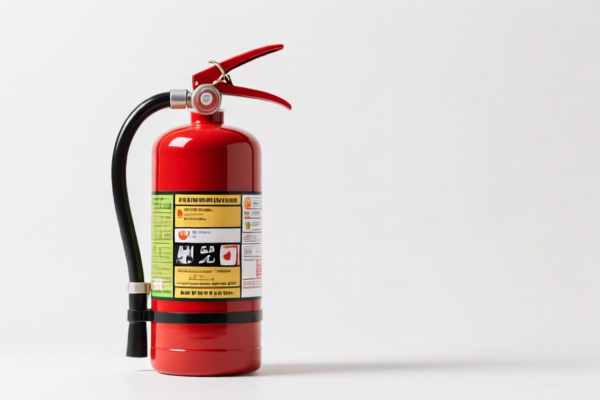
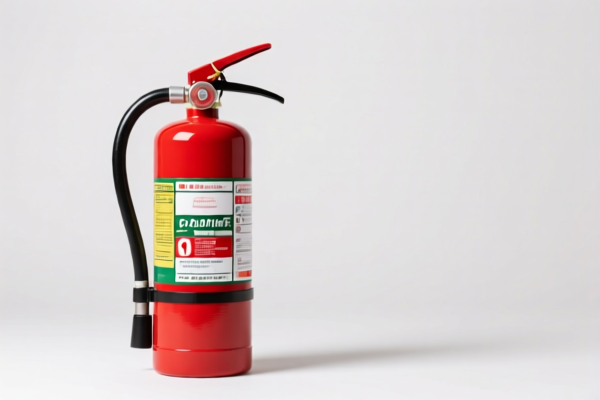
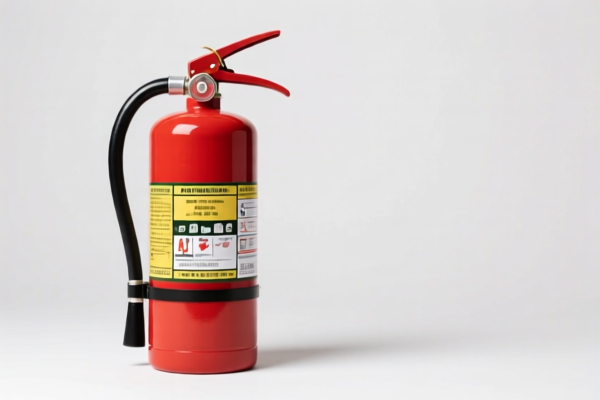
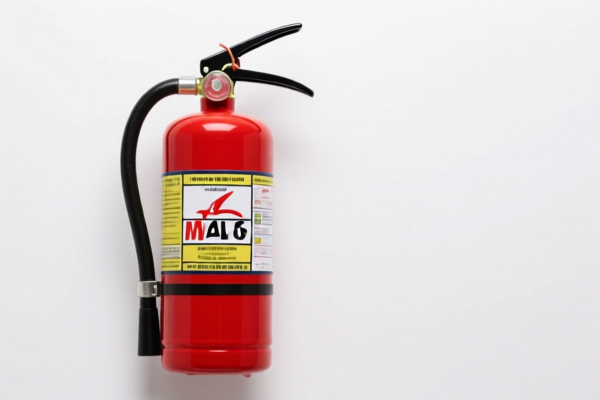
AI分析
🧪 Fire Extinguishing Agent Corrosion Inhibitor (Chemical Additives)
🌐 HS Code Reference & Customs Clearance Guide | 2026 Latest Tariff Analysis | Professional Compliance Strategy
📌 Part I: Product Definition & Classification: What Exactly Is It?
A Fire Extinguishing Agent Corrosion Inhibitor is a specialized chemical preparation designed to be added to water-based fire suppression systems (such as sprinklers, standpipes, or foam systems). Its primary function is to prevent metal degradation (rust and corrosion) of pipes, valves, and nozzles within the fire protection system, thereby ensuring system integrity and longevity.
In international trade, these products are classified based on their specific chemical composition and primary function: 1. Chemical Preparations for Metal Protection: If the primary function is preventing corrosion of metals (often categorized under Chapter 38). 2. Fire Extinguishing Preparations: If formulated specifically as an additive for fire suppression agents. 3. Mechanical Appliance Parts: If sold specifically as replacement components for extinguisher bodies (less common for pure chemical inhibitors).
⚠️ Critical Distinction:
- Pure chemical liquids/powders for preventing rust in water systems → Chapter 38 (Miscellaneous Chemical Products)
- Mechanical parts of a fire extinguisher device → Chapter 84 (Fire Extinguishers Parts)
- General binders/mixtures not elsewhere specified → Chapter 38 (Other Chemical Preparations)
📦 Part II: HS Code Classification Details (2026 Latest Tariff Authority Comparison)
Based on the provided data, here is the breakdown of applicable HS Codes for "Fire Extinguishing Agent Corrosion Inhibitors" and related preparations. Note that for pure chemical inhibitors, Chapter 38 is the primary domain, while Chapter 84 applies only to physical parts.
| HS Code | Product Description | Application Scenario | Tax Status |
|---|---|---|---|
3808.94.90 |
Other chemical products... including corrosion inhibitors for use in fire extinguishing agents, primarily used to prevent metal degradation in fire suppression systems. | General corrosion inhibitors for fire suppression water systems. | ❌ Error: Failed to retrieve tax info |
3811.90.90 |
Other chemical products... specifically formulated for use in fire extinguishing systems, including additives such as corrosion inhibitors to enhance agent stability. | Specialized additives for fire extinguishing systems. | ❌ Error: Failed to retrieve tax info |
3824.99.93.97 |
Prepared binders for foundry molds... or chemical products... not elsewhere specified or included... Other: Other... | General chemical mixtures, binders, or unspecified chemical preparations. | ⚠️ High Risk: 30.0% Total Tax |
3824.99.55.00 |
Mixtures of halogenated hydrocarbons... not elsewhere specified or included. | Halogenated chemical mixtures (if the inhibitor contains halogens). | ⚠️ High Risk: 28.7% Total Tax |
8424.10.00.00 |
Fire extinguishers, whether or not charged. | Physical Fire Extinguishers (not the chemical inside, but the device). | ✅ 7.5% Total Tax |
8424.90.05.00 |
Parts of fire extinguishers. | Physical Parts (nozzles, valves, tanks) of fire extinguishers. | ✅ 7.5% Total Tax |
🔍 Key Insight:
- The term "Corrosion Inhibitor" typically refers to chemical preparations. Therefore, HS Codes 3808, 3811, or 3824 are the most likely candidates. - HS Codes 8424.10 and 8424.90 refer to the mechanical device (the extinguisher cylinder itself) or its physical parts, NOT the chemical fluid inside. Do not misclassify chemicals under Chapter 84. - The data indicates that tax information for3808.94.90and3811.90.90failed to retrieve. In such cases, customs officers may default to generic chemical categories like3824(Other Chemical Preparations), which carry higher tariffs (28.7%–30.0%).
💰 Part III: 2026 Latest Tariff Rate Details (Including Surcharges & Policy Additions)
✅ Applicable Country: United States (US)
✅ Origin: China (CN)
✅ Effective Date: From November 10, 2025 (including subsequent imports)
🎯 1. For Chemical Inhibitors (Chapter 38 - Likely 3824.99.55.00 or 3824.99.93.97)
Since the specific tax info for 3808 and 3811 is unavailable in the data, we must consider the fallback categories provided in the dataset, which carry significant duties.
| Item | Content |
|---|---|
| Base Tariff (MFN) | 3.7% – 5.0% (depending on specific subheading) |
| Section 301 Surtax | +25.0% (Applied to Chinese-origin chemical products) |
| Total Tariff Rate | 28.7% – 30.0% |
| Calculation | CIF Value × Total Tax Rate |
| De Minimis Eligibility | ❌ Not Eligible (Chemicals are generally excluded from de minimis exemptions under current trade policies) |
| Legal Basis Path | USITC:3824.99.55.00 → FOOTNOTE:301_Section_301 |
📌 Explanation:
- If the corrosion inhibitor is classified under generic chemical mixtures (3824.99), it attracts a 30% total tariff (5% base + 25% surcharge). - If it is a mixture of halogenated hydrocarbons (3824.99.55.00), the rate is 28.7% (3.7% base + 25% surcharge). - Risk: Misclassifying a chemical as a "non-specified chemical" leads to high tariffs. Proper documentation proving its specific function (corrosion inhibition for fire systems) is crucial to argue for a potentially lower or exempted rate under3808or3811, though data for these is currently "Error."
🎯 2. For Fire Extinguisher Devices/Parts (Chapter 84 - 8424.10 / 8424.90)
Note: This applies ONLY if you are importing the physical extinguisher or its mechanical parts, not the chemical inhibitor.
| Item | Content |
|---|---|
| Base Tariff | 0.0% |
| Section 301 Surtax | +7.5% |
| Total Tariff Rate | 7.5% |
| Calculation | CIF Value × 7.5% |
| De Minimis Eligibility | ❌ Not Eligible (Fire safety equipment often subject to stricter scrutiny) |
| Legal Basis Path | USITC:8424.10.00.00 / 8424.90.05.00 |
📌 Explanation:
- Physical fire extinguishers and their parts have a significantly lower total tariff of 7.5%. - Crucial: Do not confuse the chemical (Chapter 38) with the device (Chapter 84). Importing chemicals under Chapter 84 is a major compliance error.
🛠️ Part IV: Customs Clearance Practical Advice (Combat Pitfall Guide)
✅ 1. Documentation Checklist (Non-Negotiable)
| Document | Required | Explanation |
|---|---|---|
| ✅ Product Specification Sheet | ✔️ | Must clearly state "Corrosion Inhibitor for Fire Suppression Systems" and list active chemical ingredients. |
| ✅ Safety Data Sheet (SDS) | ✔️ | Mandatory for chemical imports. Section 3 (Composition) must match the HS code claim. |
| ✅ Statement of Function | ✔️ | A letter explaining that the product is an additive for fire systems, not a fire extinguisher itself. |
| ✅ Commercial Invoice | ✔️ | Must NOT say "Fire Extinguisher" if it's just the chemical. Use "Chemical Additive: Corrosion Inhibitor." |
| ✅ Certificate of Origin (CO) | ✔️ | To determine eligibility for surcharges (US vs. China origin). |
| ✅ HS Code Ruling Request (Optional) | ✔️ | Given the "Error" in tax data for 3808/3811, pre-classification is highly recommended. |
✅ 2. Classification Strategy (Key Mnemonic)
🔥 "Chemical Goes to Ch38, Device to Ch84, Parts to Ch84.75, Mixes to Ch38.30!"
| Scenario | Correct Classification | Common Mistake | Consequence |
|---|---|---|---|
| Importing liquid corrosion inhibitor | 3808.94.90 / 3811.90.90 (Best Case) |
Misclassify as 8424.10 (Fire Extinguisher) |
Severe Penalty for false declaration |
| Importing halogenated chemical mix | 3824.99.55.00 |
Misclassify as generic 3824.99.93 |
Slight rate difference (28.7% vs 30%) |
| Importing physical extinguisher | 8424.10.00.00 |
Misclassify as chemical 3808 |
Wrong HS Code, potential seizure |
| Importing extinguisher nozzle (part) | 8424.90.05.00 |
Misclassify as chemical | Compliance failure |
✅ 3. Special Handling for "Error" Tax Data (3808/3811)
Since the data shows "Failed to retrieve tax information" for 3808.94.90 and 3811.90.90:
1. Do Not Assume 0%: Do not assume these codes have 0% tax. The "Error" might mean they are subject to high duties or require special licensing.
2. Default to 3824: If customs cannot verify the specific use under 3808/3811, they may classify the product as "Other Chemical Preparations" (3824), leading to 28.7%–30.0% tariffs.
3. Proactive Disclosure: Provide robust technical documentation to prove the product is specifically formulated for fire suppression, arguing for classification under 3808 or 3811 if possible, to avoid the higher 3824 rates.
🌍 Part V: Global Market Comparison (2026 Latest)
| Country/Region | Recommended HS Code | Tariff (China Origin) | Key Certification | Remarks |
|---|---|---|---|---|
| 🇺🇸 USA | 3808.94.90 / 3811.90.90 |
Tax Data Error (Risk of 28.7-30% if misclassified) | EPA Registration (if biocide), SDS | Strict chemical regulation. |
| 🇪🇺 EU | 3824.99.99 / 3824.90.99 |
0% - 6.5% (Standard MFN) | REACH Registration | REACH compliance is critical for chemicals. |
| 🇨🇳 China | 3824.99.93 / 3824.99.55 |
Varies (Often 5-10%) | China Compulsory Certification (if applicable) | Import licenses may be required. |
| 🇬🇧 UK | 3824.99.99 |
0% - 6.5% | UK REACH | Post-Brexit regulations apply. |
📌 Conclusion:
- USA is the most challenging market due to Section 301 Surcharges and uncertain tax data for specific fire chemicals.
- EU and UK rely heavily on REACH compliance rather than high tariffs.
- Always verify the specific chemical composition with a customs broker before shipping to the US.
📌 Part VI: Common Errors & Pitfall Guide (Lessons Learned)
❌ Error 1: Classifying chemical inhibitors as "Fire Extinguishers" (8424.10).
👉 Consequence: False declaration. Customs may seize goods and impose penalties because a chemical is not a mechanical device.
❌ Error 2: Assuming "Corrosion Inhibitor" has 0% tax because it's a "chemical."
👉 Consequence: If not properly classified under 3808/3811, it defaults to 3824 with 28.7-30% tariffs.
❌ Error 3: Ignoring SDS and EPA requirements.
👉 Consequence: CBP (US Customs) will hold the shipment until proper EPA/chemical documentation is provided, causing delays and demurrage fees.
✅ Correct Approach:
"Fire Suppression System Corrosion Inhibitor, Chemical Liquid, 5 Gallon Drum, Contains [Chemical Name], SDS Provided, EPA Regulated (if applicable)."
🎯 Part VII: Conclusion: Professional Classification, Cost Control, Compliance!
🎯 Remember the Mnemonic:
🔹 "Chemical is not a Device! 38 for Fluids, 84 for Cylinders."
🔹 "If Tax Data is Error, Prepare for 30% Duty!"
🔹 "SDS and Specs are Your Best Friends!"
📌 Pro Tip:
If your corrosion inhibitor is originating from Vietnam, Mexico, or Thailand, you may avoid US Section 301 surcharges (0%–7.5% depending on HTS).
Recommendation: Apply for a Pre-Ruling from CBP before shipping to resolve the "Tax Data Error" uncertainty for 3808/3811.
📣 Immediate Action:
📞 Contact a Licensed Customs Broker + Provide SDS + Submit Pre-Ruling Request for US Imports
🚀 Let your chemical additives clear customs smoothly, avoid 30% pitfalls, and protect your margins!
✨ Professional Customs Clearance Starts with Accurate Classification!
💼 Every Dollar Saved in Tariffs is Pure Profit!
用户评价
关于 HS 编码归类
协调制度(HS)是由世界海关组织(WCO)制定的国际贸易商品分类标准。全球 200 多个国家采用 HS 系统作为海关关税、贸易统计和进出口监管的基础。
每个 HS 编码遵循以下层级结构:
- 章(2 位)——商品大类(例如:第 84 章:机器和机械设备)
- 品目(4 位)——章内的更具体分类
- 子目(6 位)——国际通用细分,所有 WCO 成员国统一使用
- 本国细分(8-10 位)——各国自行扩展的细分编码,如美国 HTSUS 10 位编码
正确的 HS 编码归类对于顺利通关、准确缴纳关税和遵守贸易法规至关重要。错误归类可能导致海关延误、多缴关税或罚款。
从CN进口到US时,适用的关税税率可能包括:
- 最惠国(MFN)税率——适用于 WTO 成员国的标准关税税率
- 普通税率——适用于无贸易协定国家
- 贸易救济关税——附加关税,如 301 条款(反倾销)、232 条款(国家安全)或反补贴税
本页内容仅供参考。如需正式归类,请咨询当地海关或持牌报关代理。