Fire resistant Rapid setting Cement
CN → US| HS编码 | 关税税率 | 原产国 | 目的国 | 文档 |
|---|---|---|---|---|
| 6815910011 | 35.0% | CN | US | 官方文档 |
| 6815994110 | 35.0% | CN | US | 官方文档 |
| 6810110070 | 38.2% | CN | US | 官方文档 |
| 6810110010 | 38.2% | CN | US | 官方文档 |
商品图片
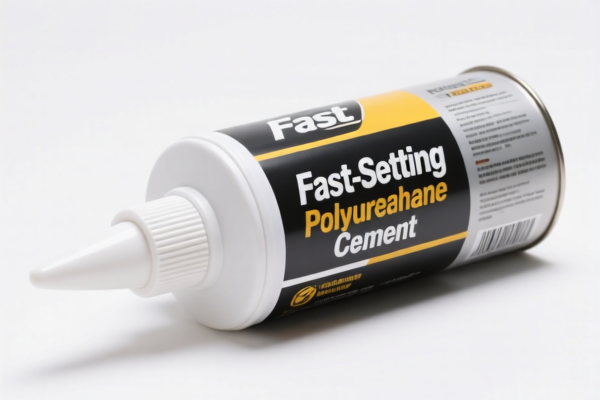
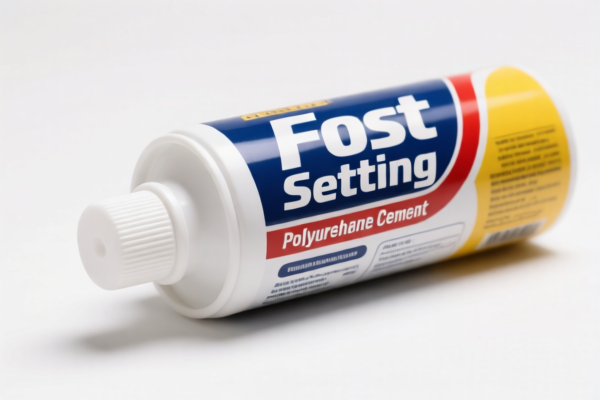
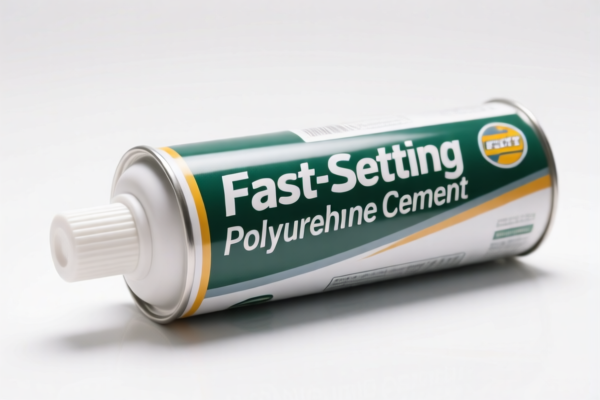
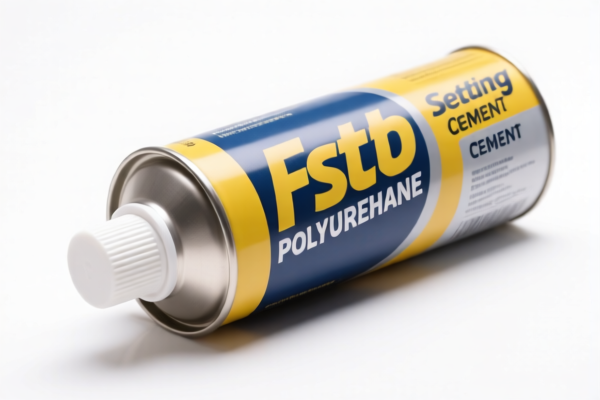
AI分析
🔥 Fire Resistant Rapid Setting Cement: HS Code Classification & US Customs Clearance Guide (2026)
🌐 HS Code Reference & Customs Clearance Guide | 2026 Latest Tariff Analysis | Professional Level Strategy
📌 I. Product Definition & Classification: Do You Really Understand "Fire Resistant Rapid Setting Cement"?
Fire Resistant Rapid Setting Cement is a specialized construction material used in high-temperature environments (e.g., furnace linings, kilns, industrial kilns) and emergency repairs where quick hardening is critical.
In international trade, it is often confused with standard construction cement. However, its chemical composition and functional attributes dictate two distinct HS Code pathways:
Pathway A: Mineral-Based Refractory Products
Products primarily composed of magnesium oxide (MgO) or other specific mineral binders, designed for extreme heat resistance. These fall under Chapter 68 (Articles of Stone or Similar Mineral Substances).
Pathway B: Cement-Based Concrete Products
Products classified strictly as "Cement" or "Concrete" articles, focusing on the binding agent rather than specific mineral oxide compositions. These fall under Chapter 68 as well, but with different subheadings regarding material definition.
⚠️ Key Distinction Point:
- If the product is defined by its mineral content (e.g., Magnesia) and refractory nature →归入 6815.91.00.11 / 6815.99.41.10
- If the product is defined by its cementitious binder properties (even if rapid-setting) → 归入 6810.11.00.70 / 6810.11.00.10
📦 II. HS Code Classification Details (2026 Latest Tariff Authority Comparison)
| HS Code | Product Description | Application Scenario | Key Material Characteristic |
|---|---|---|---|
6815.91.00.11 |
Articles of stone or other mineral substances (Refractory Cement - Fast Setting) | Industrial furnace lining, kiln repair, high-temp insulation | Classified as mineral material article; fits Chapter 68 scope for stone/mineral products. |
6815.99.41.10 |
Other articles of stone or other mineral substances | Specific chemical composition products (e.g., MgO-based) | Contains Magnesium Oxide (MgO) and other mineral components; fits specific chemical criteria. |
6810.11.00.70 |
Cement, concrete or artificial stone articles (Fire Resistant Cement - Rapid Setting) | General construction, fireproofing coatings, non-structural fire barriers | Material is defined as Cement; fits Chapter 68 definition of cement/concrete articles. |
6810.11.00.10 |
Cement, concrete or artificial stone articles (Fire Resistant Cement - Rapid Setting) | Standard fire-resistant construction applications | Core material matches Chapter 68 cement definition; fire resistance does not conflict with chemical binding properties. |
🔍 Key Reminder:
- Chapter 68 covers both "Mineral Articles" and "Cement/Concrete Articles." The distinction lies in whether the importer declares it based on mineral composition (Path A) or cementitious properties (Path B).
- Do not split shipments: If the product is a single homogeneous mix, declare it under one HS Code based on the primary material characteristic declared in your invoice.
💰 III. 2026 Latest Tariff Rate Details (Including Additional Duties & Policy Surcharges)
✅ Applicable Country: United States (US)
✅ Origin: China (CN)
✅ Effective Date: From November 10, 2025 (and subsequent imports)
🎯 1. 6815.91.00.11 & 6815.99.41.10 —— Mineral-Based Refractory Cement
| Item | Detail |
|---|---|
| Base Duty Rate | 0.0% (ad valorem) |
| USITC Additional Duty (Section 301) | +25.0% |
| Section 122 Duty | +10.0% |
| Total Duty Rate | 35.0% |
| Tax Calculation | CIF Value × 35.0% |
| De Minimis Eligibility | ❌ No (deny_de_minimis) |
| Legal Basis Path | USITC:6815.91.00.11 → FOOTNOTE:301 + Section 122 Statutory Authority |
📌 Explanation:
- "Base 0%": Mineral articles often have low base rates.
- "301 Additional 25%": Standard Section 301 tariff for Chinese goods in this category.
- "Section 122 10%": Specific statutory surcharge applied to these mineral/cement imports.
- Total 35%: High cost implication; must be factored into pricing strategies.
🎯 2. 6810.11.00.70 & 6810.11.00.10 —— Cement-Based Fire Resistant Cement
| Item | Detail |
|---|---|
| Base Duty Rate | 3.2% (ad valorem) |
| USITC Additional Duty (Section 301) | +25.0% |
| Section 122 Duty | +10.0% |
| Total Duty Rate | 38.2% |
| Tax Calculation | CIF Value × 38.2% |
| De Minimis Eligibility | ❌ No (deny_de_minimis) |
| Legal Basis Path | USITC:6810.11.00.70 → FOOTNOTE:301 + Section 122 Statutory Authority |
📌 Explanation:
- "Base 3.2%": Cementitious articles carry a small base duty.
- "301 Additional 25%": Standard Section 301 tariff.
- "Section 122 10%": Same statutory surcharge as mineral articles.
- Total 38.2%: Highest tariff scenario. Requires careful valuation and compliance.📌 Comparison:
- Mineral-based (6815): 35.0% Total Duty
- Cement-based (6810): 38.2% Total Duty
- Difference: 3.2% base duty makes cement-based declaration slightly more expensive.
🛠️ IV. Customs Clearance Practical Advice (Real-World Pitfall Avoidance)
✅ 1. Required Documentation Checklist (None Missing)
| Document | Mandatory | Explanation |
|---|---|---|
| ✅ Product Specification Sheet | ✔️ | Must state chemical composition (e.g., % MgO vs. % Portland Cement). |
| ✅ Material Safety Data Sheet (MSDS) | ✔️ | Confirms hazardous/non-hazardous status; supports fire-resistant claims. |
| ✅ Product Photos (Label & Package) | ✔️ | Clear view of HS Code, Country of Origin, and Technical Data. |
| ✅ Commercial Invoice | ✔️ | Must explicitly state "Fire Resistant Rapid Setting Cement" AND HS Code. |
| ✅ Packing List | ✔️ | Weight and quantity details; no partial shipments without consistent labeling. |
| ✅ Certificate of Origin (CO) | ✔️ | If claiming any preferential treatment (though unlikely for CN-US in this category). |
✅ 2. Declaration Tips (Key Mnemonics)
🔥 "Check Composition, Not Just Name. Mineral vs. Cement = 3.2% Difference!"
| Scenario | Correct Declaration | Wrong Practice |
|---|---|---|
| High MgO content, refractory purpose | 6815.91.00.11 or 6815.99.41.10 (35.0%) |
Misdeclaring as standard cement → 38.2% (Overpaid) |
| Standard cement binder with fire additives | 6810.11.00.70 or 6810.11.00.10 (38.2%) |
Misdeclaring as mineral article → 35.0% (Underpaid/Risk of Penalty) |
| Product description in Invoice | "Refractory Cement (MgO-based)" or "Fire-Resistant Concrete Cement" | Vague terms like "Building Material" → Inspection Delay |
| Packaging | Labeled "Made in China" | Missing Origin Label → Customs Hold |
✅ 3. Special Case Handling
| Scenario | Handling Advice |
|---|---|
| Mixed Shipments | If a shipment contains both types, declare separately. Do not average rates. |
| OEM Custom Blends | Provide chemical analysis report to justify "Mineral" vs. "Cement" classification. |
| Emergency Import | Ensure all docs are pre-submitted. 301+122 duties are non-negotiable. |
| Valuation Dispute | Use CIF value (Cost + Insurance + Freight). Do not under-declare. |
🌍 V. Global Market Comparison (2026 Latest)
| Country/Region | Recommended HS Code | Tariff Rate (China Origin) | Certification Requirement | Notes |
|---|---|---|---|---|
| 🇺🇸 USA | 6815.91.00.11 / 6810.11.00.70 |
35.0% - 38.2% | None specific (but commercial docs critical) | Highest cost market. 301 + 122 duties apply. |
| 🇨🇳 China | 6815.99.00.00 / 6810.11.00.00 |
0% - 5% | GB Standards | Domestic consumption. Low tariffs. |
| 🇪🇺 EU | 6815.91.00 / 6810.11.00 |
0% - 6.5% | CE Marking (if construction product regulation applies) | No 301/122 equivalent. Lower barriers. |
| 🇮🇳 India | 6815.91 / 6810.11 |
7.5% - 15% | BIS Certification | Moderate tariffs. Anti-dumping may apply. |
📌 Conclusion:
- The USA is the most expensive market due to the combination of Base + 301 + 122 duties.
- Mineral-based classification (6815) saves 3.2% compared to Cement-based (6810).
- No duty-free options available for Chinese-origin fire-resistant cement in the US.
📌 VI. Common Errors & Pitfall Guide (Lessons Learned)
❌ Error 1: Using generic terms like "Cement" without specifying "Fire Resistant" or "Rapid Setting"
👉 Consequence: Customs may reclassify under higher duty rates or hold for inspection.
❌ Error 2: Confusing "Mineral Articles" with "Cement Articles"
👉 Consequence: If the chemical composition is MgO-based but declared as Cement, you pay 38.2% instead of 35.0%. If vice versa, risk of penalty for underpayment.
❌ Error 3: Ignoring Section 122 Duty
👉 Consequence: Many importers forget the 10% surcharge. Total error: 10% underpayment + interest.
❌ Error 4: Incorrect Origin Labeling
👉 Consequence: Goods detained at border. Re-labeling costs + demurrage fees.
✅ Correct Practice:
"Fire Resistant Rapid Setting Cement (MgO-based), HS 6815.91.00.11, Made in China, CIF Value $X, Subject to 25% 301 Duty + 10% Section 122 Duty."
🎯 VII. Conclusion: Professional Declaration, Save Time, Reduce Costs!
🎯 Remember the Mnemonic:
🔹 "Mineral vs. Cement, Check the Composition!"
🔹 "35% or 38.2%, The 3.2% Matters!"
🔹 "301 + 122, Total is 35-38%, No Exemption!"
📌 Pro Tip:
If your product is originally from Vietnam, Mexico, or Thailand, you may qualify for Section 301 exemptions or lower base rates.
For Chinese goods, pre-classification rulings are highly recommended to avoid disputes on "Mineral" vs. "Cement" classification.
📣 Immediate Action:
📞 Contact a Professional Customs Broker + Provide Chemical Analysis Report + Apply for HS Code Pre-Ruling
🚀 Ensure your fire-resistant cement clears customs smoothly, efficiently, and profitably!
✨ Professional Customs Clearance Starts with Accurate Classification!
💼 Every Percent Counts in Cross-Border Trade!
用户评价
关于 HS 编码归类
协调制度(HS)是由世界海关组织(WCO)制定的国际贸易商品分类标准。全球 200 多个国家采用 HS 系统作为海关关税、贸易统计和进出口监管的基础。
每个 HS 编码遵循以下层级结构:
- 章(2 位)——商品大类(例如:第 84 章:机器和机械设备)
- 品目(4 位)——章内的更具体分类
- 子目(6 位)——国际通用细分,所有 WCO 成员国统一使用
- 本国细分(8-10 位)——各国自行扩展的细分编码,如美国 HTSUS 10 位编码
正确的 HS 编码归类对于顺利通关、准确缴纳关税和遵守贸易法规至关重要。错误归类可能导致海关延误、多缴关税或罚款。
从CN进口到US时,适用的关税税率可能包括:
- 最惠国(MFN)税率——适用于 WTO 成员国的标准关税税率
- 普通税率——适用于无贸易协定国家
- 贸易救济关税——附加关税,如 301 条款(反倾销)、232 条款(国家安全)或反补贴税
本页内容仅供参考。如需正式归类,请咨询当地海关或持牌报关代理。