Fish Bone Charcoal
CN → US| HS编码 | 关税税率 | 原产国 | 目的国 | 文档 |
|---|---|---|---|---|
| 3802100050 | 39.8% | CN | US | 官方文档 |
| 2530908050 | 10.0% | CN | US | 官方文档 |
| 2530908015 | 10.0% | CN | US | 官方文档 |
| 3802901000 | 40.8% | CN | US | 官方文档 |
商品图片
AI分析
🦴 Fish Bone Charcoal (Activated Carbon & Mineral Products)
🌐 HS Code Reference & Customs Clearance Guide | 2026 Latest Tariff Analysis | Professional Clearance Strategy
📌 1. Product Definition and Classification: Do You Really Understand "Fish Bone Charcoal"?
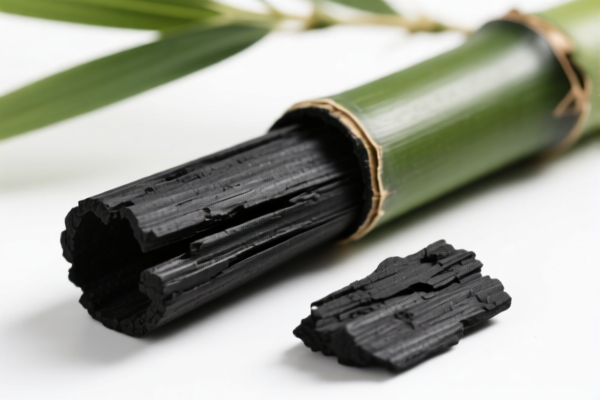
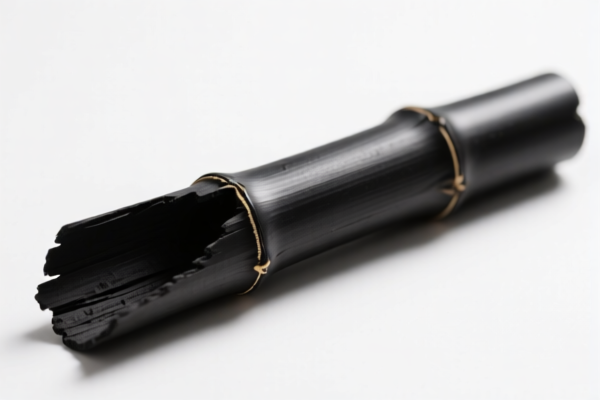
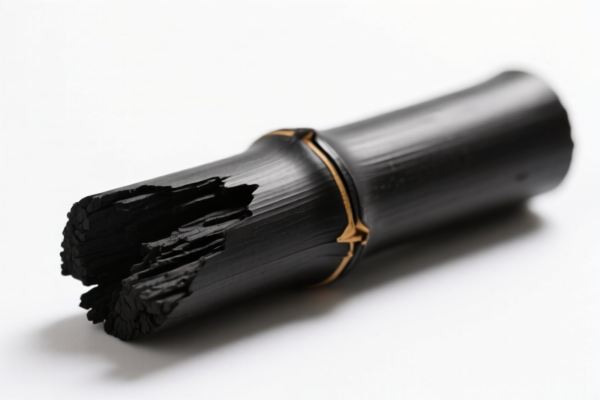
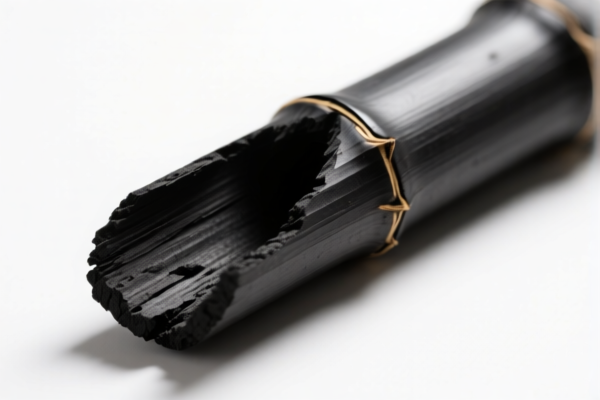
Fish Bone Charcoal is a unique organic-inorganic composite material obtained by carbonizing fish bones. Due to its complex composition (mostly calcium phosphate with organic carbon content), it can fall into different categories depending on its processing degree, physical state, and intended use in international trade.
In customs classification, the key distinction lies in whether it is treated as "Activated Carbon" (high adsorption performance) or "Unspecified Mineral/Carbonized Substance" (raw or semi-processed state).
⚠️ Key Distinction Point:
- If it has high porosity and specific adsorption properties → Classified as Activated Carbon (3802).
- If it is a basic carbonized mineral/organic residue without specific activated properties → Classified as Minerals or Other Carbonized Substances (2530).
- If it is considered an animal-derived carbonized product similar to bone black → Classified under Animal Charcoal (3802).
📦 2. HS Code Classification Details (2026 Latest Tariff Authority Comparison)
Based on the provided data, Fish Bone Charcoal is mapped to four potential HS Codes with varying tax implications:
| HS Code | Product Description | Classification Logic | Total Tax Rate |
|---|---|---|---|
3802.10.00.50 |
Activated Carbon (Other Types) | Considered a type of activated carbon. Fits the definition of "Other activated carbon." | 39.8% |
2530.90.80.50 |
Unspecified Minerals or Carbonized Substances | Considered a mineral or carbonized substance. Fits the category of "Other unspecified minerals." | 10.0% |
2530.90.80.15 |
Mineral Pigments | Considered carbonized organic matter fitting the category of mineral pigments. | 10.0% |
3802.90.10.00 |
Animal Charcoal (Bone Black Category) | Considered an animal-derived carbonized product, consistent with the category of "Bone Black." | 40.8% |
🔍 Key Reminder:
- The lowest tax rate (10%) applies when classified under 2530.90, but this requires proving it is NOT "Activated Carbon" and NOT "Animal Charcoal" in the strict sense of high-value adsorbents.
- The highest tax rates (~40%) apply when classified under 3802, either as general activated carbon or specifically as animal-derived charcoal.
- Customs Risk: Misclassifying high-grade activated carbon as a simple mineral can lead to severe penalties and retroactive tax demands.
💰 3. 2026 Latest Tariff Rate Details (Including Surcharges & Policy Add-ons)
✅ Applicable Country: United States (US)
✅ Origin: China (CN)
✅ Effective Date: Ongoing (Subject to 122 Clause and Section 301 tariffs)
🎯 1. 3802.10.00.50 —— Activated Carbon (Other Types)
| Item | Details |
|---|---|
| Base Tariff | 4.8% (ad valorem) |
| Section 301 Surcharge | +25.0% (Additional tariffs under US Trade Law Section 301) |
| 122 Clause Tariff | +10.0% (Specific tariff for certain goods from China) |
| Total Tax Rate | 39.8% |
| Tax Calculation | CIF Value × 39.8% |
| De Minimis Exemption | ❌ Not Eligible (High tariff rate exceeds exemption thresholds) |
| Legal Basis Path | HTSUS:3802.10.00.50 → Section 301: Footnote 9903.88.01 → 122 Clause |
📌 Explanation:
- Classified as "Other Activated Carbon."
- Subject to both the standard 25% Section 301 tariff and the 10% 122 Clause tariff on top of the 4.8% base rate.
- This is a high-cost entry category, requiring careful cost-benefit analysis.
🎯 2. 2530.90.80.50 —— Unspecified Minerals or Carbonized Substances
| Item | Details |
|---|---|
| Base Tariff | 0.0% |
| Section 301 Surcharge | 0.0% |
| 122 Clause Tariff | +10.0% |
| Total Tax Rate | 10.0% |
| Tax Calculation | CIF Value × 10.0% |
| De Minimis Exemption | ❌ Not Eligible (Due to 122 Clause tariff) |
| Legal Basis Path | HTSUS:2530.90.80.50 → 122 Clause |
📌 Note:
- This is the most tax-efficient option among the choices.
- However, it requires convincing customs that the product is not activated carbon (which has higher value-added and different regulatory scrutiny).
- Suitable for bulk, low-grade, or industrial filler applications where adsorption performance is not the primary selling point.
🎯 3. 2530.90.80.15 —— Mineral Pigments
| Item | Details |
|---|---|
| Base Tariff | 0.0% |
| Section 301 Surcharge | 0.0% |
| 122 Clause Tariff | +10.0% |
| Total Tax Rate | 10.0% |
| Tax Calculation | CIF Value × 10.0% |
| De Minimis Exemption | ❌ Not Eligible |
| Legal Basis Path | HTSUS:2530.90.80.15 → 122 Clause |
📌 Note:
- Similar to the above, this rate is 10%.
- Classification hinges on proving the product is used as a pigment (coloring agent) rather than for adsorption or animal feed supplements.
- Requires documentation showing pigment-grade specifications (particle size, color index, etc.).
🎯 4. 3802.90.10.00 —— Animal Charcoal (Bone Black Category)
| Item | Details |
|---|---|
| Base Tariff | 5.8% |
| Section 301 Surcharge | +25.0% |
| 122 Clause Tariff | +10.0% |
| Total Tax Rate | 40.8% |
| Tax Calculation | CIF Value × 40.8% |
| De Minimis Exemption | ❌ Not Eligible |
| Legal Basis Path | HTSUS:3802.90.10.00 → Section 301 → 122 Clause |
📌 Note:
- This is the highest tax rate among the options.
- Specifically targets animal-derived carbonized products.
- Fish bone is an animal byproduct, so this classification is highly plausible if the product is marketed as "Bone Black" or similar.
- Avoid this classification unless necessary for regulatory compliance (e.g., specific food-grade certifications), as it significantly erodes profit margins.
🛠️ 4. Customs Clearance Practical Advice (Combat Pitfall Guide)
✅ 1. Required Documentation Checklist (Must-Have)
| Document | Must Provide | Explanation |
|---|---|---|
| ✅ Product Specification Sheet | ✔️ | Details: Origin of fish bones, carbonization temperature, ash content, iodine adsorption value (if activated), particle size. |
| ✅ Certificate of Origin (CO) | ✔️ | Essential for determining applicability of Section 301 and 122 Clause tariffs. |
| ✅ Technical Data Sheet (TDS) | ✔️ | To prove whether it is "Activated Carbon" (high adsorption) or "Mineral Pigment/Filler" (low adsorption). |
| ✅ Commercial Invoice | ✔️ | Clearly state the product name and HS Code classification rationale. |
| ✅ Packing List | ✔️ | Standard customs requirement. |
| ✅ Lab Test Report (Third-Party) | ✔️ | Critical for distinguishing between 3802 (Activated) and 2530 (Mineral/Pigment). |
✅ 2. Declaration Tips (Key Mnemonic)
🔥 “Adsorption High = 3802; Filler Low = 2530; Animal Source = Watch Out!”
| Scenario | Correct Declaration | Error Consequence |
|---|---|---|
| High Adsorption (Iodine > 800mg/g) | 3802.10.00.50 or 3802.90.10.00 |
If declared as mineral → Misclassification Penalty |
| Low Adsorption / Pigment Use | 2530.90.80.50 or 2530.90.80.15 |
If declared as activated carbon → Overpaying ~30% tax |
| Animal Byproduct Marketing | 3802.90.10.00 |
If used for industrial pigment → Unnecessary high tax |
| Mixed Use (Ambiguous) | Provide TDS + Lab Report | Lack of documentation → Customs Detention & Re-classification |
✅ 3. Special Situation Handling
| Situation | Handling Advice |
|---|---|
| High-Grade Activated Carbon | Must declare under 3802. Provide Iodine Adsorption Test Report. Do not attempt to classify as mineral to save tax. |
| Low-Grade Carbonized Bone (Filler) | Declare under 2530.90.80.50. Emphasize "Unspecified Mineral/Carbonized Substance" in description. |
| Pigment Application | Declare under 2530.90.80.15. Provide Color Index or Pigment Specification. |
| Veterinary/Medical Use | May fall under 3802.90.10.00 if marketed as animal-derived charcoal. Check FDA regulations for import. |
🌍 5. Global Market Comparison (2026 Latest)
| Country/Region | Recommended HS Code | Tariff (China Origin) | Certification Requirements | Notes |
|---|---|---|---|---|
| 🇺🇸 USA | 2530.90.80.50 (if eligible) |
10.0% (122 Clause) | No specific certs for raw charcoal | 3802 incurs ~40% due to Section 301 + 122 Clause |
| 🇨🇳 China | 3802.10.00.50 |
~5-8% | Standard export clearance | Lower base rates, no Section 301 |
| 🇪🇺 EU | 2530.90 or 3802.10 |
0-6.5% | REACH Registration required for chemicals | Different HS structure (8-digit) |
| 🇯🇵 Japan | 3802.10 or 2530.90 |
0-5% | Food Safety Cert (if for food) | Strict hygiene standards |
📌 Conclusion:
- USA is the most tariff-sensitive market for Fish Bone Charcoal due to the 122 Clause and Section 301 tariffs.
- Classification Strategy is Critical:
- If the product is not high-performance activated carbon, insist on 2530.90.80 to reduce tax from ~40% to 10%.
- If it is high-performance activated carbon, accept the 3802 classification but calculate margin accordingly.
📌 6. Common Errors & Pitfall Guide (Lessons Learned)
❌ Error 1: Declaring high-grade activated carbon as "Mineral Pigment" to avoid Section 301
👉 Consequence: Customs detects high iodine adsorption value → Reclassification to 3802 + Penalty + Back Tax.
❌ Error 2: Using "Fish Bone Charcoal" without technical data
👉 Consequence: Customs cannot determine if it’s 3802 or 2530 → Detention for Inspection → Delayed release.
❌ Error 3: Assuming all animal-derived carbon is 3802.90.10.00
👉 Consequence: Overpaying tax if the product is actually a generic carbonized mineral filler (2530.90.80.50).
❌ Error 4: Ignoring the 122 Clause
👉 Consequence: Even if base tariff is 0%, the 10% 122 Clause still applies to many 2530 and 3802 items → Unexpected cost increase.
✅ Correct Approach:
“Provide TDS, Highlight Adsorption Value, Choose 2530 for Low-Grade, 3802 for High-Grade.”
🎯 7. Conclusion: Professional Classification, Cost Optimization!
🎯 Key Takeaway:
🔹 "Activated Carbon = 3802 (High Tax ~40%)"; "Mineral/Pigment = 2530 (Low Tax 10%)."
🔹 "122 Clause + Section 301 = US Market Nightmare for Charcoal."
🔹 "Technical Data is King: Proving low adsorption saves you thousands in tariffs."
📌 Pro Tip:
If your Fish Bone Charcoal is intended for industrial filtration or water treatment, it will likely be classified as Activated Carbon (3802).
If it is used for agriculture, soil amendment, or as a pigment/filler, argue for 2530.90.80 to enjoy the 10% tax rate.
Recommendation: Conduct a pre-import HS Code Advance Ruling with US Customs and Border Protection (CBP) if the value is significant.
📣 Immediate Action:
📞 Contact your customs broker with Technical Data Sheets (TDS)
🚀 Optimize your supply chain by classifying correctly to save ~30% in tariffs.
✨ Professional Clearance Starts with Accurate Classification!
💼 Every percent of tariff saved is pure profit!
用户评价
关于 HS 编码归类
协调制度(HS)是由世界海关组织(WCO)制定的国际贸易商品分类标准。全球 200 多个国家采用 HS 系统作为海关关税、贸易统计和进出口监管的基础。
每个 HS 编码遵循以下层级结构:
- 章(2 位)——商品大类(例如:第 84 章:机器和机械设备)
- 品目(4 位)——章内的更具体分类
- 子目(6 位)——国际通用细分,所有 WCO 成员国统一使用
- 本国细分(8-10 位)——各国自行扩展的细分编码,如美国 HTSUS 10 位编码
正确的 HS 编码归类对于顺利通关、准确缴纳关税和遵守贸易法规至关重要。错误归类可能导致海关延误、多缴关税或罚款。
从CN进口到US时,适用的关税税率可能包括:
- 最惠国(MFN)税率——适用于 WTO 成员国的标准关税税率
- 普通税率——适用于无贸易协定国家
- 贸易救济关税——附加关税,如 301 条款(反倾销)、232 条款(国家安全)或反补贴税
本页内容仅供参考。如需正式归类,请咨询当地海关或持牌报关代理。