Five finger socks
CN → US| HS编码 | 关税税率 | 原产国 | 目的国 | 文档 |
|---|---|---|---|---|
| 6111206050 | 25.6% | CN | US | 官方文档 |
| 6115969020 | 24.6% | CN | US | 官方文档 |
| 6115959000 | 31.0% | CN | US | 官方文档 |
| 6111305050 | 26.0% | CN | US | 官方文档 |
| 6217109550 | 32.1% | CN | US | 官方文档 |
商品图片
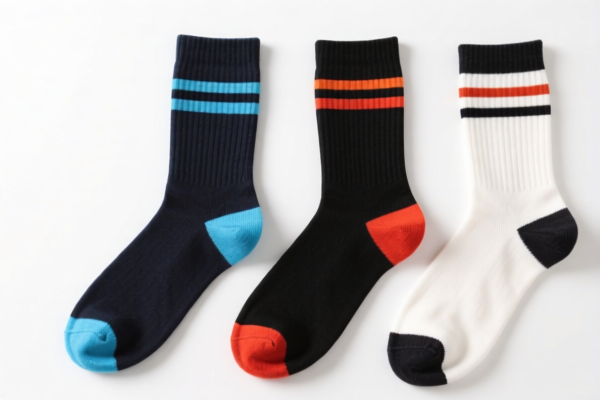
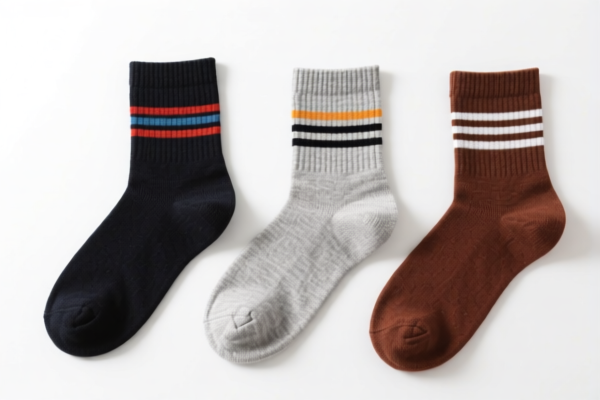
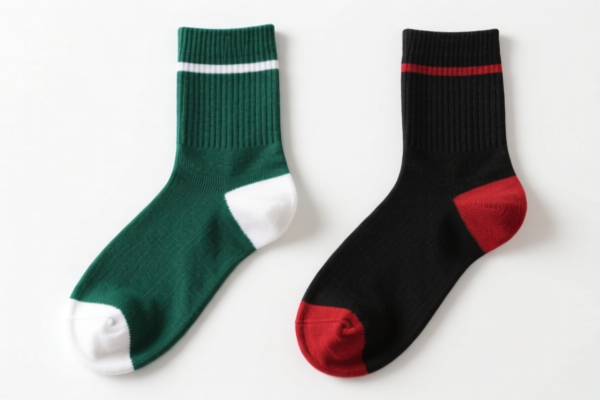
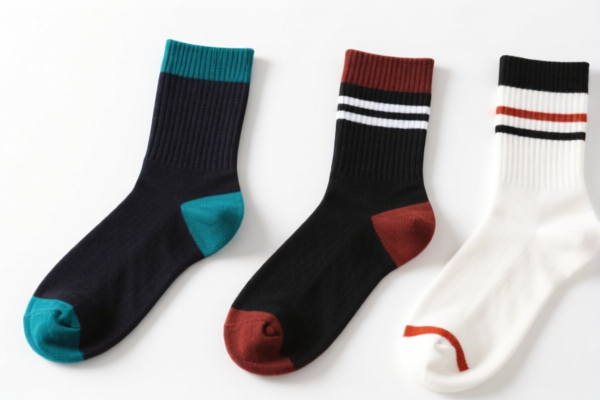
AI分析
🧦 Five-Finger Socks (Toque Socks / Split-Toe Socks)
🌐 HS Code Reference & Customs Clearance Guide | 2026 Latest Tariff Breakdown | Professional Strategy for U.S. Imports
📌 Part I: Product Definition & Classification Logic
Five-finger socks are specialized hosiery designed to separate each toe individually. In international trade, their classification depends heavily on two factors:
1. Construction Method: Knitted (Chapter 61) vs. Made-up Textile Articles (Chapter 62).
2. Target Demographic/Material: Baby/Cotton vs. Adult/Synthetic vs. General Accessories.
Because U.S. Customs and Border Protection (CBP) strictly distinguishes between "knitted hosiery" and "made-up textile articles," misclassification can lead to severe tariff penalties. The data provided below reflects the U.S. import tariff structure (including Base Tariff, Section 301/Additional Duties, and Section 1223 Tariffs).
📦 Part II: Detailed HS Code Breakdown (U.S. Tariff Schedule 2026)
Below are the five specific HS Codes derived from the provided dataset, ranked by logical classification criteria.
| HS Code | Product Description & Logic | Material Inference | Total Tax Rate | Tariff Breakdown |
|---|---|---|---|---|
| 6111.20.60.50 | Baby Socks (Knitted/Crocheted) Specifically designed for infants. If the product is marketed as "baby socks," it falls here regardless of being five-fingered. |
Cotton (Inferred) | 25.6% | Base: 8.1% Section 301/Additional: 7.5% Section 1223: 10% |
| 6115.96.90.20 | Other Knitted Socks, Synthetic Fibers Standard adult five-finger socks made of synthetic blends (polyester/nylon). This is the most common code for performance/athletic five-finger socks. |
Synthetic Fiber (Inferred) | 24.6% | Base: 14.6% Section 301/Additional: 0.0% Section 1223: 10% |
| 6111.30.50.50 | Other Knitted Socks, Other Textile Materials Generic knitted five-finger socks not classified as baby socks or synthetic-specific categories. Often used for cotton-heavy blends or unspecified fibers. |
Synthetic or Cotton (Inferred) | 26.0% | Base: 16.0% Section 301/Additional: 0.0% Section 1223: 10% |
| 6115.95.90.00 | Other Knitted Socks, Cotton Five-finger socks made primarily of cotton. Note: Distinct from baby cotton socks (6111.20.60.50). |
Cotton or Blends (Inferred) | 31.0% | Base: 13.5% Section 301/Additional: 7.5% Section 1223: 10% |
| 6217.10.95.50 | Made-Up Clothing Accessories Non-knitted five-finger socks (e.g., woven textile) or socks classified as "accessories" rather than "hosiery." Used if the item is not knitted in the final shape. |
Textile (Knitted/Woven) (Inferred) | 32.1% | Base: 14.6% Section 301/Additional: 7.5% Section 1223: 10% |
🔍 Key Distinction Logic:
- Chapter 61 (Knitted) is preferred for most five-finger socks (e.g., VibramFiveFingers, Balega, etc.).
- Chapter 62 (Made-up) is rare and applies only if the socks are not knitted (e.g., woven fabric construction) or are considered generic "accessories" rather than hosiery.
- Baby (6111) vs. General (6115/6111.30): Age-marketing matters. If labeled "For Babies," use 6111.20.60.50. If unmarked or for adults, use general codes.
💰 Part III: Tariff Deep Dive & Policy Explanation
All rates below assume Origin: China (CN) importing into the United States (US).
🎯 1. Base Tariff (Most Favored Nation - MFN)
- Range: 8.1% – 16.0%
- Explanation: This is the standard WTO-based tariff rate for textile hosiery.
- Lowest (8.1%): Applies to baby cotton socks (6111.20.60.50).
- Highest (16.0%): Applies to general knitted socks (6111.30.50.50).
🎯 2. Additional Duties (Section 301 / Trade War Tariffs)
- Range: 0.0% – 7.5%
- Explanation:
- 0.0%: Applied to synthetic fiber socks (6115.96.90.20) and general socks (6111.30.50.50). These sub-headings were historically carved out or have lower added rates in certain years.
- 7.5%: Applied to cotton socks (6115.95.90.00) and made-up accessories (6217.10.95.50). Cotton is often subject to higher political tariffs due to domestic agriculture protections.
🎯 3. Section 1223 Tariff (Renewed U.S.-China Trade Action)
- Flat Rate: 10%
- Explanation: This is a specific add-on tariff applied to all textile imports from China under Section 1223 of the Trade Act. It is non-negotiable and applies uniformly across all five HS codes above.
📊 Total Effective Tax Rate Calculation Example
- Scenario: Importing 1,000 pairs of Synthetic Five-Finger Socks (HS 6115.96.90.20)
- CIF Value: $10,000
- Base: 14.6% → $1,460
- Additional: 0.0% → $0
- Section 1223: 10% → $1,000
- Total Duty: $2,460
- Effective Rate: 24.6%
🛠️ Part IV: Customs Clearance Advice & Pitfalls
✅ 1. Critical Documentation Requirements
To ensure accurate classification and avoid delays:
| Document | Requirement | Why It Matters |
|---|---|---|
| Product Spec Sheet | Must specify Knitted vs. Woven and Material Composition (e.g., 80% Polyester, 20% Spandex). | Determines Chapter 61 vs. 62 and Base Rate. |
| Labeling Photos | Show care labels stating "Baby Socks" or "Adult Socks." | Mislabeling as "Baby" when for adults can trigger fraud penalties. |
| Technical Diagram | Illustrate the five-toe separation structure. | Confirms it is not a "shoe" or "footwear" (Chapter 64), which has different duties. |
| Commercial Invoice | Must clearly state "Five-Finger Socks" and HS Code. | CBP uses this for initial risk assessment. |
✅ 2. Common Classification Errors (Avoid These!)
❌ Error 1: Classifying as Footwear (Chapter 64)
Risk: Five-finger socks are hosiery, not footwear with soles.
Consequence: If misclassified as footwear, duties could be higher, and import restrictions may apply.
Fix: Always use Chapter 61 (Knitted) or 62* (Made-up Textile).
❌ Error 2: Misidentifying Material Composition
Risk: Listing "Cotton" when the sock is 95% Polyester.
Consequence: CBP may reclassify under a higher-duty category (e.g., from 24.6% to 32.1%).
Fix*: Provide fiber content tags exactly as they appear on the product.
❌ Error 3: Ignoring "Baby" Classification
Risk: Marketing adult socks as "unisex baby socks" to get the lower 25.6% rate.
Consequence: Severe penalties for fraud if dimensions/styling clearly indicate adult use.
Fix*: Only use 6111.20.60.50 if the product is physically sized and marketed for infants (<2 years).
✅ 3. Strategic Recommendation for Importers
- For Synthetic/Athletic Socks: Aim for 6115.96.90.20 (24.6% total). This is the most competitive rate for performance gear. Ensure the product label clearly states "Synthetic Fibers."
- For Cotton/Everyday Socks: Use 6115.95.90.00 (31.0% total). Be prepared for the higher additional duty.
- For Baby Products: Use 6111.20.60.50 (25.6% total). Ensure packaging explicitly states "For Infants" to justify the lower base rate.
- Avoid Chapter 62 (6217.10.95.50) unless absolutely necessary. The 32.1% rate is the highest, and it complicates the narrative by treating socks as "accessories" rather than hosiery.
🌍 Part V: Global Market Context (Quick Reference)
| Market | Recommended HS Code | Approx. Duty (China Origin) | Notes |
|---|---|---|---|
| 🇺🇸 USA | 6115.96.90.20 |
24.6% | Includes Section 1223 (10%) + Base (14.6%) |
| 🇨🇳 China | 6115.96.90.20 |
~7-13% | Lower base rates; no Section 1223 |
| 🇪🇺 EU | 6115.96.20 |
~10-12% | No additional political tariffs like US |
| 🇬🇧 UK | 6115.96.20 |
~10-12% | Post-Brexit tariff lines similar to EU |
📌 Conclusion: The US market remains the most tariff-intensive for Chinese textile imports due to the叠加 of Base Tariff + Section 301/Additional Duties + Section 1223. Accurate material and age classification is crucial to minimize costs.
📌 Part VI: Final Checklist for Smooth Clearance
- Verify Knitted Status: Confirm manufacturing process is knitting (not weaving).
- Confirm Material %: Match invoice with physical label (Cotton vs. Synthetic).
- Check Age Group: Ensure "Baby" claims are backed by size/marketing.
- Pre-Ruling: For large shipments, consider applying for a CBP Binding Ruling using one of the HS codes above to lock in the duty rate.
- Section 1223 Compliance: Ensure all paperwork acknowledges the 10% add-on tariff to avoid hold-ups at the border.
🎯 Pro Tip:
"When in doubt, Synthetic Knitted (6115.96.90.20) is your friend—it offers the lowest total duty (24.6%) among the listed options. Avoid cotton-heavy adult socks (31.0%) or generic categories (26.0%+) unless marketing dictates otherwise."
📣 Immediate Action:
📞 Contact your customs broker with the product’s fiber content and knitting type.
📄 Request a pre-import classification review to confirm the HS code before shipment.
🚀 Optimize your supply chain by leveraging the 24.6% rate for synthetic five-finger socks.
✨ Smart Classification, Smarter Profits!
💼 Every percentage point matters in the age of Section 1223.
用户评价
关于 HS 编码归类
协调制度(HS)是由世界海关组织(WCO)制定的国际贸易商品分类标准。全球 200 多个国家采用 HS 系统作为海关关税、贸易统计和进出口监管的基础。
每个 HS 编码遵循以下层级结构:
- 章(2 位)——商品大类(例如:第 84 章:机器和机械设备)
- 品目(4 位)——章内的更具体分类
- 子目(6 位)——国际通用细分,所有 WCO 成员国统一使用
- 本国细分(8-10 位)——各国自行扩展的细分编码,如美国 HTSUS 10 位编码
正确的 HS 编码归类对于顺利通关、准确缴纳关税和遵守贸易法规至关重要。错误归类可能导致海关延误、多缴关税或罚款。
从CN进口到US时,适用的关税税率可能包括:
- 最惠国(MFN)税率——适用于 WTO 成员国的标准关税税率
- 普通税率——适用于无贸易协定国家
- 贸易救济关税——附加关税,如 301 条款(反倾销)、232 条款(国家安全)或反补贴税
本页内容仅供参考。如需正式归类,请咨询当地海关或持牌报关代理。