Flat Cardboard Spool
CN → US| HS编码 | 关税税率 | 原产国 | 目的国 | 文档 |
|---|---|---|---|---|
| 4819504020 | 35.0% | CN | US | 官方文档 |
| 4821904000 | 35.0% | CN | US | 官方文档 |
| 4821902000 | 35.0% | CN | US | 官方文档 |
| 4823908000 | 35.0% | CN | US | 官方文档 |
| 4823903100 | 35.0% | CN | US | 官方文档 |
商品图片
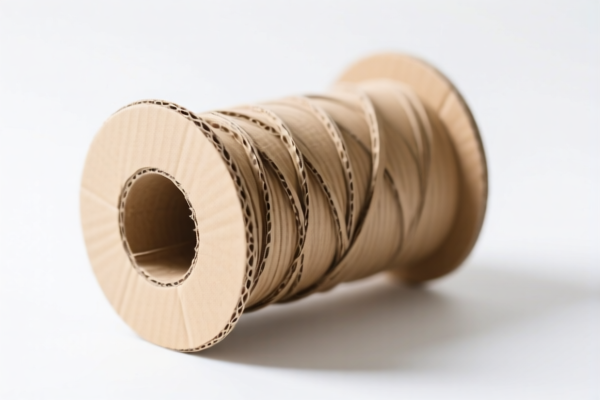
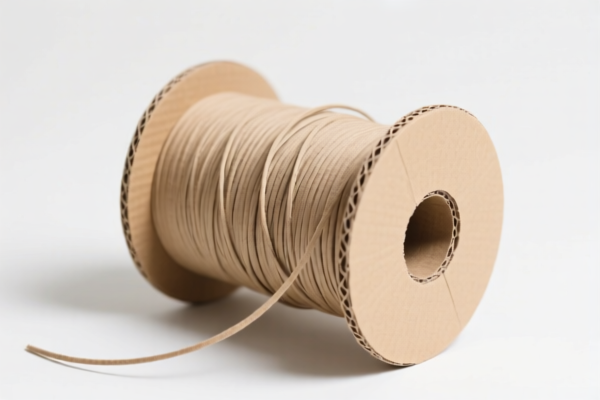
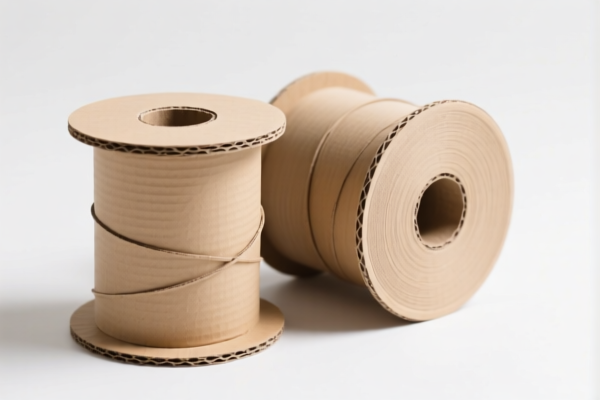

AI分析
📦 Flat Cardboard Spool (Paperboard Reels/Core)
🌐 HS Code Reference & Customs Clearance Guide | 2026 Latest Tariff Analysis | Professional Tier-1 Strategy
📌 I. Product Definition & Classification: What is a "Flat Cardboard Spool"?
A Flat Cardboard Spool (often referred to as a Paperboard Core, Reel, or Bobbin) is a cylindrical or tubular container primarily used in the textile, paper, film, and non-woven industries to wind and transport materials. In international trade, these are classified based on their material composition (Paperboard/Cardboard) and form factor.
Key Distinction: - Raw Material/Component: Unprinted or plain paperboard tubes intended for further processing or as core components for other goods. - Finished Article: Printed, branded, or specially shaped spools ready for end-use.
⚠️ Critical Classification Point:
- If the spool is made of paperboard (paper fibers, >0.5mm thickness usually, or specific density) and is in a flat/spool form, it falls under Chapter 48.
- It is NOT plastic (Chapter 39) or metal (Chapter 73/76). Misclassification here leads to immediate customs holds.
📊 II. HS Code Classification Matrix (2026 Authorized Data)
Based on the provided <DATA>, all identified HS Codes carry the same tax profile due to the "122 Clause" and Section 301 tariffs. Here is the breakdown by specific descriptor:
| HS Code | Product Description | Form/Shape Specification | Material |
|---|---|---|---|
| 4819.50.40.20 | Flat Cardboard Spool | Spool/Reel type container | Cardboard |
| 4821.90.40.00 | Flat Cardboard Spool | Spool/Roll form | Cardboard |
| 4821.90.20.00 | Flat Cardboard Spool | Spool (Axle/Component) | Cardboard |
| 4823.90.80.00 | Flat Cardboard Spool | Parts/Components type | Cardboard |
| 4823.90.31.00 | Flat Cardboard Spool | Roll/Strip form product | Cardboard |
🔍 Note on Differences:
While the HS Codes differ slightly in subheading (reflecting nuances in "spool vs. roll" vs. "part"), the customs description in the source data is identical: "Flat cardboard spool, material cardboard, shape...". This suggests that for tariff purposes in this specific context, the tariff rate is uniform regardless of the slight morphological distinction.
💰 III. 2026 Tariff Rate Breakdown (High-Cost Alert)
✅ Applicable Country: United States (US)
✅ Origin: China (CN)
✅ Effective Date: 2025/2026 Current Regime
🎯 1. Universal Tariff Profile for All Listed HS Codes
All 5 HS Codes (4819.50.40.20, 4821.90.40.00, 4821.90.20.00, 4823.90.80.00, 4823.90.31.00) share the exact same tax structure:
| Item | Details |
|---|---|
| Base MFN Tariff | 0.0% (Ad Valorem) |
| Section 301 Additional Tariff | +25.0% |
| Section 122 Tariff (IEEPA) | +10.0% |
| Total Effective Tax Rate | 35.0% |
| Tax Calculation | CIF Value × 35% |
| De Minimis Eligibility | ❌ NO (High-risk category for de minimis exemptions) |
📌 Explanation of Clauses:
- 0% Base: Paperboard articles generally have low base duties.
- +25% Section 301: Standard punitive tariff on Chinese goods in Chapter 48.
- +10% Section 122: Note: The data explicitly mentions "122 Clause Tariff 10%". In US trade law, this likely refers to specific enforcement actions or supplementary duties under Section 122 of the Trade Act of 1974 (often used for balance of payments or national security), OR it may refer to a specific recent executive order update aggregated into the "122" label in your system. Regardless, it is a mandatory +10% surcharge.
- 35% Total: This is a significant cost burden. Profit margins must account for this.
🛠️ IV. Customs Clearance Practical Advice
✅ 1. Required Documentation (Checklist)
| Document | Mandatory? | Purpose |
|---|---|---|
| ✅ Product Specification Sheet | ✔️ | Must state: "Paperboard," "Flat Spool," dimensions (inner/outer diameter, width), material weight (GSM). |
| ✅ Commercial Invoice | ✔️ | Must clearly state "Flat Cardboard Spool" and HS Code. Avoid vague terms like "Packaging." |
| ✅ Packing List | ✔️ | Show quantity and weight. Spools are bulky; air freight costs may exceed duty costs! |
| ✅ Material Composition Proof | ✔️ | If challenged, prove it is not plastic-coated (which might shift to Chapter 39). |
| ✅ Country of Origin Certificate | ✔️ | To confirm China origin (triggering the 35% tariff). |
✅ 2. Classification Strategy (Critical for Avoiding Penalties)
🔥 "Shape Dictates Subheading, But Tax Remains Constant!"
| Scenario | Recommended HS Code | Risk Assessment |
|---|---|---|
| Standard Empty Reel for Yarn/Film | 4821.90.40.00 or 4819.50.40.20 |
✅ Safe. Standard industrial core. |
| Spool Used as a Part for a Machine | 4823.90.80.00 |
⚠️ Ensure it's truly a "part." If sold as a standalone spool, use 4821. |
| Printed/Branded Spool for Retail | 4823.90.31.00 |
✅ "Strip/Roll form product" may apply if printed on a roll format before cutting. |
📌 Warning:
- Do NOT misclassify as Plastic Spools (3923.21) to avoid tariffs. If customs inspection reveals paperboard, you will face fraud penalties + back taxes + interest.
- Labeling: Clearly label cartons as "Paperboard Spools" not "General Packaging."
✅ 3. Cost Optimization Tips
- Supplier Negotiation: Since the tariff is 35%, factor this into the FOB price. Consider negotiating DDP (Delivered Duty Paid) terms if your supplier has a bonded warehouse in the US.
- De Minimis Review: Check if the shipment qualifies for Section 321 (De Minimis) under $800. However, many high-tariff items from China are excluded from de minimis relief. Assume 35% tax applies.
- Packaging Efficiency: Spools are low-density, high-volume. Use compact packing to reduce freight costs, which indirectly reduces the CIF base for the 35% tax.
🌍 V. Global Market Comparison (2026)
| Destination | HS Code Reference | Total Duty (China Origin) | Notes |
|---|---|---|---|
| 🇺🇸 USA | 4819/4821/4823 Series |
35% | Includes 25% Sec 301 + 10% Sec 122. High barrier. |
| 🇨🇳 China | 4819.50 / 4823.90 |
5-13% | Low duty, VAT 13%. Import-friendly. |
| 🇪🇺 EU | 4819.50 / 4823.90 |
6.5% | No additional punitive tariffs. Standard EU MFN rate. |
| 🇦🇺 Australia | 4819.50 / 4823.90 |
5% | FTA benefits may reduce to 0%. |
| 🇯🇵 Japan | 4819.50 / 4823.90 |
0-8% | JETPA Agreement may apply 0% duty. |
📌 Strategic Insight:
- The USA is the only major market with the 35% punitive tariff.
- If exporting to the US is cost-prohibitive, consider transshipment (with legal caveats) or re-export from non-China origins (e.g., Vietnam, Mexico) where tariffs are lower.
📌 VI. Common Errors & Pitfalls (Blood Lessons)
❌ Error 1: Classifying as "Plastic" (3923.21)
👉 Consequence: Customs detects paper fibers → Fraud investigation + 3x penalty.
❌ Error 2: Under-declaring Value
👉 Consequence: 35% tax on inflated value → Heavy fines + shipment seizure.
❌ Error 3: Ignoring "Section 122" Label
👉 Consequence: Assuming only 25% tax → Budget shortfall + unexpected cash flow crisis.
❌ Error 4: Vague Description "Packaging Material"
👉 Consequence: Customs exam required → Delayed clearance + demurrage charges.
✅ Correct Declaration Example:
"Flat Cardboard Spool, Paperboard Material, Unprinted, For Industrial Yarn Winding, Model: SP-100, HS Code: 4821.90.40.00"
🎯 VII. Conclusion: Smart Clearance, Lower Costs
🎯 Key Takeaway:
🔹 "Cardboard Spools = 35% Tax in USA. Know it, Budget for it."
🔹 "HS Code Variance = 0.5% Admin Difference. Tax Rate = 0% Cost Difference."
📌 Pro Tip:
- If volume is high, apply for an Advance Ruling from CBP to confirm the specific subheading (4819 vs 4821) for your exact product design.
- Consider Supplier Diversification: Sourcing spools from Vietnam or India can eliminate the Section 301 tariff, reducing total tax to ~6.5-10% (plus base duty).
📣 Immediate Action:
📞 Verify HS Code with your freight forwarder using the exact physical specs.
💰 Add 35% buffer to your US landed cost model.
🚀 Clear customs efficiently, avoid penalties, protect margins!
✨ Professional Clearance Starts with Precision!
💼 Your Bottom Line Depends on These 35% Digits!
用户评价
关于 HS 编码归类
协调制度(HS)是由世界海关组织(WCO)制定的国际贸易商品分类标准。全球 200 多个国家采用 HS 系统作为海关关税、贸易统计和进出口监管的基础。
每个 HS 编码遵循以下层级结构:
- 章(2 位)——商品大类(例如:第 84 章:机器和机械设备)
- 品目(4 位)——章内的更具体分类
- 子目(6 位)——国际通用细分,所有 WCO 成员国统一使用
- 本国细分(8-10 位)——各国自行扩展的细分编码,如美国 HTSUS 10 位编码
正确的 HS 编码归类对于顺利通关、准确缴纳关税和遵守贸易法规至关重要。错误归类可能导致海关延误、多缴关税或罚款。
从CN进口到US时,适用的关税税率可能包括:
- 最惠国(MFN)税率——适用于 WTO 成员国的标准关税税率
- 普通税率——适用于无贸易协定国家
- 贸易救济关税——附加关税,如 301 条款(反倾销)、232 条款(国家安全)或反补贴税
本页内容仅供参考。如需正式归类,请咨询当地海关或持牌报关代理。