Flexible Plastic Label Material
CN → US| HS编码 | 关税税率 | 原产国 | 目的国 | 文档 |
|---|---|---|---|---|
| 4821904000 | 35.0% | CN | US | 官方文档 |
| 3921904090 | 39.2% | CN | US | 官方文档 |
| 3921190090 | 41.5% | CN | US | 官方文档 |
| 3919905040 | 40.8% | CN | US | 官方文档 |
| 3919905060 | 40.8% | CN | US | 官方文档 |
商品图片


AI分析
🏷️ Flexible Plastic Label Material (Polyester/PET Labels)
🌐 HS Code Reference & Customs Clearance Guide | 2026 Latest Tariff Analysis | Professional Entry Strategies
📌 I. Product Definition & Classification: Do You Really Understand "Flexible Plastic Labels"?
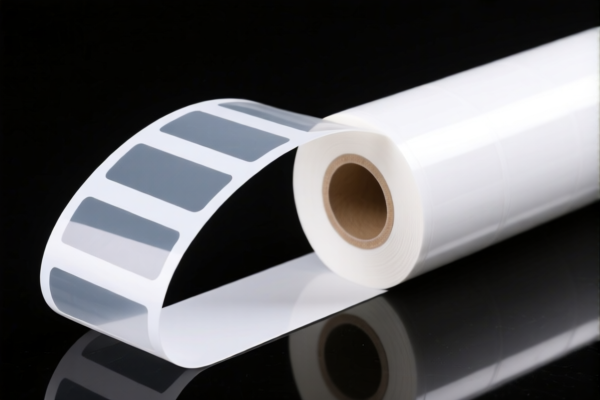
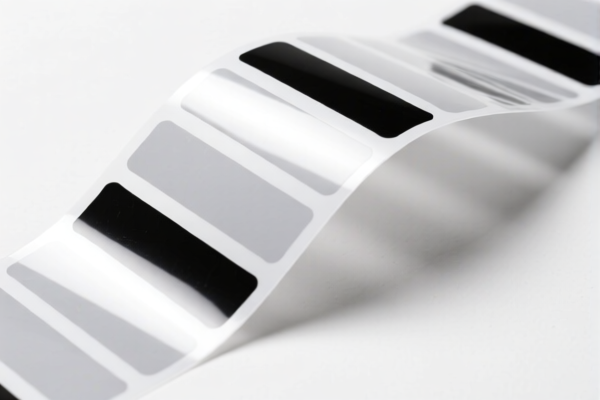
Flexible plastic labels, primarily made of Polyester (PET), are ubiquitous in consumer goods, electronics, automotive, and industrial manufacturing. Unlike paper labels, they offer superior durability, chemical resistance, and weatherability.
In international trade, the classification depends heavily on the material composition, physical form (film vs. pre-cut), and presence of adhesives. The data below highlights four primary HS Code paths for Flexible Polyester Film Labels, reflecting their nature as either plastic films, self-adhesive tapes, or specific label categories.
⚠️ Critical Distinction:
- If the label is essentially a plastic film with adhesive applied → Chapter 39 (Plastics)
- If it is considered a paper/cardboard label (even if using synthetic materials in some jurisdictions, though rare for pure PET) → Chapter 48
- Note: Most pure PET flexible labels fall under Chapter 39. The "Paper" classification (HS 4821.90.40.00) in the data below represents a specific regulatory interpretation where synthetic labels are treated as extensions of paper labels or where material definitions overlap, but Plastic-based codes (39xx) are the dominant global standard for PET.
📦 II. HS Code Classification Details (2026 Latest Tariff Authority Comparison)
| HS Code | Product Description | Application Scenario | Key Characteristic |
|---|---|---|---|
4821.90.40.00 |
Paper/Cardboard Labels (Including Synthetic Extensions) | Labels treated as "Paper/Cardboard" category due to regulatory definition | Treated as paper-based label extension |
3921.90.40.90 |
Flexible Plastic Film Labels (Plastic/PET Form) | General plastic film labels, plastic sheeting classification | Base plastic film structure |
3921.19.00.90 |
Plastic Plates, Sheets, Film, Foil & Strip (Polyester) | Polyester-based plastic film labels, board/film category | Specific plastic plate/film classification |
3919.90.50.40 |
Self-Adhesive Plastic Films (Polyester) | Pre-adhesive PET labels, self-adhesive tape category | Adhesive layer present |
3919.90.50.60 |
Plastic Self-Adhesive/Flat Shape Catch-All | General plastic self-adhesive labels, fallback category | Broad category for self-adhesive plastics |
🔍 Key Insight:
- HS 4821 is used when customs authorities classify synthetic labels under "Paper/Cardboard" for specific statistical or treaty reasons.
- HS 3921 & 3919 are the standard Plastic classifications.
- 3919 is typically preferred for pre-adhesive labels (self-adhesive).
- 3921 is often used for plastic films/sheets that may be further processed into labels.
💰 III. 2026 Latest Tariff Rate Breakdown (Including Surcharges & Policy Add-ons)
✅ Applicable Country: United States (US)
✅ Origin: China (CN)
✅ Effective Date: From November 10, 2025 (including subsequent imports)
🎯 1. 4821.90.40.00 —— Paper/Cardboard Labels (Synthetic Extension)
| Item | Content |
|---|---|
| Base Tariff | 0% (ad valorem) |
| USITC Surcharge | +25% (from USITC Footnote 9903.88.01 / Section 301) |
| IEEPA Surcharge | +10% (against China/HK products, effective Nov 10, 2025) |
| Total Rate | 35.0% |
| Tax Calculation | CIF Value × 35% |
| De Minimis Exemption | ❌ Not Available (deny_de_minimis) |
| Legal Basis Path | IEEPA:9903.01.25 → IEEPA:9903.01.24 → USITC:4821.90.40.00 → FOOTNOTE:9903.88.01 |
📌 Explanation:
- Although the base tariff is 0%, the 35% total is driven by the 25% Section 301 surcharge and 10% IEEPA tariff.
- This classification assumes the label is treated as a "paper/cardboard" derivative for customs purposes.
🎯 2. 3921.90.40.90 —— Flexible Plastic Film Labels (Plastic/PET Form)
| Item | Content |
|---|---|
| Base Tariff | 4.2% |
| USITC Surcharge | +25% |
| IEEPA Surcharge | +10% |
| Total Rate | 39.2% |
| Tax Calculation | CIF Value × 39.2% |
| De Minimis Exemption | ❌ Not Available |
| Legal Basis Path | IEEPA:9901.25 → IEEPA:9903.01.24 → USITC:3921.90.40.90 |
📌 Note:
- This code classifies the label as a plastic film.
- The 4.2% base plus 35% surcharges (25+10) results in 39.2%.
🎯 3. 3921.19.00.90 —— Plastic Plates, Sheets, Film, Foil & Strip (Polyester)
| Item | Content |
|---|---|
| Base Tariff | 6.5% |
| USITC Surcharge | +25% |
| IEEPA Surcharge | +10% |
| Total Rate | 41.5% |
| Tax Calculation | CIF Value × 41.5% |
| De Minimis Exemption | ❌ Not Available |
| Legal Basis Path | IEEPA:9901.25 → IEEPA:9903.01.24 → USITC:3921.19.00.90 |
📌 Note:
- This is a more specific plastic sheet/film classification.
- Higher base rate (6.5%) leads to the highest total among plastic categories (41.5%).
🎯 4. 3919.90.50.40 —— Self-Adhesive Plastic Films (Polyester)
| Item | Content |
|---|---|
| Base Tariff | 5.8% |
| USITC Surcharge | +25% |
| IEEPA Surcharge | +10% |
| Total Rate | 40.8% |
| Tax Calculation | CIF Value × 40.8% |
| De Minimis Exemption | ❌ Not Available |
| Legal Basis Path | IEEPA:9901.25 → IEEPA:9903.01.24 → USITC:3919.90.50.40 |
📌 Note:
- Self-adhesive plastic films are classified here.
- Base rate 5.8% + 35% surcharges = 40.8%.
🎯 5. 3919.90.50.60 —— Plastic Self-Adhesive/Flat Shape Catch-All
| Item | Content |
|---|---|
| Base Tariff | 5.8% |
| USITC Surcharge | +25% |
| IEEPA Surcharge | +10% |
| Total Rate | 40.8% |
| Tax Calculation | CIF Value × 40.8% |
| De Minimis Exemption | ❌ Not Available |
| Legal Basis Path | IEEPA:9901.25 → IEEPA:9903.01.24 → USITC:3919.90.50.60 |
📌 Note:
- This is a fallback category for self-adhesive plastic labels.
- Same rate as3919.90.50.40: 40.8%.
🛠️ IV. Customs Clearance Practical Advice (Real-World Pitfall Guide)
✅ 1. Required Documentation List (None Can Be Missing)
| Document | Mandatory | Description |
|---|---|---|
| ✅ Product Specification Sheet | ✔️ | Include material (PET/Polyester), thickness, adhesive type, dimensions, and usage |
| ✅ Material Safety Data Sheet (MSDS) | ✔️ | For adhesive and plastic components |
| ✅ Product Photos (Including Labels) | ✔️ | Clear images of the label on the product, showing texture and adhesive side if possible |
| ✅ Third-Party Test Report | ✔️ | RoHS, REACH, FDA (if food contact), or other relevant certifications |
| ✅ Commercial Invoice | ✔️ | Clearly state "Flexible Plastic Label, Material: Polyester (PET)" |
| ✅ Packing List | ✔️ | Detail net/gross weight and quantity |
| ✅ Certificate of Origin (CO) | ✔️ | If non-Chinese origin, claim preferential rates |
✅ 2. Declaration Strategy (Key Mnemonics)
🔥 "Material First, Adhesive Second, Name Precise, Rate Optimized!"
| Scenario | Correct Declaration | Wrong Practice |
|---|---|---|
| Pure PET Film (No Adhesive) | 3921.90.40.90 or 3921.19.00.90 |
Misdeclare as "Label" → Higher risk of scrutiny |
| Self-Adhesive PET Label | 3919.90.50.40 or 3919.90.50.60 |
Misdeclare as "Paper Label" → Classification error |
| Label Treated as Paper | 4821.90.40.00 |
If customs accepts synthetic as paper, this has the lowest rate (35%) |
| Mixed Packaging (Label + Other Goods) | Declare Separately | Mixed declaration → Confusion & delays |
✅ 3. Special Case Handling
| Case | Handling Advice |
|---|---|
| OEM Custom Labels | Provide client design files + material specs to avoid "unidentified" classification |
| Labels with Metalized Surface | Still classified under Plastics (39xx) unless metal is the primary material |
| Labels for Medical Devices | If for medical use, provide device classification to support label classification |
| Labels for Automotive | Provide automotive compliance certs (e.g., UL, VDA) to support plastic material claims |
🌍 V. Global Market Customs Clearance Comparison (2026 Latest)
| Country/Region | Recommended HS Code | Tariff Rate | Certification Requirements | Notes |
|---|---|---|---|---|
| 🇺🇸 United States | 3919.90.50.40 / 4821.90.40.00 |
35%–41.5% (China) | RoHS, REACH (if EU), FDA (if food) | Highest duty market for China-origin goods |
| 🇨🇳 China | 3921.90.40.90 / 3919.90.50.40 |
5%–8% (Import) | CCC (if applicable), RoHS | No additional surcharges |
| 🇪🇺 European Union | 3921.90.40.90 |
4.2% (if eligible) | CE, RoHS, REACH | No Section 301/IEEPA equivalent |
| 🇬🇧 United Kingdom | 3919.90.50.40 |
4.2%–6.5% | UKCA, RoHS | Post-Brexit rules apply |
| 🇯🇵 Japan | 3921.90.40.90 |
0%–6.5% | PSE (if electrical components) | CPTPP may apply for preferential rates |
📌 Conclusion:
- The US is the most expensive market for China-origin flexible plastic labels due to Section 301 and IEEPA surcharges.
- Duty ranges from 35% to 41.5% depending on classification.
- Non-US markets (EU, Japan, China) have significantly lower duties (0%–8%).
📌 VI. Common Mistakes & Pitfall Guide (Blood & Tears Lessons)
❌ Mistake 1: Declaring "Plastic Label" as "Paper Label" without justification
👉 Consequence: Customs rejection, reclassification, fines, or delays
❌ Mistake 2: Missing "Self-Adhesive" in description for 3919 codes
👉 Consequence: Misclassification → Higher base rate or legal penalty
❌ Mistake 3: Not providing material specs (PET vs. PVC vs. PP)
👉 Consequence: Customs cannot determine correct HS code → 100% inspection
❌ Mistake 4: Using "Label" as the only product name
👉 Consequence: Vague declaration → Customs query, shipment hold
✅ Correct Practice:
"Flexible Plastic Label, Material: Polyester (PET), Adhesive Type: Permanent Acrylic, Size: 50x30mm, for Electronic Device, Model XYZ"
🎯 VII. Conclusion: Professional Declaration, Save Time, Reduce Costs!
🎯 Remember the Mnemonics:
🔹 "Plastic vs. Paper, Adhesive is Key!"
🔹 "US Duties High, 35% Min, Plan Ahead!"
🔹 "HS Code Defines Tax, Wrong Code Costs Thousands!"
📌 Tips:
- If your labels are originated from Vietnam, Thailand, or Malaysia, you may apply for IEEPA exemptions or preferential tariffs under FTAs (e.g., CPTPP, RCEP).
- Apply for an Advance Ruling from US Customs (CBP) to lock in the HS Code and avoid disputes at the port.
📣 Take Action Now:
📞 Contact a Professional Customs Broker + Provide Product Photos + Apply for HS Code Advance Ruling
🚀 Clear Customs Smoothly, Maximize Profits, Expand Global Reach!
✨ Professional Customs Clearance Starts with Accurate Classification!
💼 Every Penny of Cost Deserves Precise Calculation!
用户评价
关于 HS 编码归类
协调制度(HS)是由世界海关组织(WCO)制定的国际贸易商品分类标准。全球 200 多个国家采用 HS 系统作为海关关税、贸易统计和进出口监管的基础。
每个 HS 编码遵循以下层级结构:
- 章(2 位)——商品大类(例如:第 84 章:机器和机械设备)
- 品目(4 位)——章内的更具体分类
- 子目(6 位)——国际通用细分,所有 WCO 成员国统一使用
- 本国细分(8-10 位)——各国自行扩展的细分编码,如美国 HTSUS 10 位编码
正确的 HS 编码归类对于顺利通关、准确缴纳关税和遵守贸易法规至关重要。错误归类可能导致海关延误、多缴关税或罚款。
从CN进口到US时,适用的关税税率可能包括:
- 最惠国(MFN)税率——适用于 WTO 成员国的标准关税税率
- 普通税率——适用于无贸易协定国家
- 贸易救济关税——附加关税,如 301 条款(反倾销)、232 条款(国家安全)或反补贴税
本页内容仅供参考。如需正式归类,请咨询当地海关或持牌报关代理。