Flexible Polycarbonate UV Protection Film
CN → US| HS编码 | 关税税率 | 原产国 | 目的国 | 文档 |
|---|---|---|---|---|
| 3920992000 | 39.2% | CN | US | 官方文档 |
| 3920591000 | 41.0% | CN | US | 官方文档 |
| 3919905060 | 40.8% | CN | US | 官方文档 |
| 3919905040 | 40.8% | CN | US | 官方文档 |
商品图片
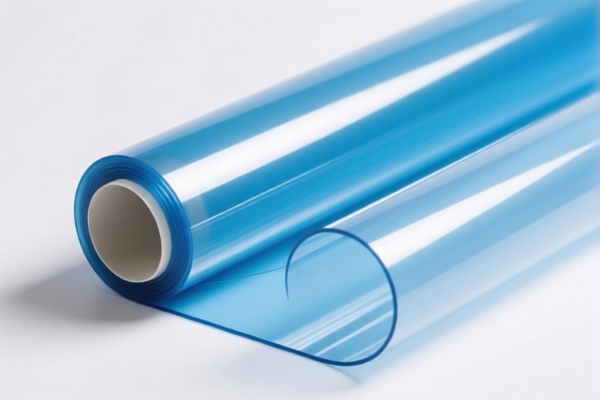
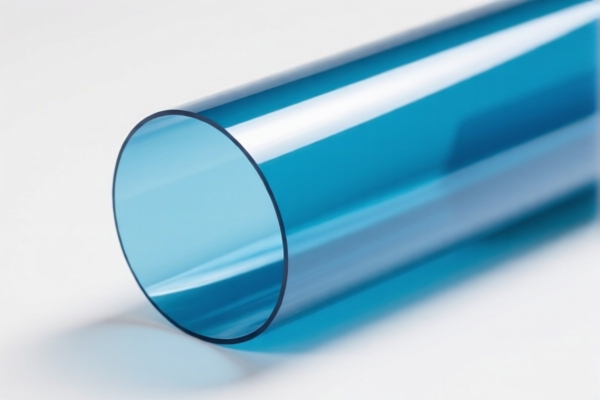
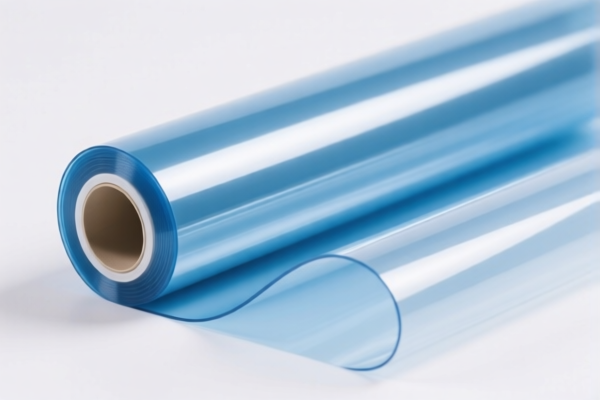
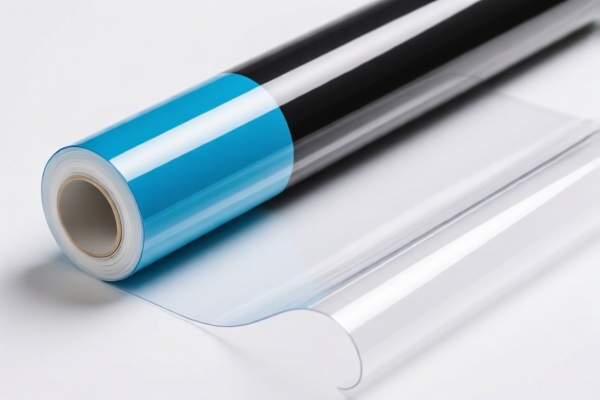
AI分析
🛡️ Flexible Polycarbonate UV Protection Film
🌐 HS Code Reference & Customs Clearance Guide | 2026 Latest Tariff Analysis | Professional Entry Strategy
📌 I. Product Definition & Classification: Do You Truly Understand “UV Protection Film”?
Polycarbonate (PC) UV Protection Film is a high-performance optical film used to shield surfaces (such as automotive windows, architectural glass, or electronics) from ultraviolet radiation while maintaining transparency. In international trade, it is categorized based on its material (Polycarbonate/Plastic), form (Film/Flat Shape), and state (Adhesive vs. Non-Adhesive).
Key Classification Distinction:
- Self-Adhesive Films (Rolls): If the film comes with an adhesive backing ready for application, it falls under Chapter 39.19 (Self-adhesive plates, sheets, film, foil, tape, strip, and other flat shapes).
- Non-Adhesive Films: If it is a standalone plastic film without adhesive, it generally falls under Chapter 39.20 (Other plates, sheets, film, foil, and strip, of plastics).
⚠️ Critical Identification Point:
- If the product description mentions "self-adhesive," "backing liner," or "ready-to-use," it points to 3919.
- If it is a raw "film" material to be laminated or processed further, it points to 3920 or 3919 (depending on specific physical characteristics and trade practice).
- Note on "Polycarbonate": Polycarbonate is a plastic. All proposed HS codes below are consistent with plastic materials.
📦 II. HS Code Classification Details (2026 Latest Tariff Authority对照)
Based on the provided data, here are the matched HS Codes with detailed justifications:
| HS Code | Product Description | Match Justification | Tax Profile |
|---|---|---|---|
3920.99.20.00 |
Other plates, sheets, film, of plastics (Non-cellular) | Material & Form Match: The product name explicitly contains "Plastic" material and "Film" morphology. It fits the classification explanation for "Non-cellular plastics" belonging to "Flexible film, strip, and sheet." | Total Tax: 39.2% |
3920.59.10.00 |
Other plates, sheets, film, of plastics (Other plastics) | Morphology & Use Match: The product form is "Film," material is "Plastic" (commonly inferred as acrylic/polycarbonate polymers), and use is "UV Protection." It fully meets the "Flexible" and "Other" classification requirements for non-foamed, non-reinforced plastic films. | Total Tax: 41.0% |
3919.90.50.60 |
Self-adhesive plates, sheets, film... (Other) | Material & Form Match: The product material is "Plastic," and form is "Film." It completely matches the HSCODE definition for "Self-adhesive... film... and other flat shapes" in terms of material and morphology. | Total Tax: 40.8% |
3919.90.50.40 |
Self-adhesive plates, sheets, film... (Other) | Material Match: The product material is "Plastic," and form is "Film." It fits the classification description for plastic flat shapes (film) with no material conflict. | Total Tax: 40.8% |
🔍 Key Reminder:
- 3920 codes apply to non-adhesive plastic films.
- 3919 codes apply to self-adhesive plastic films.
- The distinction between3919.90.50.40and3919.90.50.60is often based on specific sub-category definitions (e.g., width, specific plastic type, or regional sub-heading nuances), but both share the same tax structure.
💰 III. 2026 Latest Tariff Rate Breakdown (Including Surcharges & Policy Add-ons)
✅ Applicable Country: United States (US)
✅ Country of Origin: China (CN)
✅ Effective Time: From November 10, 2025 (including subsequent imports)
🎯 1. 3920.99.20.00 —— Plastic Films, Non-Cellular (Non-Adhesive)
| Item | Detail |
|---|---|
| Base Tariff | 4.2% (ad valorem) |
| Section 301 Tariff (USITC) | +25.0% (Add-on tariff for Chinese products) |
| Section 122 Tariff (IEEPA) | +10.0% (Additional tariff for China/HK products, effective Nov 10, 2025) |
| Total Tax Rate | 39.2% |
| Tax Calculation | CIF Value × 39.2% |
| De Minimis Eligibility | ❌ Not Eligible (deny_de_minimis applies to Section 301 and 122 goods) |
| Legal Basis Path | USITC:3920.99.20.00 → FOOTNOTE:9903.88.01 → IEEPA:9903.01.25 → IEEPA:9903.01.24 |
📌 Explanation:
- The 4.2% Base is the standard MFN rate for other plastic films.
- The 25% Section 301 is the long-standing penalty on Chinese plastics.
- The 10% Section 122 is a newer surcharge targeting specific Chinese imports, adding to the cost burden.
- Total 39.2% is a significant cost factor that must be factored into pricing strategies.
🎯 2. 3920.59.10.00 —— Other Plastic Films (Non-Adhesive)
| Item | Detail |
|---|---|
| Base Tariff | 6.0% |
| Section 301 Tariff (USITC) | +25.0% |
| Section 122 Tariff (IEEPA) | +10.0% |
| Total Tax Rate | 41.0% |
| Tax Calculation | CIF Value × 41.0% |
| De Minimis Eligibility | ❌ Not Eligible |
| Legal Basis Path | USITC:3920.59.10.00 → FOOTNOTE:9903.88.01 → IEEPA:9903.01.25 → IEEPA:9903.01.24 |
📌 Note:
- This code has a slightly higher base rate (6.0% vs. 4.2%) but the same surcharges.
- It is often used for "other" plastics not specifically listed elsewhere, which may include certain polycarbonate blends or treated films.
- Higher total cost than 3920.99.20.00.
🎯 3. 3919.90.50.60 & 3919.90.50.40 —— Self-Adhesive Plastic Films
| Item | Detail |
|---|---|
| Base Tariff | 5.8% |
| Section 301 Tariff (USITC) | +25.0% |
| Section 122 Tariff (IEEPA) | +10.0% |
| Total Tax Rate | 40.8% |
| Tax Calculation | CIF Value × 40.8% |
| De Minimis Eligibility | ❌ Not Eligible |
| Legal Basis Path | USITC:3919.90.50.60/40 → FOOTNOTE:9903.88.01 → IEEPA:9903.01.25 → IEEPA:9903.01.24 |
📌 Note:
- These two codes have the same tax rate (40.8%).
- The difference between.40and.60is typically based on specific sub-classifications within the "Other" category (e.g., width, thickness, or specific plastic type not covered in narrower headings).
- Critical: If your product is self-adhesive, you must use one of these codes. Misclassifying self-adhesive film as non-adhesive (3920) can lead to customs disputes and penalties.
🛠️ IV. Customs Clearance Practical Advice (Real-World Pitfall Guide)
✅ 1. Required Documentation Checklist (None Missing)
| Document | Mandatory | Description |
|---|---|---|
| ✅ Product Specification Sheet | ✔️ | Must specify: Material (Polycarbonate), Thickness, Width, Length, Adhesive Type (if any), UV Protection Percentage. |
| ✅ Product Photos | ✔️ | Clear images showing: Roll/Reel structure, Liner (if self-adhesive), Packaging, and Label with HS-relevant info. |
| ✅ Commercial Invoice | ✔️ | Must clearly state: "Flexible Polycarbonate UV Protection Film," CIF Value, Origin (China). |
| ✅ Packing List | ✔️ | Detail gross/net weight, dimensions, and number of rolls/sheets. |
| ✅ Certificate of Origin (CO) | ✔️ | Essential for proving Chinese origin (triggering surcharges). If re-exported from a third country, ensure no "substantial transformation" occurred. |
| ✅ Test Report | ✔️ | Optional but recommended: UV blocking efficacy, adhesion strength, material composition analysis. |
✅ 2. Declaration Tips (Key Mnemonics)
🔥 “Adhesive Check, Material Clear, Origin Declared, Tax Calculated!”
| Scenario | Correct Declaration | Wrong Practice |
|---|---|---|
| Self-Adhesive Film | 3919.90.50.60 or 3919.90.50.40 |
Misdeclare as 3920 → Penalty for misclassification |
| Non-Adhesive Film | 3920.99.20.00 or 3920.59.10.00 |
Misdeclare as 3919 → Unnecessary higher base rate or audit |
| Polycarbonate Specified | Explicitly state "Polycarbonate (PC)" | Vague "Plastic Film" → Customs may downgrade to highest duty category |
| Origin: China | Declare CN | Hidden Origin → Fraud Risk, Seizure |
✅ 3. Special Situation Handling
| Situation | Handling Advice |
|---|---|
| OEM Custom Film | Provide client order + design specs. Ensure "UV Protection" is not claimed as a "medical device" unless certified. |
| Adhesive Type | Specify if adhesive is acrylic, silicone, or rubber-based. This may affect the specific sub-heading under 3919. |
| Roll vs. Sheet | If cut to specific sizes, still considered "film" if not a finished article. If cut into complex shapes for specific devices, it might fall under 3926 (Other plastic articles). |
| Multiple Layers | If laminated with other materials (e.g., PET, PE), the "essential character" determines classification. Polycarbonate usually dominates if it’s the primary protective layer. |
🌍 V. Global Market Comparison (2026 Latest)
| Country/Region | Recommended HS Code | Tariff Rate (China Origin) | Certification Requirements | Notes |
|---|---|---|---|---|
| 🇺🇸 USA | 3919.90.50.60 (Adhesive) / 3920.99.20.00 (Non-Adhesive) |
40.8% / 39.2% | None specific for plastics | High surcharges (35-41%) due to Section 301 & 122. |
| 🇨🇳 China | 3919.90.50 / 3920.99 |
5.8% / 4.2% | RoHS (if electronic) | Low base tariff. |
| 🇪🇺 EU | 3920.99 / 3919.90 |
6.5% / 6.5% | REACH, RoHS | No Section 301/122 equivalents. |
| 🇬🇧 UK | 3920.99 / 3919.90 |
6.5% | UKCA, REACH | Post-Brexit rules apply. |
| 🇨🇦 Canada | 3920.99 / 3919.90 |
5.0% / 5.0% | None specific | Lower tariffs than US. |
📌 Conclusion:
- The US is the most challenging market for Chinese plastic films due to cumulative surcharges (Section 301 + Section 122).
- EU/Canada offer significantly lower entry costs.
- Strategy: Consider supply chain diversification (e.g., processing in Vietnam/Malaysia) if targeting the US, but ensure no substantial transformation rules are violated to avoid anti-circumvention penalties.
📌 VI. Common Mistakes & Pitfalls (Blood Lessons)
❌ Mistake 1: Declaring self-adhesive film as 3920 (non-adhesive)
👉 Consequence: Customs may reclassify and charge penalties, plus potential back-tariffs. The base rates are similar, but the legal description is wrong.
❌ Mistake 2: Not specifying "Polycarbonate" in the description
👉 Consequence: Customs may use "Other Plastics" which could have higher base rates or require additional testing.
❌ Mistake 3: Ignoring Section 122 Tariff
👉 Consequence: Underestimating total landed cost by 10%. This is a new surcharge effective from Nov 2025.
❌ Mistake 4: Failing to disclose Adhesive Nature
👉 Consequence: If the film has a liner, it is self-adhesive. Failure to declare leads to misclassification under 3919 vs 3920.
✅ Correct Practice:
"Flexible Polycarbonate UV Protection Film, Self-Adhesive, Roll Form, 50 Micron Thickness, Width 1200mm, Origin China, Model XYZ, 99% UV Block"
🎯 VII. Conclusion: Professional Declaration, Cost Optimization
🎯 Remember the Mantra:
🔹 “Adhesive or Not? Check the Liner! Plastic or PC? Specify the Material! China Origin? Expect 40%! Paperwork Complete? Stay Compliant!”
🔹 “HS Code determines tax, Tax determines profit, Declaration determines speed!”
📌 Pro Tip:
If your product is re-exported from Vietnam, Mexico, or Malaysia after substantial transformation, you may qualify for IEEPA Exemptions (lower tariffs).
Recommend Advance Ruling (Pre-classification) from US CBP to confirm the exact HS code (3919 vs 3920) and avoid clearance delays.
📣 Immediate Action:
📞 Contact a Professional Customs Broker + Provide Product Photos + Apply for HS Code Advance Ruling
🚀 Ensure your Polycarbonate UV Film Clears Smoothly, Exports Efficiently, and Maximizes Profit!
✨ Professional Clearance Starts with Accurate Classification!
💼 Every Cent of Cost Deserves Precision Calculation!
用户评价
关于 HS 编码归类
协调制度(HS)是由世界海关组织(WCO)制定的国际贸易商品分类标准。全球 200 多个国家采用 HS 系统作为海关关税、贸易统计和进出口监管的基础。
每个 HS 编码遵循以下层级结构:
- 章(2 位)——商品大类(例如:第 84 章:机器和机械设备)
- 品目(4 位)——章内的更具体分类
- 子目(6 位)——国际通用细分,所有 WCO 成员国统一使用
- 本国细分(8-10 位)——各国自行扩展的细分编码,如美国 HTSUS 10 位编码
正确的 HS 编码归类对于顺利通关、准确缴纳关税和遵守贸易法规至关重要。错误归类可能导致海关延误、多缴关税或罚款。
从CN进口到US时,适用的关税税率可能包括:
- 最惠国(MFN)税率——适用于 WTO 成员国的标准关税税率
- 普通税率——适用于无贸易协定国家
- 贸易救济关税——附加关税,如 301 条款(反倾销)、232 条款(国家安全)或反补贴税
本页内容仅供参考。如需正式归类,请咨询当地海关或持牌报关代理。