Floor Edge Banding Strip
CN → US| HS编码 | 关税税率 | 原产国 | 目的国 | 文档 |
|---|---|---|---|---|
| 7326190080 | 87.9% | CN | US | 官方文档 |
| 3918102000 | 40.3% | CN | US | 官方文档 |
| 4409295100 | 35.0% | CN | US | 官方文档 |
| 7326908688 | 87.9% | CN | US | 官方文档 |
| 4409105000 | 35.0% | CN | US | 官方文档 |
商品图片


AI分析
🏗️ Floor Edge Banding Strip (Skirting & Trim)
🌐 HS Code Reference & Customs Clearance Guide | 2026 Latest Tariff Analysis | Professional Clearance Strategy
📌 Part 1: Product Definition & Classification – Do You Know What "Edge Banding" Really Is?
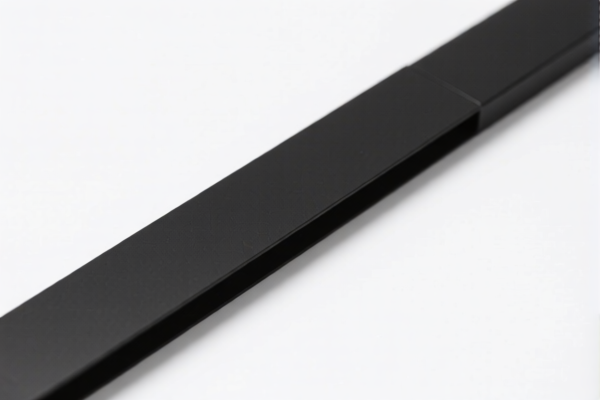
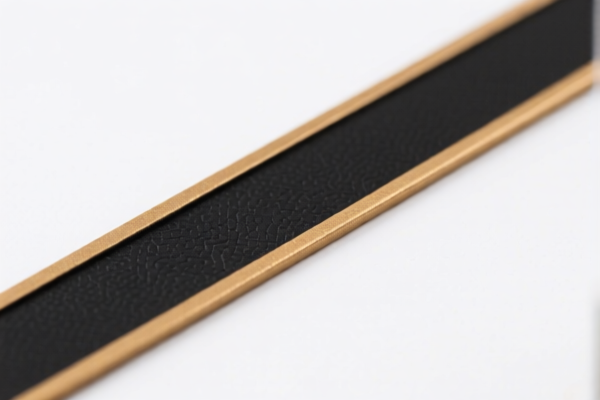
The "Floor Edge Banding Strip" is a critical finishing component in flooring installation, used to cover the expansion gaps between the floor surface and the wall. In international trade, its classification depends entirely on Material and Form. Since the name does not specify the material, customs authorities infer the likely composition based on common industry standards.
The classification splits into three primary categories: 1. Steel/Metal Products: Inferior from common knowledge that metal trims exist; classified as "Other articles of iron or steel." 2. Plastic Products (PVC): Inferior from the context of "flooring accessories" where PVC is the dominant material for flexible strips; classified under "Plastics and articles thereof." 3. Wood Products: Inferior from the "flooring matching" logic, assuming wood is used for high-end or traditional settings; classified under "Wood and articles of wood."
⚠️ Critical Distinction Point:
- If the material is Steel/Iron → Use 7326 or 7326.90 (High Tax Risk).
- If the material is PVC/Plastic → Use 3918 (Medium Tax Risk).
- If the material is Wood → Use 4409 (Low Base Tax, High Surcharge).
📦 Part 2: HS Code Classification Details (2026 Latest Tariff Authority Comparison)
| HS Code | Product Description | Application Scenario | Material Inference |
|---|---|---|---|
7326.19.00.80 |
Other articles of iron or steel (Non-electrical) | Metal skirting, stainless steel trim, industrial edge strips | ✅ Steel/Iron |
3918.10.20.00 |
Floor coverings of plastics, whether or not self-adhesive, in sheets, rolls, or similar shapes | PVC edge strips, flexible plastic trims, residential flooring accessories | ✅ PVC/Plastic |
4409.29.51.00 |
Wood continuously shaped along any of its edges (non-coniferous), including moldings/trim | Wooden skirting boards, decorative wood trims for hardwood floors | ✅ Non-Coniferous Wood |
7326.90.86.88 |
Other articles of iron or steel (Other) | Metal edging components not specifically listed elsewhere | ✅ Steel/Iron |
4409.10.50.00 |
Wood continuously shaped along any of its edges (Coniferous), including moldings/trim | Pine/Coniferous wood edge strips, basic wooden trims | ✅ Coniferous Wood |
🔍 Key Reminder:
- No Mixed Classification: You must declare one HS Code based on the actual material. Mixing materials in one line item without proper breakdown can lead to misdeclaration. - "Edge Banding" vs. "Flooring": If the strip is merely an accessory (trim), it does not fall under the main flooring code (e.g., 3918.90) but under its specific material category. - Tax Implication: Steel products face the highest total tax burden due to Section 232 tariffs. Wood and Plastic are relatively lower in base rates but still subject to high Section 301/IEEPA surcharges.
💰 Part 3: 2026 Latest Tariff Rate Breakdown (Including Additional Taxes & Policy Surcharges)
✅ Applicable Country: USA (US)
✅ Country of Origin: China (CN)
✅ Effective Date: From November 10, 2025 (and subsequent imports)
🎯 1. 7326.19.00.80 & 7326.90.86.88 —— Other Articles of Iron or Steel
| Item | Content |
|---|---|
| Base Tariff | 2.9% (ad valorem) |
| Section 301 Surcharge | +25.0% |
| Section 122 Surcharge (Steel/Aluminum/Copper) | +50.0% (Specific to steel articles) |
| Total Tax Rate | 87.9% |
| Tax Calculation | CIF Value × 87.9% |
| De Minimis Exemption | ❌ Not Eligible (deny_de_minimis) |
| Legal Basis Path | USITC:7326.19.00.80 → FOOTNOTE:Section 232 Steel → Section 301: 25% → IEEPA/Section 122: 50% |
📌 Explanation:
- Base Rate (2.9%): Standard Most Favored Nation (MFN) rate for steel articles. - Section 301 (25%): Standard USITC surcharge on Chinese goods. - Section 122 Steel Surcharge (50%): This is the killer clause. Under the Section 232 investigation, specific steel products face an additional 50% tariff. Since "edge banding" is often interpreted as a steel article, this 50% surcharge applies, pushing the total to nearly 88%. - Result: Extremely High Cost. Importers must verify if the product is indeed steel or if a plastic/wood alternative is viable.
🎯 2. 3918.10.20.00 —— Floor Coverings of Plastics
| Item | Content |
|---|---|
| Base Tariff | 5.3% (ad valorem) |
| Section 301 Surcharge | +25.0% |
| IEEPA Surcharge | +10.0% (Targeted Chinese/HK products) |
| Total Tax Rate | 40.3% |
| Tax Calculation | CIF Value × 40.3% |
| De Minimis Exemption | ❌ Not Eligible |
| Legal Basis Path | USITC:3918.10.20.00 → Section 301: 25% → IEEPA: 9903.01.24 |
📌 Explanation:
- Base Rate (5.3%): Standard rate for plastic floor coverings/accessories. - Section 301 (25%): Standard surcharge. - IEEPA (10%): Additional levy under the International Emergency Economic Powers Act. - Result: Moderate-High Cost. Significantly cheaper than steel, but still burdensome compared to pre-2018 rates.
🎯 3. 4409.29.51.00 & 4409.10.50.00 —— Wood Moldings/Trim (Continuously Shaped)
| Item | Content |
|---|---|
| Base Tariff | 0.0% (ad valorem) |
| Section 301 Surcharge | +25.0% |
| IEEPA Surcharge | +10.0% (Targeted Chinese/HK products) |
| Total Tax Rate | 35.0% |
| Tax Calculation | CIF Value × 35.0% |
| De Minimis Exemption | ❌ Not Eligible |
| Legal Basis Path | USITC:4409.xxxx → Section 301: 25% → IEEPA: 9903.01.24 |
📌 Explanation:
- Base Rate (0%): Duty-free for most wood moldings under normal MFN. - Section 301 (25%): The main tariff component. - IEEPA (10%): Additional levy. - Result: Lowest Base Tax. Among the three material options, Wood offers the lowest total tax burden (35%) because it avoids the heavy Section 232 steel surcharges and has a zero base rate. However, it still faces significant surcharges.
🛠️ Part 4: Customs Clearance Practical Advice (Combat Pitfall Guide)
✅ 1. Required Documentation Checklist (None Can Be Missing)
| Document | Mandatory | Explanation |
|---|---|---|
| ✅ Product Specification Sheet | ✔️ | Must explicitly state Material (e.g., "PVC," "Stainless Steel," "Birch Wood"), Dimensions, and Length. |
| ✅ Product Photos | ✔️ | Clear images showing cross-section (to identify material) and end-use (floor trim). |
| ✅ Commercial Invoice | ✔️ | Must match HS Code description precisely (e.g., "PVC Floor Trim" vs. "Steel Edge Strip"). |
| ✅ Packing List | ✔️ | Details weight and volume; ensure no mixed materials in one carton without declaration. |
| ✅ Certificate of Origin (CO) | ✔️ | Required to prove Chinese origin for surcharge calculation. |
| ✅ Third-Party Lab Report | ✔️ | Recommended to prove material composition if HS Code is disputed (e.g., proving it's not steel). |
✅ 2. Declaration Strategy (Key Mantra)
🔥 "Material Defines Code, Code Defines Tax, Steel Costs 88%!"
| Scenario | Correct Declaration | Wrong Action |
|---|---|---|
| PVC/Plastic Strip | HS 3918.10.20.00 |
Misdeclare as Steel → 87.9% Tax |
| Wooden Strip | HS 4409.29.51.00 or 4409.10.50.00 |
Misdeclare as Plastic → 40.3% Tax (Higher than necessary if wood is 35%) |
| Steel Strip | HS 7326.19.00.80 |
Misdeclare as Wood → Fraud/Seizure Risk + 87.9% Tax |
| Mixed Material | Split Line Items | Single line with "Mixed" → Customs Detention |
📌 Critical Note:
- If the strip is Aluminum, it may also fall under Section 232 with high surcharges. Verify if it's "Iron or Steel" (7326) or "Aluminum" (7610/7616). - "Edge Banding" is not a standalone HS description. You must use the material-based HS Code.
✅ 3. Special Situation Handling
| Situation | Handling Advice |
|---|---|
| OEM Custom Colors | Provide color cards and material certs. Ensure "Color" is not confused with "Material." |
| Self-Adhesive Backing | Still classified under 3918.10.20.00 (Plastic Floor Coverings), not as an adhesive product. |
| Import from Non-China Origin | If from Vietnam/Malaysia, Section 301/IEEPA may not apply (verify FTAs). Check for transshipment rules to avoid anti-circumvention duties. |
| Sample Shipment | Even samples are subject to full duties if not declared properly. Do not use "Sample" to evade Section 122/301. |
🌍 Part 5: Global Main Market Clearance Comparison (2026 Latest)
| Country/Region | Recommended HS Code | Estimated Tax (CN Origin) | Certification Requirements | Notes |
|---|---|---|---|---|
| 🇺🇸 USA | 3918.10.20.00 (Plastic)4409 (Wood)7326 (Steel) |
40.3% (Plastic) 35.0% (Wood) 87.9% (Steel) |
FCC (if electronic), but usually none for trim. | Steel is deadly expensive. Avoid steel if possible. |
| 🇨🇳 China | Same as above | Low Base Rates | CCC (if applicable) | No Section 301/IEEPA. Best market for export origin. |
| 🇪🇺 EU | 3918 (Plastic)4409 (Wood) |
~0-5% Base | CE (if construction product), RoHS | No Section 232. Lower total cost than US. |
| 🇦🇺 Australia | Same as above | ~5% Base | RCM | No significant surcharges. |
| 🇯🇵 Japan | Same as above | ~0-5% Base | PSE (if electronic) | Low tariffs, no US-style surcharges. |
📌 Conclusion:
- USA is the most challenging market due to Section 232 (Steel) and Section 301/IEEPA (General) surcharges. - Steel edge bands are prohibitively expensive in the US (87.9%). - Wood and Plastic are viable alternatives with lower total tax burdens (35-40.3%).
📌 Part 6: Common Mistakes & Pitfall Guide (Lessons Learned)
❌ Mistake 1: Declaring Steel edge banding under Plastic HS Code
👉 Consequence: Customs audit → Back taxes + Penalties + Seizure. The penalty can be 3x the duty evaded.
❌ Mistake 2: Ignoring Section 122 Steel Surcharge for steel products
👉 Consequence: Underpaying 50% tax. CBP (Customs and Border Protection) is actively auditing steel articles. Do not guess.
❌ Mistake 3: Using "Floor Trim" as the HS Code
👉 Consequence: Rejection by customs system. Always use material-based HS Codes (3918, 4409, 7326).
❌ Mistake 4: Assuming "De Minimis" ($800) applies to these goods
👉 Consequence: Denied. Section 301, IEEPA, and Section 232 goods are not eligible for de minimis exemption.
✅ Correct Approach:
"PVC Floor Edge Banding Strip, Self-Adhesive, 2m Length, Model XYZ, Plastic Material"
HS Code: 3918.10.20.00
🎯 Part 7: Conclusion – Professional Declaration Saves Money!
🎯 Remember the Mantra:
🔹 "Steel is 88%, Plastic is 40%, Wood is 35%."
🔹 "Material First, Code Second, Tax Third."
🔹 "No De Minimis for Surcharged Goods!"
📌 Pro Tip:
If your product is Plastic or Wood, consider sourcing from Vietnam or Thailand to potentially avoid Section 301/IEEPA surcharges (subject to strict rules of origin and anti-circumvention checks).
For Steel, consider avoiding US imports or negotiating DDP (Delivered Duty Paid) terms with your supplier who may have structured supply chains elsewhere.
📣 Immediate Action:
📞 Contact a Licensed Customs Broker + Provide Product Material Specs + Request Advance Ruling (if value allows)
🚀 Optimize Material Choice (Plastic/Wood) to Save 50%+ in Taxes!
✨ Professional Clearance, Starts with Accurate Classification!
💼 Every Percent of Tax Saved is Pure Profit!
用户评价
关于 HS 编码归类
协调制度(HS)是由世界海关组织(WCO)制定的国际贸易商品分类标准。全球 200 多个国家采用 HS 系统作为海关关税、贸易统计和进出口监管的基础。
每个 HS 编码遵循以下层级结构:
- 章(2 位)——商品大类(例如:第 84 章:机器和机械设备)
- 品目(4 位)——章内的更具体分类
- 子目(6 位)——国际通用细分,所有 WCO 成员国统一使用
- 本国细分(8-10 位)——各国自行扩展的细分编码,如美国 HTSUS 10 位编码
正确的 HS 编码归类对于顺利通关、准确缴纳关税和遵守贸易法规至关重要。错误归类可能导致海关延误、多缴关税或罚款。
从CN进口到US时,适用的关税税率可能包括:
- 最惠国(MFN)税率——适用于 WTO 成员国的标准关税税率
- 普通税率——适用于无贸易协定国家
- 贸易救济关税——附加关税,如 301 条款(反倾销)、232 条款(国家安全)或反补贴税
本页内容仅供参考。如需正式归类,请咨询当地海关或持牌报关代理。