Floor Mats
CN → US| HS编码 | 关税税率 | 原产国 | 目的国 | 文档 |
|---|---|---|---|---|
| 4016993000 | 35.0% | CN | US | 官方文档 |
| 4016910000 | 37.7% | CN | US | 官方文档 |
| 6406909000 | 17.5% | CN | US | 官方文档 |
| 6406102061 | 28.0% | CN | US | 官方文档 |
| 4016990500 | 20.9% | CN | US | 官方文档 |
商品图片
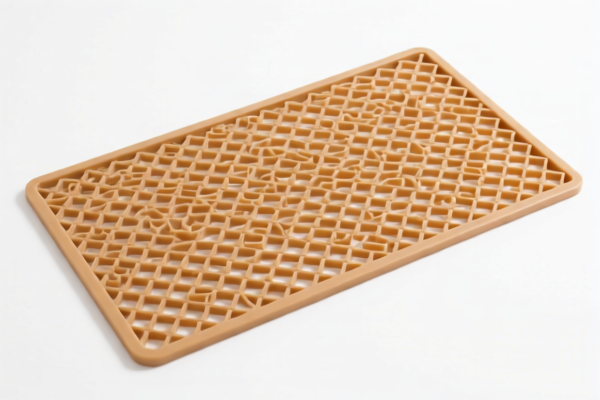
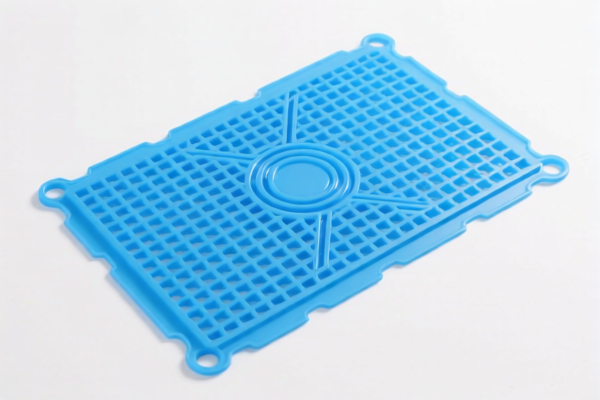
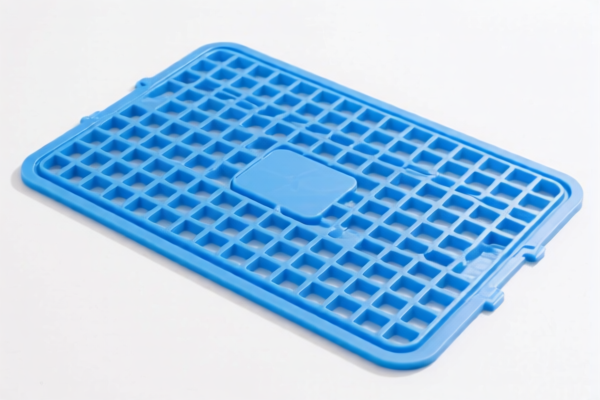
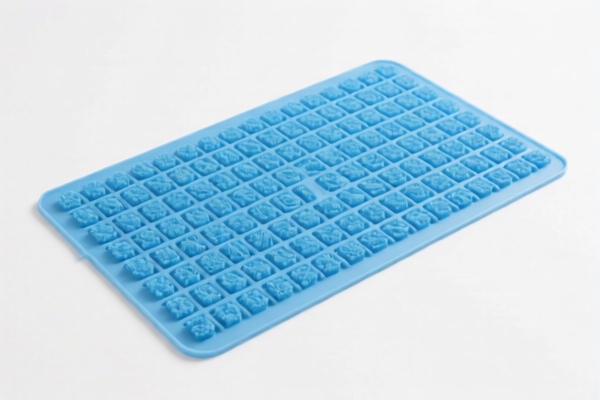
AI分析
🚗 Floor Mats (Automotive & Footwear Accessories)
🌐 HS Code Reference & Customs Clearance Guide | 2026 Latest Tariff Analysis | Professional Strategy
📌 Part 1: Product Definition & Classification: Do You Really Know "Floor Mats"?
In international trade, the term "Floor Mats" is ambiguous and spans multiple categories depending on the material, specific use (vehicle vs. shoe vs. leg), and construction. Misclassification is the #1 cause of customs delays and unexpected duties.
⚠️ Key Distinction Logic:
- Are they for Cars? → Look at Rubber/Carpeting codes (Chapter 40 or 64).
- Are they for Shoes? → Look at Footwear parts (Chapter 64).
- Are they for Body/Comfort? → Look at Household Rubber items (Chapter 40).
📦 Part 2: HS Code Classification Details (2026 Authoritative Alignment)
Based on the provided data, here are the four distinct classifications for products described as "mats" or "pads":
| HS Code | Product Description | Material/Feature | Logic for Classification |
|---|---|---|---|
4016.99.30.00 |
Car Floor Mats | Rubber or Synthetic | Classified as "Automotive shock-absorbing/protection products." |
4016.91.00.00 |
Car Floor Mats | Vulcanized Rubber | Classified as "Other vulcanized rubber articles" (Rugs/Mats). |
6406.90.90.00 |
Insoles | Non-specific Material | Classified as "Detachable insoles," generic material category. |
6406.10.20.61 |
Insoles | Detachable Shoe Insoles | Classified as "Detachable insoles, heel cushions," specific footwear accessory. |
4016.99.05.00 |
Leg Pads | Vulcanized Rubber | Classified as "Other household vulcanized rubber articles." |
🔍 Critical Note:
- "Car Mats" can fall under 4016.99.30.00 or 4016.91.00.00 depending on whether they are viewed primarily as protection devices or rubber rugs. The tax implications differ significantly.
- "Insoles" are strictly footwear accessories (Chapter 64), not general mats. Do not confuse them with car mats.
- "Leg Pads" are considered household rubber items, distinct from automotive use.
💰 Part 3: 2026 Tariff Rate Breakdown (Including Surcharges & Policy Add-ons)
✅ Applicable Market: United States (US)
✅ Origin: China (CN)
✅ Effective Date: 2025/2026 (Current Trade War Context)
🎯 1. 4016.99.30.00 —— Car Floor Mats (Protection/Shock Absorption)
| Item | Detail |
|---|---|
| Base Tariff | 0.0% |
| Section 301 Surcharge | +25.0% |
| 122 Clause Tariff | +10.0% |
| Total Tax Rate | 35.0% |
| Calculation Basis | CIF Value × 35% |
| De Minimis Exemption | ❌ Not Eligible (High duty rates typically exclude de minimis benefits) |
| Legal Basis Path | Base: 0% + Sec 301: 25% + Clause 122: 10% |
📌 Explanation:
This code offers the lowest total duty (35%) for car mats. It is classified specifically as "shock-absorbing/protection products," which benefits from a 0% base rate, but still carries the full 35% in additional taxes due to US-China trade tensions.
🎯 2. 4016.91.00.00 —— Car Floor Mats (Vulcanized Rubber/Rugs)
| Item | Detail |
|---|---|
| Base Tariff | 2.7% |
| Section 301 Surcharge | +25.0% |
| 122 Clause Tariff | +10.0% |
| Total Tax Rate | 37.7% |
| Calculation Basis | CIF Value × 37.7% |
| De Minimis Exemption | ❌ Not Eligible |
| Legal Basis Path | Base: 2.7% + Sec 301: 25% + Clause 122: 10% |
📌 Explanation:
If the mat is classified strictly as a "rug/mat" made of vulcanized rubber, it loses the 0% base rate benefit. The 2.7% base pushes the total to 37.7%, making it 2.7% more expensive than the previous code. Precision in product description is key to saving this cost.
🎯 3. 6406.90.90.00 —— Insoles (Generic Material)
| Item | Detail |
|---|---|
| Base Tariff | 0.0% |
| Section 301 Surcharge | +7.5% |
| 122 Clause Tariff | +10.0% |
| Total Tax Rate | 17.5% |
| Calculation Basis | CIF Value × 17.5% |
| De Minimis Exemption | ❌ Not Eligible |
| Legal Basis Path | Base: 0% + Sec 301: 7.5% + Clause 122: 10% |
📌 Explanation:
For shoe insoles where the material is not specified or is a mix, this code applies. The Section 301 rate for footwear parts is lower (7.5% vs 25% for rubber goods), resulting in a much lower total duty of 17.5%.
🎯 4. 6406.10.20.61 —— Insoles (Specific Detachable Type)
| Item | Detail |
|---|---|
| Base Tariff | 10.5% |
| Section 301 Surcharge | +7.5% |
| 122 Clause Tariff | +10.0% |
| Total Tax Rate | 28.0% |
| Calculation Basis | CIF Value × 28.0% |
| De Minimis Exemption | ❌ Not Eligible |
| Legal Basis Path | Base: 10.5% + Sec 301: 7.5% + Clause 122: 10% |
📌 Explanation:
This is for specific detachable insoles. While the Section 301 rate remains low (7.5%), the high base tariff (10.5%) brings the total to 28.0%. This is higher than the generic insole code (6406.90.90.00) but still lower than car mats.
🎯 5. 4016.99.05.00 —— Leg Pads (Household Rubber)
| Item | Detail |
|---|---|
| Base Tariff | 3.4% |
| Section 301 Surcharge | +7.5% |
| 122 Clause Tariff | +10.0% |
| Total Tax Rate | 20.9% |
| Calculation Basis | CIF Value × 20.9% |
| De Minimis Exemption | ❌ Not Eligible |
| Legal Basis Path | Base: 3.4% + Sec 301: 7.5% + Clause 122: 10% |
📌 Explanation:
For leg pads intended for household use. The Section 301 rate for this "other rubber article" category is capped at 7.5% (unlike the 25% for car mats). Total duty is 20.9%.
🛠️ Part 4: Customs Clearance Operational Advice
✅ 1. Documentation Checklist (Non-negotiable)
| Document | Required? | Notes |
|---|---|---|
| Product Specifications | ✅ | Must clearly state: Material, Intended Use (Car/Shoe/Leg), Dimensions. |
| Commercial Invoice | ✅ | Description must match HS Code logic. E.g., "Rubber Car Floor Mat" vs. "Vulcanized Rubber Rug." |
| Origin Certificate (CO) | ✅ | Required for tariff preference verification (though China origin triggers surcharges). |
| Material Composition Report | ✅ | Critical for distinguishing between 6406 (Footwear) and 4016 (Rubber). |
| Photos | ✅ | Show texture, packaging, and any branding that indicates use case. |
✅ 2. Classification Strategy & Pitfalls (The "Golden Rules")
🔥 Rule 1: "Car Mats" are Tax-Heavy
- Risk: Car mats incur 25% Section 301 + 10% Clause 122.
- Strategy: If your "car mat" is actually a rubber rug, try to argue for4016.99.30.00(35%) over4016.91.00.00(37.7%) if the "protection" aspect is dominant.
- Warning: Do not mislabel car mats as "household items" to avoid 25% duties; US Customs is strict on end-use.🔥 Rule 2: "Insoles" Benefit from Lower Footwear Duties
- Advantage: Footwear parts (6406) only face 7.5% Section 301, not 25%.
- Strategy: If you sell shoe insoles, ensure the description clearly states "Detachable Insole for Footwear" to qualify for6406.90.90.00(17.5% total) or6406.10.20.61(28% total).🔥 Rule 3: "Leg Pads" are Household Rubber
- Advantage: Similar to footwear, these face 7.5% Section 301.
- Strategy: Market as "Household Comfort/Support Pads" to fit4016.99.05.00(20.9% total). Do not describe them as "automotive" unless they are literally for car seats.
✅ 3. Special Scenarios
| Scenario | Recommendation |
|---|---|
| Mixed Container (Car Mats + Insoles) | Separate HS Codes! Do not lump them. Car mats at 35-37.7%, Insoles at 17.5-28%. Separate invoices prevent audit flags. |
| "Universal" Floor Mats | If material is unknown, Customs may default to higher base rates or require samples. Always specify material (e.g., "TPE Rubber"). |
| OEM/Private Label | Ensure the invoice lists the manufacturer's HS Code if different. Mislabeling brand can lead to seizure if IP issues arise, though duty is based on product type. |
🌍 Part 5: Global Market Comparison (2026 Context)
| Market | Recommended HS (Car Mats) | Total Duty (China Origin) | Key Risk |
|---|---|---|---|
| 🇺🇸 USA | 4016.99.30.00 or 4016.91.00.00 |
35.0% - 37.7% | High Section 301 + Clause 122. |
| 🇨🇳 China | 4016.99.30.00 |
~5-10% (Import Duty) | No 301/122 clauses. |
| 🇪🇺 EU | 4016.99 |
~4.5% | No 301/122. CE/RoHS compliance needed. |
| 🇬🇧 UK | 4016.99 |
~4.5% | Post-Brexit rules apply. |
📌 Conclusion:
- USA is the most expensive market for rubber floor mats due to the 35%+ effective duty rate.
- Footwear Insoles (6406) are significantly cheaper to import into the US (17.5%-28%) because footwear parts enjoy lower Section 301 rates.
📌 Part 6: Common Mistakes & Avoidance Guide (Lessons Learned)
❌ Mistake 1: Calling Car Mats "Rubber Rugs" to get a random HS code.
👉 Result: Customs will reject it as "misdescription" and reclassify to 4016.91.00.00 or demand penalties.
✅ Fix: Use accurate functional descriptions: "Automotive Floor Protector."
❌ Mistake 2: Mixing "Shoe Insoles" and "Car Mats" in one line item.
👉 Result: Customs may apply the highest duty rate to the entire shipment or audit the whole lot.
✅ Fix: Separate line items with distinct HS Codes.
❌ Mistake 3: Ignoring "Clause 122" (10%).
👉 Result: Assuming only Section 301 (25%) applies. Total is 35%+.
✅ Fix: Budget for Clause 122 in all cost calculations for Chinese goods.
❌ Mistake 4: Claiming "Household Use" for Car Mats.
👉 Result: If the mat has car-specific contours (pedal cutouts, logo placement), Customs will deny household classification.
✅ Fix: Sell "Household Mats" as plain rubber slabs if you want the lower 7.5% Section 301 rate (e.g., for gym/bedroom use).
🎯 Part 7: Conclusion: Precision Saves Money!
🎯 Key Takeaway:
🔹 Car Mats = High Duty (35-37.7%) due to 25% + 10% surcharges.
🔹 Insoles/Leg Pads = Lower Duty (17.5-28%) due to lower 7.5% surcharges.
🔹 Material & Use Define the Code!🔹 "If it's for the car, pay 35%. If it's for the foot, pay 17-28%."
📌 Pro Tip:
For Car Mats, consider Pre-Ruling from US Customs (CBP) if you have high-volume shipments. Define your product as "Shock-Absorbing" (4016.99.30.00) to secure the 0% base rate and lock in the 35% total.
For Insoles, ensure your invoice says "Detachable Insole" to trigger 6406.90.90.00 (17.5%) instead of the higher base rate code.
📣 Action Plan:
1. Audit your Bill of Materials: Confirm exact material (Vulcanized Rubber vs. Synthetic).
2. Update Descriptions: Align invoices with the HS Code logic.
3. Calculate Landed Cost: Include 35% for cars, 17.5% for insoles.
4. Consult a Broker: For high-value shipments, request a Binding Ruling.
✨ Clear Classification, Clear Savings!
💼 Don't let ambiguous "Mats" cost you 25% in unexpected duties!
用户评价
关于 HS 编码归类
协调制度(HS)是由世界海关组织(WCO)制定的国际贸易商品分类标准。全球 200 多个国家采用 HS 系统作为海关关税、贸易统计和进出口监管的基础。
每个 HS 编码遵循以下层级结构:
- 章(2 位)——商品大类(例如:第 84 章:机器和机械设备)
- 品目(4 位)——章内的更具体分类
- 子目(6 位)——国际通用细分,所有 WCO 成员国统一使用
- 本国细分(8-10 位)——各国自行扩展的细分编码,如美国 HTSUS 10 位编码
正确的 HS 编码归类对于顺利通关、准确缴纳关税和遵守贸易法规至关重要。错误归类可能导致海关延误、多缴关税或罚款。
从CN进口到US时,适用的关税税率可能包括:
- 最惠国(MFN)税率——适用于 WTO 成员国的标准关税税率
- 普通税率——适用于无贸易协定国家
- 贸易救济关税——附加关税,如 301 条款(反倾销)、232 条款(国家安全)或反补贴税
本页内容仅供参考。如需正式归类,请咨询当地海关或持牌报关代理。