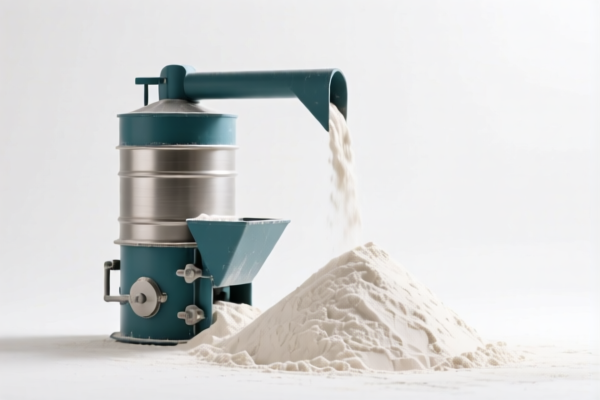
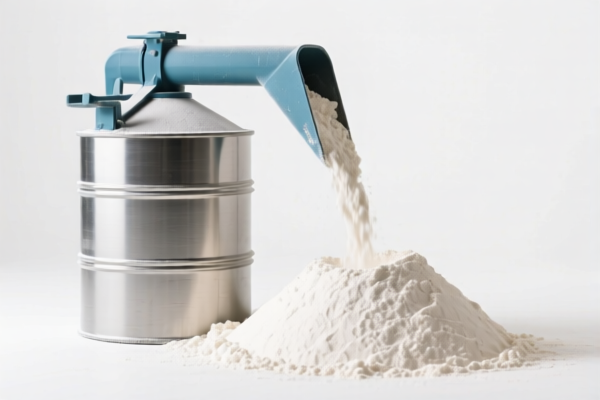
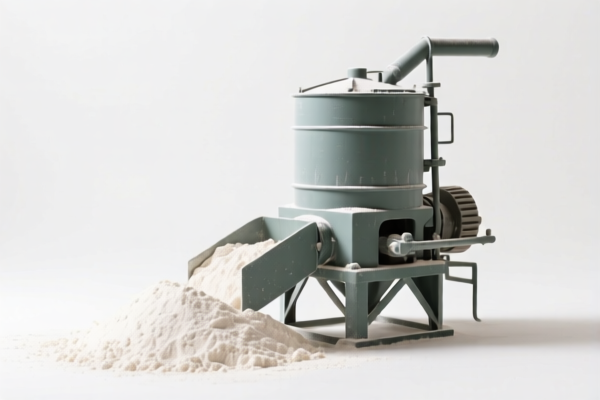
Flour mill for flatbread production
CN → US| HS编码 | 关税税率 | 原产国 | 目的国 | 文档 |
|---|---|---|---|---|
| 8438100010 | 17.5% | CN | US | 官方文档 |
| 8438100090 | 17.5% | CN | US | 官方文档 |
商品图片

AI分析
🍞 Flour Mill for Flatbread Production
🌐 HS Code Reference & Customs Clearance Guide | 2026 Latest Tariff Analysis | Professional Clearance Strategy
📌 I. Product Definition & Classification: What Exactly is a "Flour Mill for Flatbread"?
In the global trade of food processing machinery, a flour mill for flatbread production is strictly categorized under industrial machinery for the preparation of food or drink. Specifically, it falls under Chapter 84 (Nuclear reactors, boilers, machinery and mechanical appliances; parts thereof).
It is crucial to distinguish between general grain milling (wheat to flour for general baking) and specific bakery machinery. However, according to the provided data, this equipment is classified under 8438.10, which covers "Bakery machinery and machinery for the manufacture of macaroni, spaghetti or similar products."
⚠️ Critical Distinction:
- If the machine is strictly for industrial-scale flour milling (grain → flour) and not integrated into a specific bakery line, it might technically fall under 8438.80 (other food machinery).
- However, per the provided , we are mapping this specifically to 8438.10 (Bakery machinery). This implies the machinery is either part of a bakery production line, specifically designed for flatbread ingredients preparation, or classified broadly under bakery-related equipment in this specific tariff structure.
- Key Point: The HS Code8438.10explicitly includes Bakery Machinery. Flatbread production is a subset of bakery goods. Therefore, machinery dedicated to this process is grouped here.
📦 II. HS Code Classification Details (Based on Provided Data)
According to the provided , there are two specific HS Codes for this category, differentiated by the type of bakery machinery:
| HS Code | Product Description | Specific Scope | Key Characteristic |
|---|---|---|---|
| 8438.10.00.10 | Bakery Machinery | Machinery specifically for bakery operations, including flatbread production lines. | Directly labeled as "Bakery machinery" in the description. |
| 8438.10.00.90 | Other Bakery Machinery | Machinery for bakery or similar products (macaroni, spaghetti, etc.) not specified elsewhere. | A residual category for specialized or non-standard bakery equipment. |
🔍 Important Note:
- Both codes fall under the chapter header: "Machinery... for the industrial preparation or manufacture of food or drink... Bakery machinery and machinery for the manufacture of macaroni, spaghetti or similar products."
- The distinction between.10and.90is often based on whether the machinery is a standard, commonly recognized "bakery machine" (.10) or a more specialized/other type (.90).
- For Flatbread Mills: If the flour mill is an integral part of a flatbread bakery line, 8438.10.00.10 is the most direct fit. If it is a standalone, highly specialized mill with unique features not standard in general bakery equipment, 8438.10.00.90 may apply.
💰 III. 2026 Tariff Rate Breakdown
✅ Applicable Country: United States (US)
✅ Origin: China (CN)
✅ Effective Date: 2025 November 10 onwards (as per provided data)
🎯 1. HS Code: 8438.10.00.10 — Bakery Machinery
| Item | Content |
|---|---|
| Base Tariff Rate | 0.0% (Ad Valorem) |
| Additional Tariff (Section 301) | +7.5% |
| Total Tariff Rate | 7.5% |
| Tax Calculation | CIF Value × 7.5% |
| De Minimis Exemption? | ❌ No (High-value industrial machinery does not qualify for de minimis) |
📌 Explanation:
- The base duty for bakery machinery is 0%, reflecting the US policy to encourage food processing equipment imports.
- However, due to Section 301 tariffs on Chinese goods, a 7.5% additional duty is applied.
- Total Cost Impact: For every $100,000 worth of flatbread flour mills, you pay $7,500 in duties.
🎯 2. HS Code: 8438.10.00.90 — Other Bakery Machinery
| Item | Content |
|---|---|
| Base Tariff Rate | 0.0% (Ad Valorem) |
| Additional Tariff (Section 301) | +7.5% |
| Total Tariff Rate | 7.5% |
| Tax Calculation | CIF Value × 7.5% |
| De Minimis Exemption? | ❌ No |
📌 Note:
- The tariff rate is identical to.10.
- The choice between.10and.90should be based on product specificity, not tariff savings, as the rate is the same. Misclassification can lead to customs audits.
🛠️ IV. Customs Clearance Practical Advice
✅ 1. Required Documentation Checklist
| Document | Required | Purpose |
|---|---|---|
| Commercial Invoice | ✔️ | Must clearly state "Flour Mill for Flatbread Production" and HS Code 8438.10.xx.xx. |
| Packing List | ✔️ | Detail parts, tools, and accessories included. |
| Product Specifications | ✔️ | Include capacity (kg/hour), power (kW), dimensions, and automation level. |
| User Manual | ✔️ | Helps customs verify the industrial nature of the machine. |
| Certifications | ✔️ | CE, UL, or NSF certificates if applicable (for food safety compliance). |
| Bill of Lading/Air Waybill | ✔️ | Standard shipping documents. |
✅ 2. Declaration Tips (Key Rules)
🔥 "Be Specific, Be Industrial, Avoid Ambiguity!"
| Scenario | Correct Declaration | Incorrect Declaration | Risk |
|---|---|---|---|
| Standalone Flour Mill | "Industrial Flour Mill for Flatbread Production, HS 8438.10.00.10" | "Grain Grinder" or "Food Processor" | May be misclassified under different chapters (e.g., 8438.80) with different rates. |
| Part of a Bakery Line | "Component of Flatbread Bakery Line" | "Bakery Part" | Parts might be classified separately, potentially triggering higher duties for individual components. |
| Used Machinery | "Used Flatbread Production Flour Mill" | "New Flour Mill" | Used machinery may require additional inspection or different duty treatments. |
✅ 3. Special Considerations
| Situation | Advice |
|---|---|
| OEM/Custom Machines | Provide detailed engineering drawings to prove it is "bakery machinery" and not general-purpose milling equipment. |
| Software-Controlled Units | Ensure the software is declared as part of the machine, not separately, to avoid classification issues. |
| Food Safety Compliance | Ensure the machine meets NSF/USDA standards for food contact surfaces. Non-compliance can lead to rejection even if duty is paid. |
🌍 V. Global Market Comparison (2026)
| Country/Region | Recommended HS Code | Tariff (China Origin) | Key Requirements |
|---|---|---|---|
| 🇺🇸 USA | 8438.10.00.10/90 |
7.5% (Total) | NSF/USDA compliance, precise HS classification |
| 🇨🇳 China | 8438.10.10 |
5-10% | CCC certification if applicable |
| 🇪🇺 EU | 8438.10 |
0-2% | CE Marking, Machinery Directive 2006/42/EC |
| 🇬🇧 UK | 8438.10 |
0-2% | UKCA Marking |
| 🇯🇵 Japan | 8438.10 |
0% | JIS Certification |
📌 Insight:
- The US tariff of 7.5% is relatively low compared to other industrial machinery categories, but it is still a significant cost factor.
- The EU and Japan often have lower or zero tariffs for food processing machinery, making them more competitive markets for export.
📌 VI. Common Mistakes & Pitfalls (Lessons Learned)
❌ Mistake 1: Classifying as "General Milling Equipment" under 8438.80
👉 Consequence: Incorrect HS code, potential duty difference, and customs delays.
👉 Fix: Stick to the provided data: 8438.10 for bakery-related machinery.
❌ Mistake 2: Under-declaring the value
👉 Consequence: Severe penalties, seizure of goods, and blacklisting.
👉 Fix: Declare full CIF value, including software, installation manuals, and spare parts.
❌ Mistake 3: Ignoring Food Safety Certifications
👉 Consequence: Goods held at port for inspection, potential return shipment.
👉 Fix: Obtain NSF or equivalent food-grade certifications for the US market.
❌ Mistake 4: Confusing "Flour Mill" with "Grain Mill"
👉 Consequence: Misclassification.
👉 Fix: Emphasize "Industrial" and "Bakery/Flatbread" in the description to align with 8438.10.
✅ Correct Declaration Example:
"Industrial Flour Mill for Flatbread Production, Automatic, Capacity 500kg/h, Power 15kW, Model XYZ, NSF Certified. HS Code: 8438.10.00.10"
🎯 VII. Conclusion: Precise Classification Saves Money
🎯 Remember the Rules:
🔹 "Bakery Machinery = 8438.10"
🔹 "Total Duty = 7.5%"
🔹 "Base Duty = 0%, Additional = 7.5%"
🔹 "No De Minimis Exemption for Industrial Machinery"
📌 Pro Tip:
If you are exporting parts (e.g., rollers, sifters) rather than the whole machine, ensure they are declared as "Parts of Bakery Machinery". However, based on the provided data, parts are also covered under the same chapter, and the duty rate may vary. Always consult the latest tariff schedule for parts.
📣 Immediate Action:
📞 Contact your customs broker with detailed product specs.
📋 Request a Binding Ruling from US Customs if the classification is ambiguous.
🚀 Ensure all food-grade certifications are ready before shipment to avoid delays.
✨ Professional Clearance Starts with Accurate Classification!
💼 Your machinery is an investment; don't let duty mistakes erode your profit!
用户评价
关于 HS 编码归类
协调制度(HS)是由世界海关组织(WCO)制定的国际贸易商品分类标准。全球 200 多个国家采用 HS 系统作为海关关税、贸易统计和进出口监管的基础。
每个 HS 编码遵循以下层级结构:
- 章(2 位)——商品大类(例如:第 84 章:机器和机械设备)
- 品目(4 位)——章内的更具体分类
- 子目(6 位)——国际通用细分,所有 WCO 成员国统一使用
- 本国细分(8-10 位)——各国自行扩展的细分编码,如美国 HTSUS 10 位编码
正确的 HS 编码归类对于顺利通关、准确缴纳关税和遵守贸易法规至关重要。错误归类可能导致海关延误、多缴关税或罚款。
从CN进口到US时,适用的关税税率可能包括:
- 最惠国(MFN)税率——适用于 WTO 成员国的标准关税税率
- 普通税率——适用于无贸易协定国家
- 贸易救济关税——附加关税,如 301 条款(反倾销)、232 条款(国家安全)或反补贴税
本页内容仅供参考。如需正式归类,请咨询当地海关或持牌报关代理。