Food Grade Alginate
CN → US| HS编码 | 关税税率 | 原产国 | 目的国 | 文档 |
|---|---|---|---|---|
| 1302390090 | 20.7% | CN | US | 官方文档 |
| 1302390010 | 20.7% | CN | US | 官方文档 |
| 2938900000 | 13.7% | CN | US | 官方文档 |
| 3913902090 | 40.8% | CN | US | 官方文档 |
| 1302390090 | 20.7% | CN | US | 官方文档 |
商品图片
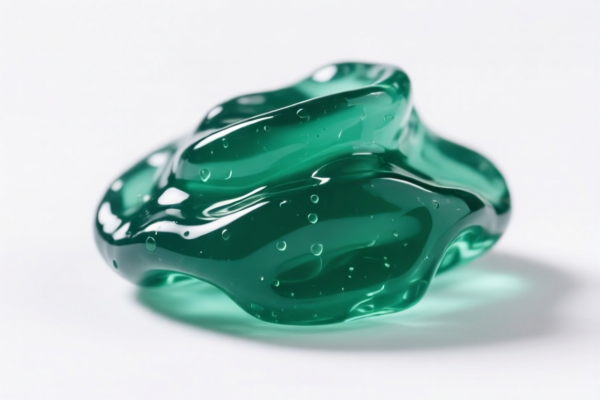
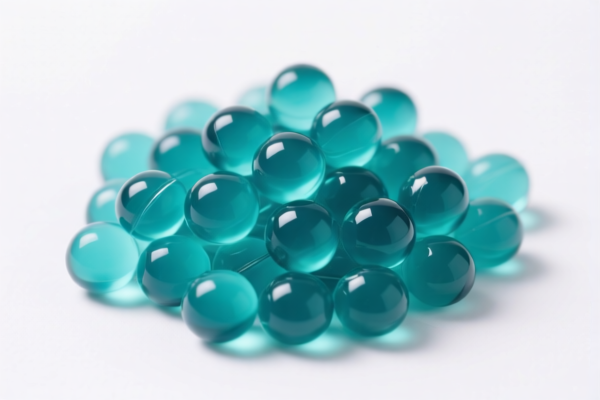
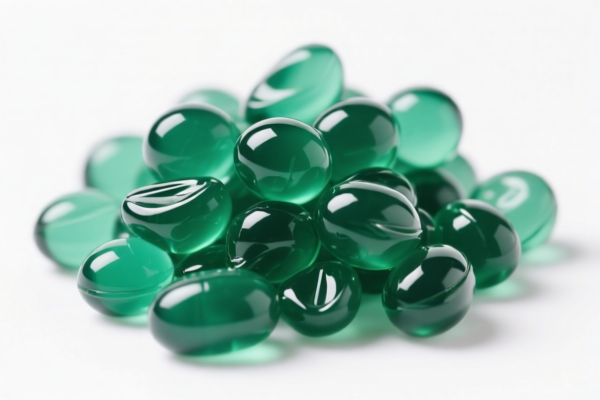

AI分析
🌿 Food Grade Alginate (Sodium Alginate & Pharmaceutical Grade Alginic Acid)
🌐 HS Code Reference & Customs Clearance Guide | 2026 Latest Tariff Analysis | Professional Strategy for US Imports
📌 I. Product Definition & Classification: Do You Really Know "Alginate"?
Food Grade Alginate is a natural polysaccharide extracted from brown seaweed. In international trade, it is classified based on its chemical nature, state of use, and regulatory purpose. The core distinction lies in whether it is declared as a food additive/thickener or a chemical derivative/natural polymer.
⚠️ Key Classification Distinction:
- If declared as a "Food Additive/Thickener" (Plant-derived mucilage) → Falls under Chapter 13 (Alkaloidal Extracts/Thickeners):1302.39.00.90/1302.39.00.10
- If declared as a "Natural Glycoside Derivative" (Chemical focus) → Falls under Chapter 29 (Organic Chemicals):2938.90.00.00
- If declared as a "Pharmaceutical/Natural Polymer" (Medical/Polymer focus) → Falls under Chapter 39 (Plastics/Polymers):3913.90.20.90🔍 Critical Insight:
The same physical product (Sodium Alginate Powder) can have three different HS Codes depending on the commercial description and technical data sheet provided during customs declaration. Misclassification can lead to massive tariff differences (from 13.7% to 40.8%).
📦 II. HS Code Classification Details (2026 Latest Tariff Authority Comparison)
| HS Code | Product Description | Applicable Scenario | Chemical/Functional Attribute | Total Tax Rate |
|---|---|---|---|---|
1302.39.00.90 |
Sodium Alginate Powder, Plant-derived mucilage/thickener, Powder form, fits "Other" category | Food additive, general industrial thickener | Plant source, mucilage | 20.7% |
1302.39.00.10 |
Sodium Alginate Powder, Plant-derived thickener, within 1302.39 scope | Food grade, specific plant-extract classification | Plant source, thickener | 20.7% |
2938.90.00.00 |
Sodium Alginate, Natural glycoside derivative, Powder form | Chemical industry, glycoside derivatives | Organic chemical derivative | 13.7% |
3913.90.20.90 |
Pharmaceutical Grade Alginic Acid, Polysaccharide derivative, Natural polymer | Medical use, natural polymer applications | Natural polymer, polysaccharide | 40.8% |
1302.39.00.90 |
Pharmaceutical Grade Alginic Acid, Plant-derived mucilage/thickener | Medical food use, plant-extract inference | Plant source, mucilage | 20.7% |
🔍 Key Reminder:
-1302.39.00.90is the most common classification for Food Grade Alginate as a thickener.
-2938.90.00.00offers the lowest tariff (13.7%) but requires strict proof of "glycoside derivative" status in chemical terms.
-3913.90.20.90is for Pharmaceutical/Natural Polymer uses, but carries the highest tariff (40.8%).
-1302.39.00.10is a specific sub-category for plant-derived thickeners under Chapter 13.
💰 III. 2026 Latest Tariff Rate Breakdown (Including Surtaxes & Policy Add-ons)
✅ Applicable Country: United States (US)
✅ Country of Origin: China (CN)
✅ Effective Date: From November 10, 2025 (including subsequent imports)
🎯 1. 1302.39.00.90 & 1302.39.00.10 —— Sodium Alginate (Plant-Derived Thickener)
| Item | Content |
|---|---|
| Base Tariff | 3.2% (ad valorem) |
| Section 301 Surtax | +7.5% (from USITC Footnote 9903.08.01, specific to certain plant extracts) |
| Section 122 Tariff | +10% (Targeting China, specific to certain agricultural/plant products) |
| Total Tax Rate | 20.7% |
| Tax Calculation | CIF Value × 20.7% |
| De Minimis Eligibility | ❌ No (Not eligible for Section 321 de minimis exemption) |
| Legal Basis Path | USITC:1302.39.00.90 → SECTION_301:9903.08.01 → SECTION_122:9903.12.01 |
📌 Explanation:
- "Base Tariff 3.2%": Standard Most Favored Nation (MFN) rate for Chapter 13.
- "Section 301 7.5%": A reduced rate compared to the previous 25%, applicable to specific plant-derived thickeners.
- "Section 122 10%": A specific surtax on Chinese plant/agricultural products.
- Total 20.7% is moderate but significantly higher than the chemical classification.
🎯 2. 2938.90.00.00 —— Sodium Alginate (Natural Glycoside Derivative)
| Item | Content |
|---|---|
| Base Tariff | 3.7% (ad valorem) |
| Section 301 Surtax | 0.0% (Not subject to the higher 25% or 7.5% rates in this specific sub-category) |
| Section 122 Tariff | +10% (Still applies as a Chinese-origin product) |
| Total Tax Rate | 13.7% |
| Tax Calculation | CIF Value × 13.7% |
| De Minimis Eligibility | ❌ No |
| Legal Basis Path | USITC:2938.90.00.00 → SECTION_122:9903.12.01 |
📌 Note:
- This classification offers the lowest total tariff (13.7%).
- However, it requires the product to be technically classified as a "glycoside derivative" under Chapter 29.
- Risk: Customs may challenge this if the product is primarily used as a food additive rather than a chemical intermediate.
🎯 3. 3913.90.20.90 —— Pharmaceutical Grade Alginic Acid (Natural Polymer)
| Item | Content |
|---|---|
| Base Tariff | 5.8% (ad valorem) |
| Section 301 Surtax | +25.0% (High surtax for natural polymers/plastics) |
| Section 122 Tariff | +10% |
| Total Tax Rate | 40.8% |
| Tax Calculation | CIF Value × 40.8% |
| De Minimis Eligibility | ❌ No |
| Legal Basis Path | USITC:3913.90.20.90 → SECTION_301:9903.88.01 → SECTION_122:9903.12.01 |
📌 Warning:
- This is the highest tariff rate.
- Only apply if the product is strictly for pharmaceutical/natural polymer use and cannot be classified under Chapter 13 or 29.
- Do not use this classification for standard food-grade alginate to avoid excessive costs.
🎯 4. 1302.39.00.90 (Pharmaceutical Grade Inferred as Plant Extract)
| Item | Content |
|---|---|
| Base Tariff | 3.2% |
| Section 301 Surtax | +7.5% |
| Section 122 Tariff | +10% |
| Total Tax Rate | 20.7% |
| Tax Calculation | CIF Value × 20.7% |
📌 Strategy:
- Even if labeled "Pharmaceutical Grade," if it is derived from plants and functions as a mucilage/thickener, it can still be classified under1302.39.00.90for a lower tax rate (20.7%) compared to the polymer classification (40.8%).
🛠️ IV. Customs Clearance Practical Advice (Real-World Pitfall Avoidance)
✅ 1. Documentation Checklist (Essential)
| Document | Required | Explanation |
|---|---|---|
| ✅ Product Specification Sheet | ✔️ | Must include: Form (powder), Source (brown seaweed), Purity, Viscosity, Use (Food/Pharma) |
| ✅ Technical Data Sheet (TDS) | ✔️ | Must specify: Chemical structure, Molecular weight, Solubility |
| ✅ Certificate of Analysis (COA) | ✔️ | Lab test results confirming food/pharma grade compliance |
| ✅ Ingredient List | ✔️ | 100% Sodium Alginate/Alginic Acid from Brown Seaweed |
| ✅ Commercial Invoice | ✔️ | Clearly state: "Sodium Alginate, Food Grade, Plant-Derived" or "Alginic Acid, Natural Polymer" |
| ✅ Certificate of Origin (CO) | ✔️ | Essential for Section 122 tariff application |
| ✅ Packaging List | ✔️ | Net weight, Gross weight, Package dimensions |
✅ 2. Declaration Tips (Key Mnemonics)
🔥 "Name Precise, Tax Minimized: Food=1302, Chem=2938, Pharma=3913!"
| Scenario | Correct Declaration | Wrong Practice |
|---|---|---|
| Standard Food Grade Alginate | 1302.39.00.90 (Plant Thickener) |
Use 3913.90.20.90 → 40.8% vs 20.7% |
| High-Purity Chemical Grade | 2938.90.00.00 (Glycoside Derivative) |
Use 1302.39.00.90 → Higher tax than necessary if chemical proof is strong |
| Pharma Grade (for capsules/tablets) | 1302.39.00.90 (If plant-derived mucilage) |
3913.90.20.90 → Avoid unless strictly defined as polymer |
| Bulk Industrial Alginate | 1302.39.00.90 |
Split into multiple packages to avoid scrutiny |
✅ 3. Special Case Handling
| Scenario | Handling Advice |
|---|---|
| OEM/Private Label Alginate | Provide supplier contract + TDS to prove plant origin and food grade |
| Alginate with Additives | If <5% additives, still classifiable as alginate; if >5%, may require different HS code |
| Labeled "Pharmaceutical" | Can still use 1302.39.00.90 if functionally a thickener/mucilage, avoiding 40.8% tax |
| Organic Certified Alginate | No direct tax benefit, but may simplify customs clearance due to higher quality documentation |
🌍 V. Global Market Customs Comparison (2026 Latest)
| Country/Region | Recommended HS Code | Tariff | Certification Required | Notes |
|---|---|---|---|---|
| 🇺🇸 USA | 1302.39.00.90 |
20.7% (CN origin) | FDA + GMP | Avoid 3913.90.20.90 (40.8%) |
| 🇨🇳 China | 1302.39.00.90 |
3.2% | No special certs | Low import tax |
| 🇪🇺 EU | 1302.39.00 |
6.5% | EFSA + E-Number | No surtaxes |
| 🇦🇺 Australia | 1302.39.00 |
5.0% | FSANZ | Moderate tax |
| 🇯🇵 Japan | 1302.39.00 |
0% | JFSL | No import duty |
📌 Conclusion:
- USA has the most complex tariff structure for alginates due to Section 301 and Section 122.
- Strategic Classification is critical:1302.39.00.90(20.7%) vs3913.90.20.90(40.8%) is a 20.1% difference.
- China, EU, Japan offer significantly lower tariffs, making US imports the most expensive.
📌 VI. Common Errors & Pitfall Guide (Lessons Learned)
❌ Error 1: Declaring Food Grade Alginate as 3913.90.20.90 (Natural Polymer)
👉 Consequence: Tariff jumps to 40.8% → Profit Margin Erased!
❌ Error 2: Declaring as 2938.90.00.00 without Chemical Proof
👉 Consequence: Customs rejects, reclassifies to 1302.39.00.90 → Delay + Penalties
❌ Error 3: Ignoring Section 122 Tariff
👉 Consequence: Underpayment of 10% → Back Taxes + Interest
❌ Error 4: Using Generic Name "Alginate" Without Grade Specification
👉 Consequence: Customs inspection delay → Storage Fees
✅ Correct Practice:
"Sodium Alginate, Food Grade, Powder, Derived from Brown Seaweed, Viscosity XXX cPs, Purity 99%, for Use as Thickener in Food Products"
🎯 VII. Conclusion: Professional Declaration, Cost Optimization, Risk Mitigation
🎯 Remember the Mantra:
🔹 "Food Grade? Use 1302.20.7%. Chem Grade? Try 2938.13.7%. Pharma? Avoid 3913.40.8%!"
🔹 "HS Code Determines Tax, 20% vs 40% is Huge, Declare Accurately, Save Thousands!"
📌 Pro Tip:
- If your alginate is pharmaceutical grade but functions as a thickener, insist on 1302.39.00.90 classification.
- Provide TDS highlighting "Plant-Derived Mucilage" to support Chapter 13 classification.
- Avoid 3913.90.20.90 unless you are certain it is classified as a natural polymer for non-food/pharma-thickener purposes.
📣 Immediate Action:
📞 Consult a licensed customs broker + Provide TDS + Pre-apply for Ruling if unsure
🚀 Ensure smooth clearance, lower taxes, and higher profits for your Alginate exports!
✨ Professional clearance starts with accurate classification!
💼 Every percentage point of tariff difference counts!
用户评价
关于 HS 编码归类
协调制度(HS)是由世界海关组织(WCO)制定的国际贸易商品分类标准。全球 200 多个国家采用 HS 系统作为海关关税、贸易统计和进出口监管的基础。
每个 HS 编码遵循以下层级结构:
- 章(2 位)——商品大类(例如:第 84 章:机器和机械设备)
- 品目(4 位)——章内的更具体分类
- 子目(6 位)——国际通用细分,所有 WCO 成员国统一使用
- 本国细分(8-10 位)——各国自行扩展的细分编码,如美国 HTSUS 10 位编码
正确的 HS 编码归类对于顺利通关、准确缴纳关税和遵守贸易法规至关重要。错误归类可能导致海关延误、多缴关税或罚款。
从CN进口到US时,适用的关税税率可能包括:
- 最惠国(MFN)税率——适用于 WTO 成员国的标准关税税率
- 普通税率——适用于无贸易协定国家
- 贸易救济关税——附加关税,如 301 条款(反倾销)、232 条款(国家安全)或反补贴税
本页内容仅供参考。如需正式归类,请咨询当地海关或持牌报关代理。