Food Grade PVC Plastic Pipe
CN → US| HS编码 | 关税税率 | 原产国 | 目的国 | 文档 |
|---|---|---|---|---|
| 3917230000 | 38.1% | CN | US | 官方文档 |
| 3917320010 | 38.1% | CN | US | 官方文档 |
| 3916200091 | 40.8% | CN | US | 官方文档 |
| 3916200020 | 40.8% | CN | US | 官方文档 |
| 3926909987 | 22.8% | CN | US | 官方文档 |
商品图片
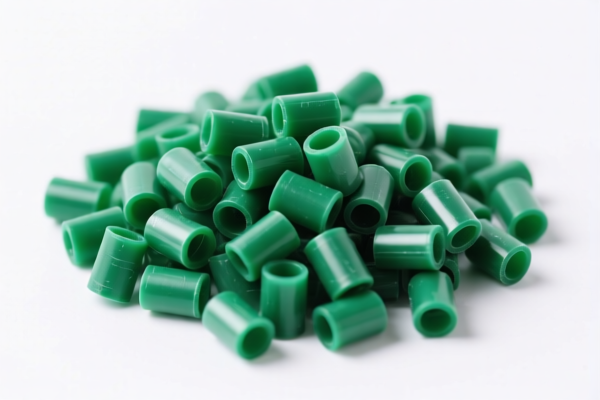
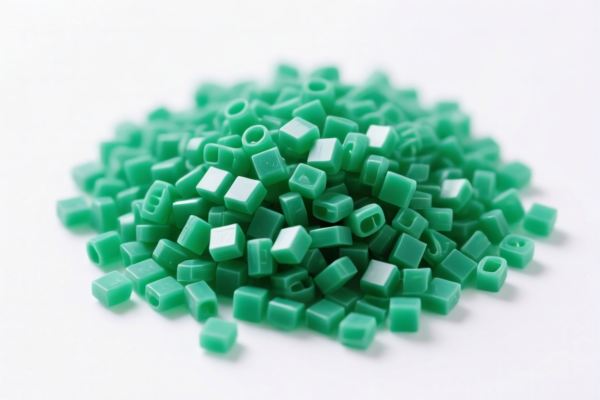
AI分析
🚰 Food Grade PVC Plastic Pipes
🌐 HS Code Reference & Customs Clearance Guide | 2026 Latest Tariff Analysis | Professional Clearance Strategy
📌 I. Product Definition: What Exactly Are "Food Grade PVC Pipes"?
Food Grade PVC Plastic Pipes are rigid or flexible polymer conduits made from Polyvinyl Chloride (PVC) that comply with strict sanitary standards (e.g., FDA 21 CFR, EU 10/2011) for transporting potable water, beverages, or food products.
In international trade, these pipes are often misclassified because they can look similar to industrial PVC pipes, cable conduits, or even plastic rods. The key lies in the form factor and material specification declared in the customs system.
⚠️ Critical Distinction:
- Are they "Pipes" (Hollow profiles for conveyance)? → Likely 3917
- Are they "Rods/Bars/Profiles" (Solid or non-hollow extrusions)? → Likely 3916
- Are they "Parts/Accessories"? → Likely 3926
📦 II. HS Code Classification Details (2026 Latest Tariff对照)
Based on the provided data, here are the four possible classifications for "Food Grade PVC Plastic Pipes" and why they are grouped under specific HS Codes.
| HS Code | Product Description Summary | Why This Classification? |
|---|---|---|
| 3917.23.00.00 | Food-grade PVC pipes; Material: Polyvinyl Chloride; Form: Pipes | ✅ Most Accurate for Pipes: Specifically targets "Tubes, pipes, and hoses" made of PVC. This is the standard classification for hollow conduits used for fluid transport. |
| 3917.32.00.10 | Food-grade PVC pipes; Material & Form meet classification requirements | ✅ Specific Subcategory: This code often refers to rigid PVC pipes with specific structural characteristics (e.g., non-flexible, specific diameter ranges). If the pipe is rigid and meets specific technical specs, this applies. |
| 3916.20.00.91 | Food-grade PVC pipes; Material: Vinyl Chloride Polymer; Form: Rods, Bars & Profiles | ⚠️ Misclassification Risk: If the "pipe" is actually sold as a solid rod, a profile, or a non-hollow extrusion, it falls under Ch. 3916. Even if called a "pipe," if it lacks the hollow geometry for flow, it may be classified here. |
| 3916.20.00.20 | Food-grade PVC pipes; Material: PVC; Form: Pipes | ⚠️ Ambiguous/Secondary: This code also lists "Pipes" but under Ch. 3916 (Rods/Bars/Profiles). This suggests a specific type of PVC profile that might be semi-rigid or used for structural purposes rather than pure fluid conveyance. |
| 3926.90.99.87 | Food-grade PVC pipes; Material: PVC; Form: Tubes/Parts | ⚠️ Accessory/Part Classification: If the item is considered a "part" of a larger system (e.g., a specific fitting, a short segment not for direct installation as main piping), or if it doesn't fit the strict "pipe" definition in 3917/3916, it may be dumped into "Other articles of plastics." |
🔍 Key Takeaway:
- 3917 is the primary chapter for "Tubes, Pipes, and Hoses."
- 3916 is for "Rods, Bars, and Profiles."
- 3926 is for "Other articles of plastics" (often parts/accessories).
The physical geometry (Hollow vs. Solid) is the deciding factor.
💰 III. 2026 Latest Tariff Rate Details (Including Surcharges)
✅ Applicable Country: United States (US)
✅ Origin: China (CN)
✅ Effective Time: 2025/2026 (Current Trade Environment)
🎯 1. Category A: Standard PVC Pipes (HS 3917 Series)
Codes: 3917.23.00.00 & 3917.32.00.10
| Item | Details |
|---|---|
| Base Tariff (MFN) | 3.1% |
| Section 301 Surcharge | +25.0% |
| Section 122 Tariff | +10.0% |
| Total Tariff Rate | 38.1% |
| Calculation Base | CIF Value × 38.1% |
| De Minimis Exemption | ❌ NOT Eligible (High tariff items are excluded) |
| Legal Basis | USITC:3917.23.00.00 → Footnote 9903.88.01 (Section 301) + IEEPA (Section 122) |
📌 Explanation:
- 3.1%: Standard Most Favored Nation (MFN) rate for PVC pipes.
- 25%: Section 301 tariff targeting Chinese-made plastics and chemical products.
- 10%: Additional tariff under Section 122 (often related to national security or specific trade actions).
- Total 38.1% is a significant cost burden.
🎯 2. Category B: PVC Rods/Profiles Labeled as Pipes (HS 3916 Series)
Codes: 3916.20.00.91 & 3916.20.00.20
| Item | Details |
|---|---|
| Base Tariff (MFN) | 5.8% |
| Section 301 Surcharge | +25.0% |
| Section 122 Tariff | +10.0% |
| Total Tariff Rate | 40.8% |
| Calculation Base | CIF Value × 40.8% |
| De Minimis Exemption | ❌ NOT Eligible |
| Legal Basis | USITC:3916.20.00.20 → Footnote 9903.88.01 + IEEPA |
📌 Warning:
- These codes have a higher base rate (5.8% vs 3.1%).
- Total tariff is 40.8%, which is 2.7% HIGHER than the 3917 category.
- Misclassifying a true "pipe" as a "rod/profile" here is financially harmful.
🎯 3. Category C: PVC Parts/Accessories (HS 3926 Series)
Code: 3926.90.99.87
| Item | Details |
|---|---|
| Base Tariff (MFN) | 5.3% |
| Section 301 Surcharge | +7.5% |
| Section 122 Tariff | +10.0% |
| Total Tariff Rate | 22.8% |
| Calculation Base | CIF Value × 22.8% |
| De Minimis Exemption | ❌ NOT Eligible |
| Legal Basis | USITC:3926.90.99.87 → Specific Footnotes for "Other Articles" |
📌 Critical Insight:
- This code has the LOWEST total tariff (22.8%).
- HOWEVER, Section 301 surcharge is only 7.5% (not 25%).
- Risk: If you declare a full-length pipe as a "part/accessory" (3926) to save 15%+ in tax, Customs will likely reclassify it as a pipe (3917/3916) upon inspection, leading to back taxes, penalties, and delays.
- Use Only If: The item is genuinely a small component, fitting, or non-standard part, NOT a standard pipe.
🛠️ IV. Customs Clearance Practical Advice (Pitfall Avoidance Guide)
✅ 1. Required Documentation Checklist
| Document | Mandatory? | Notes |
|---|---|---|
| ✅ Product Specification Sheet | YES | Must state: Material (PVC), Type (Pipe/Tube), Diameter, Wall Thickness, Food Grade Certification (FDA 21 CFR 177.1580) |
| ✅ Photos | YES | Clear images showing HOLLOW structure (cross-section) vs. Solid Rod. |
| ✅ Commercial Invoice | YES | Describe as "PVC Water Pipe, Food Grade, Not for Electrical Conduit" |
| ✅ Certificates of Analysis (COA) | YES | Proof of "Food Grade" compliance (heavy metal free, no BPA) |
| ✅ Packing List | YES | List pipe lengths, quantities, and packaging type |
✅ 2. Declaration Tips (Key Mnemonics)
🔥 "Hollow = 3917, Solid = 3916, Part = 3926"
| Scenario | Correct HS Code | Wrong HS Code | Consequence |
|---|---|---|---|
| Standard hollow PVC pipe for water | 3917.23.00.00 (38.1%) |
3926.90.99.87 (22.8%) |
Customs Penalty: Reclassified + 2.7% back tax + fine |
| Rigid PVC conduit for electrical (NOT food) | 3917.23.00.00 |
3926 |
High tax, but if food grade is claimed falsely, FDA violation |
| PVC Rod used for structural framing | 3916.20.00.20 (40.8%) |
3917 |
Minor tax difference, but wrong description |
| Small PVC Connector/Fitting | 3926.90.99.87 (22.8%) |
3917 |
Correct if truly a part, not a pipe |
📌 Golden Rule:
- If it is a continuous hollow tube for flowing liquid → 3917.
- Do NOT try to hide pipes under "3926 Parts" unless they are actual fittings. The US CBP (Customs and Border Protection) is very strict on PVC pipe classifications.
✅ 3. Special Cases
| Situation | Handling Advice |
|---|---|
| Food Grade Certification Missing | If you cannot prove FDA compliance, Customs may classify it as "Industrial PVC" (same HS, but different usage). However, if marketed as "Food Grade" without proof, you risk FDA seizure at port. |
| Mixed Containers (Pipes + Fittings) | Declare separately! Pipes under 3917, Fittings under 3926. Do NOT combine into one line item unless they are clearly a "set" for a specific machine. |
| Color/Clear | Color does not affect HS Code. Both clear and blue PVC water pipes fall under 3917.23.00.00. |
🌍 V. Global Market Comparison (2026)
| Country | Recommended HS Code | Total Tariff (China Origin) | Notes |
|---|---|---|---|
| 🇺🇸 USA | 3917.23.00.00 |
38.1% | High tariffs due to Section 301 + 122 |
| 🇨🇳 China | 3917.23.00.00 |
5.0% | Low import tariff for domestic consumption |
| 🇪🇺 EU | 3917.21.00 |
6.5% | No Section 301 equivalent, but VAT applies |
| 🇯🇵 Japan | 3917.21.00 |
6.0% | Standard ASEAN or MFN rates may apply if eligible |
📌 Conclusion:
- The USA is the most expensive market for PVC pipes due to political tariffs.
- Supply Chain Strategy: Consider sourcing from Vietnam, Thailand, or Mexico to potentially avoid Section 301 surcharges (if rules of origin are met).
📌 VI. Common Mistakes & Pitfalls (Lessons Learned)
❌ Mistake 1: Declaring "PVC Pipes" as "Plastic Parts" (3926) to save 15% tax.
👉 Consequence: CBP rejects the entry, issues a "Type 6" or "Type 5" rejection, demands back taxes + interest.
👉 Lesson: Only use 3926 for actual fittings, couplings, or valves, not the pipes themselves.
❌ Mistake 2: Confusing "Electrical Conduit" with "Water Pipe".
👉 Consequence: While both may fall under 3917.23, if it’s labeled "Food Grade" but used for electrical, you violate FDA regulations.
👉 Lesson: Ensure the product description matches the intended use.
❌ Mistake 3: Not proving "Food Grade" status.
👉 Consequence: If imported as "Food Grade," but lab tests show lead/cadmium, the goods are seized and destroyed by FDA.
👉 Lesson: Have FDA compliance certificates ready for every shipment.
🎯 VII. Conclusion: Professional Declaration, Safe Clearance!
🎯 Remember:
🔹 "Hollow Pipe = 3917 (38.1%), Solid Rod = 3916 (40.8%), Fitting = 3926 (22.8%)"
🔹 "Don't cheat on classification! CBP knows PVC pipes."
🔹 "Food Grade needs FDA proof, or face FDA seizure!"
📌 Pro Tip:
If you are importing large volumes, consider applying for a Section 301 Exclusion (if available for specific PVC products) or restructure supply chain to Vietnam/Mexico to reduce the 25%+ surcharge.
📣 Immediate Action:
📞 Confirm your pipe geometry: Hollow or Solid?
📄 Prepare FDA Compliance Documents.
🚀 Declare accurately as 3917.23.00.00 for standard food-grade PVC pipes.
✨ Professional Clearance, Start with Accurate Classification!
💼 Your Cost Savings Depend on the Right HS Code!
用户评价
关于 HS 编码归类
协调制度(HS)是由世界海关组织(WCO)制定的国际贸易商品分类标准。全球 200 多个国家采用 HS 系统作为海关关税、贸易统计和进出口监管的基础。
每个 HS 编码遵循以下层级结构:
- 章(2 位)——商品大类(例如:第 84 章:机器和机械设备)
- 品目(4 位)——章内的更具体分类
- 子目(6 位)——国际通用细分,所有 WCO 成员国统一使用
- 本国细分(8-10 位)——各国自行扩展的细分编码,如美国 HTSUS 10 位编码
正确的 HS 编码归类对于顺利通关、准确缴纳关税和遵守贸易法规至关重要。错误归类可能导致海关延误、多缴关税或罚款。
从CN进口到US时,适用的关税税率可能包括:
- 最惠国(MFN)税率——适用于 WTO 成员国的标准关税税率
- 普通税率——适用于无贸易协定国家
- 贸易救济关税——附加关税,如 301 条款(反倾销)、232 条款(国家安全)或反补贴税
本页内容仅供参考。如需正式归类,请咨询当地海关或持牌报关代理。