Food Grade Packaging Material
CN → US| HS编码 | 关税税率 | 原产国 | 目的国 | 文档 |
|---|---|---|---|---|
| 4819100040 | 35.0% | CN | US | 官方文档 |
| 3923900080 | 38.0% | CN | US | 官方文档 |
| 3923109000 | 38.0% | CN | US | 官方文档 |
| 3923210095 | 38.0% | CN | US | 官方文档 |
| 3923290000 | 38.0% | CN | US | 官方文档 |
商品图片
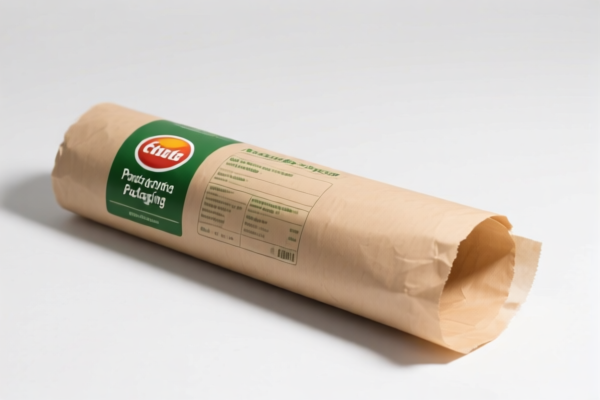
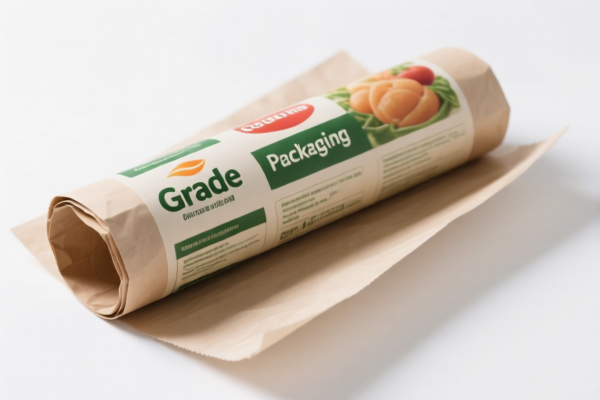
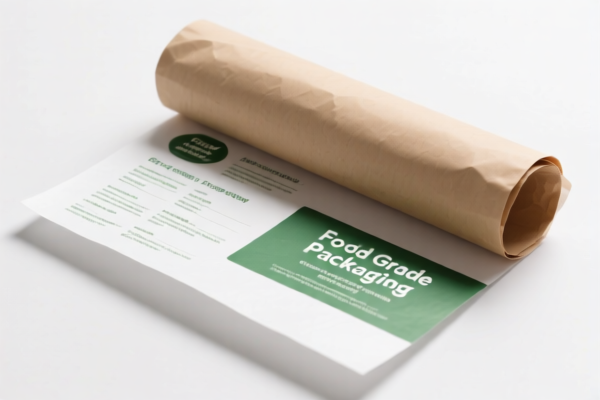
AI分析
📦 Food Grade Packaging Materials
🌐 HS Code Reference & Clearance Guide | 2026 Latest Tariff Analysis | Professional Customs Strategy
📌 I. Product Definition: What Are "Food Grade Packaging Materials"?
Food grade packaging materials refer to containers, bags, films, or other materials used to store, transport, or package food products that are safe for direct contact with consumables. In international trade, these are primarily categorized into Paper/Cardboard and Plastic materials, depending on their composition and intended use.
⚠️ Key Distinction:
- Paper/Cardboard: Typically non-elastic, rigid or semi-rigid structures (e.g., boxes, cartons).
- Plastic: Includes films, bags, pouches, and flexible containers. Food grade status is critical for plastics (e.g.,裱花 bags for icing) to ensure compliance with FDA/EU regulations.
📋 II. HS Code Classification Details (2026 Latest Tariff Alignment)
Based on the provided data, food grade packaging materials are classified into two main material types: Paper and Plastic.
| HS Code | Product Description | Material Type | Specific Use/Feature |
|---|---|---|---|
4819.10.00.40 |
Packaging materials, shape consistent with packaging containers, initially inferred as paper or cardboard. | 📄 Paper/Cardboard | General paper-based packaging containers. |
3923.90.00.80 |
Packaging materials, inferred as goods for transport or packaging made of plastic. | 🧴 Plastic | General plastic transport/packaging supplies. |
3923.10.90.00 |
Packaging materials, intended for packaging use, inferred as plastic兜底 (catch-all) category. | 🧴 Plastic | Plastic packaging items (flexible bags, etc.). |
3923.21.00.95 |
Food-grade plastic piping bags (裱花袋), conforming to ethylene polymer material and pouch shape. | 🎂 Plastic (Food Grade) | Specifically for cake decorating/icing; Ethylene-based. |
3923.29.00.00 |
Food-grade plastic piping bags (裱花袋), conforming to "other plastic pouches" classification logic. | 🎂 Plastic (Food Grade) | Other plastic food-contact bags (non-ethylene specific). |
🔍 Key Insight:
- HS3923.21&3923.29are specifically identified as Food Grade (e.g., for icing bags).
- HS4819.10is Paper-based, not typically "food-grade" in the plastic sense, but safe for general food packaging if certified.
- HS3923.90&3923.10are general plastic packaging materials.
💰 III. 2026 Latest Tariff Rate Breakdown (Including Surcharges & Policy Add-ons)
✅ Applicable Country: United States (US)
✅ Origin: China (CN)
✅ Effective Date: Post-November 2025 (Current Policy)
All listed HS codes carry a Total Tax Rate of 35%–38%, composed of three parts:
🎯 1. 4819.10.00.40 – Paper/Cardboard Packaging
| Item | Content |
|---|---|
| Base Tariff | 0.0% |
| Section 301 Surcharge | 25.0% |
| Section 122 Tariff | 10.0% |
| Total Tax Rate | 35.0% |
| Tax Calculation | CIF Value × 35% |
| De Minimis Exemption | ❌ Not Eligible (High tariff threshold) |
| Legal Basis | Base 0% → +25% (USITC) → +10% (Section 122) |
📌 Explanation:
- Paper packaging from China faces no base tariff but is heavily impacted by US-China trade tensions.
- The 10% Section 122 tariff is a recent addition affecting broad categories, significantly raising costs.
🎯 2. 3923.90.00.80 & 3923.10.90.00 – General Plastic Packaging
| Item | Content |
|---|---|
| Base Tariff | 3.0% |
| Section 301 Surcharge | 25.0% |
| Section 122 Tariff | 10.0% |
| Total Tax Rate | 38.0% |
| Tax Calculation | CIF Value × 38% |
| De Minimis Exemption | ❌ Not Eligible |
| Legal Basis | Base 3% → +25% (USITC) → +10% (Section 122) |
📌 Note:
- These codes cover general plastic packaging (bags, rolls, etc.).
- Even though the base rate is low (3%), the 35% surcharge makes the total cost high.
🎯 3. 3923.21.00.95 & 3923.29.00.00 – Food-Grade Plastic Piping Bags (裱花袋)
| Item | Content |
|---|---|
| Base Tariff | 3.0% |
| Section 301 Surcharge | 25.0% |
| Section 122 Tariff | 10.0% |
| Total Tax Rate | 38.0% |
| Tax Calculation | CIF Value × 38% |
| De Minimis Exemption | ❌ Not Eligible |
| Legal Basis | Base 3% → +25% (USITC) → +10% (Section 122) |
📌 Critical Note:
- Food-grade status does not exempt these items from tariffs.
- Customs may require FDA compliance documentation or Food Contact Material (FCM) certifications to verify "food grade" claims.
- Mislabeling non-food-grade items as food-grade can lead to seizure or penalties.
🛠️ IV. Customs Clearance Practical Advice (Avoiding Pitfalls)
✅ 1. Required Documentation Checklist
| Document | Required? | Notes |
|---|---|---|
| ✅ Product Specification Sheet | ✔️ | Must specify material (e.g., PE, PP, Paper), thickness, and food contact status. |
| ✅ FDA Compliance Certificate | ✔️ | For 3923.21 & 3923.29 (Food Grade Plastics). Must confirm compliance with 21 CFR. |
| ✅ Material Safety Data Sheet (MSDS) | ✔️ | Especially for plastic resins. |
| ✅ Commercial Invoice | ✔️ | Clearly state: "Food Grade Plastic Piping Bag" or "Paper Packaging Box". |
| ✅ Packing List | ✔️ | Detail quantity, weight, and dimensions. |
| ✅ Certificate of Origin (CO) | ✔️ | To prove origin is China (for tariff calculation). |
✅ 2. Declaration Tips (Golden Rules)
🔥 “Label Accurately, Declare Precisely, Avoid ‘General’ Terms!”
| Scenario | Correct Declaration | Incorrect Declaration |
|---|---|---|
| Icing bags for cakes | Food Grade Plastic Piping Bag, PE Material |
"Plastic Bag" → Risk of misclassification |
| General plastic wrap | Plastic Packaging Film |
"Food Wrap" → If not certified, may be rejected |
| Paper cake boxes | Paper Packaging Box |
"Food Container" → Too vague |
| Mixed packaging | Separate by HS Code | Mix paper and plastic in one line → Customs delay |
✅ 3. Special Considerations
| Situation | Recommendation |
|---|---|
| OEM Custom Bags | Provide client’s design + material spec sheet. |
| Mixed Shipments | Separate paper (4819.10) and plastic (3923.xx) in declaration to avoid confusion. |
| Food Grade Proof | Keep FDA test reports or EU Regulation 1935/2004 compliance docs ready. |
| High-Value Shipments | Consider Advance Ruling from CBP to confirm HS code and tariff rate. |
🌍 V. Global Market Comparison (2026)
| Country/Region | Recommended HS Code | Tariff Rate | Certification | Notes |
|---|---|---|---|---|
| 🇺🇸 USA | 3923.21.00.95 / 4819.10.00.40 |
35%–38% | FDA + RoHS | High surcharges due to China origin. |
| 🇨🇳 China | 3923.21 / 4819.10 |
5%–13% | GB 4806 (Food Contact) | Lower base tariffs, strict food safety laws. |
| 🇪🇺 EU | 3923.21 / 4819.10 |
0%–6.5% | EU FCM Regulation 1935/2004 | No US-style surcharges, but strict migration limits. |
| 🇯🇵 Japan | 3923.21 / 4819.10 |
0%–5% | Japan Food Sanitation Act | Requires detailed ingredient/material declarations. |
📌 Conclusion:
- The USA is the most expensive market due to 25% Section 301 + 10% Section 122 tariffs.
- Food-grade plastic packaging requires FDA compliance for US entry.
- Paper packaging (4819.10) is slightly cheaper (35% vs. 38%) but still heavily taxed.
📌 VI. Common Mistakes & Pitfalls (Lessons Learned)
❌ Mistake 1: Declaring "Plastic Bag" without specifying "Food Grade"
👉 Consequence: Customs may reject as non-compliant or assign higher tariff if unsure.
❌ Mistake 2: Mixing Paper and Plastic in one HS Code line
👉 Consequence: Confusion, potential audit, delayed clearance.
❌ Mistake 3: Ignoring Section 122 Tariff
👉 Consequence: Underpaying tax → Back taxes + penalties.
❌ Mistake 4: Claiming "De Minimis" Exemption
👉 Consequence: Packages > $800 are not exempt from these tariffs; smaller shipments may be seized if undervalued.
✅ Best Practice:
“Food Grade Plastic Piping Bag, 100% Polyethylene, 10cm x 15cm, FDA Compliant, Batch No. XYZ”
🎯 VII. Conclusion: Precise Classification, Smooth Clearance!
🎯 Key Takeaways:
🔹 Total Tariff: 35%–38% (US, China Origin)
🔹 Breakdown: Base (0–3%) + 301 (25%) + 122 (10%)
🔹 Food Grade: Requires FDA documentation for plastic items.
🔹 Paper vs. Plastic: Paper is 35%, Plastic is 38%.
📌 Pro Tip:
If your packaging materials are originating from Vietnam, Thailand, or Malaysia, you may qualify for tariff exemptions or reductions.
✅ Apply for Advance Ruling before shipment to confirm HS code and avoid surprises.
📣 Act Now:
📞 Contact a licensed customs broker + Provide FDA docs + Verify HS Code
🚀 Ensure your food grade packaging clears customs smoothly, quickly, and cost-effectively!
✨ Professional Clearance Starts with Accurate Classification!
💼 Every Percent of Tariff Matters – Save Money, Stay Compliant!
用户评价
关于 HS 编码归类
协调制度(HS)是由世界海关组织(WCO)制定的国际贸易商品分类标准。全球 200 多个国家采用 HS 系统作为海关关税、贸易统计和进出口监管的基础。
每个 HS 编码遵循以下层级结构:
- 章(2 位)——商品大类(例如:第 84 章:机器和机械设备)
- 品目(4 位)——章内的更具体分类
- 子目(6 位)——国际通用细分,所有 WCO 成员国统一使用
- 本国细分(8-10 位)——各国自行扩展的细分编码,如美国 HTSUS 10 位编码
正确的 HS 编码归类对于顺利通关、准确缴纳关税和遵守贸易法规至关重要。错误归类可能导致海关延误、多缴关税或罚款。
从CN进口到US时,适用的关税税率可能包括:
- 最惠国(MFN)税率——适用于 WTO 成员国的标准关税税率
- 普通税率——适用于无贸易协定国家
- 贸易救济关税——附加关税,如 301 条款(反倾销)、232 条款(国家安全)或反补贴税
本页内容仅供参考。如需正式归类,请咨询当地海关或持牌报关代理。