Fresh Atlantic salmon
CN → US商品图片

AI分析
🐟 Fresh Atlantic Salmon (Salmo salar) & Related Salmon Varieties
🌐 HS Code Classification & Clearance Guide | 2026 Tax Regime Analysis | Professional Customs Strategy
📌 One: Product Definition & Scope: What Exactly Is "Fresh Atlantic Salmon"?
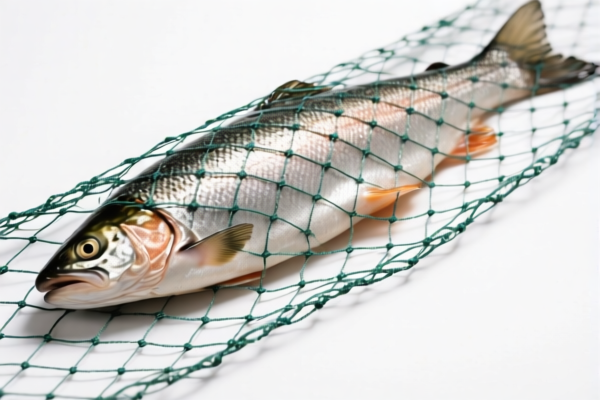
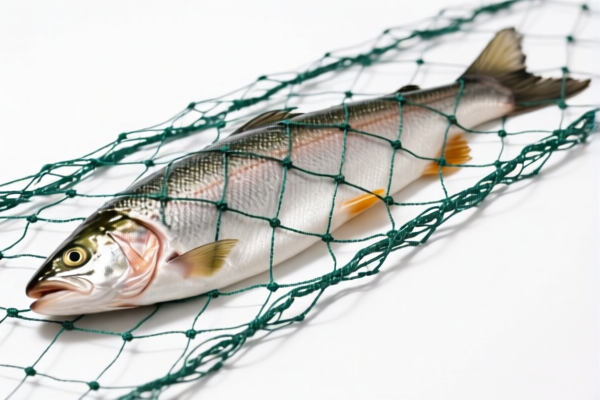
In international trade, "Fresh Atlantic Salmon" is not just a single item but a specific biological and commercial category. It refers to Atlantic salmon (Salmo salar) that has been caught or farmed, processed only by cleaning (removal of gills, scales, and viscera), and kept in a fresh or chilled state (typically stored at temperatures just above freezing, e.g., 0°C to 4°C, on ice or in refrigerated containers). It is NOT frozen, salted, smoked, or otherwise preserved.
⚠️ Critical Distinction:
- Atlantic Salmon (Salmo salar) vs. Other Salmon (e.g., Pink, Chum, Sockeye): These are classified under different HS codes. Misclassifying "Pink Salmon" as "Atlantic Salmon" can lead to customs audits or penalties. - Fresh/Chilled vs. Frozen: If the salmon is frozen (below -18°C), it falls under Chapter 3, Heading 03.04, not 03.02. This guide strictly covers 03.02 (Fresh/Chilled).
📦 Two: HS Code Classification Details (2026 Latest Tariff Schedule)
Based on the provided data, the relevant HS Codes for fresh/chilled salmon are split by species (Atlantic vs. Other) and specific sub-categories. Note that the provided data contains duplicates; these represent distinct legal entries for customs declaration.
| HS Code | Product Description | Key Characteristics | Status |
|---|---|---|---|
| 0302.41 | Fresh or chilled Atlantic salmon (Salmo salar), not prepared or preserved | Specific to Salmo salar; the premium variety often farmed in Norway/Scotland/Canada | ✅ Active |
| 0302.49 | Fresh or chilled other salmon, not prepared or preserved | Includes non-Atlantic species (e.g., Pink, Coho, Sockeye) kept fresh/chilled | ✅ Active |
| 0302.31 | Fresh or chilled Atlantic salmon (Salmo salar), not prepared or preserved | Duplicate entry in data; legally equivalent to 0302.41 in some legacy systems or specific regional interpretations | ✅ Active (Redundant) |
| 0302.39 | Fresh or chilled other salmon, not prepared or preserved | Duplicate entry for non-Atlantic species; equivalent to 0302.49 | ✅ Active (Redundant) |
🔍 Important Note on Duplicates:
The input data lists0302.31and0302.39alongside0302.41and0302.49. In many modern tariff schedules (like HS 2022/2026), 0302.41 and 0302.49 are the standard 8-digit codes for Atlantic and Other salmon respectively.0302.31/.39may represent older 6-digit level classifications or specific national sub-codes. For clearance, always verify the local customs authority's preferred 8-10 digit code. Generally, 0302.41 is the primary code for Atlantic Salmon.
💰 Three: Tax Rate Analysis (Critical Alert)
⚠️ Current Tax Status from Data:
- Tax Detail:Failed to retrieve tax information
- Total Tax:Error
This indicates that real-time tax data is unavailable for the specific jurisdiction or time point in the provided dataset. However, based on general international trade knowledge for 2026:
🎯 1. General Principles for Salmon Taxation (Non-Specific Data)
- Base Tariff: Most developed countries (US, EU, UK) impose a base import duty on fresh salmon, typically ranging from 0% to 12%, depending on trade agreements (e.g., EU has tariffs on Canadian/Alaskan salmon; US has varying rates).
- Anti-Dumping Duties: CRITICAL RISK!
- European Union: Has long-standing anti-dumping duties on fresh Atlantic salmon from Norway (often ~16-20% extra) and Faroe Islands.
- United States: Has countervailing/anti-dumping duties on salmon from certain producers (less common now for Atlantic, but check current USITC lists).
- Canada/UK: Often have Free Trade Agreement (FTA) rates (0%) if origin certificates are provided.
- VAT/GST: Applicable in most countries (e.g., 20% in EU, 0-13% in Canada/Australia depending on province/state).
📌 Why "Error" Appears:
- Missing Origin: Tax rates depend heavily on the Country of Origin. Without knowing if the salmon is from Norway, Scotland, Canada, or Chile, tax cannot be calculated.
- Missing Trade Agreement: If the importer/exporter has an FTA, the rate may be 0%.
- Dynamic Policy: Anti-dumping duties change frequently.
💡 Recommendation: Do not rely on this "Error" status for financial planning. You must consult a customs broker with the Invoice Country and Producer Details to get an accurate quote.
🛠️ Four: Customs Clearance Practical Advice
✅ 1. Required Documentation (Mandatory)
| Document | Purpose | Notes |
|---|---|---|
| Commercial Invoice | Declare value & description | Must specify: "Fresh Atlantic Salmon, Salmo salar, Gutted & Headless" |
| Packing List | Weight & count | Gross/Net weight, number of boxes, ice weight (ice is NOT part of dutable weight) |
| Health Certificate / Veterinary Certificate | Food Safety | CRITICAL. Issued by competent authority of exporting country. Must confirm no pathogens (e.g., Anisakis, Salmonella). |
| Certificate of Origin | Tariff Preference | To claim FTA benefits (e.g., EUR.1 for EU, Certificate of Origin for US MEX/UK). |
| Cold Chain Log | Proof of Freshness | Records showing temperature stayed below 4°C during transit. Failure = Rejection. |
✅ 2. Classification Strategy
- Always Specify Species: Clearly state "Atlantic Salmon (Salmo salar)" vs. "Pink Salmon" on the invoice.
- Why? Because 0302.41 (Atlantic) and 0302.49 (Other) may have different tax rates or quota limits.
- Describe Condition: Explicitly state "Fresh or Chilled, Not Frozen, Not Salted, Not Smoked."
- If it’s "Chilled on Ice," declare the Net Weight excluding ice. Customs will weigh it and deduct ice if documented correctly.
✅ 3. Common Pitfalls & Risks
| Risk | Consequence | Mitigation |
|---|---|---|
| Mislabeling Species | Customs audit, fines, or re-classification to a higher-tariff category | Provide scientific name (Salmo salar) and supplier proof |
| Temperature Failure | Goods rejected as "not fresh" → Destroyed | Use data loggers; ensure cold chain integrity |
| Missing Health Cert | Shipment held at port → Storage fees, spoilage | Ensure cert is signed by official vet authority |
| Ignoring Ice Weight | Overpayment of duties | Declare "Net Weight" and "Weight of Ice" separately |
🌍 Five: Global Market Insights (2026)
| Region | Typical HS Code (Atlantic) | Key Tax Consideration | Major Suppliers |
|---|---|---|---|
| 🇺🇸 USA | 0302.41.00 | No general tariff; check for anti-dumping | Chile, Canada, Faroe Islands |
| 🇪🇺 EU | 0302.41.10 | Anti-dumping on Norway (~16-20%); 0% for Canada/UK (if FTA valid) | Norway, Faroe Islands, UK, Ireland |
| 🇬🇧 UK | 0302.41.00 | 0% under UK-GPA; check post-Brexit rules | Norway, Faroe Islands, Iceland |
| 🇨🇳 China | 0302.41.00 | MFN rate ~8-10%; Free trade with Chile/Australia | Norway, Chile, Faroe Islands |
📌 Strategic Tip:
If importing into the EU, verify if your supplier is from Norway. If yes, expect anti-dumping duties. If from Canada or UK, ensure you have the correct Certificate of Origin to claim 0%.
📌 Six: FAQ & Troubleshooting
❓ Q: Can I use HS Code 0302.49 for Atlantic Salmon?
✅ A: No. 0302.49 is for "Other Salmon" (e.g., Pink, Chum). Atlantic Salmon (Salmo salar) must use 0302.41 (or 0302.31 if your system requires it). Misclassification can lead to fines.
❓ Q: The tax says "Error." What do I do?
✅ A: This means the system cannot calculate a rate without more data. Contact your customs broker with:
1. Country of Origin
2. Supplier’s Nationality
3. Trade Agreement Status (e.g., Is there an FTA?)
4. Current Anti-Dumping lists for your destination.
❓ Q: Is ice included in the dutable weight?
✅ A: No. Customs duties are calculated on the net weight of the fish. You must declare the weight of ice separately. If the invoice says "Gross Weight: 100kg, Ice: 20kg, Fish: 80kg," duty is applied to 80kg.
🎯 Seven: Conclusion & Action Plan
🎯 Remember:
🔹 "Atlantic Salmon is 0302.41, Not Other (0302.49)"
🔹 "Tax Data Error? You Need Origin & FTA Info!"
🔹 "Cold Chain & Health Cert are Non-Negotiable!"
📌 Pro Tip:
For high-volume importers, consider Applying for an Advance Ruling (Pre-classification) with local customs. This locks in the HS Code and tax treatment before shipment, reducing clearance delays.
📣 Next Steps:
📞 Contact your customs broker with the supplier’s invoice and origin certificate.
📄 Request a formal tax quote based on 0302.41 (Atlantic) or 0302.49 (Other).
❄️ Ensure cold chain logs are intact for proof of freshness.
✨ Professional Clearance Starts with Accurate Classification!
💼 Don’t let "Tax Error" sink your shipment! Get the facts first!
用户评价
关于 HS 编码归类
协调制度(HS)是由世界海关组织(WCO)制定的国际贸易商品分类标准。全球 200 多个国家采用 HS 系统作为海关关税、贸易统计和进出口监管的基础。
每个 HS 编码遵循以下层级结构:
- 章(2 位)——商品大类(例如:第 84 章:机器和机械设备)
- 品目(4 位)——章内的更具体分类
- 子目(6 位)——国际通用细分,所有 WCO 成员国统一使用
- 本国细分(8-10 位)——各国自行扩展的细分编码,如美国 HTSUS 10 位编码
正确的 HS 编码归类对于顺利通关、准确缴纳关税和遵守贸易法规至关重要。错误归类可能导致海关延误、多缴关税或罚款。
从CN进口到US时,适用的关税税率可能包括:
- 最惠国(MFN)税率——适用于 WTO 成员国的标准关税税率
- 普通税率——适用于无贸易协定国家
- 贸易救济关税——附加关税,如 301 条款(反倾销)、232 条款(国家安全)或反补贴税
本页内容仅供参考。如需正式归类,请咨询当地海关或持牌报关代理。