Fresh Horse Skin
CN → US| HS编码 | 关税税率 | 原产国 | 目的国 | 文档 |
|---|---|---|---|---|
| 4101501091 | 17.5% | CN | US | 官方文档 |
| 4101201020 | 17.5% | CN | US | 官方文档 |
商品图片
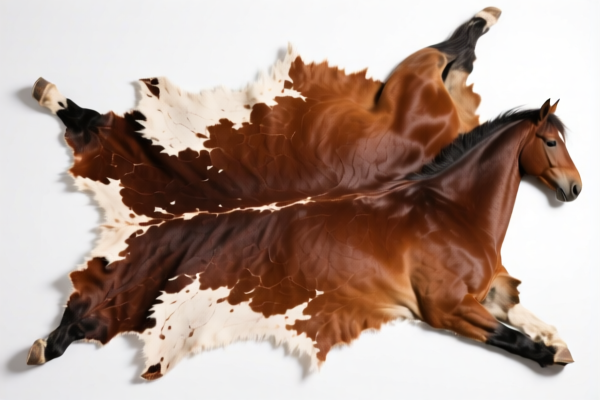
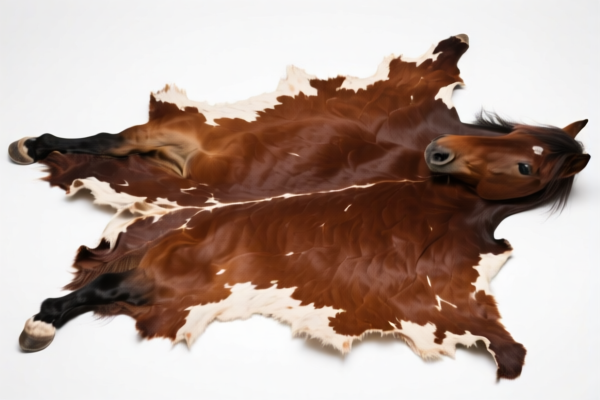
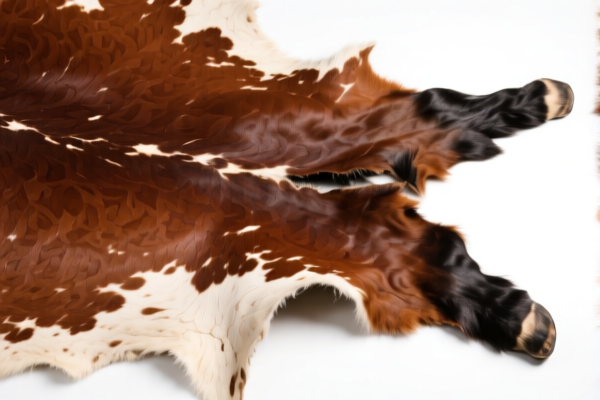
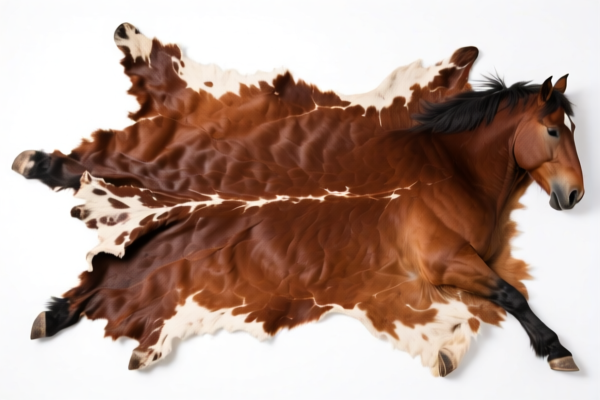
AI分析
🐎 Fresh Horse Skins (Raw Hides and Skins of Equine Animals)
🌐 HS Code Reference & Clearance Guide | 2026 Latest Tariff Data | Professional Clearance Strategy
📌 I. Product Definition and Classification: What Exactly Are "Fresh Horse Skins"?
Raw hides and skins of equine animals constitute the unprocessed, untreated leather substrate. In international trade, these are strictly defined by their preservation state (fresh, wet-salted, dried, etc.), weight, and structural integrity (whole, split, dehaired). They are NOT tanned or further prepared.
The classification depends heavily on two factors: 1. Weight per skin: Critical for distinguishing between lighter dried skins and heavier fresh/wet-salted ones. 2. Treatment Status: "Not pretanned" is the key phrase. If any tanning process has begun, it moves to Chapter 41 Subheading 4104.
⚠️ Key Distinction Point:
- Fresh/Wet-Salted: Weight limit is 16 kg per skin for smaller categories.
- Simply Dried: Weight limit is 8 kg per skin.
- Dry-Salted: Weight limit is 10 kg per skin.
- Exceeding 16 kg (Fresh/Wet-Salted): Falls into the "Whole hides/skins, of a weight exceeding 16 kg" category.
📦 II. HS Code Classification Details (2026 Latest Tariff Authoritative Comparison)
Based on the provided data, here are the specific HS Codes for Fresh Horse Skins (Equine) that are Not Pretanned:
| HS Code | Product Description | Weight/Condition Criteria | Applicability |
|---|---|---|---|
4101.50.10.91 |
Whole hides and skins, of a weight exceeding 16 kg | Applies to fresh, wet-salted, or otherwise preserved skins where each piece weighs more than 16 kg. | Large whole hides |
4101.20.10.20 |
Whole hides and skins, unsplit | Applies to skins not exceeding: 8 kg (dried), 10 kg (dry-salted), or 16 kg (fresh/wet-salted). | Smaller skins or split/lighter hides |
🔍 Important Reminder:
- Both codes apply ONLY to Equine animals (horses, donkeys, mules).
- Both codes apply ONLY if the skins are Not Pretanned.
- If the skin is split (delaminated into layers), it may still fall under4101.20.10.20if within weight limits, but4101.50.10.91specifies "Whole hides and skins," so split skins exceeding 16kg might have different classification nuances not covered in this specific snippet. However, for standard whole skins, the weight is the deciding factor.
💰 III. 2026 Latest Tariff Rate Details (Including Additional Duties)
✅ Applicable Country: USA (US)
✅ Origin: China (CN) (Inferred from tax structure typical of US-China trade data)
✅ Validity: Current as per provided data
🎯 1. 4101.50.10.91 —— Whole Hides/Skins > 16 kg (Equine, Not Pretanned)
| Item | Content |
|---|---|
| Base Tariff | 0.0% |
| Additional Duty (Section 301/Other) | 7.5% |
| Total Tariff Rate | 7.5% |
| Tax Calculation | CIF Value × 7.5% |
| De Minimis Exemption | ❌ Not Applicable (Large shipments typically exceed de minimis thresholds or are subject to specific agricultural/leather regulations) |
| Legal Basis | HTSUS 4101.50.10.91 |
📌 Explanation:
- The base MFN (Most Favored Nation) rate for raw equine hides is often 0% or low, but specific trade policies impose the 7.5% additional tariff.
- This is a total effective rate for customs clearance purposes.
- Unlike high-tech goods, leather raw materials often face moderate, stable tariffs rather than punitive 25%+ rates, but compliance with animal health certificates is critical.
🎯 2. 4101.20.10.20 —— Whole Hides/Skins ≤ 16 kg (Equine, Not Pretanned)
| Item | Content |
|---|---|
| Base Tariff | 0.0% |
| Additional Duty (Section 301/Other) | 7.5% |
| Total Tariff Rate | 7.5% |
| Tax Calculation | CIF Value × 7.5% |
| De Minimis Exemption | ❌ Not Applicable (Biological goods often face stricter scrutiny) |
| Legal Basis | HTSUS 4101.20.10.20 |
📌 Note:
- Same tariff rate as the heavier category.
- Applies to smaller, dried, or lighter skins.
- Common in fashion accessories supply chains where smaller cuts or specific horse sizes are used.
🛠️ IV. Clearance Operational Advice (Practical Pitfall Avoidance Guide)
✅ 1. Required Documentation Checklist (None Can Be Omitted)
| Document | Mandatory? | Description |
|---|---|---|
| ✅ Commercial Invoice | ✔️ | Must clearly state "Raw Horse Skins, Equine, Not Pretanned, Fresh/Wet-Salted/Dried." |
| ✅ Packing List | ✔️ | Detail weight per skin, total number of skins, and preservation method (e.g., "Wet-Salted"). |
| ✅ Health Certificate | ✔️ | CRITICAL. Issued by the country of origin's veterinary authority. Must certify freedom from anthrax, rabies, and other zoonotic diseases. |
| ✅ Bill of Lading / Air Waybill | ✔️ | Standard transport documents. |
| ✅ Isotope Traceability / Origin Proof | ✔️ | Some buyers/customs require proof of origin to verify non-tanned status and species. |
| ✅ Customs Bond | ✔️ | If using a single bond for multiple entries. |
✅ 2. Declaration Tips (Key Mnemonics)
🔥 "Weight Determines Code, Health Cert Clears Border, Not Tanned is Key!"
| Situation | Correct Declaration | Wrong Practice |
|---|---|---|
| Skins > 16 kg, Fresh | 4101.50.10.91 |
Misdeclare as 4101.20.10.20 to avoid attention |
| Skins ≤ 16 kg, Dried | 4101.20.10.20 |
Ignore preservation method (fresh vs. dried) |
| Pretanned Skins | Wrong HS Code! (Should be 4104) | Declare as "Raw" when actually tanned → Severe Penalty |
| Non-Equine Skins (e.g., Cow) | 4101.20.10.10 (Bovine) |
Declare Horse as Bovine → False Declaration |
✅ 3. Special Handling Cases
| Situation | Handling Advice |
|---|---|
| Wet-Salted vs. Dry-Salted | Clearly specify in invoice. Weight limits differ (16 kg for wet, 10 kg for dry-salted). Mislabeling leads to reclassification. |
| Dehaired or Split | If dehaired, it may still be 4101.20.10.20 if weight allows. If split, check if it's still considered a "whole hide" for customs purposes or if it falls under a different subheading not listed here. |
| Biological Material Inspection | All raw hides are subject to APHIS (Animal and Plant Health Inspection Service) scrutiny. Ensure no visible flesh, blood, or contamination remains, as this can cause rejection or decontamination orders. |
| Sustainable Sourcing | Provide certificates if claiming environmentally friendly preservation (e.g., low-salt methods), though this doesn't change HS code, it aids buyer compliance. |
🌍 V. Global Market Clearance Comparison (2026 Latest)
| Country/Region | Recommended HS Code | Tariff (China Origin) | Certification Required | Notes |
|---|---|---|---|---|
| 🇺🇸 USA | 4101.20.10.20 / 4101.50.10.91 |
7.5% | Veterinary Health Cert, APHIS | Strict biological inspection |
| 🇨🇳 China | 4101.20.10.20 / 4101.50.10.91 |
Varies (Often 0-5%) | Import License, Health Cert | Major importer of raw hides |
| 🇪🇺 EU | 4101 series |
0% (if under quota) | EU Animal Health Certificate | Strict eco-labels possible |
| 🇻🇳 Vietnam | 4101 series |
0-5% | Health Cert | Major processing hub |
📌 Conclusion:
- USA imposes a 7.5% total tariff on raw equine hides from China.
- Health Certification is the most critical non-tariff barrier. Failure to provide a valid veterinary certificate results in immediate rejection or destruction of the goods.
- Weight accuracy is vital for correct HS code selection to avoid customs delays.
📌 VI. Common Errors & Pitfall Guide (Blood & Tears Lessons)
❌ Error 1: Declaring Tanned leather as "Raw Horse Skins"
👉 Consequence: HS Code mismatch, 7.5% duty undercharged, penalties, and potential fraud charges.
❌ Error 2: Ignoring Preservation Method (Fresh vs. Dried)
👉 Consequence: If a 12 kg skin is declared as "Fresh" (limit 16 kg) but is actually "Dry-Salted" (limit 10 kg), it exceeds the limit for the lighter category, potentially forcing a reclassification or penalty.
❌ Error 3: Missing Veterinary Health Certificate
👉 Consequence: Goods seized or returned by APHIS. No financial compensation for destroyed biological materials.
❌ Error 4: Incorrect Species Declaration (e.g., calling Bovine hides "Equine")
👉 Consequence: False declaration, fines, and loss of import privileges.
✅ Correct Practice:
"Raw Horse Skins, Equine, Wet-Salted, Whole, Unsplit, Not Pretanned, Weight: 15 kg/skin, Veterinary Health Cert No. XYZ"
🎯 VII. Conclusion: Professional Clearance, Cost-Effective & Compliant!
🎯 Remember the Mnemonics:
🔹 "Weight Determines Code, Health Cert Clears Border, Not Tanned is Key!"
🔹 "7.5% Total Tax, But Biological Inspection is the Real Cost!"
📌 Tips:
- Always pre-declare with a licensed customs broker.
- Ensure freshness and preservation methods are clearly documented to avoid spoilage claims.
- For large volumes (>16 kg/skin), use 4101.50.10.91. For smaller/lighter skins, use 4101.20.10.20.
📣 Immediate Action:
📞 Contact a customs broker specializing in animal products + Health Certificate Verification
🚀 Ensure your veterinary certificates are valid and APHIS-compliant.
💼 Compliance saves time, avoids seizure, and ensures smooth entry!
✨ Professional clearance starts with precise classification!
💼 Every kilogram of hide matters!
用户评价
关于 HS 编码归类
协调制度(HS)是由世界海关组织(WCO)制定的国际贸易商品分类标准。全球 200 多个国家采用 HS 系统作为海关关税、贸易统计和进出口监管的基础。
每个 HS 编码遵循以下层级结构:
- 章(2 位)——商品大类(例如:第 84 章:机器和机械设备)
- 品目(4 位)——章内的更具体分类
- 子目(6 位)——国际通用细分,所有 WCO 成员国统一使用
- 本国细分(8-10 位)——各国自行扩展的细分编码,如美国 HTSUS 10 位编码
正确的 HS 编码归类对于顺利通关、准确缴纳关税和遵守贸易法规至关重要。错误归类可能导致海关延误、多缴关税或罚款。
从CN进口到US时,适用的关税税率可能包括:
- 最惠国(MFN)税率——适用于 WTO 成员国的标准关税税率
- 普通税率——适用于无贸易协定国家
- 贸易救济关税——附加关税,如 301 条款(反倾销)、232 条款(国家安全)或反补贴税
本页内容仅供参考。如需正式归类,请咨询当地海关或持牌报关代理。