Fungicide (Carbendazim)
CN → US| HS编码 | 关税税率 | 原产国 | 目的国 | 文档 |
|---|---|---|---|---|
| 3808925080 | 40.0% | CN | US | 官方文档 |
| 3808921500 | 41.5% | CN | US | 官方文档 |
| 3808922400 | 35.0% | CN | US | 官方文档 |
| 3808921500 | 41.5% | CN | US | 官方文档 |
| 3808925080 | 40.0% | CN | US | 官方文档 |
商品图片
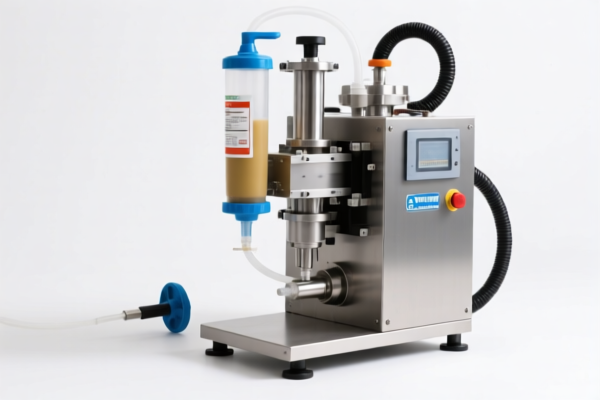
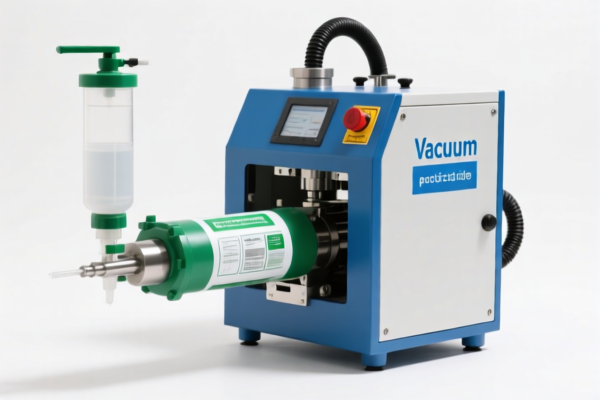
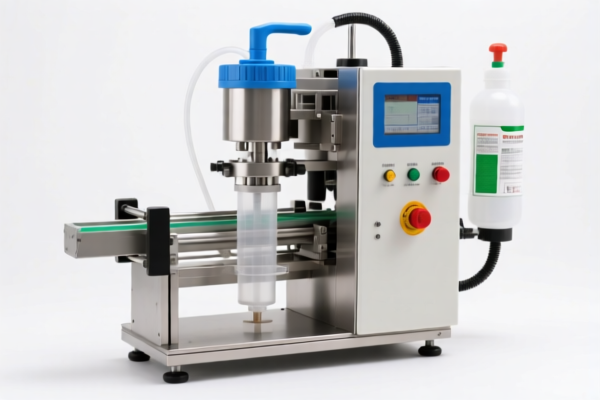

AI分析
🧪 Fungicides (Carbendazim & Others)
🌐 HS Code Reference & Customs Clearance Guide | 2026 Latest Tariff Analysis | Professional Compliance Strategy
📌 1. Product Definition & Classification: Do You Really Understand "Fungicides"?
Fungicides are chemical substances used to kill or inhibit fungi. In international trade, they fall under Chapter 38, specifically heading 38.08 ("Insecticides, rodenticides, fungicides, herbicides, antisprouting products and plant-growth regulators...").
The critical distinction for Carbendazim and other fungicides lies in two factors: 1. Chemical Composition: Does it contain "aromatic or modified aromatic fungicides"? 2. Packaging/Format: Is it in a form/packing for retail sale or as a preparation?
⚠️ Key Distinction Point:
- Carbendazim is a benzimidazole derivative. Under US Harmonized Tariff Schedule (HTSUS), it is often classified based on whether it falls under specific aromatic fungicide codes or "other fungicides." - Preparation vs. Pure Substance: If it is a formulated product (mixed with carriers, solvents) for retail sale, it goes to 38.08. Pure substances may sometimes fall elsewhere, but the data provided assumes "preparations/articles for retail sale" as per 38.08 structure.
📦 2. HS Code Classification Details (Based on Provided Data)
| HS Code | Product Description | Applicability | Chemical Nature |
|---|---|---|---|
3808.92.15.00 |
Fungicides containing any aromatic or modified aromatic fungicide (Other) | Carbendazim formulations if classified under "aromatic" group | ✅ Contains Aromatic Components* |
3808.92.50.80 |
Fungicides: Other: Other: Other (Generic Fungicides) | Carbendazim formulations if classified under "other" group | ❌ Non-Aromatic or General Classification |
🔍 Note on Carbendazim:
Carbendazim (C9H9N3O2) has a benzimidazole structure, which contains aromatic rings. However, US Customs and Border Protection (CBP) rulings have historically debated whether specific benzimidazoles fall under the "aromatic" sub-heading or the "other" sub-heading depending on the specific tariff note interpretations at the time of entry.
- Code3808.92.15.00captures fungicides containing any aromatic or modified aromatic fungicide.
- Code3808.92.50.80is the "basket" code for fungicides not meeting the specific aromatic criteria or other specific sub-headings.
Since Carbendazim is chemically aromatic,3808.92.15.00is technically more precise chemically, but customs practice varies. The data provided lists both, implying potential classification debate or different product formulations.
💰 3. 2026 Latest Tariff Rate Detail (Including Additional Taxes, Policy Add-ons)
✅ Applicable Country: United States (US)
✅ Origin: China (CN)
✅ Effective Time: 2025/2026 (Current Trade War Era)
🎯 1. 3808.92.15.00 – Fungicides (Containing Aromatic/Modified Aromatic)
| Item | Content |
|---|---|
| Base Tariff | 0.0% |
| Section 301 Additional Tariff | 0.0% |
| Total Tax Rate | 0.0% |
| Tax Calculation | CIF Value × 0% = $0 |
| De Minimis Eligibility | ❌ NO (Agrochemicals are generally excluded from de minimis relief for high-value shipments, though small samples might pass; however, commercial imports require full duty entry). |
| Legal Basis | HTSUS 3808.92.15.00 |
📌 Interpretation:
- Despite being an agricultural chemical, this specific subheading currently has no additional tariffs under the provided dataset.
- This is a highly favorable rate if your Carbendazim product qualifies here.
- Risk: If CBP reclassifies it to3808.92.50.80, the rate jumps to 30%.
🎯 2. 3808.92.50.80 – Fungicides (Other)
| Item | Content |
|---|---|
| Base Tariff | 5.0% |
| Section 301 Additional Tariff | 25.0% |
| Total Tax Rate | 30.0% |
| Tax Calculation | CIF Value × 30% |
| De Minimis Eligibility | ❌ NO |
| Legal Basis | HTSUS 3808.92.50.80; USITC Footnote 9903.88.01 (if applicable) |
📌 Interpretation:
- Base Duty (5%): Standard MFN rate for "Other fungicides."
- Additional Duty (25%): Imposed under Section 301 of the Trade Act of 1974 on Chinese-origin goods.
- Total (30%): This is a significant cost that eats directly into profit margins.
- Why the difference? The US government has historically placed higher restrictions on certain chemical categories. If Carbendazim is not explicitly listed under the "aromatic" exemption or specific low-tariff list, it falls into the "Other" bucket with full Section 301 penalties.
🛠️ 4. Customs Clearance Practical Advice (Battle-Tested Pitfall Avoidance Guide)
✅ 1. Document Checklist (Non-Negotiable)
| Document | Mandatory? | Description |
|---|---|---|
| ✅ Product Spec Sheet | ✔️ | Must clearly state: "Carbendazim," CAS No. 10605-21-0, purity %, formulation type (e.g., WP, SC, EC). |
| ✅ MSDS / SDS | ✔️ | Required for safety handling. Shows chemical nature (aromatic/non-aromatic). |
| ✅ Commercial Invoice | ✔️ | Must describe goods as "Fungicide, Carbendazim, for Agricultural Use." Avoid vague terms like "Plant Food." |
| ✅ EPA Registration | ✔️ | CRITICAL: All pesticides/fungicides imported into the US must be registered with the EPA (Environmental Protection Agency) under the Federal Insecticide, Fungicide, and Rodenticide Act (FIFRA). No EPA number = No Entry. |
| ✅ Origin Certificate | ✔️ | Proves China origin to assess correct Section 301 applicability. |
| ✅ Labeling Proof | ✔️ | Labels must comply with EPA requirements (warning statements, first aid, etc.). |
✅ 2. Classification Strategy (Key Mantras)
🔥 "Define the Chemistry, Declare the EPA, Avoid the 30% Trap!"
| Scenario | Correct Classification | Error Consequence |
|---|---|---|
| Carbendazim is clearly aromatic | 3808.92.15.00 (0% Total) |
Misclassification to 50.80 → 30% Tax Hit |
| Generic Fungicide Mix | 3808.92.50.80 (30% Total) |
N/A (Standard high rate) |
| Unregistered Fungicide | Denied Entry | Confiscation & Fine |
| Bulk Chemical (Not Retail) | Potential Chapter 29 (Not in Data) | May change tariff entirely, but requires different entry type. |
✅ 3. Special Circumstances Handling
| Situation | Handling Advice |
|---|---|
| EPA Exemption | Some research samples may be exempt, but commercial shipments must have an EPA Establishment Number and Product Registration Number. |
| Mixed Formulations | If the product contains Carbendazim + another active ingredient, the primary active ingredient usually determines the HS code. Ensure all actives are listed on the invoice. |
| Dispute over "Aromatic" | If you believe Carbendazim should be 3808.92.15.00 (0%) but CBP insists on 3808.92.50.80 (30%), you may file a Timely Protest or request a Customs Ruling based on chemical structure analysis. Proactive ruling is recommended. |
| Container Load (LCL/FCL) | Ensure the HS code is consistent across all commercial invoices and packing lists for the entire shipment. |
🌍 5. Global Main Market Comparison (2026 Latest)
| Country/Region | Recommended HS Code | Duty Rate | Certification Requirements | Remarks |
|---|---|---|---|---|
| 🇺🇸 USA | 3808.92.15.00 or 3808.92.50.80 |
0% or 30% | EPA Registration Mandatory | High risk of 30% if misclassified. |
| 🇨🇳 China | 3808.92.90 (Approx.) |
5% - 10% | CAQ Registration | Import control is strict. |
| 🇪🇺 EU | 3808.94 |
0% - 6.5% | EFSA Approval, CLP Labeling | Very strict on residue limits. |
| 🇯🇵 Japan | 3808.99 |
5% - 10% | JICIS Registration | MRL (Maximum Residue Limit) compliance is critical. |
| 🇧🇷 Brazil | 3808.94 |
14% - 16% | MAPA Registration | Slow customs clearance due to agri-regulations. |
📌 Conclusion:
- USA is the most tariff-sensitive market for Chinese fungicides due to the binary choice between 0% and 30%.
- EPA compliance is the biggest barrier, not just tariffs.
- Ensure your supplier provides valid EPA registration numbers before shipping.
📌 6. Common Errors & Pitfalls (Blood & Tears Lessons)
❌ Error 1: Shipping without EPA Registration
👉 Consequence: Goods seized at port, fined, or destroyed. Zero flexibility.
❌ Error 2: Misclassifying Carbendazim as "Plant Growth Regulator"
👉 Consequence: Wrong HS Code, 30% duty + penalties + retrospective tax collection.
❌ Error 3: Vague Description on Invoice ("Chemical Goods")
👉 Consequence: CBP exam delay, possible assignment of highest duty rate, bond loss.
❌ Error 4: Ignoring the "Aromatic" Nuance
👉 Consequence: Paying 30% when you could have paid 0% if properly argued under 3808.92.15.00.
✅ Correct Action: Consult a customs broker or legal expert to file a Pre-Ruling if the 0% rate is critical.
✅ Correct Way:
"Fungicide, Carbendazim, 50% WP, EPA Reg. No. 12345-XX, For Agricultural Use Only"
🎯 7. Conclusion: Precision Classification Saves Money!
🎯 Remember the Mantra:
🔹 "EPA First, Code Second, 0% vs 30%, Know Your Chemistry!"
🔹 "Carbendazim is Aromatic? Fight for 3808.92.15.00! Don't settle for 30%!"
📌 Pro Tip:
- If you are importing large volumes, file a Binding Ruling with CBP regarding whether your specific Carbendazim formulation qualifies under 3808.92.15.00 (0%) or 3808.92.50.80 (30%).
- Ensure all packaging is labeled with EPA-approved labels.
- Keep detailed SDS documents ready to prove chemical composition.
📣 Immediate Action:
📞 Contact your EPA Compliance Officer + Customs Broker
📄 Prepare EPA Registration Docs + SDS + Spec Sheet
🚀 Apply for Pre-Ruling to secure 0% tariff if eligible!
✨ Professional Customs Clearance, Starting with Precise Classification!
💼 Your Margin Depends on This 0% vs 30% Decision!
用户评价
关于 HS 编码归类
协调制度(HS)是由世界海关组织(WCO)制定的国际贸易商品分类标准。全球 200 多个国家采用 HS 系统作为海关关税、贸易统计和进出口监管的基础。
每个 HS 编码遵循以下层级结构:
- 章(2 位)——商品大类(例如:第 84 章:机器和机械设备)
- 品目(4 位)——章内的更具体分类
- 子目(6 位)——国际通用细分,所有 WCO 成员国统一使用
- 本国细分(8-10 位)——各国自行扩展的细分编码,如美国 HTSUS 10 位编码
正确的 HS 编码归类对于顺利通关、准确缴纳关税和遵守贸易法规至关重要。错误归类可能导致海关延误、多缴关税或罚款。
从CN进口到US时,适用的关税税率可能包括:
- 最惠国(MFN)税率——适用于 WTO 成员国的标准关税税率
- 普通税率——适用于无贸易协定国家
- 贸易救济关税——附加关税,如 301 条款(反倾销)、232 条款(国家安全)或反补贴税
本页内容仅供参考。如需正式归类,请咨询当地海关或持牌报关代理。