Furniture Protection Pad
CN → US| HS编码 | 关税税率 | 原产国 | 目的国 | 文档 |
|---|---|---|---|---|
| 4016996050 | 37.5% | CN | US | 官方文档 |
| 6304920000 | 23.8% | CN | US | 官方文档 |
| 3926909989 | 22.8% | CN | US | 官方文档 |
| 4016990500 | 20.9% | CN | US | 官方文档 |
| 6304910170 | 23.3% | CN | US | 官方文档 |
商品图片
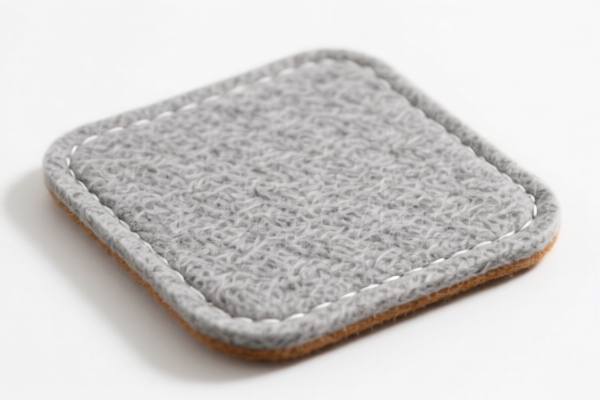
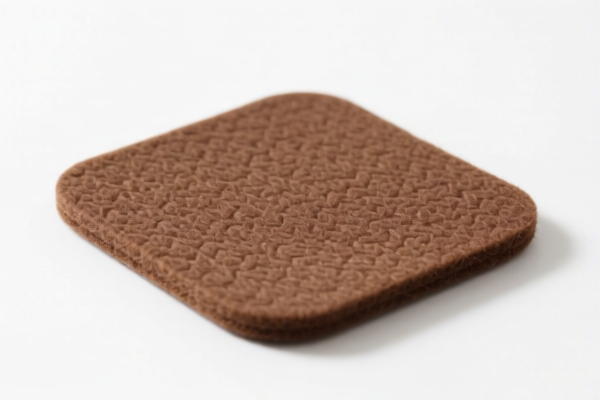
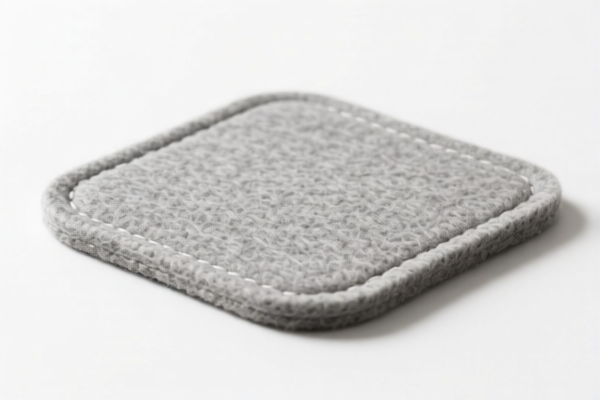

AI分析
🛡️ Furniture Protection Pad (FPP)
🌐 HS Code Reference & Customs Clearance Guide | 2026 Latest Tariff Analysis | Professional Level Clearance Strategy
📌 I. Product Definition & Classification: Do You Really Understand "Furniture Protection Pads"?
Furniture Protection Pads are small but critical components in logistics, moving, and home organization. They serve to prevent scratches, dents, and damage to furniture legs, floor surfaces, and appliance bases during transit or daily use. In international trade, these items are not classified under a single HS code. Instead, they fall into multiple categories depending on their material composition and specific function.
⚠️ Key Classification Logic:
- If the pad is primarily Rubber → Classified under Chapter 40 (Rubber Articles).
- If the pad is primarily Plastic/Synthetic → Classified under Chapter 39 (Plastics).
- If the pad is Textile/Fabric-based (Knitted/Woven) → Classified under Chapter 63 (Other Made-up Textile Articles).
- Crucial Distinction: The material determines the HS Code, which directly impacts the Total Tax Rate (especially for imports from China to the US under Section 301 and IEEPA).
📦 II. HS Code Classification Details (2026 Latest Tariff Reference)
Based on the provided data, here are the five most likely HS Code classifications for "Furniture Protection Pads," ranked by estimated total tax efficiency and logical deduction.
| HS Code | Summary / Deduction Logic | Primary Material | Category Description |
|---|---|---|---|
| 4016.99.60.50 | Based on functional attributes, inferred as Rubber. Classified as other vulcanized rubber articles. | Rubber | Other vulcanized rubber products |
| 6304.92.00.00 | Based on catch-all classification principle, inferred as Cotton/Textile. Classified as other furnishing articles. | Cotton/Textile | Other furnishing articles |
| 3926.90.99.89 | Based on common sense, inferred as Plastic/Synthetic. Classified as other articles of plastics. | Plastic | Other articles of plastics |
| 4016.99.05.00 | Inferred material is Rubber or Plastic via usage. Classified as other vulcanized rubber articles, fitting home protective items. | Rubber/Plastic | Other vulcanized rubber articles |
| 6304.91.01.70 | Inferred form belongs to Furniture Decoration/Supplies. Fits catch-all for other knitted/crocheted furnishing articles. | Knitted/Crocheted Textile | Other knitted/crocheted furnishing articles |
🔍 Critical Note:
- Chapter 40 (Rubber) and Chapter 39 (Plastic) generally offer the most logical fit for durable "pads."
- Chapter 63 (Textile) is used if the pad is soft, fabric-based (e.g., felt pads under chair legs).
- Avoid Misclassification: Do not classify a heavy rubber pad as a textile item to avoid scrutiny; consistency between physical product and declared material is vital for customs clearance.
💰 III. 2026 Latest Tariff Rate Breakdown (Including Additional Duties & Policy Surcharges)
✅ Applicable Country: United States (US)
✅ Origin: China (CN) (Note: Tax details provided in source data reflect China-origin surcharges)
✅ Effective Time: Ongoing (Subject to Section 301 and IEEPA regulations)
🎯 1. 4016.99.60.50 —— Vulcanized Rubber Products (High Tariff)
| Item | Content |
|---|---|
| Base Tariff | 2.5% |
| Section 301 Surcharge | 25.0% |
| 122 Clause Tariff | 10.0% |
| Total Tax Rate | 37.5% |
| Tax Calculation | CIF Value × 37.5% |
| De Minimis Exemption | ❌ Not Eligible (Deny de_minimis) |
| Legal Basis Path | Base Duty → Section 301 (Footnote 9903.88.01) → 122 Clause |
📌 Explanation:
- This classification assumes the pad is made of Rubber.
- The 25% Section 301 tariff is significant.
- An additional 10% under "122 Clause" (likely referring to specific anti-dumping or countervailing duties, or a specific administrative code) is added.
- Total: 37.5%. This is a high-cost entry point.
🎯 2. 6304.92.00.00 —— Other Furnishing Articles (Textile) (Moderate-High Tariff)
| Item | Content |
|---|---|
| Base Tariff | 6.3% |
| Section 301 Surcharge | 7.5% |
| 122 Clause Tariff | 10.0% |
| Total Tax Rate | 23.8% |
| Tax Calculation | CIF Value × 23.8% |
| De Minimis Exemption | ❌ Not Eligible |
| Legal Basis Path | Base Duty → Section 301 (Lower bracket) → 122 Clause |
📌 Explanation:
- If the pad is made of Cotton or Textile, the Section 301 surcharge is lower (7.5% vs 25%).
- However, the Base Duty is higher (6.3%).
- Total: 23.8%. This is significantly cheaper than the Rubber classification.
- Caution: Ensure the product is genuinely textile. Misdeclaring rubber as textile is fraud.
🎯 3. 3926.90.99.89 —— Other Plastic Articles (Moderate Tariff)
| Item | Content |
|---|---|
| Base Tariff | 5.3% |
| Section 301 Surcharge | 7.5% |
| 122 Clause Tariff | 10.0% |
| Total Tax Rate | 22.8% |
| Tax Calculation | CIF Value × 22.8% |
| De Minimis Exemption | ❌ Not Eligible |
| Legal Basis Path | Base Duty → Section 301 → 122 Clause |
📌 Explanation:
- Most common plastic furniture pads (e.g., PVC, Polyethylene) fall here.
- Section 301 Surcharge is 7.5%.
- Total: 22.8%. This is one of the most cost-effective classifications if the material is plastic.
🎯 4. 4016.99.05.00 —— Vulcanized Rubber Products (Lower Rubber Tariff)
| Item | Content |
|---|---|
| Base Tariff | 3.4% |
| Section 301 Surcharge | 7.5% |
| 122 Clause Tariff | 10.0% |
| Total Tax Rate | 20.9% |
| Tax Calculation | CIF Value × 20.9% |
| De Minimis Exemption | ❌ Not Eligible |
| Legal Basis Path | Base Duty → Section 301 (Lower bracket) → 122 Clause |
📌 Explanation:
- This is a specific sub-category of Vulcanized Rubber.
- Total: 20.9%.
- This is the lowest total tax rate among all rubber and plastic options provided.
- Strategy: If the pad is rubber-based, verify if it fits this specific subheading (05vs60). If it does, this is the optimal HS Code for cost savings.
🎯 5. 6304.91.01.70 —— Knitted/Crocheted Furnishing Articles (Moderate-High Tariff)
| Item | Content |
|---|---|
| Base Tariff | 5.8% |
| Section 301 Surcharge | 7.5% |
| 122 Clause Tariff | 10.0% |
| Total Tax Rate | 23.3% |
| Tax Calculation | CIF Value × 23.3% |
| De Minimis Exemption | ❌ Not Eligible |
| Legal Basis Path | Base Duty → Section 301 → 122 Clause |
📌 Explanation:
- Applies to Knitted or Crocheted textile pads (e.g., felt chair tips).
- Total: 23.3%.
- Slightly more expensive than Plastic (3926) but comparable to Cotton (6304.92).
🛠️ IV. Customs Clearance Practical Advice (Battle-Tested Pitfall Guide)
✅ 1. Preparation Checklist (Absolutely Essential)
| Document | Mandatory? | Description |
|---|---|---|
| ✅ Material Certificate | ✔️ | Must state exact material (e.g., "95% Natural Rubber, 5% Carbon Black"). Critical for HS Code validation. |
| ✅ Product Photos | ✔️ | Clear images of the pad, including texture (rubber grain vs. fabric weave). |
| ✅ Commercial Invoice | ✔️ | Description must match HS Code logic (e.g., "Rubber Felt Pad" vs. "Polymer Furniture Glider"). |
| ✅ Packaging List | ✔️ | Weight and dimensions of each pad. |
| ✅ Third-Party Test Report | ✔️ | If rubber, consider REACH/RoHS compliance for US/EU markets. |
✅ 2. Declaration Tips (Key Mnemonic)
🔥 "Material Defines Code, Code Defines Tax! Don't Guess, Verify!"
| Scenario | Correct Declaration | Wrong Action | Consequence |
|---|---|---|---|
| Rubber Pad | Use 4016.99.05.00 (if applicable) or 4016.99.60.50 |
Declare as "Plastic" | Customs Audit, Seizure, Fine! |
| Plastic Pad | Use 3926.90.99.89 |
Declare as "Textile" | Wrong HS, Potential Penalty |
| Mixed Material | Use primary functional material (usually Rubber/Plastic for protection) | Vague description "Protective Pad" | Amber Status, Delayed Release |
| Section 301 Eligibility | Confirm Origin (China) | Assume Exemption | Unexpected 7.5%-25% Duty |
✅ 3. Special Case Handling
| Situation | Handling Advice |
|---|---|
| OEM Custom Pads | Provide design specs showing material composition. Avoid generic names like "Glider" if they contain specific technical materials. |
| Multi-Material Pads | (e.g., Rubber bottom + Fabric top) |
| Small Value Shipment | Even if under $800, verify if De Minimis applies. Note: Source data suggests deny_de_minimis, meaning Section 301 items often lose this benefit. |
| 122 Clause Tariff | This 10% additional tax is non-negotiable for China-origin goods under this specific regulatory framework. Plan cash flow accordingly. |
🌍 V. Global Market Customs Comparison (2026 Latest)
| Country/Region | Recommended HS Code | Est. Tariff (China Origin) | Certification Req. | Notes |
|---|---|---|---|---|
| 🇺🇸 USA | 4016.99.05.00 (Best Case) |
20.9% | None specific | Highest due diligence required. Section 301 applies. |
| 🇺🇸 USA | 3926.90.99.89 |
22.8% | None specific | Common for plastic pads. |
| 🇨🇳 China | 4016.99.00.00 |
5% - 10% | CCC (if applicable) | Low import duty. No Section 301. |
| 🇪🇺 EU | 4016.93.99 |
4.7% | REACH Compliance | No Section 301. Focus on chemical safety. |
| 🇬🇧 UK | 4016.93.99 |
4.7% | UKCA/REACH | Post-Brexit standards apply. |
📌 Conclusion:
- USA is the most complex market due to Section 301 and 122 Clause tariffs.
- Material accuracy is the single biggest factor in determining cost (20.9% vs 37.5%).
- Plastic (3926) and Low-Rate Rubber (4016.99.05.00) are the most cost-effective classifications.
📌 VI. Common Mistakes & Pitfall Guide (Lessons Learned)
❌ Mistake 1: Declaring a Rubber Pad as 3926 (Plastic) to save tax.
👉 Result: Customs physical inspection reveals rubber texture/composition. Penalty + Back Taxes!
❌ Mistake 2: Ignoring the 122 Clause Tariff (10%).
👉 Result: Underestimating landed cost by 10%. Profit margin erosion!
❌ Mistake 3: Assuming De Minimis ($800) applies.
👉 Result: Source data indicates deny_de_minimis. Full duty applies even on small shipments!
❌ Mistake 4: Vague Description: "Pad".
👉 Result: Customs may classify under the highest applicable tariff or detain for further review. Delay + Storage Fees!
✅ Correct Approach:
"Furniture Protection Pad, Rubber, Round, 2-inch diameter, Non-marking, Model X, Made in China"
🎯 VII. Conclusion: Precise Classification, Cost Optimization!
🎯 Remember the Mnemonic:
🔹 "Rubber vs. Plastic, Check the Code Twice!"
🔹 "20.9% vs 37.5%, The Difference is Key!"
🔹 "122 Clause Adds 10%, Don't Let It Slide!"
📌 Pro Tip:
If your furniture pads are originating from Vietnam, Mexico, or Thailand, you may qualify for IEEPA Exemptions or lower Section 301 rates.
Recommendation: Apply for an Advance Ruling from US Customs if you have large, consistent shipments to lock in the 4016.99.05.00 (20.9%) rate if applicable.
📣 Call to Action:
📞 Contact your Customs Broker + Provide Material Specs + Verify HS Code
🚀 Clear Customs Smoothly, Maximize Profit, Ship with Confidence!
✨ Professional Clearance Starts with Accurate Classification!
💼 Every Dollar of Tax Saved is Pure Profit!
用户评价
关于 HS 编码归类
协调制度(HS)是由世界海关组织(WCO)制定的国际贸易商品分类标准。全球 200 多个国家采用 HS 系统作为海关关税、贸易统计和进出口监管的基础。
每个 HS 编码遵循以下层级结构:
- 章(2 位)——商品大类(例如:第 84 章:机器和机械设备)
- 品目(4 位)——章内的更具体分类
- 子目(6 位)——国际通用细分,所有 WCO 成员国统一使用
- 本国细分(8-10 位)——各国自行扩展的细分编码,如美国 HTSUS 10 位编码
正确的 HS 编码归类对于顺利通关、准确缴纳关税和遵守贸易法规至关重要。错误归类可能导致海关延误、多缴关税或罚款。
从CN进口到US时,适用的关税税率可能包括:
- 最惠国(MFN)税率——适用于 WTO 成员国的标准关税税率
- 普通税率——适用于无贸易协定国家
- 贸易救济关税——附加关税,如 301 条款(反倾销)、232 条款(国家安全)或反补贴税
本页内容仅供参考。如需正式归类,请咨询当地海关或持牌报关代理。