Furniture parts
CN → US| HS编码 | 关税税率 | 原产国 | 目的国 | 文档 |
|---|---|---|---|---|
| 9403910080 | 35.0% | CN | US | 官方文档 |
| 9402900020 | 10.0% | CN | US | 官方文档 |
| 9402100000 | 10.0% | CN | US | 官方文档 |
| 9401919090 | 35.0% | CN | US | 官方文档 |
商品图片


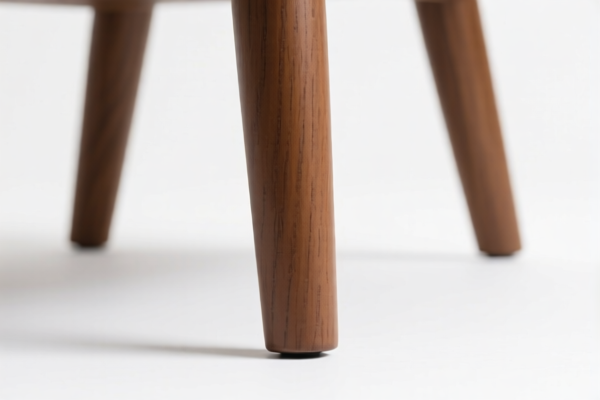
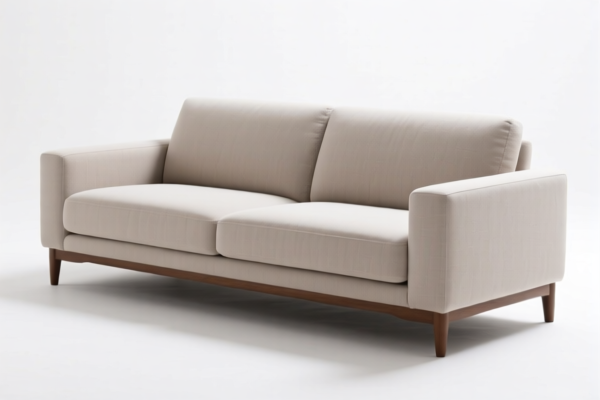
AI分析
🪑 Furniture Parts: Global Trade & Customs Classification Guide (2026)
🌐 HS Code Reference & Customs Clearance Guide | 2026 Tax Code Breakdown | Professional Entry Strategy
📌 One: Product Definition & Classification – Do You Really Know "Furniture Parts"?
Furniture parts are the essential building blocks of modern living, from office ergonomics to luxury home decor. In international trade, they are NOT a single category but split based on functional integration and end-product compatibility.
Key Distinction: * "Dedicated Parts" (Specific to a chair, table, or cabinet): Must match the parent product's HS Code logic. * "General/Backup Parts" (Generic or mixed use): Fall into "Other" or "Backup" categories. * "High-Risk Parts": Often targeted for additional anti-dumping or Section 301 duties due to their high value-to-volume ratio.
⚠️ Critical Logic:
- If the part is specifically designed for a Chair (9401) but doesn't fit a specific sub-category, it might be dumped into "Other" (9401.91.90.90).
- If the part is for a Table/Desk (9403) and is a generic fitting piece, it falls under 9403.91.00.80.
- If the part is for a Cabinet/Locker (9402), generic parts go to 9402.90.00.20.
- If it is a specific Chair Part that fits perfectly, it goes to 9402.10.00.00 (Note: Data suggests this code is used for chair parts in this specific dataset).
📦 Two: Detailed HS Code Classification & Tax Breakdown (2026 Data)
Based on the latest 2026 tariff data provided, here is the precise mapping of Furniture Parts to their HS Codes and corresponding tax liabilities.
| HS Code | Product Description & Logic | Tax Rate (Total) | Tax Composition Breakdown | Risk Level |
|---|---|---|---|---|
| 9403.91.00.80 | Furniture Parts (General/Backup) • Usage: Parts matching the form/shape for general furniture components. • Category: "Other Parts/Components" (Fallback/Deductible category). |
35.0% | • Base Tariff: 0.0% • Added Tariff: 25.0% • Sec. 301/122 Tariff: 10.0% |
🔴 HIGH |
| 9402.90.00.20 | Furniture Parts (Cabinet/Storage) • Usage: Parts for cabinets/lockers (Category: Other/Fallback). • Category: "Other Parts/Components". |
10.0% | • Base Tariff: 0.0% • Added Tariff: 0.0% • Sec. 301/122 Tariff: 10.0% |
🟡 MODERATE |
| 9402.10.00.00 | Furniture Parts (Chair Specific) • Usage: Parts explicitly for Chairs (Category: Components). • Logic: "Parts/Components matching Chair usage". |
10.0% | • Base Tariff: 0.0% • Added Tariff: 0.0% • Sec. 301/122 Tariff: 10.0% |
🟡 MODERATE |
| 9401.91.90.90 | Furniture Parts (Chair/Other Fallback) • Usage: Parts for Chairs (9401) falling under "Other" categories. • Logic: "Fits Chair/Part Rules" but not specific sub-list. |
35.0% | • Base Tariff: 0.0% • Added Tariff: 25.0% • Sec. 301/122 Tariff: 10.0% |
🔴 HIGH |
🔍 Important Note on Tax Structure:
- Base Tariff (0%): The standard Most-Favored-Nation (MFN) rate is often 0% for these specific sub-categories.
- Added Tariff (25%): This is the critical "Section 301" / "USITC Footnote" duty applied to Chinese-made furniture parts (specifically for 9403 and 9401 "Other" categories).
- 122 Clause (10%): A specific policy levy (likely related to Section 122 or specific 2026 trade measures) applied on top of the base rate.
Total = 0 + 25 + 10 = 35% (for high-risk categories).
💰 Three: 2026 Tariff Rate Deep Dive (USA Origin/Import)
✅ Destination: United States (US)
✅ Origin: China (CN)
✅ Effective Date: 2026 Fiscal Year
🎯 1. The 35% Tax Trap (9403.91.00.80 & 9401.91.90.90)
These codes represent the most expensive classification for furniture parts.
| Component | Rate | Source |
|---|---|---|
| Base Tariff | 0.0% | Standard MFN Rate |
| Section 301 / Added Tariff | 25.0% | USITC Footnote 9903.88.01 (Typical for furniture parts) |
| Policy 122 Add-on | 10.0% | New 2026 Trade Measure (Section 122) |
| TOTAL | 35.0% | Heavy Duty on Parts |
📌 Interpretation:
- If your product is a generic furniture part (e.g., a universal bracket, a generic table leg connector) or a chair part that doesn't fit a specific "Seat" code, it gets hit with the 25% Added Tariff.
- The 10% 122 Clause is an additional layer, pushing the total to 35%.
- Strategy: If you can prove the part is specific to a finished good (like a specific chair seat mechanism) that might qualify for a lower code, you save 25% instantly.
🎯 2. The 10% Sweet Spot (9402.90.00.20 & 9402.10.00.00)
These codes are significantly cheaper.
| Component | Rate | Source |
|---|---|---|
| Base Tariff | 0.0% | Standard MFN Rate |
| Section 301 / Added Tariff | 0.0% | Exempt or Classified under "Other" without added duty |
| Policy 122 Add-on | 10.0% | Mandatory 122 Clause Levy |
| TOTAL | 10.0% | Low Duty Zone |
📌 Interpretation:
- 9402.90.00.20: Used for Cabinet/Storage Parts that are generic.
- 9402.10.00.00: Used for Chair Parts that are explicitly defined under this code.
- The 10% is unavoidable due to the "122 Clause," but you avoid the 25% Added Tariff.
- Savings: 25% difference compared to the 35% tier!
🛠️ Four: Customs Clearance Practical Advice (Avoiding the 35% Pitfall)
✅ 1. Material & Documentation Checklist
To prove your part falls into the 10% category (avoiding the 25% Added Tariff), you must provide:
| Document | Requirement | Why it matters |
|---|---|---|
| Engineering Drawings | Must show specific fit to the parent product. | Proves it's not a "generic/other" part (which triggers 35%). |
| Assembly Photos | Show the part installed in a Chair or Cabinet. | Visual proof of "Functional Integration". |
| Bill of Materials (BOM) | Explicitly list the part as a component of a 9402 or 9401 finished good. | Prevents classification as "Other/Backup". |
| Functional Description | Detailed text: "This is a specific backrest support for Chair Model X, not a universal bracket." | Crucial for Customs officers to understand the intent. |
| HS Code Pre-Ruling | Recommended for high-volume parts. | Locks in the 10% rate before shipping. |
✅ 2. Declaration Strategy (The "Golden Rules")
🔥 Rule #1: Be Specific, Not Generic
BAD Declaration: "Furniture Part, Generic Bracket" → Risk: 35% (9403.91.00.80).
GOOD Declaration: "Chair Backrest Support, Model XYZ, for Chair Type 9402.10" → Risk: 10% (9402.10.00.00).🔥 Rule #2: Match the End Product Logic
If the part is for a Table, check if it fits9403.91.00.80(35%) or if there is a specific sub-code for that table part.
If the part is for a Cabinet, check9402.90.00.20(10%).🔥 Rule #3: The 122 Clause is Non-Negotiable
Warning: Even the 10% rate includes a 10% "122 Clause Tariff". You cannot avoid this. The goal is to avoid the 25% Added Tariff.
✅ 3. Common Mistakes & Consequences
| Mistake | Consequence |
|---|---|
| Classifying a specific Chair Part as "General Furniture Part" | You pay 35% instead of 10%. Loss: $250 per $1000 of goods. |
| Declaring "Furniture Part" without functional description | Customs will guess "Other" → 35%. |
| Assuming "0% Base Tariff" means "0% Total Tax" | False! The 122 Clause (10%) + Added Tariff (25%) apply. Minimum 10% tax exists. |
| Splitting a "Set of Parts" incorrectly | If you ship a complete kit, it might be classified as the "Finished Good" (higher duty) or "Parts" (lower duty). Consistency is key. |
🌍 Five: Global Market Comparison (2026)
| Market | Recommended HS Code | Total Duty | Key Requirement |
|---|---|---|---|
| 🇺🇸 USA | 9402.10.00.00 / 9402.90.00.20 |
10% | Must prove specific function to avoid 35% tier. |
| 🇨🇳 China | Varies | Varies | Domestic import duties apply; 122 Clause does not apply. |
| 🇪🇺 EU | 9403.91 / 9402.90 |
Varies | CE marking required; no Section 301. |
| 🇨🇦 Canada | 9403.91 / 9402.90 |
Varies | CUSMA rules of origin apply. |
📌 Conclusion:
The USA market is the most aggressive with Section 301 (25%) and the 122 Clause (10%).
Strategy: Always aim for the 10% codes (9402.xxxx.00) by proving specificity. Avoid the 35% codes (9403.91.00.80,9401.91.90.90) by avoiding "Generic/Other" classifications.
📌 Six: Quick Action Plan for Importers
- Audit your Parts List: Are any parts "generic" or "universal"? If yes, they likely hit 35%. Can they be redesigned or reclassified as specific?
- Verify the "122 Clause": Ensure your supplier knows that 10% tax is mandatory. Do not plan for 0% duty.
- Draft Precise Descriptions: Use phrases like "Specifically designed for [Model]" instead of "Furniture part".
- Request Pre-Rulings: For high-value shipments, get a Binding Ruling from US Customs (CBP) to lock in the 10% rate.
🎯 Final Verdict: Professional Clearance, Maximum Savings!
🚀 The Golden Formula:
"Specific Function + Clear Documentation = 10% Duty"
"Generic/Other + Vague Description = 35% Duty"💡 Remember:
The 25% Added Tariff is the enemy. The 10% 122 Clause is the tax you must pay.
Your goal: Avoid the 25%.
✨ Expert Tip: If you are shipping from a non-Chinese origin (e.g., Vietnam), the 25% Section 301 tariff might not apply, but the 122 Clause and Base Tariff logic may differ. Always verify origin rules!
📣 Ready to ship?
📞 Contact your customs broker with the exact HS Code + "122 Clause" awareness.
📄 Prepare your "Function vs. Generic" matrix for every shipment.
🚀 Clear the customs gate, save 25%, and boost your margins!
💼 Your Profit Margin Depends on Your HS Code Choice!
🔍 Precision is the key to 2026 Trade Success!
用户评价
关于 HS 编码归类
协调制度(HS)是由世界海关组织(WCO)制定的国际贸易商品分类标准。全球 200 多个国家采用 HS 系统作为海关关税、贸易统计和进出口监管的基础。
每个 HS 编码遵循以下层级结构:
- 章(2 位)——商品大类(例如:第 84 章:机器和机械设备)
- 品目(4 位)——章内的更具体分类
- 子目(6 位)——国际通用细分,所有 WCO 成员国统一使用
- 本国细分(8-10 位)——各国自行扩展的细分编码,如美国 HTSUS 10 位编码
正确的 HS 编码归类对于顺利通关、准确缴纳关税和遵守贸易法规至关重要。错误归类可能导致海关延误、多缴关税或罚款。
从CN进口到US时,适用的关税税率可能包括:
- 最惠国(MFN)税率——适用于 WTO 成员国的标准关税税率
- 普通税率——适用于无贸易协定国家
- 贸易救济关税——附加关税,如 301 条款(反倾销)、232 条款(国家安全)或反补贴税
本页内容仅供参考。如需正式归类,请咨询当地海关或持牌报关代理。