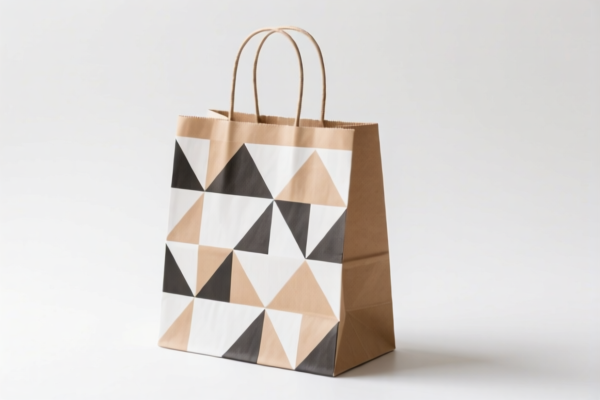
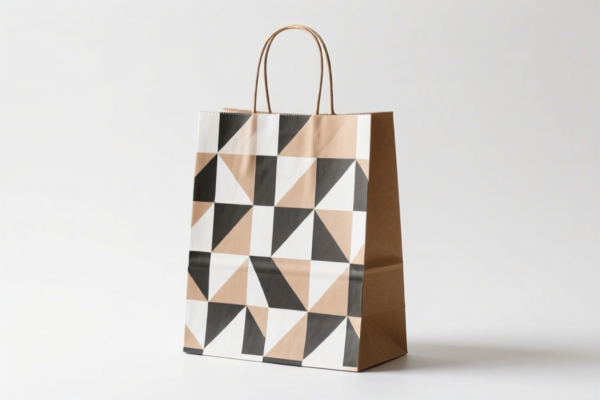
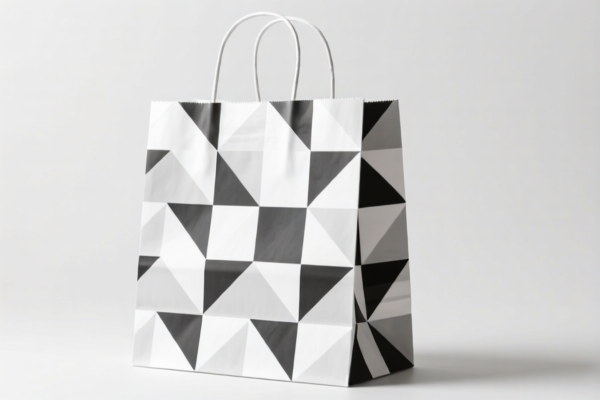
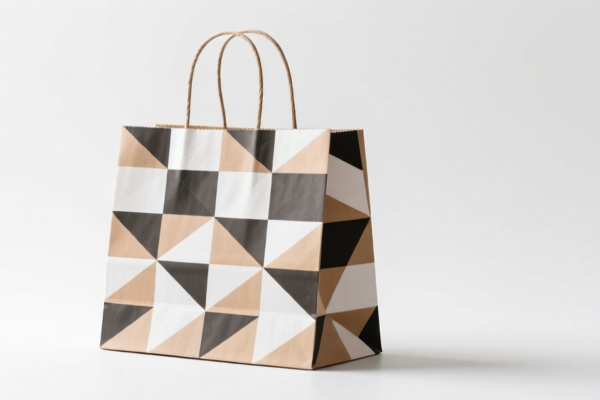
Geometric Pattern Paper Handbag
CN → US| HS编码 | 关税税率 | 原产国 | 目的国 | 文档 |
|---|---|---|---|---|
| 4819400020 | 35.0% | CN | US | 官方文档 |
| 4202995000 | 42.8% | CN | US | 官方文档 |
| 4819504060 | 35.0% | CN | US | 官方文档 |
| 4819400040 | 35.0% | CN | US | 官方文档 |
| 4202221500 | 51.0% | CN | US | 官方文档 |
商品图片
AI分析
🛍️ Geometric Pattern Paper Handbag (纸制几何图案手提袋)
🌐 HS Code Reference & Customs Clearance Guide | 2026 Latest Tariff Analysis | Professional Strategy
⚠️ CRITICAL WARNING: Products originating from China destined for the USA are subject to significant additional tariffs under Section 301 and Section 122 (IEEPA) regimes. Misclassification can lead to massive unexpected costs or customs holds.
📌 一、Product Definition & Classification Logic: Is it Paper or Plastic?
A "Geometric Pattern Paper Handbag" is generally defined as a portable container for personal items, constructed primarily of paper/paperboard, often featuring reinforced handles or specific structural designs. However, customs authorities scrutinize the primary material and structural integrity.
Key Distinction Points: 1. Pure Paper Construction: If the bag is made entirely of paper/cardboard with paper handles → Chapter 48 (Paper Products). 2. Mixed Material (Paper-covered): If the bag has a rigid structure covered in paper but contains plastic components or acts more like a standard handbag → Chapter 42 (Articles of Leather/Plastics). 3. Plastic Surface: If the "paper" appearance is actually a plastic sheet with a printed geometric pattern → Chapter 42 (Plastics).
🔍 Why so many HS Codes? Customs officers may classify this item differently based on: - The exact composition of handles (paper vs. plastic-coated paper vs. pure plastic). - Whether it is considered a "packaging container" (Chapter 48) or a "handbag/accessory" (Chapter 42). - Specific sub-headings for "packaging" vs. "consumer goods."
📦 二、HS Code Classification Details (2026 Latest Tariff对照)
Below are the five potential HS Codes derived from the data, ranging from pure paper packaging to plastic-based accessories.
| HS Code | Product Description | Classification Logic | Material Focus |
|---|---|---|---|
| 4819.40.00.20 | Paper Handbags, Geometric Pattern | Classified as Paper Packaging/Containers. Specifically fits "other paper packaging articles." | ✅ Pure Paper/Cardboard |
| 4202.99.50.00 | Handbag with Paper Covering | Classified as a Handbag/Accessory. It is viewed as a container made partly of paper but structurally akin to a handbag. | ⚠️ Mixed (Paper + Other) |
| 4819.50.40.60 | Other Paper Packaging Containers | Classified as Other Packaging. Excludes specific rigid boxes or fiber drums; fits flexible or semi-rigid paper bags. | ✅ Pure Paper |
| 4819.40.00.40 | Paper Handbags (General) | Similar to 4819.40.00.20 but potentially a different tariff line for "other bags" under paper packaging. | ✅ Pure Paper |
| 4202.22.15.00 | Geometric Pattern Plastic Handbag | High Risk! If the surface is identified as plastic sheeting (even with a paper-like print), it falls here. | ❌ Plastic Surface |
💰 三、2026 Latest Tariff Rate Breakdown (China to USA)
✅ Origin: China (CN)
✅ Destination: United States (US)
✅ Effective Date: Current regimes (Section 301 + IEEPA 122)
🎯 1. Chapter 48: Paper Handbags
Applicable HS Codes: 4819.40.00.20, 4819.50.40.60, 4819.40.00.40
These codes are treated as paper packaging materials. They benefit from lower base tariffs but still face significant additional tariffs due to trade policies.
| Tariff Component | Rate | Source/Regulation |
|---|---|---|
| MFN Base Duty | 0.0% | General Note 3 to HTSUS (Most paper packaging is duty-free) |
| Section 301 Duty (25%) | +25.0% | USITC Note 301.88.01 (Covering many Chinese paper products) |
| IEEPA Section 122 Duty | +10.0% | Executive Order 14050 / IEEPA (Additional levy on Chinese imports) |
| Total Effective Tax Rate | 35.0% | 0% + 25% + 10% |
📌 Explanation:
- The 0% base rate makes these attractive compared to plastic goods. - However, the 35% total burden is still substantial. - Note: All three 48xx codes listed have identical tax details in the data provided.
🎯 2. Chapter 42: Handbags & Plastic Goods
Applicable HS Codes: 4202.99.50.00, 4202.22.15.00
These codes are treated as finished consumer goods (handbags) or plastic articles. They are subject to higher base duties.
A. Mixed Material Handbag: 4202.99.50.00
Summary: "Handbag covered mainly by paper, no material conflict."
| Tariff Component | Rate | Source/Regulation |
|---|---|---|
| MFN Base Duty | 7.8% | HTSUS General Rate for "Other bags" |
| Section 301 Duty (25%) | +25.0% | USITC Note 301.88.01 |
| IEEPA Section 122 Duty | +10.0% | Executive Order 14050 / IEEPA |
| Total Effective Tax Rate | 42.8% | 7.8% + 25% + 10% |
B. Plastic Surface Handbag: 4202.22.15.00
Summary: "Geometric pattern plastic handbag, outer surface is plastic sheet."
| Tariff Component | Rate | Source/Regulation |
|---|---|---|
| MFN Base Duty | 16.0% | HTSUS for "Handbags with outer surface of plastic sheeting" |
| Section 301 Duty (25%) | +25.0% | USITC Note 301.88.01 |
| IEEPA Section 122 Duty | +10.0% | Executive Order 14050 / IEEPA |
| Total Effective Tax Rate | 51.0% | 16% + 25% + 10% |
📌 Critical Warning:
-4202.22.15.00is the MOST EXPENSIVE option (51%).
- If your "paper" bag has a plastic coating or is made of synthetic material with a printed pattern, customs will likely classify it here.
- Even4202.99.50.00(42.8%) is significantly more expensive than the paper codes (35%).
🛠️ 四、Customs Clearance Practical Advice (Avoiding Pitfalls)
✅ 1. Material Evidence is Key
To claim the lower 35% tariff (Chapter 48), you must prove the product is primarily paper.
| Evidence Required | Why It Matters |
|---|---|
| Material Specification Sheet | Clearly state: "100% Paper," "Paper Handles," "Paper Glue." Avoid words like "laminate," "plastic coating," or "synthetic fiber." |
| Photographs (Close-up) | Show the texture of the material. If it looks like plastic or has a glossy plastic sheen, be prepared for Chapter 42 classification. |
| Handling Tests | If the bag tears like paper, it supports Chapter 48. If it stretches or melts like plastic, it risks Chapter 42. |
| Bill of Materials (BOM) | List all components. If handles are plastic-coated paper, it might still trigger Chapter 42 scrutiny. |
✅ 2. Description on Commercial Invoice
Do NOT just write "Handbag." Use precise terminology aligned with your target HS Code.
-
For 35% Tax Rate (Chapter 48):
"Paper Handbag, Pure Paper Construction, Geometric Print, For Packaging/Presentation Use Only. No Plastic Components."
-
For 42.8% Tax Rate (Chapter 42):
"Paper-Covered Handbag, Mixed Material Structure, Cosmetic Accessory."
-
❌ AVOID:
"Plastic Handbag" or "Synthetic Leather Handbag" if it's actually paper. This leads to misdeclaration penalties.
✅ 3. Strategic Recommendation
| Goal | Recommended Strategy |
|---|---|
| Minimize Tariff | Ensure the product is 100% Paper. Classify under 4819.40.00.20 or 4819.50.40.60. Tariff: 35%. |
| Brand Perception | If the bag needs to be durable/water-resistant (plastic-coated), accept the 42.8% or 51% rate. Clearly label as "Paper-Look Plastic" to avoid fraud claims. |
| Avoid 51% Rate | Do not use plastic sheets unless absolutely necessary. The jump from 35% to 51% is a 16% increase on the CIF value, which destroys margins on low-cost items. |
🌍 五、Global Market Comparison (Quick Reference)
| Destination | Primary HS Code | Base Duty | Add-on (China) | Total Est. | Notes |
|---|---|---|---|---|---|
| 🇺🇸 USA | 4819.40.00.20 |
0% | +35% (301+122) | 35% | Cheapest Option |
| 🇺🇸 USA | 4202.22.15.00 |
16% | +35% (301+122) | 51% | Most Expensive |
| 🇪🇺 EU | 4819.40.00 |
~3-6% | 0% (No Section 301) | ~5-8% | No additional tariffs for paper |
| 🇨🇳 China | 4819.40.00 |
5-10% | 0% | ~5-10% | Low duty for import into China |
📌 Insight:
The US market is uniquely punitive due to Section 301 and IEEPA tariffs. For other markets, the cost difference between paper and plastic handbags is negligible. Focus your compliance efforts on US Customs.
📌 Six、Common Mistakes & Risk Mitigation
❌ Mistake 1: Calling a Plastic-Coated Bag "Paper"
👉 Risk: Customs examines the item, finds it’s synthetic, reclassifies to 4202.22.15.00.
👉 Consequence: Pay the difference (51% - 35% = 16% more tax) + Penalties.
✅ Fix: If it’s plastic-coated, declare it accurately or consult a broker for a Pre-Ruling.
❌ Mistake 2: Ignoring Handles
👉 Risk: Handles are made of woven plastic. Customs may argue the "essential character" is plastic.
👉 Consequence: Classification shifts to Chapter 42.
✅ Fix: Use paper-straw or twisted paper handles to maintain Chapter 48 status.
❌ Mistake 3: Vague Invoice Descriptions
👉 Risk: "Gift Bag" is too vague.
👉 Consequence: Customs holds the shipment for classification verification.
✅ Fix: Use the exact summary: "Paper Handbag, Geometric Pattern, Paper Handles, 100% Paper Material."
🎯 Seven、Conclusion & Action Plan
Summary of Tariff Hierarchy (China to USA):
- 🥇 Best (35%):
4819.40.00.20/4819.50.40.60/4819.40.00.40
→ Must be 100% Paper (including handles). - 🥈 Middle (42.8%):
4202.99.50.00
→ Mixed material, but structured as a handbag. - 🥉 Worst (51.0%):
4202.22.15.00
→ Plastic outer surface.
🚀 Immediate Action Steps:
- Audit Your Product: Is the bag truly 100% paper? Check handles and any coatings.
- Update Invoice: Rename from "Handbag" to "Paper Packaging Container" or "Paper Handbag (100% Paper)."
- Calculate Cost:
- If CIF = $1,000:
- Paper (35%): Tax = $350
- Plastic (51%): Tax = $510
- Savings: $160 per $1,000 shipped.
📣 Pro Tip:
If your volume is high, apply for a US Customs and Border Protection (CBP) Binding Ruling for your specific product sample. This locks in the 35% tariff rate for future shipments, providing legal certainty and budget stability.
✨ Smart Classification = Lower Costs.
💼 Don't let "Geometric Patterns" cost you 51%!
用户评价
关于 HS 编码归类
协调制度(HS)是由世界海关组织(WCO)制定的国际贸易商品分类标准。全球 200 多个国家采用 HS 系统作为海关关税、贸易统计和进出口监管的基础。
每个 HS 编码遵循以下层级结构:
- 章(2 位)——商品大类(例如:第 84 章:机器和机械设备)
- 品目(4 位)——章内的更具体分类
- 子目(6 位)——国际通用细分,所有 WCO 成员国统一使用
- 本国细分(8-10 位)——各国自行扩展的细分编码,如美国 HTSUS 10 位编码
正确的 HS 编码归类对于顺利通关、准确缴纳关税和遵守贸易法规至关重要。错误归类可能导致海关延误、多缴关税或罚款。
从CN进口到US时,适用的关税税率可能包括:
- 最惠国(MFN)税率——适用于 WTO 成员国的标准关税税率
- 普通税率——适用于无贸易协定国家
- 贸易救济关税——附加关税,如 301 条款(反倾销)、232 条款(国家安全)或反补贴税
本页内容仅供参考。如需正式归类,请咨询当地海关或持牌报关代理。