Glass Bead Reflective Film
CN → US| HS编码 | 关税税率 | 原产国 | 目的国 | 文档 |
|---|---|---|---|---|
| 3919901000 | 41.5% | CN | US | 官方文档 |
| 3926909989 | 22.8% | CN | US | 官方文档 |
| 3919101050 | 41.5% | CN | US | 官方文档 |
| 7018200000 | 40.0% | CN | US | 官方文档 |
| 7018905000 | 41.6% | CN | US | 官方文档 |
商品图片
AI分析
🌟 Glass Bead Reflective Film (Self-Adhesive Roll)
🌐 HS Code Classification & Customs Clearance Guide | 2026 Latest Tariff Analysis | Strategic Compliance Strategy
📌 I. Product Definition & Core Characteristics: What is "Glass Bead Reflective Film"?
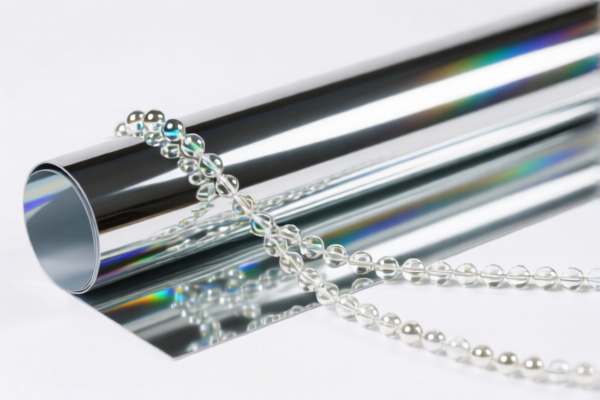
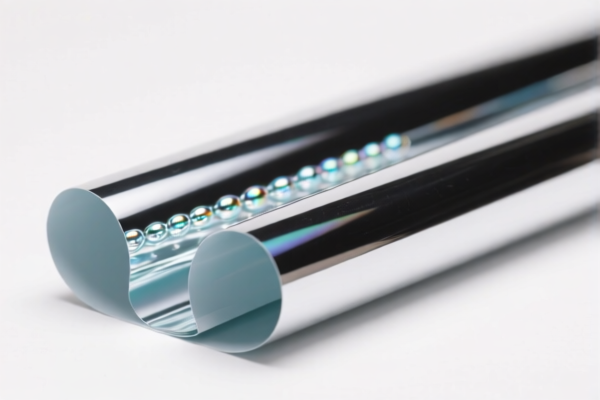
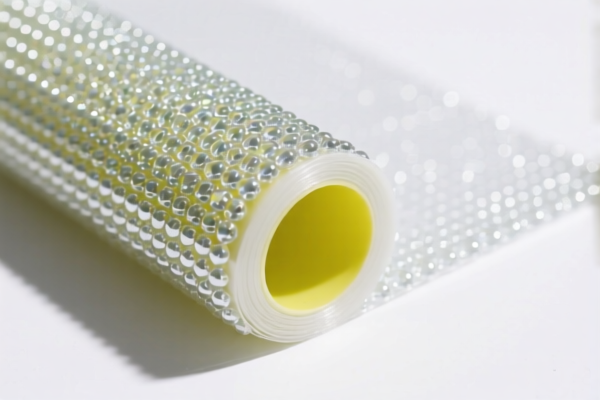
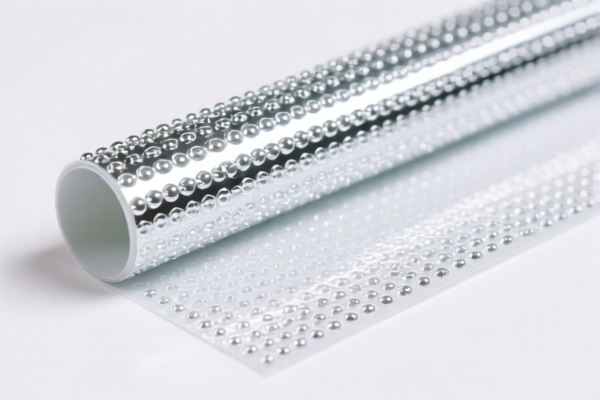
Glass Bead Reflective Film (Self-Adhesive Roll) is a high-performance material widely used in traffic signs, safety vests, automotive markings, and industrial safety equipment. Its core functionality relies on prismatic reflection, where embedded glass microbeads reflect light directly back to its source (e.g., car headlights).
In international trade, this product is a "hybrid" item, combining plastic/polymer substrates (the film/roll) with glass components (the beads) and an adhesive layer. This complexity often leads to classification disputes between Chapter 39 (Plastics) and Chapter 70 (Glass).
⚠️ Key Distinction Points:
- Is it a "Glass Product"? If the glass beads are the primary defining feature and the product is essentially a finished glass article → Chapter 70.
- Is it a "Plastic Film"? If the plastic substrate is dominant, and the beads are just a surface coating for reflection → Chapter 39.
- Is it "Self-Adhesive"? The presence of an adhesive layer often pushes classification toward 3919 (Self-adhesive plates, sheets, film, etc.), but the material composition dictates the final 8-digit code.
📦 II. HS Code Classification Details (Based on Provided Data)
The following HS Codes are derived from the provided dataset. Note that different customs authorities may interpret the "essential character" differently, leading to multiple possible classifications for the same physical product.
| HS Code | Product Description | Key Characteristics | Total Tax Rate |
|---|---|---|---|
3919.90.10.00 |
Glass Bead Reflective Self-Adhesive Roll Film | Film Form: Roll; Material: Contains glass beads; Feature: Reflective + Self-Adhesive. | 41.5% |
3926.90.99.89 |
Glass Bead Reflective Self-Adhesive Roll Film | Film Form: Classified as "Film"; Material: Glass beads classified under "Other Articles of Plastic/Other Materials". | 22.8% |
3919.10.10.50 |
Glass Bead Reflective Self-Adhesive Roll Film | Film Form: Roll; Features: Identical characteristics (Glass beads + Self-adhesive). | 41.5% |
7018.20.00.00 |
Glass Bead Reflective Self-Adhesive Roll Film | Material: Glass; Form: Roll; Feature: Fits characteristics of glass bead articles. | 40.0% |
7018.90.50.00 |
Glass Bead Reflective Self-Adhesive Roll Film | Material: Glass Beads; Category: Small glass articles; Conflict: None. | 41.6% |
🔍 Critical Observation:
- Chapter 39 (Plastics) classifications (3919,3926) generally attract 41.5% or 22.8% total tax.
- Chapter 70 (Glass) classifications (7018) attract 40.0% or 41.6% total tax.
- Why the difference? The classification hinges on whether the customs authority views the product as a "Plastic Film with Glass Coating" (Chapter 39) or a "Glass Article" (Chapter 70).
💰 III. Detailed Tax Rate Breakdown (2026 Latest Tariffs)
✅ Applicable Market: United States (US)
✅ Origin: China (CN)
✅ Effective Date: November 10, 2025 (and subsequent imports)
The tax structure is consistent across most codes, driven by the Section 301 and IEEPA tariffs on Chinese goods.
🎯 1. High-Tax Scenario: 3919.90.10.00, 3919.10.10.50, 7018.90.50.00
| Item | Content |
|---|---|
| Base Tariff | 6.5% (for 3919) or 6.6% (for 7018.90) |
| Section 301 Tariff (Add-on) | +25.0% |
| Section 122 Tariff (IEEPA) | +10.0% |
| Total Tax Rate | 41.5% ~ 41.6% |
| Tax Calculation | CIF Value × Total Rate |
| De Minimis Eligibility | ❌ NO (Deny de minimis) |
📌 Explanation:
- The 25% is the standard Section 301 tariff on many Chinese imports.
- The 10% is the additional IEEPA tariff (Section 122) targeting specific Chinese products.
- Base Rates: Vary slightly between 6.5% and 6.6% depending on the exact subheading.
- Total Impact: A ~41.5% duty significantly impacts profit margins.
🎯 2. Low-Tax Scenario: 3926.90.99.89
| Item | Content |
|---|---|
| Base Tariff | 5.3% |
| Section 301 Tariff (Add-on) | +7.5% |
| Section 122 Tariff (IEEPA) | +10.0% |
| Total Tax Rate | 22.8% |
| Tax Calculation | CIF Value × 22.8% |
| De Minimis Eligibility | ❌ NO (Deny de minimis) |
📌 Explanation:
- This classification (3926.90.99.89) benefits from a lower Section 301 rate of 7.5% instead of 25%.
- Why? It is classified under "Other articles of plastics," which may have a different tariff schedule than "Self-adhesive plates/sheets/film" (3919).
- Strategy: This is the most cost-effective classification if the product description and physical description allow it to be viewed as a "Plastic Article" rather than a "Self-Adhesive Film."
🎯 3. Medium-Tax Scenario: 7018.20.00.00
| Item | Content |
|---|---|
| Base Tariff | 5.0% |
| Section 301 Tariff (Add-on) | +25.0% |
| Section 122 Tariff (IEEPA) | +10.0% |
| Total Tax Rate | 40.0% |
| Tax Calculation | CIF Value × 40.0% |
📌 Explanation:
- Base tariff is low (5.0%), but the 25% Section 301 applies, bringing the total to 40.0%.
- Slightly cheaper than the 41.5% bracket, but more expensive than the 22.8% bracket.
🛠️ IV. Customs Clearance Practical Advice (Risk Avoidance Guide)
✅ 1. Preparation Checklist (Non-negotiable)
| Document | Required | Purpose |
|---|---|---|
| ✅ Product Specification Sheet | ✔️ | Must detail: Substrate material (PET/PC/PE), Glass Bead content %, Adhesive type, Roll dimensions, Reflectivity coefficient. |
| ✅ Photos (Labeled) | ✔️ | Clear images of the roll, cross-section (showing beads embedded), and adhesive side. |
| ✅ Composition Statement | ✔️ | Explicitly state: "Plastic film base with glass microbeads coated on one side and pressure-sensitive adhesive on the other." |
| ✅ Commercial Invoice | ✔️ | Must NOT say "Glass". Use terms like "Reflective Film," "Self-Adhesive Vinyl," or "Plastic Sheet." Avoid "Glass Bead Product" if possible. |
| ✅ Origin Certificate | ✔️ | Essential for determining Section 301 applicability. |
| ✅ Binding Ruling (Optional but Recommended) | ✔️ | Strongly Advised: Apply for an Advance Ruling from CBP to lock in the HS Code and avoid post-import audits. |
✅ 2. Classification Strategy & Declaration Tips
🔥 "Key Phrase: 'Plastic Film' vs. 'Glass Article'"
| Scenario | Recommended HS Code | Reasoning |
|---|---|---|
| Maximize Savings | 3926.90.99.89 |
Classify as a "Plastic Article." Justify that the plastic film is the essential character, and glass beads are a minor coating. |
| Standard Declaration | 3919.90.10.00 |
If the product is clearly a "Self-Adhesive Film," this is the most accurate description, but expect higher taxes. |
| Glass-Focused | 7018.20.00.00 |
Only use if the product is primarily glass (e.g., glass beads fused into a matrix with minimal plastic). |
📌 Declaration Tip:
- Do NOT describe the product as "Glass Beads" in the commercial invoice.
- Use: "Reflective Self-Adhesive Film, 100% Plastic Base, with Glass Bead Coating."
- This supports the classification under Chapter 39 (Plastics).
✅ 3. Special Handling for "Section 122" (10% IEEPA Tariff)
- Applicability: The 10% tariff applies to all Chinese-origin goods in these categories unless exempted.
- No De Minimis Exemption: Packages under $800 (de minimis) are NOT exempt from these tariffs. You must pay duty on every shipment.
- Compliance: Ensure the "Country of Origin" is correctly marked as "China" on all packaging and documents. Mislabeling as "Made in Vietnam" for Chinese goods is fraud.
🌍 V. Global Market Comparison (2026)
| Country/Region | Recommended HS Code | Total Tariff (China Origin) | Key Requirements | Notes |
|---|---|---|---|---|
| 🇺🇸 USA | 3926.90.99.89 (Preferred) |
22.8% | CBP Ruling, FCC (if electronic integration) | Cheapest option. Avoid 3919 if possible due to 41.5% rate. |
| 🇺🇸 USA | 3919.90.10.00 |
41.5% | Standard | Higher risk, higher cost. |
| 🇪🇺 EU | 3919.10 or 3926.90 |
0% - 6% | CE, REACH, EPR (WEEE/Packaging) | No Section 301 tariffs. Much cheaper for European market. |
| 🇨🇳 China | 3919.10 |
5% - 6.5% | CCC (if applicable) | Low duty, but domestic competition is high. |
📌 Conclusion:
- For US Market: The difference between 22.8% and 41.5% is 18.7% of the CIF value. This is a massive cost difference.
- Strategy: Aim for3926.90.99.89by providing documentation that emphasizes the plastic film nature of the product.
📌 VI. Common Mistakes & Pitfalls (Lessons Learned)
❌ Mistake 1: Declaring as "Glass Beads"
👉 Consequence: Classified under Chapter 70, potentially triggering higher base rates or different regulatory requirements.
👉 Fix: Always describe as "Reflective Film" or "Plastic Sheet."
❌ Mistake 2: Using "Self-Adhesive" in the description for 3926 classification
👉 Consequence: Customs may reclassify to 3919 (Self-Adhesive) with a higher 25% Section 301 rate.
👉 Fix: If using 3926, emphasize the "Plastic Article" aspect in the technical description, even if it has adhesive.
❌ Mistake 3: Ignoring Section 122 (10% IEEPA)
👉 Consequence: Underpayment of duties, leading to penalties and interest.
👉 Fix: Add 10% to all cost calculations for US imports from China.
❌ Mistake 4: Splitting Shipment to Avoid De Minimis
👉 Consequence: Since de minimis is denied, splitting shipments does not save duty and increases logistics costs.
👉 Fix: Plan consolidated shipments and budget for full duty payment.
🎯 VII. Conclusion: Professional Classification for Cost Efficiency
🎯 Key Takeaway:
🔹 For US Imports: Fight for
3926.90.99.89(22.8% total) over3919(41.5%).
🔹 Documentation is King: Your product description must support the plastic classification.
🔹 Budget for 10% IEEPA: This is a fixed cost for Chinese goods.
📌 Pro Tip:
If you import large volumes, apply for an Advance Ruling from U.S. Customs and Border Protection (CBP). This legally binds the customs officer to your chosen HS Code, preventing disputes and ensuring predictable costs.
📣 Immediate Action:
📞 Consult with a licensed customs broker.
📝 Provide detailed product specs to support the3926classification.
🚀 Optimize your supply chain to handle the 22.8% duty efficiently.
✨ Accurate Classification, Predictable Costs, Smooth Customs!
💼 Every Dollar Saved in Duty is Pure Profit!
用户评价
关于 HS 编码归类
协调制度(HS)是由世界海关组织(WCO)制定的国际贸易商品分类标准。全球 200 多个国家采用 HS 系统作为海关关税、贸易统计和进出口监管的基础。
每个 HS 编码遵循以下层级结构:
- 章(2 位)——商品大类(例如:第 84 章:机器和机械设备)
- 品目(4 位)——章内的更具体分类
- 子目(6 位)——国际通用细分,所有 WCO 成员国统一使用
- 本国细分(8-10 位)——各国自行扩展的细分编码,如美国 HTSUS 10 位编码
正确的 HS 编码归类对于顺利通关、准确缴纳关税和遵守贸易法规至关重要。错误归类可能导致海关延误、多缴关税或罚款。
从CN进口到US时,适用的关税税率可能包括:
- 最惠国(MFN)税率——适用于 WTO 成员国的标准关税税率
- 普通税率——适用于无贸易协定国家
- 贸易救济关税——附加关税,如 301 条款(反倾销)、232 条款(国家安全)或反补贴税
本页内容仅供参考。如需正式归类,请咨询当地海关或持牌报关代理。