Goat Skin Not Further Processed (Dry State)
CN → US商品图片
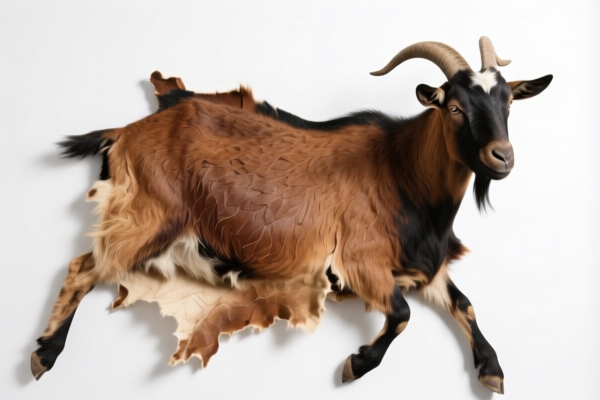
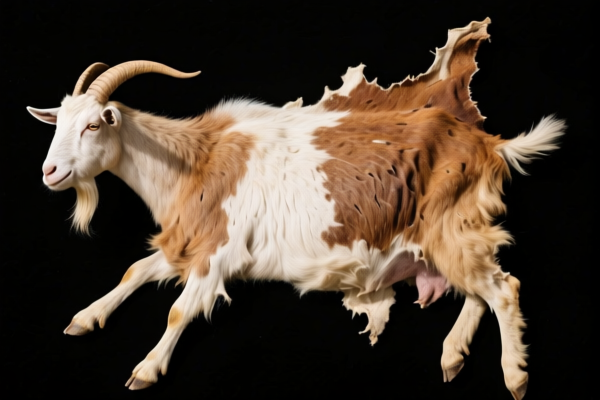
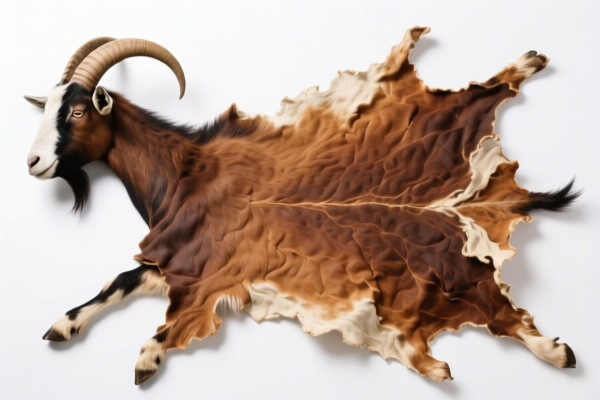
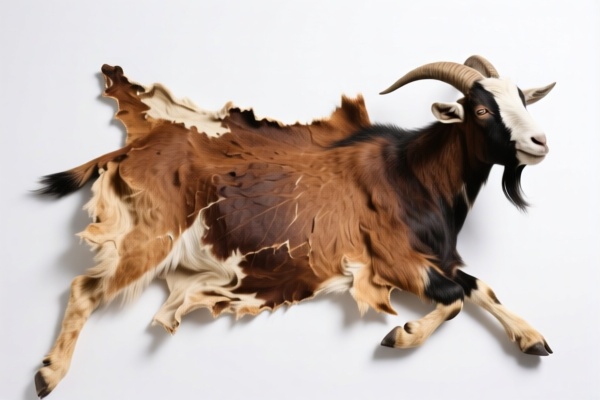
AI分析
🐐 Goat Skin Not Further Processed (Dry State)
🌐 HS Code Reference & Customs Clearance Guide | 2026 Latest Tariff Analysis | Professional-Level Entry Strategy
📌 1. Product Definition and Classification: Do You Really Understand "Dry Goat Skins"?
Goat skins in the dry, unprocessed state are the raw materials of the leather industry. In international trade, they are distinguished not just by species, but by the degree of preservation. "Not further processed" means the skins have been salted, dried, or pickled only to prevent decay, but have not undergone tanning, crust leather processing, or finishing.
Two Main Categories in Trade: * Fresh/Wet-Salted Skins (0401-0405 range logic, but here 4101/4102): Rarely shipped long-distance in "wet" form due to weight and spoilage risk. * Dry/Salted Skins (4102): The standard global commodity. These are hair-on or hair-off, salted/dried skins ready for tanneries.
⚠️ Key Distinction Point:
- If the skin is merely salted/dried for preservation → Classified under Chapter 41.
- If the skin has been tanned (even lightly) → Classified under Chapter 41, Headings 4103/4104 (Tanned Leather).
- If the skin is prepared for direct use (e.g., rugs with hair intact and treated) → May be classified elsewhere.
📦 2. HS Code Classification Details (2026 Latest Tariff Authority Comparison)
| HS Code | Product Description | Application Scenario | Is it Tanned? |
|---|---|---|---|
4102.21.00.00 |
Goat skins, with hair on, not further prepared than salting, drying, etc. | Raw materials for rug manufacturing, traditional crafts, some specialty leathers | ❌ No |
4102.29.00.00 |
Goat skins, other than those with hair on, not further prepared | Hair-off goat skins for general leather production (shoes, bags, jackets) | ❌ No |
4102.30.00.00 |
Lamb skins (not goat) | Often confused with goat; distinguish by size and follicle pattern | ❌ No (Different Species) |
4101.20.00.00 |
Bovine hides (cattle) | Often mixed in containers; must be separated | ❌ No (Different Species) |
4103.90.00.00 |
Other skins, tanned or crust | If goat skins undergo light tanning before export | ✅ Yes |
🔍 Key Reminder:
- "With hair on" vs. "Hair-off": Customs officers will inspect the follicle pattern. Hair-on goat skins (4102.21) are often valued differently due to their dual potential (leather or rug).
- Salting vs. Tanning: If the pH level indicates tanning agents have been introduced, it moves to Chapter 41, Heading 4103+, NOT 4102.
- Mixed Containers: If a container has both cattle hides and goat skins, they MUST be declared separately. Misclassification can lead to severe penalties.
💰 3. 2026 Latest Tariff Rate Details (Including Additional Taxes, Policy Surcharges)
✅ Applicable Country: United States (US)
✅ Country of Origin: China (CN)
✅ Effective Date: November 10, 2025 onwards (including subsequent imports)
🎯 1. 4102.21.00.00 —— Goat Skins, with Hair On, Dry/Salted
| Item | Content |
|---|---|
| Base Tariff Rate | 4.8% (ad valorem) |
| USITC Additional Duty | +25% (From USITC Footnote 9903.88.01) |
| IEEPA Additional Duty | +10% (For China/HK products, effective Nov 10, 2025) |
| Total Tax Rate | 39.8% |
| Tax Calculation | CIF Value × 39.8% |
| De Minimis Eligibility | ❌ No (deny_de_minimis) |
| Legal Basis Path | IEEPA:9903.01.25 → IEEPA:9903.01.24 → USITC:4102.21.00.00 → FOOTNOTE:9903.88.01 |
📌 Explanation:
- The "25% USITC surcharge" is part of the Section 301 tariffs on specific raw materials and intermediate goods.
- The "10% IEEPA surcharge" is the new baseline tariff on Chinese animal products effective late 2025.
- Total 39.8% is a high burden for low-margin raw materials. Cost calculation must include this entirely.
🎯 2. 4102.29.00.00 —— Goat Skins, Hair-Off, Dry/Salted
| Item | Content |
|---|---|
| Base Tariff Rate | 4.8% |
| USITC Additional Duty | +25% |
| IEEPA Additional Duty | +10% |
| Total Tax Rate | 39.8% |
| Tax Calculation | CIF × 39.8% |
| De Minimis Eligibility | ❌ No |
| Legal Basis Path | IEEPA:9903.01.25 → IEEPA:9903.01.24 → USITC:4102.29.00.00 → FOOTNOTE:9903.88.01 |
📌 Note:
- Same rate as hair-on skins. The distinction is mostly for statistical and inspection purposes.
- Hair-off skins are often preferred by mass-market leather goods manufacturers (shoes/bags) due to easier processing.
🛠️ 4. Practical Customs Clearance Advice (Combat Pitfalls)
✅ 1. Required Documentation Checklist (No Exceptions)
| Document | Mandatory? | Notes |
|---|---|---|
| ✅ Product Specification Sheet | ✔️ | Must state: "Goat Skin, Dry, Salted, Hair-On/Hair-Off", Origin, Quantity (kg/pcs) |
| ✅ Non-Tanned Declaration | ✔️ | Explicitly state: "Not Tanned, Not Crust, Only Salting/Drying" |
| ✅ Commercial Invoice | ✔️ | Clearly list "Goat Skin" not "Leather" or "Material" |
| ✅ Packing List | ✔️ | Weight per bale, total bales, net/gross weight |
| ✅ Certificate of Origin (CO) | ✔️ | Required for tariff calculation |
| ✅ Veterinary Health Certificate | ✔️ | Many countries require proof of no foot-and-mouth disease or other contaminants |
| ✅ Photo of Skins (in Bale) | ✔️ | Show condition, salting quality, and any branding/tagging |
✅ 2. Declaration Tips (Key Mantra)
🔥 "Raw Skin, Not Leather; Salted Only, No Tanning; Hair-On vs Hair-Off, Be Precise!"
| Situation | Correct Declaration | Wrong Practice |
|---|---|---|
| Dry, salted goat skins | 4102.21.00 or 4102.29.00 |
Declare as "Leather" → 10%+ duties + inspections |
| Goat skins + Cattle hides | Declare separately | Mixed declaration → Container seizure risk |
| Skins with high salt content | State "Salt Content: X%" | Vague description → Customs lab testing delays |
| Goat skins for rugs | Specify "With Hair On" | Vague "Goat Skin" → Potential misclassification |
✅ 3. Special Cases Handling
| Situation | Handling Advice |
|---|---|
| OEM Custom Sizes | Provide cutting templates if skins are pre-cut. Still raw material. |
| Damaged Skins | Declare as "Grade B" or "Rejected". Value will be lower, but duty rate same. |
| Mixed Species | If container has goat + cow, must have separate bills of lading or clear segregation. |
| Transshipment | If goods pass through Vietnam/Thailand, ensure CO is still China. Transshipment may not exempt IEEPA. |
🌍 5. Global Market Comparison (2026 Latest)
| Country/Region | Recommended HS Code | Tariff | Certification | Notes |
|---|---|---|---|---|
| 🇺🇸 USA | 4102.21.00 / 4102.29.00 |
39.8% (China) | None specific | High duty burden |
| 🇨🇳 China | 4102.21.00 / 4102.29.00 |
5% | None | Major importer |
| 🇪🇺 EU | 4102.21.00 / 4102.29.00 |
0% (if eligible) | REACH Compliance | No additional surcharges |
| 🇮🇳 India | 4102.21.00 / 4102.29.00 |
5-10% | BIS Standards | Import restrictions apply |
| 🇹🇷 Turkey | 4102.21.00 / 4102.29.00 |
0% (FTA) | CE (for finished goods) | Major leather hub |
📌 Conclusion:
- USA imposes the highest barriers due to combined 301/IEEPA tariffs.
- EU and Turkey are more favorable for raw skin imports if origin rules are met.
- Consider supply chain diversification if US market is primary.
📌 6. Common Errors & Pitfalls (Lessons Learned)
❌ Error 1: Declaring "Dry Goat Skin" as "Leather"
👉 Consequence: Lower base duty but incorrect classification → Audit risk + penalties for false declaration.
❌ Error 2: Not specifying "Hair-On" vs "Hair-Off"
👉 Consequence: Customs may delay for inspection to determine subtype → Demurrage costs.
❌ Error 3: Mixing Goat Skins with Cattle Hides in one line item
👉 Consequence: HS codes differ (4101 vs 4102). Must be separate lines.
❌ Error 4: Ignoring Veterinary Requirements
👉 Consequence: Skins rejected at border due to disease risk → Destruction or re-export.
✅ Correct Practice:
"Goat Skins, Dry, Salted, Hair-On, Not Tanned, Origin: China, Model: Raw Material, Grade: B"
🎯 7. Conclusion: Professional Declaration, Save Time, Reduce Costs!
🎯 Remember the Mantra:
🔹 "Raw Skin, Not Leather; Hair-On or Off, State Clearly; Salted Only, No Tanning; Avoid 39.8% Surprise!"
🔹 "HS Code Determines Duty; 39.8% is High; Separate Lines for Mixed Species!"
📌 Tip:
If your goat skins are originating from India, Turkey, or Italy, you may apply for preferential tariffs (e.g., 0% in EU), bypassing IEEPA.
Recommend Advance Ruling if uncertain about "Tanning" status.
📣 Immediate Action:
📞 Contact a professional customs broker + Provide Product Photos + Apply for HS Code Advance Ruling
🚀 Ensure smooth customs clearance, global market access, and cost control!
✨ Professional Clearance Starts with Accurate Classification!
💼 Every dollar of tariff saved is pure profit!
用户评价
关于 HS 编码归类
协调制度(HS)是由世界海关组织(WCO)制定的国际贸易商品分类标准。全球 200 多个国家采用 HS 系统作为海关关税、贸易统计和进出口监管的基础。
每个 HS 编码遵循以下层级结构:
- 章(2 位)——商品大类(例如:第 84 章:机器和机械设备)
- 品目(4 位)——章内的更具体分类
- 子目(6 位)——国际通用细分,所有 WCO 成员国统一使用
- 本国细分(8-10 位)——各国自行扩展的细分编码,如美国 HTSUS 10 位编码
正确的 HS 编码归类对于顺利通关、准确缴纳关税和遵守贸易法规至关重要。错误归类可能导致海关延误、多缴关税或罚款。
从CN进口到US时,适用的关税税率可能包括:
- 最惠国(MFN)税率——适用于 WTO 成员国的标准关税税率
- 普通税率——适用于无贸易协定国家
- 贸易救济关税——附加关税,如 301 条款(反倾销)、232 条款(国家安全)或反补贴税
本页内容仅供参考。如需正式归类,请咨询当地海关或持牌报关代理。