Gold waste and scrap
CN → US| HS编码 | 关税税率 | 原产国 | 目的国 | 文档 |
|---|---|---|---|---|
| 7112910100 | 35.0% | CN | US | 官方文档 |
| 7112990100 | 35.0% | CN | US | 官方文档 |
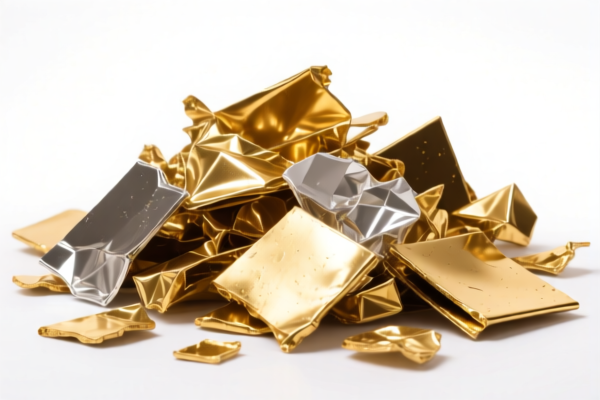
商品图片



AI分析
🏆 Gold Waste & Scrap (Precious Metal Recovery)
🌐 HS Code Reference & Clearance Guide | 2026 Latest Tariff Analysis | Professional Clearance Strategy
📌 I. Product Definition & Classification: What is "Gold Waste and Scrap"?
Gold waste and scrap refer to materials that are no longer fit for their original purpose but contain precious metals (specifically gold in this context) and are primarily intended for the recovery of precious metals. This category excludes general electronic waste (heading 8549) and focuses on industrial by-products, used jewelry, circuit boards, and polishing sweepings.
In international trade, these goods are classified under Heading 7112: "Waste and scrap of precious metal or of metal clad with precious metal; other waste and scrap containing precious metal or precious metal compounds, of a kind used principally for the recovery of precious metal other than goods of heading 8549."
⚠️ Key Distinction:
- If the material is gold-clad or contains gold compounds and is destined for smelting/recovery → It falls under 7112.
- If it is used jewelry not primarily for recovery (e.g., vintage collectibles) → It may fall under 7113 (Jewelry).
- Crucial Exclusion: Goods of Heading 8549 (Waste and scrap of electrical or electronic apparatus) are excluded from Heading 7112. However, if the gold recovery is the principal purpose, 7112 takes precedence.
📦 II. HS Code Classification Details (2026 Latest Tariff Authority Comparison)
Based on the provided data, there are two specific sub-categories for gold waste and scrap under Heading 7112.
| HS Code | Product Description | Applicable Scenario | Metal Composition |
|---|---|---|---|
7112.91.01.00 |
Of gold, including metal clad with gold (but excluding sweepings containing other precious metals) | Industrial gold sludge, gold-clad copper scraps, pure gold recovery waste | ✅ Pure Gold / Gold-Clad |
7112.99.01.00 |
Other | Gold waste not covered by 7112.91 (e.g., mixed gold waste not purely "gold-clad" or specific alloy recoveries) | ✅ Gold-containing (Mixed/Other) |
🔍 Critical Note:
- Both codes fall under the broader definition of "Other" within their respective sub-headings.
- 7112.91.01.00 is specific to Gold and Gold-Clad materials.
- 7112.99.01.00 is the residual category for Other gold waste and scrap containing precious metal or compounds.
- Sweepings containing other precious metals are explicitly excluded from 7112.91.01.00 and likely fall under the "Other" category (7112.99) or different sub-headings depending on the dominant metal.
💰 III. 2026 Latest Tariff Rate Breakdown (Including Surtaxes & Policy Add-ons)
✅ Applicable Country: United States (US)
✅ Country of Origin: China (CN)
✅ Effective Date: 2025-11-10 onwards (including subsequent imports)
🎯 1. 7112.91.01.00 —— Waste and Scrap of Gold (Including Gold-Clad)
| Item | Content |
|---|---|
| Base Tariff Rate | 0.0% (ad valorem) |
| Additional Tariff (Section 301) | +25.0% |
| Total Tax Rate | 25.0% |
| Tax Calculation | CIF Value × 25% |
| De Minimis Exemption | ❌ Not Eligible |
| Legal Basis Path | HTSUS:7112.91.01.00 → USITC Footnote 9903.88.01 (301 Tariff) |
📌 Explanation:
- The base tariff is 0% because precious metal waste is often considered a raw material for recycling.
- However, the 25% additional tariff applies due to Section 301 trade actions against China.
- Total Liability: 25% of the CIF value. This is a significant cost for low-value waste but high-value content materials.
🎯 2. 7112.99.01.00 —— Other Waste and Scrap of Gold
| Item | Content |
|---|---|
| Base Tariff Rate | 0.0% (ad valorem) |
| Additional Tariff (Section 301) | +25.0% |
| Total Tax Rate | 25.0% |
| Tax Calculation | CIF Value × 25% |
| De Minimis Exemption | ❌ Not Eligible |
| Legal Basis Path | HTSUS:7112.99.01.00 → USITC Footnote 9903.88.01 (301 Tariff) |
📌 Note:
- This category covers all other gold waste not classified under 7112.91.01.00.
- The tariff structure is identical to 7112.91.01.00 (0% base + 25% surcharge = 25%).
- Whether it is pure gold scrap or gold-contaminated industrial waste, the 25% total tax applies.
🛠️ IV. Clearance Practical Advice (Real-World Pitfall Guide)
✅ 1. Required Documentation Checklist (No Omissions)
| Document | Mandatory? | Description |
|---|---|---|
| ✅ Commercial Invoice | ✔️ | Must clearly state "Gold Waste and Scrap" and value. |
| ✅ Certificate of Origin (CO) | ✔️ | Proof of origin (China) triggers the 25% surcharge. |
| ✅ Material Composition Report | ✔️ | Lab test results showing gold content and purity (e.g., Assay Report). |
| ✅ Packing List | ✔️ | Detailing net/gross weight, crucial for customs valuation. |
| ✅ Export Declaration from Origin | ✔️ | To verify compliance with export controls. |
| ✅ Proof of "Principal Purpose" | ✔️ | Documentation stating the goods are for recovery, not reuse as jewelry. |
✅ 2. Declaration Tips (Key Mnemonics)
🔥 “True Value, Not Scrap Value – Declare Content!”
| Scenario | Correct Declaration Method | Wrong Practice |
|---|---|---|
| Gold-plated copper scraps | 7112.91.01.00 - "Gold-clad copper waste for recovery" |
Mislabeling as "Copper Scrap" → Risk of fraud penalties. |
| Gold polishing sweepings | 7112.99.01.00 - "Gold-containing waste sweepings" |
Labeling as "Household Waste" → Illegal dumping risk. |
| Mixed precious metal waste | 7112.99.01.00 (if gold is principal) |
Splitting into multiple codes to evade taxes → Audit risk. |
| E-waste with gold | Check Heading 8549 first | Forcing into 7112 if primarily electronic waste → Rejection. |
✅ 3. Special Circumstances Handling
| Scenario | Handling Advice |
|---|---|
| High Gold Content | Provide Assay Reports to justify CIF value. Customs may re-evaluate if declared value is too low. |
| Mixed Metals | If sweepings contain other precious metals (e.g., silver, platinum), ensure correct HS code selection. 7112.91.01.00 excludes sweepings with other PMs. |
| OEM Gold Waste | If the waste is generated by a US manufacturer from imported materials, ensure proper bonded warehouse procedures to defer duties. |
| De Minimis Risk | ❌ Do NOT use Section 321 (De Minimis) for gold waste. The value is often high, and precious metal waste is excluded from de minimis exemptions due to its strategic and high-value nature. |
🌍 V. Global Major Market Clearance Comparison (2026 Latest)
| Country/Region | Recommended HS Code | Tariff Rate | Certification/Notes |
|---|---|---|---|
| 🇺🇸 USA | 7112.91.01.00 / 7112.99.01.00 |
25% (Total) | Section 301 applies. High scrutiny on origin. |
| 🇨🇳 China | 7112.91.00 / 7112.99.00 |
0% (Import) | China is a major recycler. Import duties may be lower or zero. |
| 🇪🇺 EU | 7112.91 / 7112.99 |
0% - 2.5% | No Section 301 equivalent, but strict environmental compliance (WEEE). |
| 🇯🇵 Japan | 7112.91 / 7112.99 |
0% - 2% | Strict anti-money laundering checks for high-value metal imports. |
📌 Conclusion:
- The US market is the most tax-intensive for Chinese-origin gold waste due to the 25% surcharge.
- Environmental Regulations are stricter in the EU and Japan, requiring detailed contamination reports.
- Value Declaration is critical; under-declaring gold content can lead to severe penalties.
📌 VI. Common Errors & Pitfalls Guide (Blood & Tears Lessons)
❌ Error 1: Declaring gold waste as "Copper Scrap" to avoid taxes
👉 Consequence: Customs audit, seizure, fines up to 3x the value, and potential criminal charges for fraud.
❌ Error 2: Using De Minimis (Section 321) for gold waste shipments
👉 Consequence: Rejected entry. Precious metal waste is explicitly excluded from de minimis thresholds. Must file formal entry.
❌ Error 3: Ignoring the "Principal Purpose" clause
👉 Consequence: If the goods are reused (e.g., vintage jewelry) and not for recovery, they may be classified under 7113 (Jewelry), which has different duties and restrictions.
❌ Error 4: Inaccurate Weight/Value Declaration
👉 Consequence: Since the tax is 25% of CIF, under-declaring value leads to back-taxes + interest + penalties.
✅ Correct Practice:
"Gold-Clad Copper Waste, for Metal Recovery, Assay Report Attached, HS Code 7112.91.01.00, Origin China"
🎯 VII. Conclusion: Professional Clearance, Save Time, Reduce Costs!
🎯 Remember the Mnemonic:
🔹 "Gold Waste, 25% Tax, No De Minimis, Assay is Key!"
🔹 "HS Code 7112, Section 301 Hits, Declare Content, Don't Miss!"
📌 Tips:
- If your gold waste is originating from Vietnam, Mexico, or Thailand, you MIGHT avoid the 25% Section 301 surcharge, but you must provide a Certificate of Origin proving non-China origin.
- Consider applying for an Advance Ruling (Pre-classification) if your product mix is complex (e.g., mixed gold/silver/platinum waste).
📣 Immediate Action:
📞 Consult a licensed customs broker + Provide Assay Reports + Apply for Advance Ruling
🚀 Ensure your gold waste clears customs smoothly, avoids penalties, and maximizes recovery value!
✨ Professional clearance starts with accurate classification!
💼 Every gram of gold, calculated precisely for maximum profit!
用户评价
关于 HS 编码归类
协调制度(HS)是由世界海关组织(WCO)制定的国际贸易商品分类标准。全球 200 多个国家采用 HS 系统作为海关关税、贸易统计和进出口监管的基础。
每个 HS 编码遵循以下层级结构:
- 章(2 位)——商品大类(例如:第 84 章:机器和机械设备)
- 品目(4 位)——章内的更具体分类
- 子目(6 位)——国际通用细分,所有 WCO 成员国统一使用
- 本国细分(8-10 位)——各国自行扩展的细分编码,如美国 HTSUS 10 位编码
正确的 HS 编码归类对于顺利通关、准确缴纳关税和遵守贸易法规至关重要。错误归类可能导致海关延误、多缴关税或罚款。
从CN进口到US时,适用的关税税率可能包括:
- 最惠国(MFN)税率——适用于 WTO 成员国的标准关税税率
- 普通税率——适用于无贸易协定国家
- 贸易救济关税——附加关税,如 301 条款(反倾销)、232 条款(国家安全)或反补贴税
本页内容仅供参考。如需正式归类,请咨询当地海关或持牌报关代理。