Golf Ball
CN → US| HS编码 | 关税税率 | 原产国 | 目的国 | 文档 |
|---|---|---|---|---|
| 4016996050 | 37.5% | CN | US | 官方文档 |
| 9506320000 | 17.5% | CN | US | 官方文档 |
| 9506390080 | 22.4% | CN | US | 官方文档 |
| 4016992000 | 14.3% | CN | US | 官方文档 |
| 4016990500 | 20.9% | CN | US | 官方文档 |
商品图片
AI分析
⛳ Golf Balls (Golf Equipment & Rubber Articles)
🌐 HS Code Reference & Customs Clearance Guide | 2026 Latest Tariff Analysis | Strategic通关 Strategy
📌 I. Product Definition & Classification: Do You Really Understand "Golf Balls"?
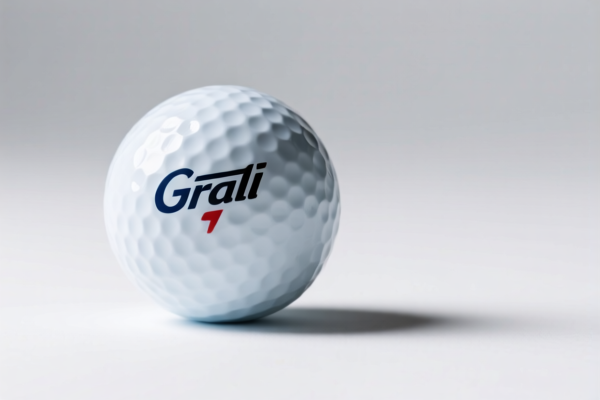
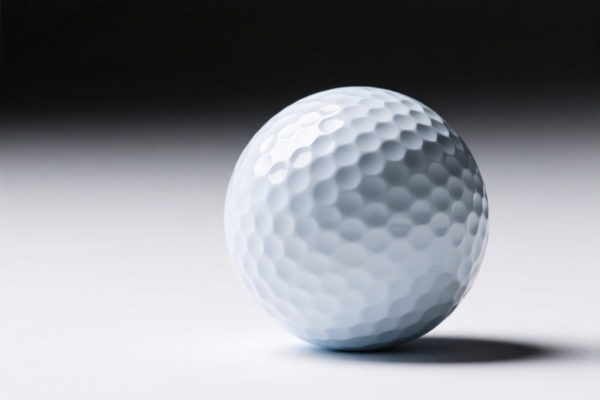
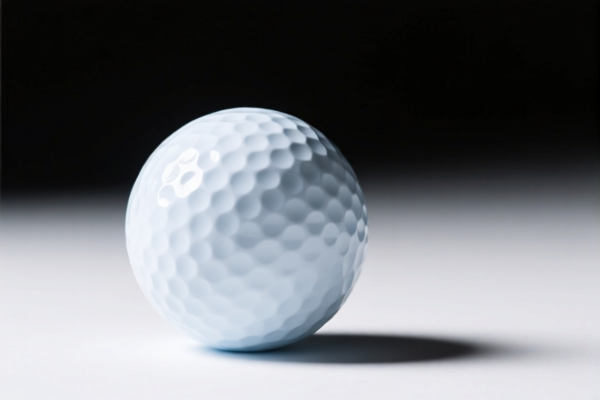
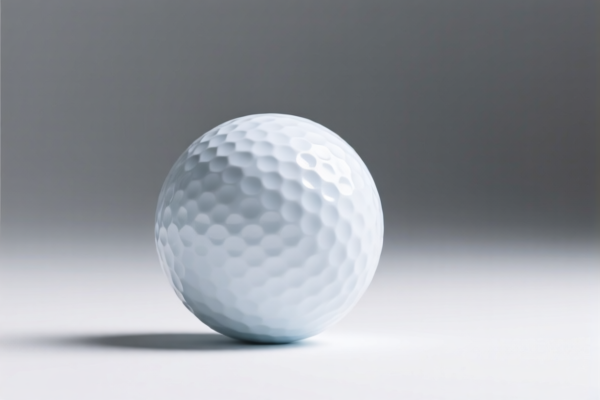
A golf ball is not just a small white sphere; it is a complex composite of core materials, mantle layers, and a cover (typically ionomer or urethane), often encased in dimpled polymeric structures. In international trade, its classification hinges on a critical distinction: Is it classified by its specific use (Golf Equipment) or its primary material (Rubber)?
This distinction dramatically impacts the Total Tax Rate, ranging from 14.3% to 37.5%. Misclassification can lead to significant duty overpayments or customs delays.
⚠️ Key Distinction Point:
- If classified under Chapter 95 (Sports Equipment) → Lower base duty, but subject to Section 301 tariffs.
- If classified under Chapter 40 (Rubber Articles) → Base duties vary significantly (0%–4.9%), but all are subject to heavy additional tariffs.
📦 II. HS Code Classification Details (2026 Latest Tariff Authority Comparison)
| HS Code | Product Description | Classification Logic | Total Tax Rate* |
|---|---|---|---|
4016.99.60.50 |
Other vulcanized rubber articles, not specified elsewhere | Based on material: Vulcanized rubber, general rubber goods category | 37.5% |
9506.32.00.00 |
Golf balls, specifically designated as such | Based on use & form: Specific HS code for Golf Balls | 17.5% |
9506.39.00.80 |
Other golf equipment and accessories | Based on category: Other golf apparatus (fallback for "golf balls") | 22.4% |
4016.99.20.00 |
Other vulcanized rubber articles, made of synthetic rubber/polymers | Based on material: Synthetic rubber or polymer composition | 14.3% |
4016.99.05.00 |
Other unlisted vulcanized rubber articles (Household/Sport Consumer Goods) | Based on material & consumer category: Unlisted rubber items | 20.9% |
📌 Explanation Summary from Data:
-4016.99.60.50: Categorized as "other vulcanized rubber articles."
-9506.32.00.00: Categorized specifically as "Golf balls" based on use and form.
-9506.39.00.80: Categorized as "other golf equipment and accessories."
-4016.99.20.00: Categorized as "other vulcanized rubber articles" made of synthetic rubber or polymers.
-4016.99.05.00: Categorized as "other unlisted vulcanized rubber articles" for household/sport consumer goods.
💰 III. 2026 Latest Tariff Rate Breakdown (Including Surtaxes & Policy Add-ons)
✅ Applicable Country: United States (US)
✅ Origin: China (CN)
✅ Effective Date: Post-November 2025 (Including subsequent imports)
The following table breaks down the Total Tax Rate into its three components: Base Duty, Section 301 Surtax (7.5%-25%), and Section 122/IEEPA Surtax (10%).
🎯 1. 4016.99.60.50 —— Other Vulcanized Rubber Articles
| Item | Details |
|---|---|
| Base Duty | 2.5% |
| Section 301 Surtax | +25.0% |
| Section 122/IEEPA Surtax | +10.0% |
| Total Tax Rate | 37.5% |
| Calculation | CIF Value × 37.5% |
📌 Analysis:
This is the highest tax rate among the options. The high Section 301 rate (25%) combined with the base duty makes this the most expensive classification. Avoid this unless specifically required by material documentation.
🎯 2. 9506.32.00.00 —— Golf Balls (Specific Designation)
| Item | Details |
|---|---|
| Base Duty | 0.0% |
| Section 301 Surtax | +7.5% |
| Section 122/IEEPA Surtax | +10.0% |
| Total Tax Rate | 17.5% |
| Calculation | CIF Value × 17.5% |
📌 Analysis:
This is the most cost-effective classification for standard golf balls. The 0% base duty is offset only by the minimal Section 301 rate (7.5%) and the 10% IEEPA surtax. This is the recommended HS Code for standard golf balls.
🎯 3. 9506.39.00.80 —— Other Golf Equipment
| Item | Details |
|---|---|
| Base Duty | 4.9% |
| Section 301 Surtax | +7.5% |
| Section 122/IEEPA Surtax | +10.0% |
| Total Tax Rate | 22.4% |
| Calculation | CIF Value × 22.4% |
📌 Analysis:
Used if the ball is considered an "accessory" rather than the primary ball itself, or if classification ambiguity exists. The base duty (4.9%) is higher than9506.32, leading to a higher total tax.
🎯 4. 4016.99.20.00 —— Other Vulcanized Rubber Articles (Synthetic/Polymers)
| Item | Details |
|---|---|
| Base Duty | 4.3% |
| Section 301 Surtax | +0.0% |
| Section 122/IEEPA Surtax | +10.0% |
| Total Tax Rate | 14.3% |
| Calculation | CIF Value × 14.3% |
📌 Analysis:
⚠️ Critical Note: This has the lowest total tax (14.3%) because it has 0% Section 301 surtax. However, it is classified under Chapter 40 (Rubber).
Risk: You can only use this if you can prove the golf ball is primarily a "synthetic rubber or polymer article" and not explicitly covered under Chapter 95. Customs may challenge this if the item is clearly identifiable as a golf ball. Use with extreme caution and strong material justification.
🎯 5. 4016.99.05.00 —— Other Unlisted Vulcanized Rubber Articles
| Item | Details |
|---|---|
| Base Duty | 3.4% |
| Section 301 Surtax | +7.5% |
| Section 122/IEEPA Surtax | +10.0% |
| Total Tax Rate | 20.9% |
| Calculation | CIF Value × 20.9% |
📌 Analysis:
A middle-ground option for rubber goods. Higher tax than9506.32and4016.99.20, so generally not recommended for standard golf balls.
🛠️ IV. Customs Clearance Practical Advice (Avoid Pitfalls)
✅ 1. Documentation Checklist (Essential)
| Document | Required | Notes |
|---|---|---|
| Product Spec Sheet | ✔️ | Must detail materials: Core (rubber/plastic), Cover (ionomer/urethane), Dimple structure. |
| Material Declaration | ✔️ | Critical for 4016 codes. Must specify % of synthetic rubber vs. other polymers. |
| Product Photos | ✔️ | Clear images showing the ball, dimples, and any markings. |
| Commercial Invoice | ✔️ | Must clearly state "Golf Ball" and not just "Rubber Item." |
| HS Code Ruling (Optional) | ✔️ | Recommended for 4016.99.20.00 to prove eligibility. |
✅ 2. Declaration Strategy (Key Tips)
🔥 “Be Specific, Be Accurate: Use 9506.32 for Balls, 4016.99.20 for Proof”
| Scenario | Recommended HS Code | Reason |
|---|---|---|
| Standard Golf Balls | 9506.32.00.00 |
Explicitly listed. Low risk, reasonable tax (17.5%). |
| Proving Synthetic Rubber Content | 4016.99.20.00 |
Only if you have lab reports proving >50% synthetic rubber content and intent to classify as rubber article. Lowest tax (14.3%) but high audit risk. |
| Golf Ball Accessories (Tees, Markers) | 9506.39.00.80 |
If the item is not the ball itself. |
| Generic Rubber Balls (Non-Golf) | 4016.99.60.50 |
High tax (37.5%) – avoid if possible. |
✅ 3. Special Considerations
| Situation | Advice |
|---|---|
| Material Change | If the cover changes from Urethane to Ionomer, it may still be Chapter 40. Check lab reports. |
| Customs Audits | If you use 4016.99.20.00 (14.3%), be prepared to provide material composition reports to justify why it’s not 9506.32. |
| Section 301 Exemptions | Check if your specific golf ball manufacturer is on the USITC exemption list for Chapter 95 or 40. |
🌍 V. Global Market Comparison (2026)
| Country/Region | Recommended HS Code | Est. Total Tax (China Origin) | Notes |
|---|---|---|---|
| 🇺🇸 USA | 9506.32.00.00 |
17.5% | Best balance of clarity and cost. |
| 🇺🇸 USA (Alternative) | 4016.99.20.00 |
14.3% | Lower tax, but high risk of reclassification. |
| 🇨🇳 China | 9506.32.00.00 |
~10-15% | Varies by import/export status. |
| 🇪🇺 EU | 9506.32.00.00 |
0% | Often duty-free for sports equipment. |
| 🇬🇧 UK | 9506.32.00.00 |
0% | Post-Brexit tariff schedules often favor sports goods. |
📌 Conclusion:
- The US market has significant Section 301 tariffs.
-9506.32.00.00(17.5%) is the safest and most standard classification.
-4016.99.20.00(14.3%) offers savings but requires strong material evidence to avoid penalties.
📌 VI. Common Mistakes & Pitfalls
❌ Mistake 1: Classifying all rubber items as 4016.99.60.50
👉 Result: 37.5% tax. Unnecessary cost!
❌ Mistake 2: Using 4016.99.20.00 without material proof
👉 Result: Customs reclassifies to 9506.32 + penalties + back taxes.
❌ Mistake 3: Ignoring Section 122/IEEPA 10% Surtax
👉 Result: Underestimating total landed cost by 10%.
✅ Correct Approach:
"Standard Golf Ball, Ionomer Cover, Synthetic Core, 45.93g Diameter, Model XYZ" → Declare as
9506.32.00.00.
🎯 VII. Conclusion: Professional Classification, Cost Optimization!
🎯 Remember the Key Rule:
🔹 "Golf Ball First: 9506.32 (17.5%). Rubber Second: 4016.99.20 (14.3%) with Proof."
🔹 "Avoid 4016.99.60 (37.5%) – It’s a Tax Trap!"
📌 Pro Tip:
If you are importing large volumes, consider applying for a US CBP Advance Ruling for 4016.99.20.00 to legitimize the lower tax rate. This provides legal certainty and prevents future disputes.
📣 Immediate Action:
📞 Contact your customs broker + Provide material composition report + Choose
9506.32.00.00for safety or4016.99.20.00for optimization (with proof).
🚀 Clear customs smoothly, minimize duties, maximize profit!
✨ Professional Classification Starts with Precision!
💼 Every percentage point counts in global trade!
用户评价
关于 HS 编码归类
协调制度(HS)是由世界海关组织(WCO)制定的国际贸易商品分类标准。全球 200 多个国家采用 HS 系统作为海关关税、贸易统计和进出口监管的基础。
每个 HS 编码遵循以下层级结构:
- 章(2 位)——商品大类(例如:第 84 章:机器和机械设备)
- 品目(4 位)——章内的更具体分类
- 子目(6 位)——国际通用细分,所有 WCO 成员国统一使用
- 本国细分(8-10 位)——各国自行扩展的细分编码,如美国 HTSUS 10 位编码
正确的 HS 编码归类对于顺利通关、准确缴纳关税和遵守贸易法规至关重要。错误归类可能导致海关延误、多缴关税或罚款。
从CN进口到US时,适用的关税税率可能包括:
- 最惠国(MFN)税率——适用于 WTO 成员国的标准关税税率
- 普通税率——适用于无贸易协定国家
- 贸易救济关税——附加关税,如 301 条款(反倾销)、232 条款(国家安全)或反补贴税
本页内容仅供参考。如需正式归类,请咨询当地海关或持牌报关代理。