Hand Push Mixer
CN → US| HS编码 | 关税税率 | 原产国 | 目的国 | 文档 |
|---|---|---|---|---|
| 8438909090 | 37.8% | CN | US | 官方文档 |
| 8509400015 | 14.2% | CN | US | 官方文档 |
| 8509400025 | 14.2% | CN | US | 官方文档 |
| 8479820040 | 35.0% | CN | US | 官方文档 |
| 8479820080 | 35.0% | CN | US | 官方文档 |
| 8438800000 | 35.0% | CN | US | 官方文档 |
商品图片
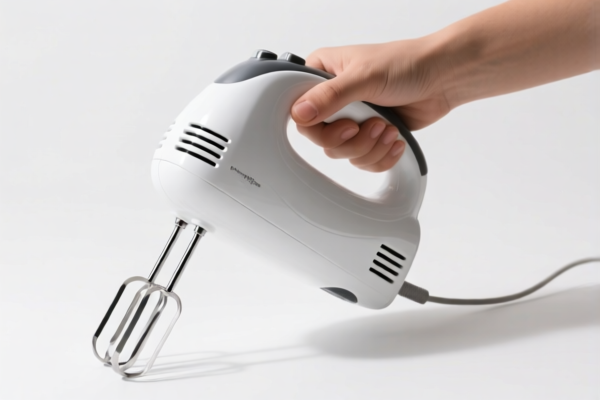
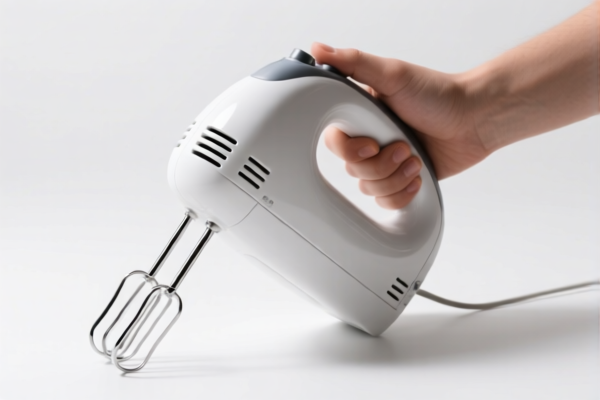
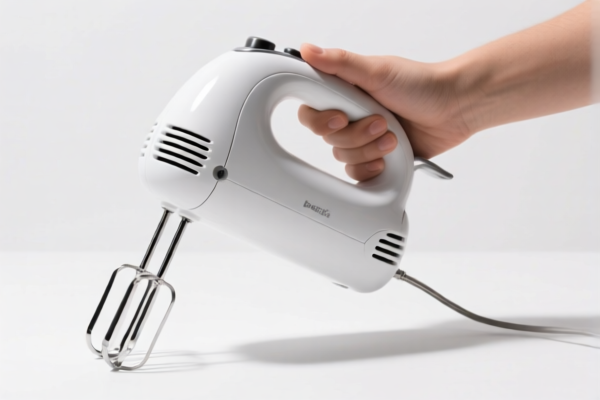

AI分析
🤝 Hand Push Mixer (Industrial/Commercial Blenders & Mixers)
🌐 HS Code Reference & Customs Clearance Guide | 2026 Latest Tariff Analysis | Professional Customs Strategy
📌 I. Product Definition & Classification: Understanding the "Hand Push Mixer"
A "Hand Push Mixer" in international trade typically refers to a mechanical device used for mixing, stirring, or blending materials. Its classification depends heavily on its primary function and application scenario.
In the provided data context, this product spans two main categories: 1. Household/Portable Electric Mixers: Small, user-operated devices for food preparation (e.g., kitchen blenders). 2. Industrial/Commercial Mechanical Mixers: Larger equipment used in food processing, chemical, or manufacturing industries for mixing, kneading, or emulsifying.
⚠️ Key Distinction Point:
- If it is a small, electric appliance for home/kitchen use (food/beverage preparation) → It falls under HS 8509.
- If it is a larger, industrial machine for food production lines or general mechanical mixing → It falls under HS 8438 or HS 8479.
📦 II. HS Code Classification Details (Based on Provided Data)
| HS Code | Product Description | Summary & Logic | Total Tax Rate (China Origin to US) |
|---|---|---|---|
8509.40.00.15 |
Electric Household Blender | Matches "Hand Push Mixer" as a home electric appliance with motor. | 14.2% |
8509.40.00.25 |
Electric Food Blender | Matches "Food Blender" use; no material conflict. | 14.2% |
8438.90.90.90 |
Parts of Food/Bev Machinery | Classified as parts for industrial food/beverage preparation machinery. | 37.8% |
8479.82.00.40 |
Industrial Mixing Machine | Matches "Mixing, kneading, or stirring machines" for general industrial use. | 35.0% |
8479.82.00.80 |
General Mechanical Mixer | Matches "Stirring" function in general purpose machinery. | 35.0% |
8438.80.00.00 |
Industrial Food Machinery | Broad category for food/beverage manufacturing machinery. | 35.0% |
🔍 Key Insight:
- The tax rate varies significantly from 14.2% to 37.8% depending on whether the item is deemed "Household Electric Appliance" (Lower Tax) or "Industrial Mechanical Equipment" (Higher Tax).
- Misclassification Risk: Declaring an industrial mixer as a household blender to save taxes is high-risk if customs inspect the size/power rating.
💰 III. Detailed Tariff Rate Breakdown (2026 Latest)
✅ Applicable Country: United States (US)
✅ Origin: China (CN)
✅ Effective Date: 2025/2026 Current Regulations
🎯 1. 8509.40.00.15 & 8509.40.00.25 —— Household Electric Blenders
These codes apply if the "Hand Push Mixer" is a portable, electric kitchen appliance.
| Item | Content |
|---|---|
| Base Tariff | 4.2% (Ad Valorem) |
| Section 301 Tariff | 0.0% (No additional 25% tariff for these specific subheadings in the provided data) |
| Section 122 Tariff | +10.0% (Surtax on Chinese origin goods) |
| Total Tax Rate | 14.2% |
| Calculation Basis | CIF Value × 14.2% |
| De Minimis Eligibility | ❌ No (Section 122 usually blocks de minimis for these categories) |
| Legal Reference | Base: 4.2% + Sec 122: 10% |
📌 Explanation:
- This is the most cost-effective classification if the product qualifies as a household electric blender.
- The 0% Section 301 status is crucial; many other machinery items attract 25%.
- The 10% Section 122 is a specific surtax for Chinese electronics/appliances.
🎯 2. 8438.90.90.90 —— Parts of Food/Bev Machinery
Applies if the item is sold as spare parts or a component of a larger food processing line.
| Item | Content |
|---|---|
| Base Tariff | 2.8% |
| Section 301 Tariff | +25.0% |
| Section 122 Tariff | +10.0% |
| Total Tax Rate | 37.8% |
| Calculation Basis | CIF Value × 37.8% |
| Legal Reference | Base: 2.8% + Sec 301: 25% + Sec 122: 10% |
📌 Explanation:
- High duty due to 25% Section 301 (Industrial Machinery parts) and 10% Section 122.
- Use only if the item is truly a "part" and not a standalone machine.
🎯 3. 8479.82.00.40 & 8479.82.00.80 —— Industrial Mixing Machines
Applies if the "Hand Push Mixer" is a standalone industrial machine (e.g., concrete mixer, large-scale industrial blender, chemical mixer).
| Item | Content |
|---|---|
| Base Tariff | 0.0% |
| Section 301 Tariff | +25.0% |
| Section 122 Tariff | +10.0% |
| Total Tax Rate | 35.0% |
| Calculation Basis | CIF Value × 35.0% |
| Legal Reference | Base: 0.0% + Sec 301: 25% + Sec 122: 10% |
📌 Explanation:
- Even with 0% base duty, the 25% Section 301 makes this category expensive.
- Applies to general-purpose machinery for mixing/kneading not specifically covered by other food machinery codes.
🎯 4. 8438.80.00.00 —— Other Food/Bev Manufacturing Machinery
Applies to industrial-scale food preparation equipment that doesn't fit other specific food machinery codes.
| Item | Content |
|---|---|
| Base Tariff | 0.0% |
| Section 301 Tariff | +25.0% |
| Section 122 Tariff | +10.0% |
| Total Tax Rate | 35.0% |
| Calculation Basis | CIF Value × 35.0% |
| Legal Reference | Base: 0.0% + Sec 301: 25% + Sec 122: 10% |
📌 Explanation:
- Same tax structure as8479.82.
- Use for specialized food manufacturing equipment (e.g., industrial dough mixers, large beverage blenders).
🛠️ IV. Customs Clearance Practical Advice
✅ 1. Documentation Checklist (Must-Haves)
| Document | Required | Notes |
|---|---|---|
| Product Specifications | ✔️ | Must clearly state: Power (Watts/Volts), Capacity, Motor Type, Intended Use (Home vs. Industrial). |
| Product Photos | ✔️ | Clear images of nameplate, controls, and overall size to distinguish household vs. industrial. |
| Commercial Invoice | ✔️ | Declare precise model, HS Code, and Country of Origin. |
| Packing List | ✔️ | Detail contents to avoid "mixed shipment" issues. |
| User Manual | ✔️ | Helps prove intended use (e.g., "Kitchen Use" vs. "Factory Line Use"). |
| Test Reports | ✔️ | UL/ETL (for US electrical safety) is critical for 8509 codes. |
✅ 2. Classification Strategy (Critical Tips)
| Scenario | Recommended HS Code | Reason |
|---|---|---|
| Small, Electric, Kitchen Use | 8509.40.00.15 or 8509.40.00.25 |
Lowest tax (14.2%). Must be portable/home-use. |
| Industrial Food Line Component | 8438.90.90.90 |
If it's a part, not a full machine. |
| Large Industrial Mixer | 8479.82.00.40 |
General industrial machinery. High tax (35%). |
| Specialized Food Machinery | 8438.80.00.00 |
For specific food processing lines. High tax (35%). |
⚠️ Warning:
- Do not declare an industrial concrete mixer or large chemical blender as a "Kitchen Blender" (8509) to save taxes. Customs may reclassify it, leading to penalties and back-taxes.
- Ensure the motor type and power rating support the claimed classification. Household blenders typically have <1500W and portable designs.
✅ 3. Special Considerations
| Issue | Action |
|---|---|
| Section 122 Surcharge | Applies to almost all Chinese-origin electronics/machinery. Budget for +10%. |
| Section 301 Tariff | Avoids 25% only if classified under 8509. Industrial machinery (8479, 8438) usually attracts 25%. |
| Pre-Ruling | Strongly recommended for high-value shipments. Apply for an Advance Ruling from CBP to confirm HS Code. |
🌍 V. Global Market Comparison (2026)
| Market | Recommended HS Code | Estimated Duty (China Origin) | Key Certifications |
|---|---|---|---|
| 🇺🇸 USA | 8509.40.00.15 |
14.2% (Household) | UL/ETL, FCC |
| 🇺🇸 USA | 8479.82.00.40 |
35.0% (Industrial) | None specific, but safety standards apply |
| 🇪🇺 EU | 8509.40 |
~3.2% + VAT | CE, RoHS |
| 🇨🇳 China | 8509.40 |
~10% (Import Duty) | CCC (if applicable) |
| 🇬🇧 UK | 8509.40 |
~3.2% + VAT | UKCA |
📌 Conclusion:
- The US market is highly sensitive to classification. Choosing8509for eligible products saves ~20-23% in duties compared to industrial codes.
- Electrical Safety Compliance (UL/ETL) is non-negotiable for8509entries into the US.
📌 VI. Common Mistakes & Pitfalls
❌ Mistake 1: Declaring a large, fixed industrial mixer as a "Hand Push Blender"
👉 Consequence: Customs rejects the entry, imposes 35% duty + penalties.
❌ Mistake 2: Ignoring Section 122 Tariff
👉 Consequence: Underpayment of 10% surtax on Chinese goods, leading to audits.
❌ Mistake 3: Missing UL/ETL Certification for 8509
👉 Consequence: Detention at US border. CBP requires proof of electrical safety for household appliances.
✅ Best Practice:
“Electric Hand Blender, 500W, 120V, for Kitchen Food Preparation, Model XYZ, UL Certified, Made in China.”
🎯 VII. Final Recommendations
🎯 Key Takeaway:
🔹 Household vs. Industrial: This is the single most important distinction.
🔹 Tax Savings:8509(14.2%) vs.8479/8438(35-37.8%).
🔹 Documentation: Proof of "Home Use" (manual, photos, size) is essential for8509.
📌 Action Steps:
1. Confirm Product Type: Is it portable/home-use or fixed/industrial?
2. Check Voltage/Power: Must match household standards for 8509.
3. Obtain Safety Certs: UL/ETL for US entry.
4. File Pre-Ruling: For high-volume imports, get CBP confirmation.
📣 Professional Customs Service:
📞 Consult a licensed customs broker.
📄 Prepare complete technical specs and photos.
🚀 Ensure Compliance, Avoid Delays, Maximize Profit!
✨ Accurate Classification is the Key to Smooth Customs Clearance!
💼 Your Bottom Line Depends on the Right HS Code!
用户评价
关于 HS 编码归类
协调制度(HS)是由世界海关组织(WCO)制定的国际贸易商品分类标准。全球 200 多个国家采用 HS 系统作为海关关税、贸易统计和进出口监管的基础。
每个 HS 编码遵循以下层级结构:
- 章(2 位)——商品大类(例如:第 84 章:机器和机械设备)
- 品目(4 位)——章内的更具体分类
- 子目(6 位)——国际通用细分,所有 WCO 成员国统一使用
- 本国细分(8-10 位)——各国自行扩展的细分编码,如美国 HTSUS 10 位编码
正确的 HS 编码归类对于顺利通关、准确缴纳关税和遵守贸易法规至关重要。错误归类可能导致海关延误、多缴关税或罚款。
从CN进口到US时,适用的关税税率可能包括:
- 最惠国(MFN)税率——适用于 WTO 成员国的标准关税税率
- 普通税率——适用于无贸易协定国家
- 贸易救济关税——附加关税,如 301 条款(反倾销)、232 条款(国家安全)或反补贴税
本页内容仅供参考。如需正式归类,请咨询当地海关或持牌报关代理。