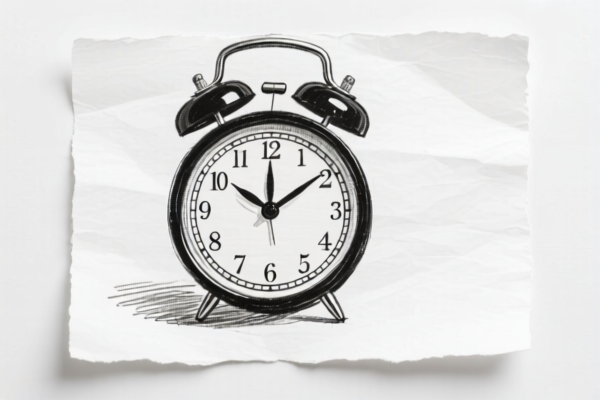
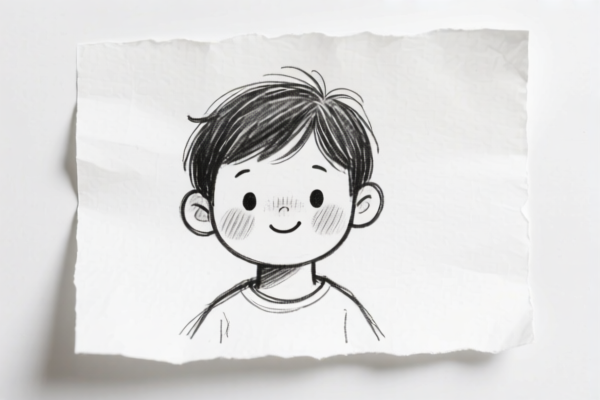
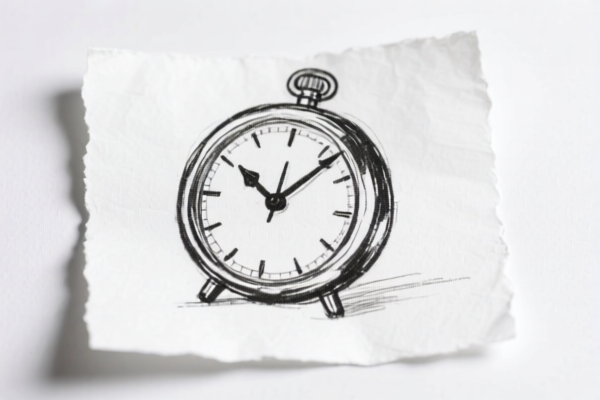
Hand drawn Sketch Paper
CN → US| HS编码 | 关税税率 | 原产国 | 目的国 | 文档 |
|---|---|---|---|---|
| 4911996000 | 17.5% | CN | US | 官方文档 |
| 4820200000 | 35.0% | CN | US | 官方文档 |
| 4820104000 | 35.0% | CN | US | 官方文档 |
| 4911998000 | 17.5% | CN | US | 官方文档 |
| 4817202000 | 35.0% | CN | US | 官方文档 |
| 4817300000 | 35.0% | CN | US | 官方文档 |
商品图片

AI分析
✏️ Hand-Drawn Sketch Paper: The Ultimate HS Code Classification & Customs Clearance Guide
🌐 HS Code Reference & Customs Clearance Guide | 2024-2026 Tariff Analysis | Professional Strategy
📌 I. Product Definition & Classification: Do You Really Know "Sketch Paper"?
Hand-drawn sketch paper is a versatile stationery item, widely used by artists, designers, students, and professionals. In international trade, its classification depends heavily on its specific form, usage, and material structure.
Key Distinctions: - Printed vs. Blank: Is it pre-printed with guides/templates or completely blank? - Format: Is it a loose sheet, a bound notebook, a spiral sketchbook, or a portable pad? - Material: Primarily paper-based, falling under Chapter 48 (Paper) or Chapter 49 (Printed Materials).
⚠️ Critical Classification Point:
- If it is blank or lightly ruled and bound as a notebook → Chapter 48 (Paper Products)
- If it is heavily printed with instructions, patterns, or complex layouts → Chapter 49 (Printed Matter)
- Misclassification Risk: Declaring a bound sketchbook as "loose paper" or vice versa can trigger significant tariff discrepancies and customs delays.
📦 II. HS Code Classification Matrix (Based on Provided Data)
| HS Code | Product Description | Key Characteristics | Total Tax Rate |
|---|---|---|---|
4820.10.40.00 |
Sketchbooks / Notebooks | Paper material, bound form (like a sketchbook), classified as "notebooks and similar articles." | 35.0% |
4820.20.00.00 |
Exercise Books / Notebooks | Paper material, used as exercise books, notebooks, or general stationery. | 35.0% |
4817.20.20.00 |
Letter Cards / Notepads | Paper material, fits the category of letter cards or notepads (stationery). | 35.0% |
4817.30.00.00 |
Book-like Portable Cases | Paper material, shape resembles books/portable cases, used as stationery boxes/portables. | 35.0% |
4911.99.60.00 |
Other Printed Paper | Paper material, classified under printed products, no material conflict. | 17.5% |
4911.99.80.00 |
Sketchbooks as Printed Matter | Paper material, form is a sketchbook, but classified under "other printed products." | 17.5% |
🔍 Analysis of Divergence:
Notice the significant tax difference between 35.0% and 17.5%.
- 35.0% applies when the product is classified strictly as stationery/paper goods (48xx).
- 17.5% applies when the product is classified as printed matter (49xx), even if it's a sketchbook, provided it fits specific "other printed products" criteria.
Strategy: Determining whether your sketchbook is considered "stationery" (48) or "printed matter" (49) is the single most critical factor for cost optimization.
💰 III. 2024-2026 Tariff Rate Breakdown (Detailed Tax Clauses)
✅ Applicable Jurisdiction: United States (US)
✅ Origin: China (CN)
✅ Effective Period: Current trade policies including Section 301 and Section 122 tariffs.
🎯 1. The "Stationery" Category (HS Codes 48xx)
Applies to: 4820.10.40.00, 4820.20.00.00, 4817.20.20.00, 4817.30.00.00
| Tax Component | Rate | Legal Basis / Explanation |
|---|---|---|
| Basic Tariff | 0.0% | Standard MFN duty for many paper products. |
| Section 301 / Additional Tariff | 25.0% | Imposed by USITC under Section 301 of the Trade Act. Applies to many Chinese-origin goods. |
| Section 122 Tariff | 10.0% | Specific additional duty applied to certain Chinese imports (as per provided data). |
| Total Effective Tax | 35.0% | 0% + 25% + 10% |
| De Minimis Eligibility | ❌ No | Section 301 tariffs generally apply even to low-value shipments; de minimis exemption often does not cover 301 goods. |
📌 Explanation:
- The 25% is the core punitive tariff under Section 301.
- The 10% is an additional layer (referenced as "122 Clause" in the data), likely referring to specific administrative trade actions.
- Total 35% is a high burden. Importers must calculate this into their landed cost immediately.
🎯 2. The "Printed Matter" Category (HS Codes 49xx)
Applies to: 4911.99.60.00, 4911.99.80.00
| Tax Component | Rate | Legal Basis / Explanation |
|---|---|---|
| Basic Tariff | 0.0% | Standard MFN duty for printed matter. |
| Section 301 / Additional Tariff | 7.5% | Lower additional duty rate for specific printed goods compared to general stationery. |
| Section 122 Tariff | 10.0% | Additional duty applies here as well. |
| Total Effective Tax | 17.5% | 0% + 7.5% + 10% |
| De Minimis Eligibility | ❌ No | Same restriction as above; 301 goods are typically excluded. |
📌 Explanation:
- The 7.5% additional duty is significantly lower than the 25% in the 48xx category.
- This creates a 17.5% savings opportunity if the product can be legally classified as "printed matter" rather than "stationery."
- Key Factor: Does the sketchbook contain enough printed content (templates, instructions, branding) to qualify under Chapter 49?
🛠️ IV. Customs Clearance Practical Advice (Avoiding Pitfalls)
✅ 1. Preparation Checklist (Must-Have Documents)
| Document | Required? | Purpose |
|---|---|---|
| ✅ Product Specification Sheet | ✔️ | Details: Paper weight (GSM), size, binding type, blank vs. printed content. |
| ✅ Product Photos (Front/Back/Spine) | ✔️ | Visual proof of form factor (e.g., spiral bound vs. glue bound). |
| ✅ Commercial Invoice | ✔️ | Must clearly state: "Hand-Drawn Sketch Paper" and the declared HS Code. |
| ✅ Packing List | ✔️ | Item count, weight, dimensions. |
| ✅ Declaration of Content | ✔️ | Explicitly state if the paper is blank, ruled, or printed with templates. |
✅ 2. Strategic Classification Tips
| Scenario | Recommended HS Code | Reasoning | Tax Rate |
|---|---|---|---|
| Highly Printed Sketchbook (e.g., with drawing guides, step-by-step instructions, heavy branding) |
4911.99.60.00 or 4911.99.80.00 |
Classified as "Printed Matter" due to significant printed content beyond mere ruling. | 17.5% |
| Blank or Lightly Ruled Notebook (e.g., standard artist pad, blank pages, simple spiral binding) |
4820.10.40.00 or 4820.20.00.00 |
Classified as "Stationery/Paper Goods" because the primary function is blank writing surface. | 35.0% |
| Loose Sheets with Instructions | 4911.99.60.00 |
If sold as a package of sheets with printed guides, it may fall under printed matter. | 17.5% |
| Portable Paper Case | 4817.30.00.00 |
If the product is a flat case made of paper for storing loose sheets. | 35.0% |
🔥 Golden Rule:
"Printed Content Dictates Chapter 49; Blank Surface Dictates Chapter 48."
If you can argue that the product's value lies in its printed intellectual content (templates, art guides), aim for 17.5%. If it's essentially blank paper, you are stuck with 35%.
✅ 3. Special Case Handling
| Situation | Advice |
|---|---|
| OEM Custom Sketchbooks | Provide samples to CBP. If the client's logo/instructions are minimal, argue for Chapter 48 (Stationery). If comprehensive, Chapter 49 (Printed) may be risky but cheaper if accepted. |
| Digital vs. Physical | Ensure the product is physical paper. Digital downloads are not subject to these tariffs. |
| Mixed Shipments | Do not mix 48xx and 49xx codes in one shipment without clear segregation. It invites scrutiny. |
🌍 V. Global Market Comparison (2024-2026)
| Market | Recommended HS Code | Estimated Total Duty | Notes |
|---|---|---|---|
| 🇺🇸 USA | 4911.99.80.00 (Preferred) |
17.5% | Try to qualify as printed matter to save 17.5% vs. 35%. |
| 🇨🇳 China | 4820.10.40.00 |
~10-15% | Different tax structure; no Section 301. |
| 🇪🇺 EU | 4820.10.00 |
~6.5% | Standard MFN rate for notebooks; no high punitive tariffs. |
| 🇬🇧 UK | 4820.10.00 |
~6.5% | Post-Brexit tariffs similar to EU for paper goods. |
📌 Conclusion:
- The USA is the highest-cost market due to Section 301 and Section 122 tariffs.
- Classifying as Printed Matter (17.5%) vs. Stationery (35%) is a 17.5% difference in total cost. This is a massive margin impact.
- EU/UK/China do not have these punitive tariffs, making them more favorable for mass market sketch paper.
📌 VI. Common Mistakes & Pitfalls (Lessons Learned)
❌ Mistake 1: Declaring all sketchbooks as 4820.10.40.00 without checking printed content.
👉 Consequence: You pay 35% when you could have paid 17.5% if justified as printed matter. Overpayment by 17.5% of CIF value.
❌ Mistake 2: Declaring blank notebooks as 4911.99.80.00 to save taxes.
👉 Consequence: Customs may reject this classification if there is insufficient printed content. Result: Back-taxes, penalties, and delay.
❌ Mistake 3: Ignoring the "122 Clause" 10% tariff.
👉 Consequence: Many importers only calculate Section 301 (25%) and forget the additional 10%, leading to underpayment and audit risks.
✅ Correct Action:
Conduct a content audit. If >10% of the page area contains printed instructional content, templates, or artistic guides, consider Chapter 49. If <10%, stick to Chapter 48 to avoid misdeclaration risks.
🎯 VII. Conclusion: Optimize Your Classification for Profit
🎯 Key Takeaway:
🔹 Printed = 17.5% (Chapter 49)
🔹 Blank/Standalone = 35% (Chapter 48)
🔹 Difference = 17.5% Savings
📌 Pro Tip:
If your sketchbook includes drawings, tutorials, or templates, explicitly highlight this in the commercial invoice and product description to support a Chapter 49 classification. This is your best lever for reducing customs costs in the US market.
📣 Immediate Action:
📞 Consult a Customs Broker: Provide samples of your sketchbook (printed vs. blank) for a Pre-Ruling Decision.
🚀 Re-evaluate Packaging: If possible, add educational content or templates to justify "Printed Matter" status.
💼 Your Margin Depends on This Classification!
✨ Smart Customs Clearance Starts with Precise Classification!
💼 Don't let 17.5% slip away!
用户评价
关于 HS 编码归类
协调制度(HS)是由世界海关组织(WCO)制定的国际贸易商品分类标准。全球 200 多个国家采用 HS 系统作为海关关税、贸易统计和进出口监管的基础。
每个 HS 编码遵循以下层级结构:
- 章(2 位)——商品大类(例如:第 84 章:机器和机械设备)
- 品目(4 位)——章内的更具体分类
- 子目(6 位)——国际通用细分,所有 WCO 成员国统一使用
- 本国细分(8-10 位)——各国自行扩展的细分编码,如美国 HTSUS 10 位编码
正确的 HS 编码归类对于顺利通关、准确缴纳关税和遵守贸易法规至关重要。错误归类可能导致海关延误、多缴关税或罚款。
从CN进口到US时,适用的关税税率可能包括:
- 最惠国(MFN)税率——适用于 WTO 成员国的标准关税税率
- 普通税率——适用于无贸易协定国家
- 贸易救济关税——附加关税,如 301 条款(反倾销)、232 条款(国家安全)或反补贴税
本页内容仅供参考。如需正式归类,请咨询当地海关或持牌报关代理。