Hand tools of base metal
CN → US| HS编码 | 关税税率 | 原产国 | 目的国 | 文档 |
|---|---|---|---|---|
| 8204110030 | 44.0% | CN | US | 官方文档 |
| 8204120000 | 44.0% | CN | US | 官方文档 |
| 8205100000 | 41.2% | CN | US | 官方文档 |
| 8205598000 | 38.7% | CN | US | 官方文档 |
| 8203202000 | 39.0% | CN | US | 官方文档 |
| 8203103000 | 35.0% | CN | US | 官方文档 |
商品图片
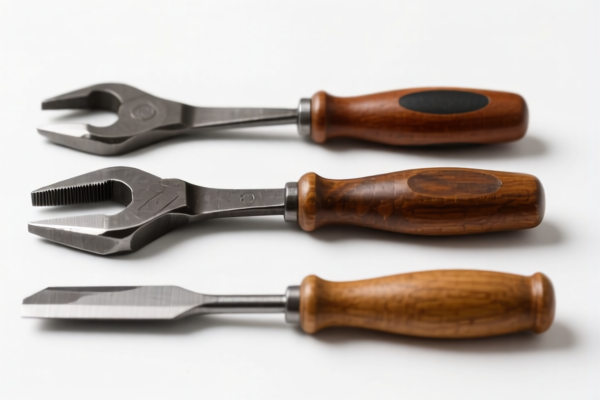
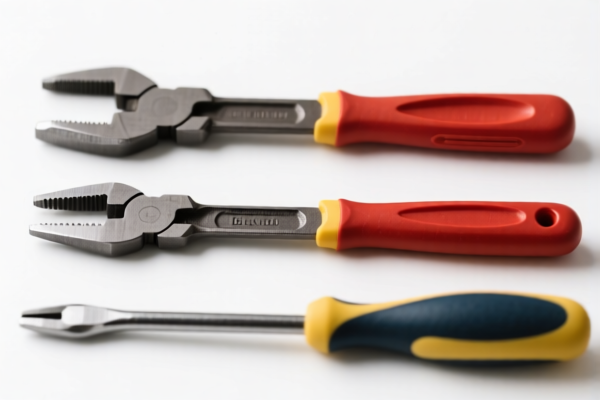
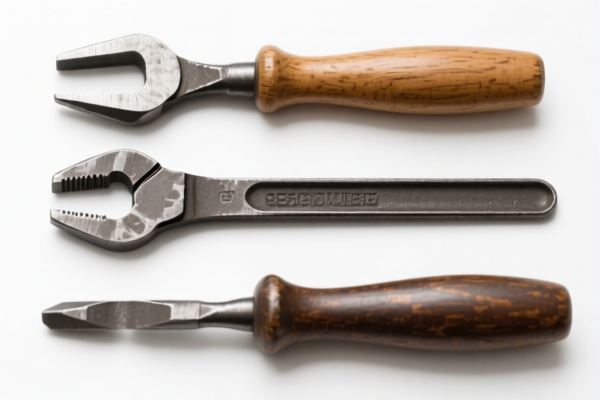
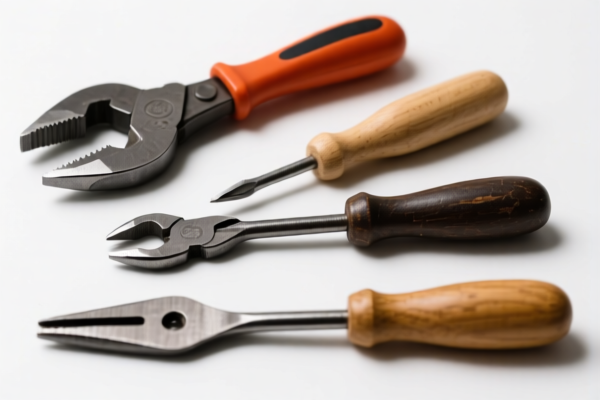
AI分析
🛠️ Hand Tools of Base Metal: The Ultimate HS Code & Duty Clearance Guide (2026 Edition)
🌐 HS Code Reference & Customs Clearance Strategy | Latest 2026 Tariff Analysis | Professional Import Compliance
📌 I. Product Definition & Classification: Are You Categorizing Hand Tools Correctly?
"Hand tools of base metal" is a broad category in international trade, primarily governed by Chapter 82 of the Harmonized System (HS). These tools are defined as instruments operated manually, not by electricity, air, or combustion engines.
In customs classification, they are split into two main families based on their function: 1. Spanners, Wrenches, Pliers, and Similar Tools: These are mechanical fastening/gripping tools (HS Codes 8203, 8204). 2. General Hand Tools: This includes taps, dies, vises, and miscellaneous tools not specified elsewhere (HS Code 8205).
⚠️ Critical Distinction:
- Adjustable vs. Non-Adjustable: For wrenches, this is the #1 determinant of HS code and tax rate.
- Specific vs. General: If a tool fits into a specific sub-category (like pliers or files), it goes there. If not, it goes to "Other Hand Tools" (8205).
- Material: Must be made of base metal (steel, iron, etc.). If the handles are primarily plastic or wood, the tool head still dictates the classification, but ensure the description reflects the base metal component.
📦 II. HS Code Classification Details (2026 Latest Tariff Schedule)
Based on the provided data, here are the specific HS codes for common hand tools of base metal, along with their tax implications.
| HS Code | Product Description | Key Features | Tax Rate (Total) |
|---|---|---|---|
| 8204.11.00.30 | Hand-operated spanners/wrenches (Non-adjustable) | Open-end, box, or combination wrenches. Fixed size. | 34.0% |
| 8204.12.00.00 | Hand-operated spanners/wrenches (Adjustable) | Adjustable wrenches, crescent wrenches. Variable size. | 0.0% |
| 8203.20.20.00 | Tweezers | Precision gripping tools for small parts. | 0.0% |
| 8203.10.30.00 | Files, Rasps (< 11 cm) | Metal cutting/shaping tools. Length under 11 cm. | 25.0% |
| 8205.10.00.00 | Drilling, Threading, or Tapping Tools | Taps, dies, punches for creating threads or holes. | 0.0% |
| 8205.59.80.00 | Other Hand Tools (General) | Vises, clamps, glass cutters, blow torches, or any other manual tool not listed above. | 28.7% |
🔍 Key Takeaway:
- Adjustable wrenches (8204.12) are duty-free (0%), while non-adjustable wrenches (8204.11) face a high 34% duty.
- Tweezers and Tapping Tools are also duty-free.
- Small Files and General Miscellaneous Tools face significant tariffs (25%-28.7%).
💰 III. 2026 Latest Tariff Rate Breakdown (Including Additional Duties)
✅ Applicable Country: United States (US)
✅ Origin: China (CN)
✅ Effective Date: Current policy (Subject to USITC/Section 301 rulings)
🎯 1. 8204.11.00.30 – Non-Adjustable Wrenches (Open/Box/Combination)
| Item | Details |
|---|---|
| Base Tariff | 9.0% |
| Section 301 Additional Tariff | 25.0% |
| Total Tax Rate | 34.0% |
| Calculation | CIF Value × 34.0% |
| De Minimis Exemption? | ❌ NO (Section 301 goods are generally excluded from de minimis) |
| Legal Basis | HTSUS 8204.11.00 + Section 301 Footnote |
📌 Explanation:
- Non-adjustable wrenches are considered "standard" tools and attract the highest penalty due to their strategic importance in manufacturing and construction.
- The 25% additional tariff is applied on top of the 9% base rate.
- Risk: High duty costs significantly impact profit margins for hardware importers.
🎯 2. 8204.12.00.00 – Adjustable Wrenches
| Item | Details |
|---|---|
| Base Tariff | 0.0% |
| Section 301 Additional Tariff | 0.0% |
| Total Tax Rate | 0.0% |
| Calculation | CIF Value × 0% |
| De Minimis Exemption? | ✅ YES (If value is under $800 and not otherwise restricted) |
| Legal Basis | HTSUS 8204.12.00 |
📌 Explanation:
- Adjustable wrenches are often categorized differently due to their versatility and specific manufacturing process, resulting in a zero-duty status.
- Opportunity: If your product line includes adjustable wrenches, this is a much more cost-effective category to import than non-adjustable ones.
🎯 3. 8203.20.20.00 – Tweezers
| Item | Details |
|---|---|
| Base Tariff | 0.0% |
| Section 301 Additional Tariff | 0.0% |
| Total Tax Rate | 0.0% |
| Calculation | CIF Value × 0% |
| De Minimis Exemption? | ✅ YES |
📌 Explanation:
- Precision tools like tweezers are exempt from both base and additional tariffs. Ideal for electronics, medical, or jewelry importers.
🎯 4. 8203.10.30.00 – Files/Rasps (< 11 cm)
| Item | Details |
|---|---|
| Base Tariff | 0.0% |
| Section 301 Additional Tariff | 25.0% |
| Total Tax Rate | 25.0% |
| Calculation | CIF Value × 25.0% |
| De Minimis Exemption? | ❌ NO |
📌 Explanation:
- Small files are subject to the 25% additional tariff. Note that if the file is over 11 cm, it may fall under a different HS code with potentially different rates (check8203.10.90if applicable, but for this data set, we focus on < 11cm).
🎯 5. 8205.10.00.00 – Drilling/Threading/Tapping Tools
| Item | Details |
|---|---|
| Base Tariff | 0.0% |
| Section 301 Additional Tariff | 0.0% |
| Total Tax Rate | 0.0% |
| Calculation | CIF Value × 0% |
| De Minimis Exemption? | ✅ YES |
📌 Explanation:
- Taps and dies are specialized tools for thread creation. They enjoy a 0% duty rate. Ensure your description explicitly mentions "tapping tools" or "threading dies."
🎯 6. 8205.59.80.00 – Other Hand Tools (General)
| Item | Details |
|---|---|
| Base Tariff | 3.7% |
| Section 301 Additional Tariff | 25.0% |
| Total Tax Rate | 28.7% |
| Calculation | CIF Value × 28.7% |
| De Minimis Exemption? | ❌ NO |
📌 Explanation:
- This is the "catch-all" category for hand tools not specifically listed (e.g., vises, clamps, specialized cutters).
- It carries a significant burden: 3.7% base + 25% additional = 28.7%.
- Warning: Misclassifying a specific tool (like a wrench) into this "other" category can lead to customs audits and penalties.
🛠️ IV. Customs Clearance Practical Advice (Real-World Pitfall Guide)
✅ 1. Essential Documentation Checklist
| Document | Required? | Description |
|---|---|---|
| ✅ Product Specification Sheet | ✔️ | Must detail dimensions, material (base metal type), and mechanism (e.g., "non-adjustable"). |
| ✅ Photos of the Product | ✔️ | Clear images showing the tool head, handles, and any adjustable parts. Crucial for proving "adjustable" vs "non-adjustable." |
| ✅ Commercial Invoice | ✔️ | Must match the HS code description exactly. Use terms like "Non-Adjustable Box Wrench" not just "Wrench." |
| ✅ Packing List | ✔️ | List quantities and weights. Ensure no mixing of taxable and non-taxable items in a way that obscures classification. |
| ✅ Origin Certificate | ✔️ | Required to claim preferential rates if applicable (though most of these are subject to Section 301). |
✅ 2. Classification Strategy (Key Mnemonics)
🔥 "Adjustable is Free, Non-Adj is High, Tweezers & Taps Zero, Files & Others Pay!"
| Scenario | Correct HS Code | Duty Rate | Wrong Action | Consequence |
|---|---|---|---|---|
| Open-end Wrench | 8204.11.00.30 |
34% | Classify as "Other Hand Tools" (8205) |
28.7% (Save 5.3%, but risk misclassification audit) |
| Crescent Wrench | 8204.12.00.00 |
0% | Classify as "Non-Adjustable" | 34% (Massive overpayment!) |
| Needle-Nose Pliers | Not listed in Data | See Note | N/A | Pliers usually fall under 8203.10 or 8203.90. Check full schedule. |
| Small File (<11cm) | 8203.10.30.00 |
25% | Classify as "Tool Part" | Incorrect, leads to delays. |
| Tap & Die Set | 8205.10.00.00 |
0% | Classify as "General Tool" | 28.7% (Unnecessary cost) |
📌 Note on Pliers: The provided data only lists "Tweezers" under
8203.20.20.00. Standard Pliers (cutting pliers, combination pliers) typically fall under8203.10or8203.90in the full HS schedule. If your data source only includes Tweezers, ensure you are not misclassifying standard pliers as tweezers.
✅ 3. Special Circumstances
| Situation | Handling Advice |
|---|---|
| Sets of Tools | If a set contains both 0% and 34% items, customs may apply the highest duty rate to the entire set or require separate line-item declarations. Recommendation: Ship separately if possible. |
| OEM/Private Label | Ensure the supplier provides the correct material certification. Base metal must be verified. |
| Wooden Handles | If the tool has a wooden handle, the metal head still determines the HS code. Do not classify as "Wooden Tools." |
| Torque Wrenches | If it's a "torque meter wrench," it falls under 8204.10. Determine if it's adjustable or non-adjustable to apply the correct 0% or 34% rate. |
🌍 V. Global Market Comparison (2026 Snapshot)
| Country/Region | Recommended HS Code | Approx. Duty (China Origin) | Key Requirement |
|---|---|---|---|
| 🇺🇸 USA | 8204.11.00.30 / 8204.12.00.00 |
0% - 34% | Section 301 applies. Detailed description needed. |
| 🇨🇳 China | 8204.11.00.30 / 8204.12.00.00 |
9% - 0% | Base rate applies. No additional Section 301 for imports into China. |
| 🇪🇺 EU | 8204.11 / 8204.12 |
0% - 10% | Check CE marking for safety standards. No Section 301. |
| 🇬🇧 UK | 8204.11 / 8204.12 |
0% - 10% | Post-Brexit tariffs apply. UK Global Tariff (UGT) used. |
📌 Conclusion:
- USA is the most complex market due to the bifurcation of duties based on adjustability and Section 301 tariffs.
- EU/UK/China generally have simpler, lower base rates but require strict safety compliance (CE/UKCA).
📌 VI. Common Errors & Pitfall Guide (Lessons Learned)
❌ Error 1: Calling an adjustable wrench a "wrench" without specifying "adjustable."
👉 Result: Customs may default to the non-adjustable rate (34%) or demand clarification, causing delays.
✅ Fix: Always use "Adjustable Wrench" in the description.
❌ Error 2: Including small files with general hand tools.
👉 Result: Mixing taxable (25%) and non-taxable (0%) items complicates valuation and duty calculation.
✅ Fix: Declare files on a separate line item with the specific HS code 8203.10.30.00.
❌ Error 3: Misclassifying Taps/Dies as "Drilling Tools" under 8205.59.
👉 Result: Paying 28.7% instead of 0%.
✅ Fix: Use the specific code 8205.10.00.00 for threading/tapping tools.
❌ Error 4: Ignoring the "Base Metal" requirement.
👉 Result: If the tool is primarily plastic (e.g., household kitchen tweezers), it may fall under Chapter 39 or 8202, not 8203/8204.
✅ Fix: Verify the material composition. If the functional part is base metal, Chapter 82 is correct.
🎯 VII. Conclusion: Precision Classification Saves Money
🎯 Remember the Golden Rule:
🔹 "Adjustable = 0%, Non-Adjustable = 34%."
🔹 "Tweezers, Taps, Drills = 0%. Files, General Tools = 25-29%."
🔹 "Describe, Don't Guess."
📌 Pro Tip:
For high-volume imports of non-adjustable wrenches, consider:
1. Supply Chain Diversification: Source from countries with FTAs (Free Trade Agreements) if possible.
2. Product Redesign: If feasible, switch to adjustable mechanisms where possible to enjoy the 0% duty rate.
3. Pre-Ruling: Apply for an Advance Ruling from US Customs (CBP) if you have a unique tool design that doesn't clearly fit.
📣 Immediate Action:
📞 Consult a licensed customs broker.
📋 Provide clear photos and specs.
📝 Verify HS codes before shipping.
✨ Accurate Classification = Lower Costs + Faster Clearance!
💼 Your hardware business deserves the right tariff rate!
用户评价
关于 HS 编码归类
协调制度(HS)是由世界海关组织(WCO)制定的国际贸易商品分类标准。全球 200 多个国家采用 HS 系统作为海关关税、贸易统计和进出口监管的基础。
每个 HS 编码遵循以下层级结构:
- 章(2 位)——商品大类(例如:第 84 章:机器和机械设备)
- 品目(4 位)——章内的更具体分类
- 子目(6 位)——国际通用细分,所有 WCO 成员国统一使用
- 本国细分(8-10 位)——各国自行扩展的细分编码,如美国 HTSUS 10 位编码
正确的 HS 编码归类对于顺利通关、准确缴纳关税和遵守贸易法规至关重要。错误归类可能导致海关延误、多缴关税或罚款。
从CN进口到US时,适用的关税税率可能包括:
- 最惠国(MFN)税率——适用于 WTO 成员国的标准关税税率
- 普通税率——适用于无贸易协定国家
- 贸易救济关税——附加关税,如 301 条款(反倾销)、232 条款(国家安全)或反补贴税
本页内容仅供参考。如需正式归类,请咨询当地海关或持牌报关代理。