Handbag Pocket
CN → US| HS编码 | 关税税率 | 原产国 | 目的国 | 文档 |
|---|---|---|---|---|
| 4202228980 | 52.6% | CN | US | 官方文档 |
| 4202923120 | 52.6% | CN | US | 官方文档 |
| 4202923900 | 52.6% | CN | US | 官方文档 |
| 4202224020 | 42.4% | CN | US | 官方文档 |
| 4202228980 | 52.6% | CN | US | 官方文档 |
商品图片
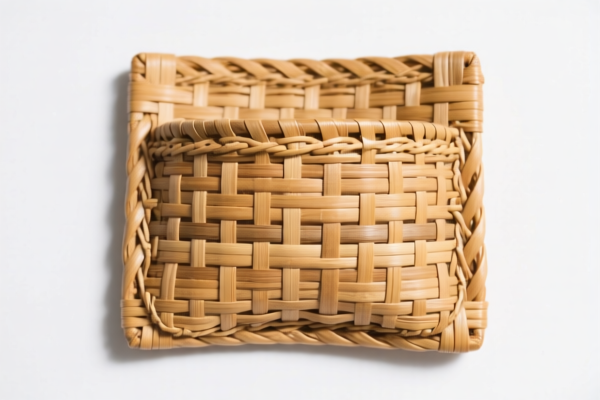
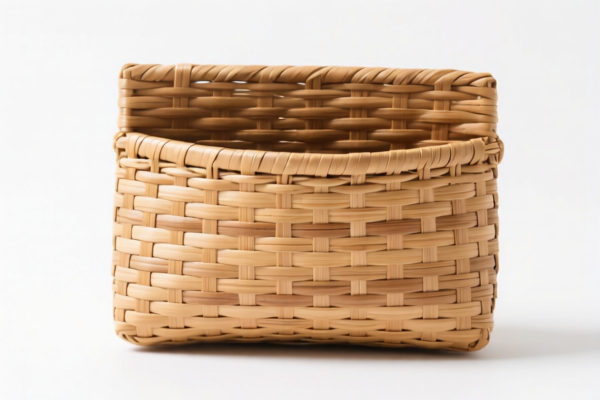
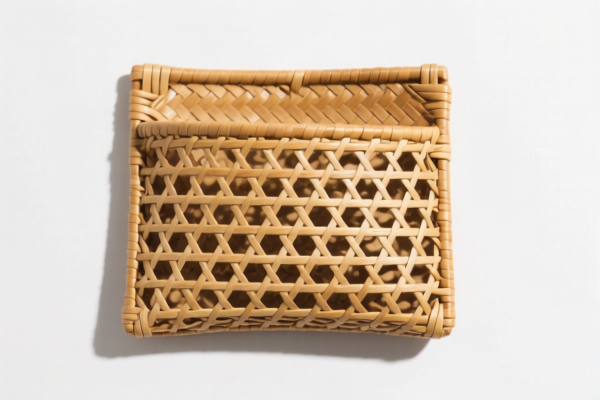
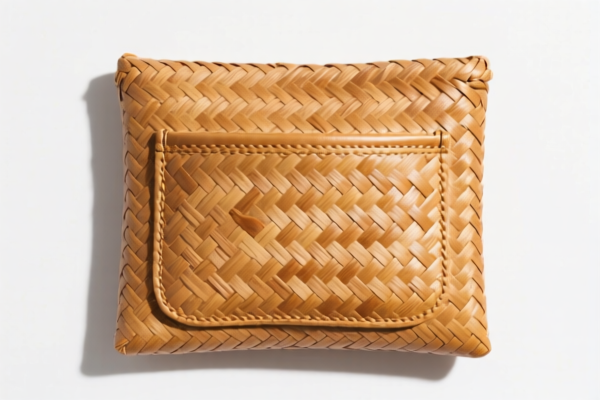
AI分析
👜 Handbag & Pouch (女士手提袋/包)
🌐 HS Code Reference & Customs Clearance Guide | 2026 Latest Tariff Analysis | Professional Clearance Strategy
📌 I. Product Definition & Classification: What Exactly is a "Handbag"?
In international trade, "Handbags" and "Pouches" are primarily classified under Chapter 42 (Articles of Leather; Saddle Harness). The critical determinant for classification is the outer surface material. Based on the provided data, the goods are inferred as being made of Textile Materials (e.g., nylon, polyester, canvas, woven fabrics).
Key Distinctions: * Handbags/Purses with Handles: Items designed to be carried by hand or over the shoulder (e.g., tote bags, clutches). * Backpacks/Rucksacks: Items designed to be worn on the back with straps. * Woven Bags: Specifically those made from plaiting materials (e.g., straw, rattan, or synthetic woven textiles).
⚠️ Critical Classification Point:
- If the item is a standard handbag/shoulder bag made of textile fabric → 4202.22.xxxx
- If the item is a backpack made of textile fabric → 4202.92.xxxx
- If the item is specifically a woven bag (distinct structural appearance) → 4202.22.40.xxxx
📦 II. HS Code Classification Details (2026 Latest Tariff Authority Comparison)
| HS Code | Product Description | Material Inference | Applicability |
|---|---|---|---|
4202.22.89.80 |
Handbags, shopping bags, and similar containers | Textile Material | General women's handbags, totes, clutches not elsewhere specified |
4202.92.31.20 |
Rucksacks (Backpacks) | Textile Material | Women's/Men's backpacks for personal use |
4202.92.39.00 |
Other cases for personal use | Textile Material | Other textile-based bags/backpacks not specifically listed above |
4202.22.40.20 |
Woven bags | Woven Material | Specifically woven structural bags (e.g., straw, raffia, or synthetic weave) |
🔍 Important Note:
- The data explicitly infers the material as Textile for most items. This places them under subheading 4202.22 (with outer surface of textile materials) or 4202.92 (other articles of leather or of sheeting of plastic, or of textile materials). - Do not confuse "Handbags" (4202.22) with "Wallets" (4202.19). Handbags must have handles or a means of carrying.
💰 III. 2026 Latest Tariff Rate Breakdown (Including Surtaxes & Policy Surcharges)
✅ Applicable Country: United States (US)
✅ Origin: China (CN) (Implied by the "Section 301" and "122" tariff details)
✅ Effective Date: Current Trade Policies (Post-2024 adjustments)
🎯 1. 4202.22.89.80 & 4202.92.31.20 & 4202.92.39.00
(Standard Handbags and Backpacks made of Textile)
| Item | Content |
|---|---|
| Base Duty Rate | 17.6% (Ad Valorem) |
| Section 301 Surcharge | +25.0% (List 3/4 Goods) |
| Section 122 Surcharge | +10.0% (Specific to Apparel/Textiles/Accessories from China) |
| Total Effective Rate | 52.6% |
| Tax Calculation | CIF Value × 52.6% |
| De Minimis Exemption | ❌ NOT APPLICABLE |
| Legal Basis Path | HTSUS:4202 → USITC:25% Footnote → USTR:Section 122 Order |
📌 Explanation:
- 17.6%: The standard Most Favored Nation (MFN) duty for textile-based handbags/backpacks. - 25.0%: The Section 301 tariff on Chinese goods, which broadly covers accessories and handbags. - 10.0%: The Section 122 tariff (under the Trump-era order, still enforced under current frameworks for specific textile/accessory categories from China). - Total 52.6%: This is a VERY HIGH effective tariff rate. It significantly impacts profit margins.
🎯 2. 4202.22.40.20
(Woven Bags)
| Item | Content |
|---|---|
| Base Duty Rate | 7.4% (Ad Valorem) |
| Section 301 Surcharge | +25.0% (List 3/4 Goods) |
| Section 122 Surcharge | +10.0% (Specific to Apparel/Textiles/Accessories from China) |
| Total Effective Rate | 42.4% |
| Tax Calculation | CIF Value × 42.4% |
| De Minimis Exemption | ❌ NOT APPLICABLE |
| Legal Basis Path | HTSUS:4202.22.40 → USITC:25% Footnote → USTR:Section 122 Order |
📌 Note:
- While the base rate is lower (7.4% vs 17.6%) due to the specific "woven" classification, the surcharges remain identical. - Total 42.4% is still a heavy burden, but ~10% lower than standard textile handbags.
🛠️ IV. Customs Clearance Practical Advice (Pitfall Avoidance Guide)
✅ 1. Required Documentation Checklist
| Document | Mandatory? | Explanation |
|---|---|---|
| ✅ Commercial Invoice | ✔️ | Must clearly state "Handbag" or "Backpack," material (e.g., "100% Polyester"), and country of origin (China). |
| ✅ Packing List | ✔️ | Detail dimensions and weight. |
| ✅ Product Photos | ✔️ | Crucial: Show the bag’s shape, handles/straps, and lining to prove it is a bag, not a wallet or case. |
| ✅ Material Composition Statement | ✔️ | Explicitly state "Outer Material: Textile." If it has leather trim >10%, classification may change. |
| ✅ Proof of Origin | ✔️ | Confirm China origin to justify Section 122/301 tariffs (and avoid penalties for misdeclaration). |
✅ 2. Declaration Tips (Key Mantras)
🔥 "Material Defines Code, Shape Defines Subheading, Origin Triggers Tax!"
| Scenario | Correct Declaration | Incorrect Practice |
|---|---|---|
| Standard Handbag (Textile) | 4202.22.89.80 | Misdeclare as "Wallet" (4202.19) → Audit Risk |
| Backpack (Textile) | 4202.92.31.20 | Misdeclare as "Laptop Case" (8471.80) → High Penalty |
| Woven Bag (e.g., Straw/Nylon Weave) | 4202.22.40.20 | Misdeclare as "Plastic Bag" → Wrong Base Rate |
| Any Bag (China Origin) | Expect ~52.6% Tax | Assume De Minimis (800 USD) applies → Seizure! |
⚠️ Critical Warning:
- De Minimis (Section 321): Most textile accessories and handbags from China do NOT qualify for the $800 de minimis exemption due to Section 301 and Section 122 restrictions. Full declaration is required.
✅ 3. Special Cases
| Scenario | Handling Advice |
|---|---|
| Mixed Materials (e.g., Leather Trim) | If leather parts exceed 10% of surface area, it may fall under 4202.11 (Leather). This changes the base rate but likely keeps the surcharges. Consult a specialist. |
| OEM/Private Label | Provide authorization letters. Mislabeling as a different brand can lead to IP seizure at US Customs. |
| Samples | Clearly mark as "No Commercial Value" but still pay duty if applicable. Do not under-declare value to evade the 52.6% tax. |
🌍 V. Global Market Clearance Comparison (2026 Latest)
| Country/Region | Recommended HS Code | Estimated Duty (China Origin) | Certification | Notes |
|---|---|---|---|---|
| 🇺🇸 USA | 4202.22.89.80 / 4202.92.31.20 |
52.6% (Handbag) 42.4% (Woven) |
None usually | High Tariff Barrier. Section 122 + 301 apply. |
| 🇨🇳 China | 4202.22.89.80 |
17.6% (Export) | N/A | N/A |
| 🇪🇺 EU | 4202.22.99 |
4.0% - 6.0% | CE (if functional) | No Section 301 equivalent. |
| 🇨🇦 Canada | 4202.22.90.95 |
17.6% + GST | N/A | No major surtaxes. |
| 🇯🇵 Japan | 4202.22.000 |
15.0% | N/A | No surtaxes. |
📌 Conclusion:
- The US market is the most challenging for Chinese-made handbags/backpacks due to the cumulative surcharges (Total ~52.6%). - European and other markets offer significantly lower duty rates, making them more attractive for margin preservation.
📌 VI. Common Errors & Pitfalls (Blood & Tears Lessons)
❌ Error 1: Assuming De Minimis ($800) applies to bags from China.
👉 Consequence: Goods seized, penalties applied. Section 301/122 overrides de minimis for many textile/accessory items.
❌ Error 2: Declaring "Plastic" material when it is actually "Textile."
👉 Consequence: Wrong HS Code (e.g., 3926.90.99). If caught, fraud penalties and retroactive tax adjustments.
❌ Error 3: Ignoring the "Woven" distinction.
👉 Consequence: Missed opportunity to use 4202.22.40.20 (42.4% tax) instead of 4202.22.89.80 (52.6% tax) if the product is truly woven. Save ~10%!
❌ Error 4: Under-declaring value to avoid the 52.6% tax.
👉 Consequence: US CBP is aggressive on Section 122 goods. High risk of audit, lien, and seizure.
✅ Correct Approach:
Declare accurately: "Women’s Handbag, 100% Polyester Textile, China Origin, Model ABC."
Budget for 52.6% duty in your landed cost calculation.
🎯 VII. Conclusion: Professional Clearance, Cost Control, Risk Mitigation!
🎯 Remember the Key Metrics:
🔹 Handbags/Backpacks (Textile): 52.6% Total Duty (17.6% Base + 25% 301 + 10% 122)
🔹 Woven Bags (Textile): 42.4% Total Duty (7.4% Base + 25% 301 + 10% 122)
🔹 De Minimis: DO NOT RELY ON IT for these items from China.
📌 Pro Tip:
If your margin cannot absorb the 52.6% US duty, consider:
1. Manufacturing in a Non-Chapter 42 Exempt Country (e.g., Vietnam, Mexico) to avoid Section 122/301 (if rules of origin are met).
2. Pre-Arranging Advance Rulings to confirm the "Woven" status (4202.22.40.20) if applicable, saving 10.2% in duties.
3. Repricing Strategy: Factor the full 52.6% into the US retail price.
📣 Immediate Action:
📞 Engage a US Customs Broker before shipping.
📄 Provide exact material specs to verify the 42.4% vs 52.6% classification.
🚀 Plan your cash flow for high duties to ensure smooth US port clearance!
✨ Professional Customs Clearance Starts with Accurate Classification!
💼 Your Profit Margin Depends on Getting the HS Code Right!
用户评价
关于 HS 编码归类
协调制度(HS)是由世界海关组织(WCO)制定的国际贸易商品分类标准。全球 200 多个国家采用 HS 系统作为海关关税、贸易统计和进出口监管的基础。
每个 HS 编码遵循以下层级结构:
- 章(2 位)——商品大类(例如:第 84 章:机器和机械设备)
- 品目(4 位)——章内的更具体分类
- 子目(6 位)——国际通用细分,所有 WCO 成员国统一使用
- 本国细分(8-10 位)——各国自行扩展的细分编码,如美国 HTSUS 10 位编码
正确的 HS 编码归类对于顺利通关、准确缴纳关税和遵守贸易法规至关重要。错误归类可能导致海关延误、多缴关税或罚款。
从CN进口到US时,适用的关税税率可能包括:
- 最惠国(MFN)税率——适用于 WTO 成员国的标准关税税率
- 普通税率——适用于无贸易协定国家
- 贸易救济关税——附加关税,如 301 条款(反倾销)、232 条款(国家安全)或反补贴税
本页内容仅供参考。如需正式归类,请咨询当地海关或持牌报关代理。