Handheld Vacuum Cleaner
CN → US| HS编码 | 关税税率 | 原产国 | 目的国 | 文档 |
|---|---|---|---|---|
| 8508600000 | 35.0% | CN | US | 官方文档 |
| 8508190000 | 35.0% | CN | US | 官方文档 |
| 8509805080 | 14.2% | CN | US | 官方文档 |
| 8479896500 | 20.3% | CN | US | 官方文档 |
| 8479897000 | 35.0% | CN | US | 官方文档 |
商品图片
AI分析
🌪️ Handheld Vacuum Cleaner (Portable Cleaning Devices)
🌐 HS Code Reference & Customs Clearance Guide | 2026 Latest Tariff Analysis | Professional Clearance Strategy
📌 I. Product Definition & Classification: Do You Really Understand "Handheld Vacuums"?
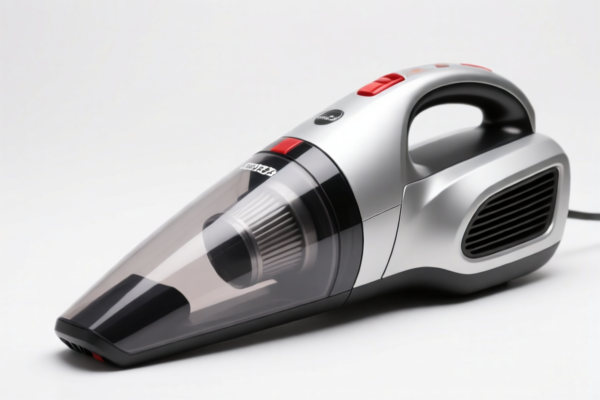
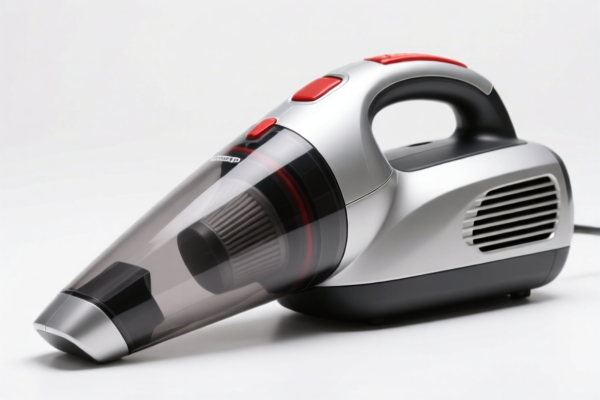
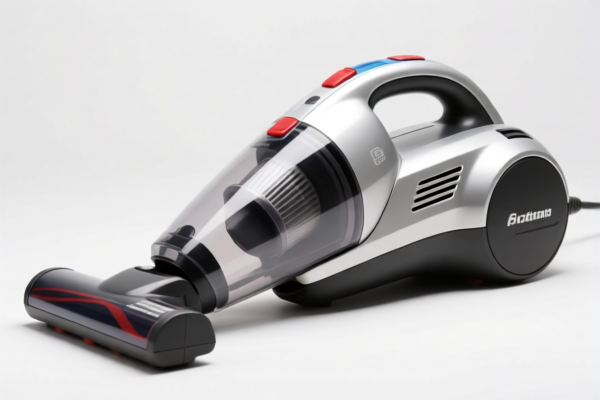
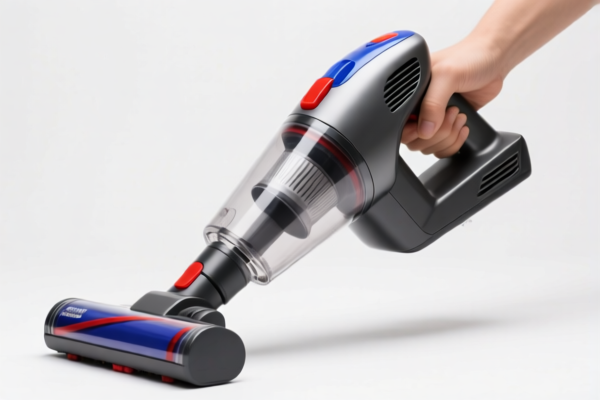
A handheld vacuum cleaner is a portable, battery-powered or corded electrical appliance designed for quick, spot cleaning of surfaces, upholstery, and tight spaces. In international trade, its classification depends heavily on its internal structure, motor integration, and primary function.
There are two main ways customs authorities view these devices: 1. As a Specialized Cleaning Appliance: Treated strictly as a "Vacuum Cleaner" (Heading 8508). 2. As a General Mechanical/Appliance Device: Treated as a "General Mechanical Apparatus" or "Household Appliance" (Headings 8509 or 8479).
⚠️ Key Distinction Point:
- If it is specifically designed and marketed as a vacuum cleaner (suction-based cleaning) with a self-contained motor → Often falls under 8508.
- If it is considered a general-purpose mechanical tool or a small household appliance not strictly defined as a vacuum in the specific national tariff line → May fall under 8509 or 8479.
- Crucial Note: Misclassification leads to significant tariff differences (from 14.2% to 35%).
📦 II. HS Code Classification Details (2026 Latest Tariff Authority Cross-Reference)
| HS Code | Product Description | Application Scenario | Key Classification Logic |
|---|---|---|---|
8508.60.00.00 |
Other Vacuum Cleaners | Handheld vacuums classified under the general "Vacuum Cleaner" umbrella | ✅ Fits "Vacuum Cleaner" category broadly |
8508.19.00.00 |
Vacuum Cleaners: Other, with Self-Contained Electric Motor | Handheld units explicitly categorized under "Other" vacuum types with internal motors | ✅ Fits "Vacuum Cleaner" + "Self-Contained Motor" |
8509.80.50.80 |
Electromechanical Domestic Appliances: Other Apparatus | Handheld vacuums classified as general small electromechanical household devices | ✅ Fits "Small Mechanical Household Appliance" |
8479.89.65.00 |
Machinery with Self-Contained Electric Motor: Other | Handheld vacuums viewed as independent mechanical apparatus | ✅ Fits "Independent Mechanical Function" |
8479.89.70.00 |
Machinery: Carpet Sweeper/Runner Type | Handheld vacuums viewed as carpet cleaning tools (specialized mechanical function) | ✅ Fits "Carpet Sweeper/Cleaner Function" |
🔍 Important Reminder:
- 8508 Codes are the most "standard" for vacuums but currently attract the highest combined tariffs (35%) due to specific trade measures. - 8509.80.50.80 offers the lowest tax burden (14.2%) but requires convincing customs that it is a "general appliance" rather than a specialized vacuum. - 8479 Codes represent a middle ground or alternative interpretation of "mechanical cleaning tools."
💰 III. 2026 Latest Tariff Rate Detailed Breakdown (Including Additional Taxes)
✅ Applicable Country: United States (US)
✅ Origin: China (CN)
✅ Effective Time: 2025/2026 Period (Subject to ongoing trade policy updates)
🎯 1. 8508.60.00.00 & 8508.19.00.00 —— Vacuum Cleaners (High Tariff Zone)
| Item | Detail |
|---|---|
| Base Tariff | 0.0% (Ad Valorem) |
| USITC Additional Tariff (Section 301) | +25.0% |
| 122 Clause Tariff | +10.0% |
| Total Effective Rate | 35.0% |
| Tax Calculation | CIF Value × 35% |
| De Minimis Exemption | ❌ Not Eligible |
| Legal Basis Path | USITC:8508.19.00.00 → Section 301: 25% → Clause 122: 10% |
📌 Explanation:
- These HS codes are classified under Chapter 85 (Electrical Machinery).
- The 25% Section 301 tariff applies to most Chinese-origin electrical goods.
- The 10% "122 Clause" tariff is a specific additional duty applicable to certain goods from China.
- Total 35% is a significant cost burden. This is the standard classification for "Vacuum Cleaners" but is financially challenging.
🎯 2. 8509.80.50.80 —— Electromechanical Household Appliances (Low Tariff Zone)
| Item | Detail |
|---|---|
| Base Tariff | 4.2% (Ad Valorem) |
| USITC Additional Tariff (Section 301) | 0.0% (Exempt/Not Applicable for this specific subheading) |
| 122 Clause Tariff | +10.0% |
| Total Effective Rate | 14.2% |
| Tax Calculation | CIF Value × 14.2% |
| De Minimis Exemption | ❌ Not Eligible (Check specific de minimis thresholds) |
| Legal Basis Path | USITC:8509.80.50.80 → Clause 122: 10% |
📌 Explanation:
- This code falls under Chapter 85 (Household Appliances) but is categorized as "Other."
- Crucially, it avoids the 25% Section 301 tariff, reducing the burden significantly.
- The 10% Clause 122 still applies.
- Total 14.2% is the most cost-effective option, but requires precise product description to avoid being reclassified as a vacuum cleaner.
🎯 3. 8479.89.65.00 & 8479.89.70.00 —— Machinery (Mid-Tariff Zone)
| Item | Detail |
|---|---|
| Base Tariff | 2.8% (for 65) / 0.0% (for 70) |
| USITC Additional Tariff (Section 301) | 7.5% (for 65) / 25.0% (for 70) |
| 122 Clause Tariff | +10.0% |
| Total Effective Rate | 20.3% (65) / 35.0% (70) |
| Tax Calculation | CIF Value × 20.3% / 35.0% |
| De Minimis Exemption | ❌ Not Eligible |
| Legal Basis Path | USITC:8479.89.65.00 → Section 301: 7.5% → Clause 122: 10% |
📌 Explanation:
- 8479.89.65.00: Classified as "Other Machinery." It benefits from a lower Section 301 rate (7.5%) compared to the vacuum codes.
- 8479.89.70.00: Classified as "Carpet Sweeper," which triggers the full 25% Section 301 tariff, resulting in 35% (same as 8508).
- Recommendation: If choosing the 8479 route, 8479.89.65.00 is preferable for cost savings.
🛠️ IV. Customs Clearance Practical Advice (Avoid Pitfalls)
✅ 1. Documentation Checklist (Essential)
| Document | Required | Purpose |
|---|---|---|
| ✅ Product Specification Sheet | ✔️ | Details motor power, battery type, suction power, weight. |
| ✅ Product Photos (Clear) | ✔️ | Show the entire unit, labels, and usage context. |
| ✅ Commercial Invoice | ✔️ | Must match the HS Code description exactly. |
| ✅ Packing List | ✔️ | List all accessories (nozzles, chargers, bags). |
| ✅ Certifications | ✔️ | FCC (for electronics), UL/ETL (for safety), RoHS. |
| ✅ Origin Certificate | ✔️ | Proof of manufacturing origin (China). |
✅ 2. Classification Strategy (Key Tips)
🔥 "Describe Function, Not Just Name"
| Scenario | Recommended HS Code | Risk Level |
|---|---|---|
| Standard Handheld Vacuum (Clearly a vacuum) | 8508.19.00.00 or 8508.60.00.00 |
High Tariff (35%) but Low Audit Risk |
| Multi-Tool Cleaning Device (Vacuum + Blower + Brush) | 8509.80.50.80 |
Low Tariff (14.2%) but High Audit Risk |
| Industrial Carpet Cleaner (Small, mechanical) | 8479.89.65.00 |
Mid Tariff (20.3%) |
📌 Critical Advice:
- If you classify as8509.80.50.80(14.2%), ensure your product name and description do not overly emphasize "Vacuum Cleaner." Use terms like "Portable Cleaning Appliance," "Mini Cleaning Device," or "Electromechanical Dust Remover."
- If you classify as8508, you must accept the 35% tariff.
- Do not misdeclare a vacuum cleaner as a "General Appliance" without substantial evidence of non-vacuum primary functions. Customs may reclassify and penalize.
✅ 3. Special Case Handling
| Situation | Handling Advice |
|---|---|
| OEM/White Label Products | Ensure the supplier provides accurate technical specs. Do not assume the HS code is the same as previous orders. |
| Battery-Operated Devices | Must declare battery type (Li-ion, Ni-MH) and watt-hour (Wh) rating for shipping compliance (IATA/IMDG). |
| Accessories Sold Separately | Charge bags, filters, and nozzles should be classified separately (often under 8508.90 or 8479.90) to optimize costs if possible. |
🌍 V. Global Market Comparison (2026 Perspective)
| Country/Region | Recommended HS Code | Estimated Total Duty (China Origin) | Key Certification | Note |
|---|---|---|---|---|
| 🇺🇸 USA | 8508.19.00.00 |
35.0% | FCC, UL | High tariff due to Section 301 + Clause 122 |
| 🇺🇸 USA | 8509.80.50.80 |
14.2% | FCC, UL | Lower tariff, but higher classification risk |
| 🇪🇺 EU | 8508.70 |
~0-6% + VAT | CE, RoHS | No Section 301 equivalent; VAT applies |
| 🇨🇳 China | 8508.70 |
~10-15% | CCC (if applicable) | Domestic market rates differ |
📌 Conclusion:
- The US market is the most challenging due to the 122 Clause and Section 301 tariffs.
- Cost Optimization: Try to justify8509.80.50.80(14.2%) if the product has multifunctional features beyond simple vacuuming.
- Risk Management: If the product is exclusively a vacuum cleaner,8508(35%) is the safest legal classification, despite the high cost.
📌 VI. Common Mistakes & Pitfalls (Lessons Learned)
❌ Mistake 1: Assuming all "Cleaners" are vacuum cleaners.
👉 Consequence: Using 8509 for a pure vacuum cleaner may lead to customs audits, back-taxes, and penalties.
❌ Mistake 2: Ignoring the 122 Clause.
👉 Consequence: Underestimating the total tariff by 10%. Even if Section 301 is avoided, Clause 122 may still apply.
❌ Mistake 3: Splitting shipments to avoid de minimis.
👉 Consequence: Handheld vacuums often exceed the $800 de minimis threshold when shipped in bulk. If under threshold, ensure the product is correctly classified to avoid "frustration" penalties.
✅ Correct Approach:
"Portable Electromechanical Cleaning Device, Model XYZ, 12V Li-ion Battery, Suction Power 5000Pa, FCC Certified."
🎯 VII. Conclusion: Professional Classification Saves Money!
🎯 Remember:
🔹 "Vacuum Cleaner = 35% Tax (Safe)"
🔹 "General Appliance = 14.2% Tax (Risky but Cheaper)"
🔹 "Mechanical Tool = 20.3% Tax (Middle Ground)"🔹 "HS Code is Life. Tariff Difference is Profit."
📌 Tip:
If you are importing large volumes, consider applying for an Advance Ruling from US Customs (CBP) to lock in the HS Code classification before shipment. This provides legal certainty for the 14.2% vs. 35% decision.
📣 Immediate Action:
📞 Consult a Licensed Customs Broker
📋 Provide Product Images & Specs
🚀 Choose the Right HS Code: Balance Risk vs. Cost
✨ Precise Classification is the First Step to Successful Clearance!
💼 Every Percent of Tax Saved is Pure Profit!
用户评价
关于 HS 编码归类
协调制度(HS)是由世界海关组织(WCO)制定的国际贸易商品分类标准。全球 200 多个国家采用 HS 系统作为海关关税、贸易统计和进出口监管的基础。
每个 HS 编码遵循以下层级结构:
- 章(2 位)——商品大类(例如:第 84 章:机器和机械设备)
- 品目(4 位)——章内的更具体分类
- 子目(6 位)——国际通用细分,所有 WCO 成员国统一使用
- 本国细分(8-10 位)——各国自行扩展的细分编码,如美国 HTSUS 10 位编码
正确的 HS 编码归类对于顺利通关、准确缴纳关税和遵守贸易法规至关重要。错误归类可能导致海关延误、多缴关税或罚款。
从CN进口到US时,适用的关税税率可能包括:
- 最惠国(MFN)税率——适用于 WTO 成员国的标准关税税率
- 普通税率——适用于无贸易协定国家
- 贸易救济关税——附加关税,如 301 条款(反倾销)、232 条款(国家安全)或反补贴税
本页内容仅供参考。如需正式归类,请咨询当地海关或持牌报关代理。