Handle Sensor
CN → US商品图片
AI分析
🖐️ Handle Sensor (Handle Position / Presence Sensor)
🌐 HS Code Reference & Customs Clearance Guide | 2026 Latest Tariff Analysis | Professional-Level Strategy
📌 Part I: Product Definition & Classification: Do You Really Know a "Handle Sensor"?
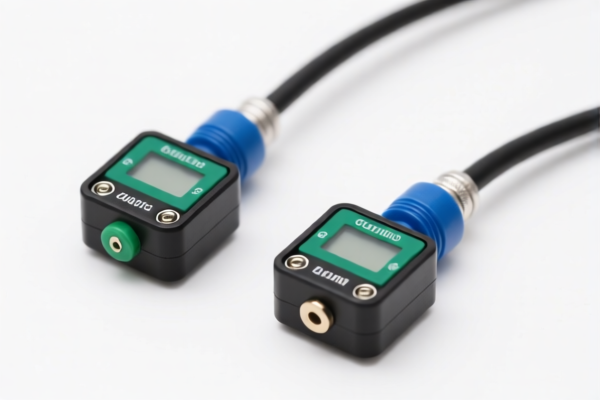
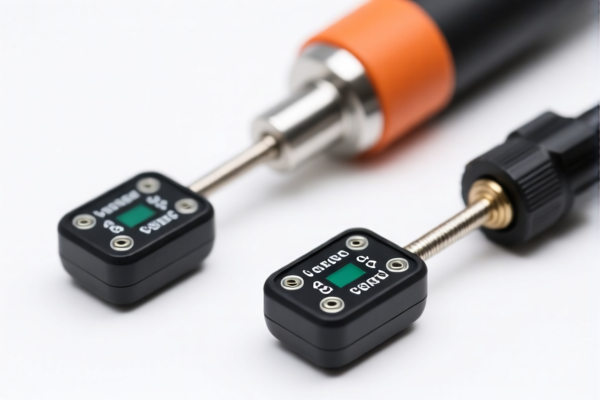
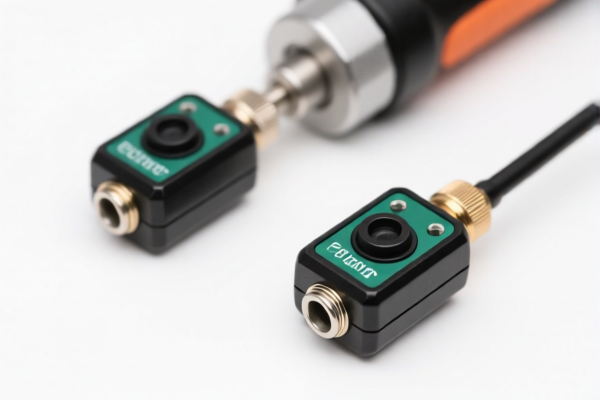
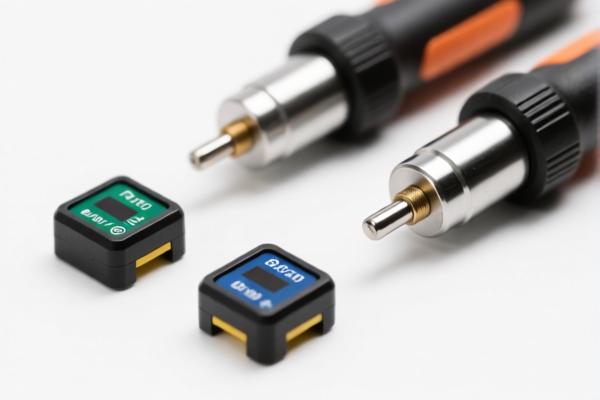
A Handle Sensor is typically an electromechanical device used to detect the position (open/closed) or presence of a handle, door, or latch. It is widely used in: - Automotive Industry: Door ajar sensors, trunk handle sensors. - Smart Home/Security: Door/window contact sensors, smart lock handles. - Industrial Automation: Safety interlock switches for machine guards.
In international trade, these are NOT classified as simple "sensors" under general headings. They are usually classified based on their specific application (e.g., for vehicles) or as electric circuits/devices if general-purpose.
⚠️ Key Distinction Points:
- If specifically designed for automotive vehicles (e.g., car door handle sensor) → Classify under Chapter 85 (Electrical Machinery) or Chapter 87 (Vehicles) depending on integration.
- If it is a standalone electric sensor/switch (e.g., reed switch, Hall effect sensor for general use) → Classify under 8536.
- If it is an optical sensor (IR beam break) → Classify under 8541 or 8501 depending on construction.
📦 Part II: HS Code Classification Details (2026 Latest Tariff Authority Comparison)
| HS Code | Product Description | Application Scenario | Key Feature |
|---|---|---|---|
8536.50.40.90 |
Other relays, circuit breakers, and switches (including proximity sensors, limit switches) | Industrial limit switches, door contact switches, automotive handle switches | ✅ Electric mechanical/electronic switch |
8541.40.40.00 |
Photoelectric cells, phototransistors, and other photoelectric devices | Optical handle sensors (IR/LED based) | ✅ Optical/Electronic component |
8543.70.99.90 |
Electrical machines and apparatus, having individual functions, not specified elsewhere | General-purpose smart sensor modules with embedded microcontrollers | ✅ Integrated circuit/function |
8708.99.99.00 |
Parts and accessories for motor vehicles (if strictly for automotive) | OEM car door handle position sensors | ✅ Automotive part |
9031.80.80.00 |
Measuring or checking instruments, appliances and machines (not specified elsewhere) | High-precision industrial handle position measurement devices | ✅ Precision measurement |
🔍 Key Reminder:
- Automotive-specific sensors often fall under 8536 (as electrical switches/circuits) or 8708 (as parts). However, US Customs often prefers 8536.50.40 for electric switches/sensors used in cars unless they are purely mechanical.
- Non-automotive general sensors (e.g., for smart locks) are typically classified under 8536.50.40 (as electric switches) or 8543.70 (if complex).
- Optical sensors fall under 8541.
💰 Part III: 2026 Latest Tariff Rate Details (Including Additional Taxes)
✅ Applicable Country: United States (US)
✅ Country of Origin: China (CN)
✅ Effective Date: November 10, 2025 onwards (including subsequent imports)
🎯 1. 8536.50.40.90 —— Electric Switches / Relays / Proximity Sensors
| Item | Content |
|---|---|
| Base Rate | 2.5% (ad valorem) |
| USITC Additional Tax (Section 301) | +25% (Footnote 9903.88.01) |
| IEEPA Additional Tax | +10% (针对中国/香港产品,自2025年11月10日起) |
| Total Rate | 37.5% |
| Tax Calculation | CIF Value × 37.5% |
| De Minimis Exemption Available? | ❌ No (deny_de_minimis) |
| Legal Basis Path | IEEPA:9903.01.25 → IEEPA:9903.01.24 → USITC:8536.50.40.90 → FOOTNOTE:9903.88.01 |
📌 Explanation:
- "USITC 25%" is from the US Trade Act Section 301;
- "IEEPA 10%" is the additional tariff on Chinese/HK products under the International Emergency Economic Powers Act;
- Total 37.5%, which is high, must be factored into cost planning!
🎯 2. 8541.40.40.00 —— Photoelectric Devices (Optical Sensors)
| Item | Content |
|---|---|
| Base Rate | 3.4% (ad valorem) |
| USITC Additional Tax (Section 301) | +25% (Footnote 9903.88.01) |
| IEEPA Additional Tax | +10% |
| Total Rate | 38.4% |
| Tax Calculation | CIF Value × 38.4% |
| De Minimis Exemption Available? | ❌ No (deny_de_minimis) |
| Legal Basis Path | IEEPA:9903.01.25 → IEEPA:9903.01.24 → USITC:8541.40.40.00 → FOOTNOTE:9903.88.01 |
📌 Note:
- Slightly higher base rate due to optical component classification;
- Applies to IR handle sensors, laser position sensors, etc.
🎯 3. 8708.99.99.00 —— Auto Parts (If Declared as Automotive Parts)
| Item | Content |
|---|---|
| Base Rate | 2.5% (ad valorem) |
| USITC Additional Tax (Section 301) | +25% |
| IEEPA Additional Tax | +10% |
| Total Rate | 37.5% |
| Tax Calculation | CIF Value × 37.5% |
| De Minimis Exemption Available? | ❌ No (deny_de_minimis) |
⚠️ Risk: If US Customs determines the sensor is not "primarily for automotive use" (e.g., it's a general-purpose smart lock sensor), you may face reclassification to 8536, leading to back taxes and penalties.
🛠️ Part IV: Customs Clearance Practical Advice (Battle-Tested Pitfall Avoidance)
✅ 1. Required Documentation Checklist (No Exceptions)
| Document | Mandatory | Description |
|---|---|---|
| ✅ Product Specification Sheet | ✔️ | Includes sensor type (Hall/IR/Reed), voltage, output signal, operating temperature |
| ✅ Circuit Diagram / Schematic | ✔️ | Crucial to prove if it's a simple switch (8536) or complex device (8543) |
| ✅ Product Photos (Clear Labels) | ✔️ | Show model, brand, input/output specs, connector type |
| ✅ Third-Party Test Reports | ✔️ | FCC, CE, RoHS, UL (if applicable for electrical safety) |
| ✅ Commercial Invoice | ✔️ | Must clearly state "Electric Handle Sensor for [Application]" |
| ✅ Certificate of Origin (CO) | ✔️ | If not Chinese origin, apply for preferential rates |
| ✅ Packing List | ✔️ | Detail contents to avoid "undelivered goods" claims |
✅ 2. Declaration Tips (Key Mantra)
🔥 "Function Defines Code, Application Matters, Be Specific or Pay More!"
| Situation | Correct Declaration | Wrong Practice |
|---|---|---|
| Car Door Handle Sensor | 8536.50.40.90 (Electric Switch) |
Declaring as "Auto Part" (8708) without proof → 37.5% vs potential reclassification risk |
| Smart Lock Handle Sensor | 8536.50.40.90 or 8543.70.99.90 |
Declaring as "Electronic Component" vaguely → Delays |
| IR Handle Sensor | 8541.40.40.00 |
Declaring as "Switch" → Wrong classification, 38.4% base vs 2.5% base |
| Generic Reed Switch | 8536.50.40.90 |
Declaring as "Hardware" → Wrong chapter |
✅ 3. Special Case Handling
| Situation | Handling Advice |
|---|---|
| OEM Sensors for Car Brands | Provide OEM purchase order + technical drawings to support automotive classification if beneficial |
| Sensor + Housing + Wiring Harness | Declare as set if marketed together. If separate, declare individually |
| Smart Sensors with Bluetooth/Wi-Fi | May require FCC ID documentation. Ensure it's declared under 8543 or 8536 with proper certification |
| Sensor for Industrial Machinery | Ensure it's not classified as "Machine Part" (Chapter 84) unless it's integral to the machine's operation |
🌍 Part V: Global Market Customs Comparison (2026 Latest)
| Country/Region | Recommended HS Code | Tariff | Certification Required | Notes |
|---|---|---|---|---|
| 🇺🇸 USA | 8536.50.40.90 |
37.5% (CN Origin) | FCC + RoHS | High additional taxes |
| 🇨🇳 China | 8536.50.40.90 |
5.0% | CCC (if applicable) | No additional taxes |
| 🇪🇺 EU | 8536.50.90 |
0% (if CE compliant) | CE + RoHS + WEEE | No additional tariffs |
| 🇦🇺 Australia | 8536.50.90 |
5.0% | RCM | No additional tariffs |
| 🇯🇵 Japan | 8536.50.90 |
0% | PSE (if applicable) | No additional tariffs |
📌 Conclusion:
- USA is the most challenging market for handle sensors due to Section 301 and IEEPA tariffs.
- China, EU, Australia, Japan have significantly lower or zero tariffs, making them more cost-effective for export.
- Consider supply chain diversification if targeting the US market heavily.
📌 Part VI: Common Mistakes & Pitfall Avoidance (Lessons Learned)
❌ Mistake 1: Declaring a smart sensor (with MCU) as a simple reed switch
👉 Consequence: If US Customs audits and finds it's more complex, you may face penalties for misclassification.
👉 Correct: Use 8543.70.99.90 if it has embedded intelligence.
❌ Mistake 2: Ignoring FCC requirements for wireless handle sensors
👉 Consequence: Seizure at US border if no FCC ID is declared.
👉 Correct: Always provide FCC ID on invoice.
❌ Mistake 3: Misclassifying automotive sensors as auto parts (8708) without proof
👉 Consequence: Customs may reclassify to 8536, leading to back taxes + interest.
👉 Correct: If not OEM, declare as general electrical switch (8536).
❌ Mistake 4: Vague description: "Sensor"
👉 Consequence: Customs hold for further inspection.
👉 Correct: Use precise description: "Electric Handle Position Sensor, Hall Effect Type, 12V DC, for Automotive Door, Model XYZ"
✅ Best Practice:
"Electric Handle Sensor, Hall Effect, 12V, for Automotive Door, FCC Certified, Model XYZ"
🎯 Part VII: Conclusion: Precise Classification Saves Money!
🎯 Remember the Mantra:
🔹 "Switches in 8536, Optics in 8541, Auto Parts in 8708, Smart Devices in 8543!"
🔹 "US Tariff is High, De Minimis is Gone, Declare Accurately or Pay More!"
📌 Pro Tip:
If your handle sensors are originated in Vietnam, Mexico, Thailand, or Malaysia, you may apply for IEEPA Exemption, reducing tariffs to 0%~5%.
Recommend applying for Advance Ruling before shipping to US to avoid clearance delays.
📣 Call to Action:
📞 Contact a professional customs broker + Provide Product Specs + Apply for HS Code Advance Ruling
🚀 Ensure your Handle Sensors Clear Customs Smoothly, Reduce Costs, and Maximize Profits!
✨ Professional Customs Clearance Starts with Accurate Classification!
💼 Every Penny of Cost is Worth Precision!
用户评价
关于 HS 编码归类
协调制度(HS)是由世界海关组织(WCO)制定的国际贸易商品分类标准。全球 200 多个国家采用 HS 系统作为海关关税、贸易统计和进出口监管的基础。
每个 HS 编码遵循以下层级结构:
- 章(2 位)——商品大类(例如:第 84 章:机器和机械设备)
- 品目(4 位)——章内的更具体分类
- 子目(6 位)——国际通用细分,所有 WCO 成员国统一使用
- 本国细分(8-10 位)——各国自行扩展的细分编码,如美国 HTSUS 10 位编码
正确的 HS 编码归类对于顺利通关、准确缴纳关税和遵守贸易法规至关重要。错误归类可能导致海关延误、多缴关税或罚款。
从CN进口到US时,适用的关税税率可能包括:
- 最惠国(MFN)税率——适用于 WTO 成员国的标准关税税率
- 普通税率——适用于无贸易协定国家
- 贸易救济关税——附加关税,如 301 条款(反倾销)、232 条款(国家安全)或反补贴税
本页内容仅供参考。如需正式归类,请咨询当地海关或持牌报关代理。