Heat Exchanger
CN → US| HS编码 | 关税税率 | 原产国 | 目的国 | 文档 |
|---|---|---|---|---|
| 8479899599 | 87.5% | CN | US | 官方文档 |
| 7322190000 | 85.0% | CN | US | 官方文档 |
| 7322900045 | 85.0% | CN | US | 官方文档 |
| 8419505000 | 85.0% | CN | US | 官方文档 |
| 8479899565 | 37.5% | CN | US | 官方文档 |
商品图片
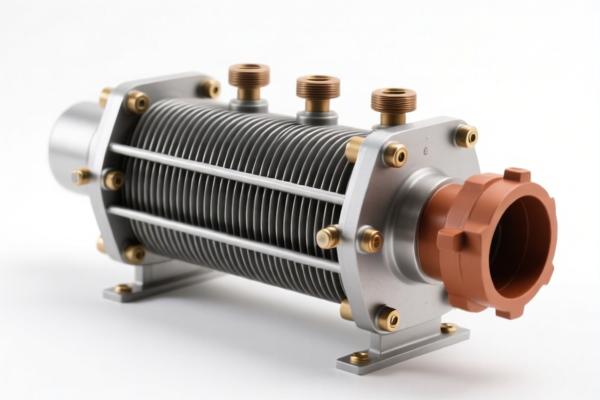
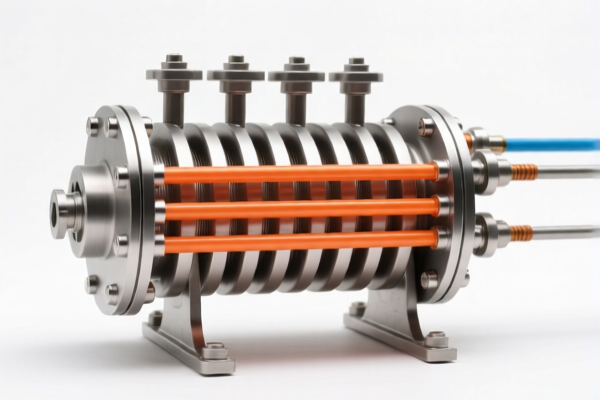
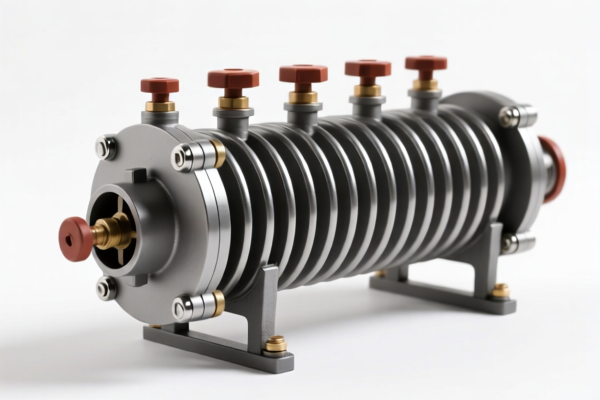

AI分析
🌡️ Heat Exchanger (Thermal Exchange Units)
🌐 HS Code Reference & Customs Clearance Guide | 2026 Latest Tariff Analysis | Professional Clearance Strategy
📌 I. Product Definition & Classification: What Exactly is a "Heat Exchanger"?
In international trade, a Heat Exchanger is a device used to transfer heat between two or more fluids (liquids, gases, or slurries). They are critical components in HVAC systems, industrial processing, automotive cooling, and power generation.
However, classification depends heavily on function, material, and integration. A heat exchanger is not a single HS code but falls into several categories based on its specific application and construction.
⚠️ Key Classification Distinctions:
- If it is a component part of a larger heater/distributor system → Likely 7322.90.00.45
- If it is a standalone mechanical unit/unitary system → Likely 8419.50.50.00
- If it is a general mechanical apparatus (non-specific) → Likely 8479.89.95.65 or 8479.89.95.99
- If it is metal-based, non-electric heating/cooling → Likely 7322.19.00.00
📦 II. HS Code Classification Details (2026 Latest Tariff Authority对照)
Based on the provided data, here are the five possible classifications with their specific rationales:
| HS Code | Product Description & Rationale | Function | Material/Context |
|---|---|---|---|
7322.90.00.45 |
Part of Air Heater/Air Distributor System: Classified as a component part for heat transfer within these systems. | Component for Air Heaters/Distributors | Metal/Steel/Aluminum (implied by tariff notes) |
8419.50.50.00 |
Heat Exchange Unit: Matches the name "Heat Exchanger" directly. Classified as a mechanical device. | Standalone Mechanical Heat Transfer | Mechanical Apparatus |
8479.89.95.65 |
Other Mechanical Apparatus: Similar to hydraulic accumulators; independent mechanical function. | General Mechanical Function | Non-conflicting material |
8479.89.95.99 |
Residual Category (Others): A "catch-all" for specific functional mechanical devices if no other category fits perfectly. | General Mechanical Function | Non-conflicting material |
7322.19.00.00 |
Other Radiators (Non-Electric): Based on the common material of heat exchangers (metal/steel) and function (heat dissipation). | Non-Electric Heating/Cooling | Iron, Steel, or Metal |
🔍 Key Note:
- 8419.50.50.00 is the most direct match for a standalone "Heat Exchanger."
- 7322 codes are typically used if the unit is specifically a radiator or a part of a heating/distribution system made of base metals.
- 8479 codes are used for general mechanical machinery that doesn’t fit neatly into heating/cooling equipment chapters (8419) or radiator chapters (7322).
💰 III. 2026 Latest Tariff Rate Breakdown (Including Surcharges)
✅ Applicable Country: United States (US)
✅ Origin: China (CN)
✅ Effective Date: 2025-11-10 onwards
🎯 1. 7322.90.00.45 & 8419.50.50.00 & 7322.19.00.00
(These codes share identical tax structures in the provided data)
| Item | Detail |
|---|---|
| Base Tariff | 0.0% (Ad Valorem) |
| Section 301 Surcharge | +25.0% |
| Section 232 Surcharge (122 Clause) | +50.0% (Specifically for Steel, Aluminum, Copper products) |
| Total Effective Tax Rate | 75.0% |
| Tax Calculation | CIF Value × 75.0% |
| De Minimis Exemption | ❌ Not Applicable |
📌 Explanation:
- Base 0%: These codes often have low base duties for specific categories.
- 25% (Section 301): Standard US-China trade war tariff.
- 50% (Section 232/122): This is a critical cost driver. If the heat exchanger is made of steel, aluminum, or copper, it triggers the 50% surcharge under the "122 Clause" (Section 232 national security tariffs).
- Total 75%: This is an extremely high duty, significantly impacting profit margins.
🎯 2. 8479.89.95.65 (Independent Mechanical Function)
| Item | Detail |
|---|---|
| Base Tariff | 2.5% |
| Section 301 Surcharge | +25.0% |
| Section 232 Surcharge (122 Clause) | +10.0% (Note: Data specifies "122 Clause 10%" for this code, likely not classified as base metal under this specific subheading or exemption applies) |
| Total Effective Tax Rate | 37.5% |
| Tax Calculation | CIF Value × 37.5% |
| De Minimis Exemption | ❌ Not Applicable |
📌 Explanation:
- This code offers a significantly lower total duty (37.5%) compared to the 75% rate for metal-specific radiators/components.
- It relies on the argument that the unit is a "general mechanical apparatus" rather than a specific metal radiator or steel component, potentially avoiding the full 50% Section 232 burden.
🎯 3. 8479.89.95.99 (Residual "Others")
| Item | Detail |
|---|---|
| Base Tariff | 2.5% |
| Section 301 Surcharge | +25.0% |
| Section 232 Surcharge (122 Clause) | +50.0% (If deemed steel/aluminum/copper) |
| Total Effective Tax Rate | 87.5% |
| Tax Calculation | CIF Value × 87.5% |
| De Minimis Exemption | ❌ Not Applicable |
📌 Explanation:
- This is the highest possible rate.
- The "+50% 122 Clause" applies here if the customs officer determines the product is made of steel, aluminum, or copper.
- As a "residual" category, it offers less protection against material-based surcharges.
🛠️ IV. Customs Clearance Operational Advice (Practical Pitfall Guide)
✅ 1. Document Preparation Checklist
| Document | Required? | Description |
|---|---|---|
| ✅ Technical Specification Sheet | ✔️ | Must detail materials (Steel/Aluminum/Copper/Other), function (Heat Transfer Type), and dimensions. |
| ✅ Diagram/Structure Chart | ✔️ | Show if it is a standalone unit (8419/8479) or a component part (7322). |
| ✅ Material Composition Proof | ✔️ | Crucial for determining if Section 232 (50% tariff) applies. |
| ✅ Commercial Invoice | ✔️ | Must clearly state "Heat Exchanger" and specify material. |
| ✅ Country of Origin Certificate | ✔️ | To verify China origin and apply correct surcharges. |
✅ 2. Declaration Strategy (Key Tips)
🔥 "Material Matters, Function Defines!"
| Scenario | Recommended HS Code | Risk |
|---|---|---|
| Standalone Mechanical Unit | 8419.50.50.00 |
Moderate (75% tax). Best for direct match. |
| General Mechanical Apparatus | 8479.89.95.65 |
Lowest Cost Option (37.5%). Justify as "independent mechanical function" not specific to metal heating. |
| Metal Radiator/Component | 7322.19.00.00 / 7322.90.00.45 |
High Cost (75%). Avoid if possible unless specifically a radiator. |
| Unspecified Mechanical Part | 8479.89.95.99 |
Highest Cost (87.5%). Use only as a last resort. |
📌 Strategy:
- Try to classify under8479.89.95.65if the heat exchanger has a complex mechanical function beyond simple metal heat conduction (e.g., includes pumps, control units, or complex assembly). This can save 37.5% in tariffs compared to the 75% rate.
- If it is a simple metal coil/tube used as a radiator, you likely must use 7322 or 8419, accepting the 75% duty due to the 50% Section 232 surcharge.
✅ 3. Special Cases
| Case | Advice |
|---|---|
| Aluminum Heat Exchangers | High risk for Section 232 (50% surcharge). Ensure classification avoids "Steel/Aluminum" if possible, or accept the 75% rate. |
| Copper Heat Exchangers | Also subject to Section 232 surcharges. Same risk as above. |
| Plastic/Polymer Heat Exchangers | May avoid Section 232. Investigate if 8479 codes can be applied without the 50% surcharge, potentially lowering the total to 27.5% (2.5% base + 25% 301). |
🌍 V. Global Market Comparison (2026)
| Market | Recommended HS Code | Est. Tariff (China Origin) | Notes |
|---|---|---|---|
| 🇺🇸 USA | 8479.89.95.65 |
37.5% | Best balance of function and cost. Avoid 7322 for 75%. |
| 🇺🇸 USA | 8419.50.50.00 |
75.0% | High cost due to Section 232 on metals. |
| 🇨🇳 China | 8419.50.50.00 |
~5-10% | Lower base duties, no Section 232. |
| 🇪🇺 EU | 8419.50.00 |
0-2.7% | No US-style Section 301/232 surcharges. |
📌 Conclusion:
- The US market is the most challenging due to Section 301 (25%) and Section 232 (50%) tariffs.
- Optimization Opportunity: If your heat exchanger can be legally classified as a "General Mechanical Apparatus" (8479.89.95.65) rather than a "Radiator/Part" (7322), you can save 37.5% in duties.
- Material Choice: Using non-metallic materials (e.g., plastic, graphite) may help avoid the 50% Section 232 surcharge entirely, potentially lowering the total duty to ~27.5%.
📌 VI. Common Mistakes & Pitfalls (Lessons Learned)
❌ Mistake 1: Declaring a Steel Heat Exchanger as 8479.89.95.99 but getting hit with 50% Section 232.
👉 Result: Final rate 87.5%.
👉 Fix: Proactively declare under 8479.89.95.65 if it fits the "mechanical apparatus" description, or accept the 75% rate for 8419/7322.
❌ Mistake 2: Assuming All Heat Exchangers are the same HS Code.
👉 Result: Incorrect classification leads to penalties.
👉 Fix: Distinguish between components (7322) and standalone units (8419/8479).
❌ Mistake 3: Ignoring Material Composition.
👉 Result: Unexpected 50% Section 232 surcharge.
👉 Fix: Provide detailed material specs. If possible, use non-steel/aluminum/copper materials to reduce costs.
✅ Correct Declaration Example:
"Heat Exchange Unit, Mechanical Type, Used for Industrial Cooling, Model X, Made of [Specify Material], Not a Radiator"
🎯 VII. Conclusion: Smart Classification Saves Money
🎯 Remember the Golden Rule:
🔹 "Function First, Material Second."
🔹 "7322/8419 = 75% (High Risk)."
🔹 "8479.65 = 37.5% (Optimized)."
🔹 "8479.99 = 87.5% (Avoid)."
📌 Pro Tip:
- If your heat exchanger is custom-built or has unique mechanical functions, argue for 8479.89.95.65 to benefit from the lower 37.5% duty rate.
- Always consult with a licensed customs broker to perform a Pre-Ruling in the US before shipping to avoid costly surprises.
📣 Immediate Action:
📞 Contact a Customs Broker → Provide Material Specs → Request HS Code Pre-Ruling
🚀 Minimize Duty → Maximize Profit → Smooth Clearance
✨ Professional Clearance Starts with Precise Classification!
💼 Every Percent of Duty Saved is Pure Profit!
用户评价
关于 HS 编码归类
协调制度(HS)是由世界海关组织(WCO)制定的国际贸易商品分类标准。全球 200 多个国家采用 HS 系统作为海关关税、贸易统计和进出口监管的基础。
每个 HS 编码遵循以下层级结构:
- 章(2 位)——商品大类(例如:第 84 章:机器和机械设备)
- 品目(4 位)——章内的更具体分类
- 子目(6 位)——国际通用细分,所有 WCO 成员国统一使用
- 本国细分(8-10 位)——各国自行扩展的细分编码,如美国 HTSUS 10 位编码
正确的 HS 编码归类对于顺利通关、准确缴纳关税和遵守贸易法规至关重要。错误归类可能导致海关延误、多缴关税或罚款。
从CN进口到US时,适用的关税税率可能包括:
- 最惠国(MFN)税率——适用于 WTO 成员国的标准关税税率
- 普通税率——适用于无贸易协定国家
- 贸易救济关税——附加关税,如 301 条款(反倾销)、232 条款(国家安全)或反补贴税
本页内容仅供参考。如需正式归类,请咨询当地海关或持牌报关代理。