Heavy duty Conveyor Belt
CN → US| HS编码 | 关税税率 | 原产国 | 目的国 | 文档 |
|---|---|---|---|---|
| 3926905900 | 37.4% | CN | US | 官方文档 |
| 4010129000 | 36.9% | CN | US | 官方文档 |
| 4010199100 | 38.3% | CN | US | 官方文档 |
| 5910009000 | 37.6% | CN | US | 官方文档 |
| 5910001070 | 39.0% | CN | US | 官方文档 |
| 3926905500 | 40.1% | CN | US | 官方文档 |
商品图片
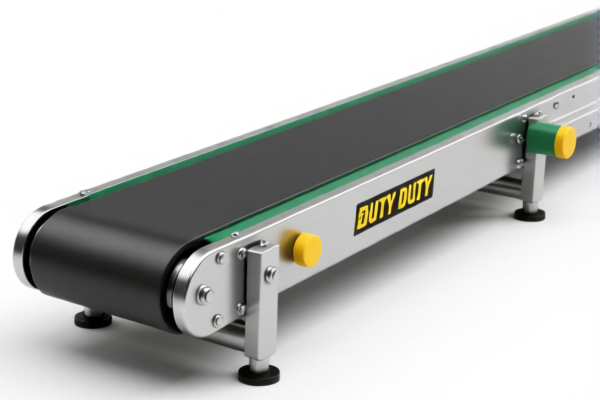
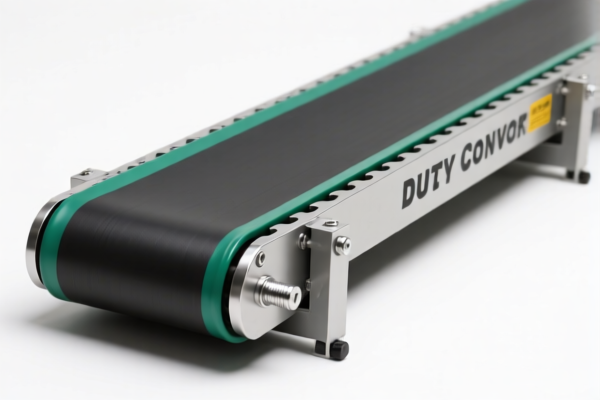
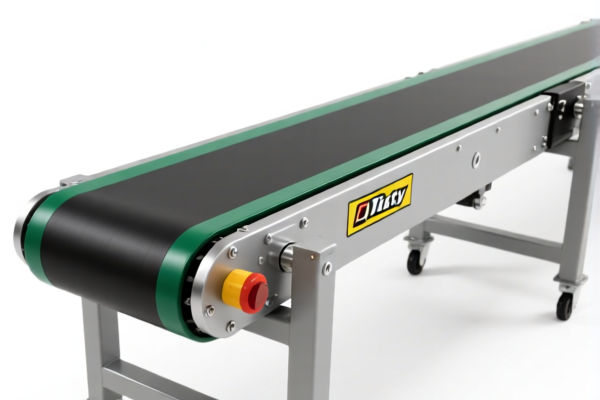
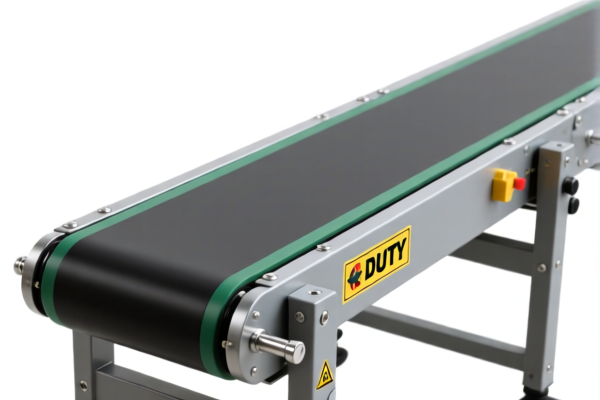
AI分析
🏗️ Heavy Duty Conveyor Belt: The Ultimate 2026 Import & Classification Guide
🌐 HS Code Strategy & Customs Clearance Protocol | High-Tax Alert: 36.9% - 40.1% | Professional Compliance Guide
📌 I. Product Definition: What is a "Heavy Duty Conveyor Belt"?
A Heavy Duty Conveyor Belt is a critical industrial component used for continuous movement of bulk materials or packaged goods. In international trade, its classification is highly sensitive to material composition, which dramatically alters the tax liability.
Common Material Types: * Rubber-Metal Composite: The most common "heavy duty" type (high friction, heat resistance). * Fabric/Textile Reinforced: Uses nylon/polyester cords covered in rubber or plastic. * Plastic/PVC/PU: Often used for lighter logistics but sometimes classified as heavy duty if thick.
⚠️ Critical Distinction:
- If the belt is primarily Rubber → It falls under Chapter 40.
- If the belt is primarily Plastic → It falls under Chapter 39.
- If the belt is primarily Textile/Fabric → It falls under Chapter 59.
Misclassification is the #1 cause of customs delays and penalty fees for this product.
📦 II. HS Code Classification Matrix (Based on Provided Data)
Below are the 6 possible HS Codes derived from common interpretations of "Conveyor Belt," ranked by likelihood and tax impact.
| HS Code | Material Basis | Tax Detail Breakdown | Total Tax Rate | Risk Level |
|---|---|---|---|---|
| 4010.12.90.00 | Rubber (Most Likely) | Base: 1.9% + 301 Tariff: 25% + Section 122: 10% | 36.9% | ✅ Low (Standard Industrial Rubber Belt) |
| 5910.00.90.00 | Textile/Fabric | Base: 2.6% + 301 Tariff: 25% + Section 122: 10% | 37.6% | ⚠️ Med (Requires proof of textile dominance) |
| 3926.90.59.00 | Plastic | Base: 2.4% + 301 Tariff: 25% + Section 122: 10% | 37.4% | ⚠️ Med (Requires proof of plastic composition) |
| 4010.19.91.00 | Rubber (Other) | Base: 3.3% + 301 Tariff: 25% + Section 122: 10% | 38.3% | ⚠️ Med (Less specific rubber category) |
| 5910.00.10.70 | Artificial Fiber | Base: 4.0% + 301 Tariff: 25% + Section 122: 10% | 39.0% | ❌ High (Niche: Synthetic fiber belts) |
| 3926.90.55.00 | Plastic (Misc.) | Base: 5.1% + 301 Tariff: 25% + Section 122: 10% | 40.1% | ❌ High (Default "Other Plastic" category) |
🔍 Key Insight:
The difference between the lowest (36.9%) and highest (40.1%) rate is 3.2%. On a $100,000 shipment, this is a $3,200 difference. Choosing the wrong HS code based on material misidentification costs money.
💰 III. Tax Clause Deep Dive: Why Is It So Expensive?
For shipments originating from China entering the USA, the tax structure is layered. Here is the detailed breakdown for all listed codes:
1. The Base Duty (General Rate)
- Range: 1.9% – 5.1%
- Source: US Harmonized Tariff Schedule (HTSUS) General Notes.
- Logic: Rubber belts (Ch 40) and Plastic belts (Ch 39) generally have lower base duties than textile-based belts (Ch 59) in this specific context.
2. The "301" Tariff (Section 301 Trade Action)
- Rate: 25.0%
- Source: USTR List 3 / List 4A.
- Logic: This is a punitive tariff on Chinese-made industrial goods to address trade imbalances and IP concerns. Applies to ALL 6 HS Codes listed above.
3. The "Section 122" Tariff
- Rate: 10.0%
- Source: Specific regulatory clauses (often related to national security or specific trade remedy investigations).
- Logic: This is an additional layer on top of the 301 tariff for certain industrial inputs.
🧮 Total Tax Calculation Formula
$ \text{Total Tax} = \text{Base Duty} + 25\% (\text{Section 301}) + 10\% (\text{Section 122}) $
Example for Rubber Belt (4010.12.90.00): $ 1.9\% + 25.0\% + 10.0\% = \mathbf{36.9\%} $
🛠️ IV. Customs Clearance Advice: How to Avoid Delays
✅ 1. Material Verification is Mandatory
Customs officers (CBP) will ask: "What is the belt made of?" * Rubber: Must provide a mill test report or manufacturer declaration stating "Rubber Content > 90%" or similar. * Plastic: Must declare PVC, PU, or Nylon composition. * Textile: Must declare fabric reinforcement type (Nylon/Polyester).
📌 Pro Tip: Do NOT simply write "Conveyor Belt" on the commercial invoice. Write:
"Heavy Duty Rubber Conveyor Belt, Fabric Reinforced, Width 1000mm"
or
"PVC Industrial Conveyor Belt, Heavy Duty"
✅ 2. Document Checklist for Clearance
| Document | Purpose | Key Detail to Include |
|---|---|---|
| Commercial Invoice | Valuation & Classification | Must specify Material (Rubber/Plastic/Textile) |
| Packing List | Logistics | Weight, dimensions, number of rolls/sheets |
| Manufacturer Declaration | Proof of Origin | Confirm Country of Origin (China) |
| Material Safety Data Sheet (MSDS) | Safety | If the belt contains hazardous chemicals or oils |
| Test Report | Classification Support | Lab test confirming material composition (e.g., FTIR analysis for plastics/rubber) |
✅ 3. Common Pitfalls & Solutions
❌ Pitfall 1: Vague Description
Bad: "Belt" or "Conveyor Part"
Consequence: CBP may assign a "catch-all" code with higher duty or demand additional info, causing 2-4 week delays.
Fix:* Be specific. "Rubberized Fabric Conveyor Belt."
❌ Pitfall 2: Ignoring Section 122
Bad: Calculating tax as only 25% (Section 301)
Consequence: Underpayment of duties. CBP will assess back taxes + penalties.
Fix:* Always include the 10% Section 122 if applicable to the specific HS code subheading.
❌ Pitfall 3: Wrong Material Classification
Bad: Declaring a Rubber belt as Plastic to save on base duty (if base duty is higher for rubber? Note: In this data, Rubber base is 1.9%, Plastic is 2.4-5.1%, so Rubber is cheaper).
Consequence: Fraud accusation if material analysis shows rubber.
Fix:* Accurately declare the dominant material.
🌍 V. Strategic Recommendations for Importers
-
Prefer Rubber (4010.12.90.00) if Possible:
Among the listed options, Rubber offers the lowest total tax (36.9%) and is the most standard classification for "Heavy Duty" belts. It avoids the higher base duties of textile or plastic variants. -
Apply for Advance Rulings (If Volume is High):
If you import >$1M annually, file an Advance Ruling with CBP. This locks in the HS code (e.g., 4010.12.90.00) for 5 years, providing certainty against rate changes or classification disputes. -
Bundle Shipping Costs Wisely:
Since the tax is ad valorem (percentage of value), reducing the declared value of the belt (via legitimate discounts or separating non-taxed accessories) can lower the absolute tax paid. However, never undervalue the goods. -
Consider Section 301 Exclusions (If Applicable):
Check if your specific belt type currently has an Exclusion Number from the 301 tariff. While rare for standard industrial belts, niche engineering belts might qualify. Note: Current data assumes no exclusion.
📌 VI. Summary: The "Golden Rule" for Conveyor Belts
🔥 "Know Your Material, Pay the Right Tax."
- Rubber? →
4010.12.90.00(36.9%) → Best Option - Plastic? →
3926.90.59.00(37.4%) → Acceptable - Textile? →
5910.00.90.00(37.6%) → Watch Base Duty - Artificial Fiber? →
5910.00.10.70(39.0%) → Avoid if possible - Misc. Plastic? →
3926.90.55.00(40.1%) → Most Expensive
✨ Professional Clearance, Every Time!
💼 Don't let a 3% tax difference eat your margin. Classify correctly today.
用户评价
关于 HS 编码归类
协调制度(HS)是由世界海关组织(WCO)制定的国际贸易商品分类标准。全球 200 多个国家采用 HS 系统作为海关关税、贸易统计和进出口监管的基础。
每个 HS 编码遵循以下层级结构:
- 章(2 位)——商品大类(例如:第 84 章:机器和机械设备)
- 品目(4 位)——章内的更具体分类
- 子目(6 位)——国际通用细分,所有 WCO 成员国统一使用
- 本国细分(8-10 位)——各国自行扩展的细分编码,如美国 HTSUS 10 位编码
正确的 HS 编码归类对于顺利通关、准确缴纳关税和遵守贸易法规至关重要。错误归类可能导致海关延误、多缴关税或罚款。
从CN进口到US时,适用的关税税率可能包括:
- 最惠国(MFN)税率——适用于 WTO 成员国的标准关税税率
- 普通税率——适用于无贸易协定国家
- 贸易救济关税——附加关税,如 301 条款(反倾销)、232 条款(国家安全)或反补贴税
本页内容仅供参考。如需正式归类,请咨询当地海关或持牌报关代理。