Height Gauge Setting Block
CN → US| HS编码 | 关税税率 | 原产国 | 目的国 | 文档 |
|---|---|---|---|---|
| 9017308000 | 38.9% | CN | US | 官方文档 |
| 7326908688 | 87.9% | CN | US | 官方文档 |
| 9017900160 | 0.0% | CN | US | 官方文档 |
| 8007005000 | 37.8% | CN | US | 官方文档 |
| 7326190080 | 87.9% | CN | US | 官方文档 |
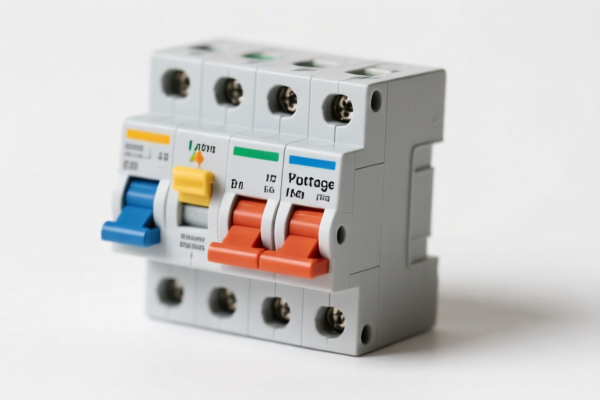
商品图片



AI分析
📏 Height Gauge Setting Block (Master Gauge Blocks)
🌐 HS Code Reference & Customs Clearance Guide | 2026 Latest Tariff Analysis | Professional Compliance Strategy
📌 I. Product Definition & Classification: What Exactly Is a "Setting Block"?
A Height Gauge Setting Block (often referred to as a Master Gauge Block, Datum Block, or Reference Block) is a precision-machined metal component used as a reference standard for calibrating height gauges, depth gauges, and other measuring instruments. It is not a finished measuring instrument itself, but rather a part/accessory essential for the accuracy of those instruments.
In international trade, its classification depends heavily on: 1. Material: Typically hardened steel, chromium steel, or sometimes ceramic/plastic for specific low-wear applications. 2. Function: It serves as a "Part or Accessory" to measuring instruments (Chapter 90) or as a general metal product (Chapter 73/80).
⚠️ Critical Distinction:
- If the block is a precision master standard (certified with traceability to NIST/ISO) intended for high-accuracy metrology → Often falls under Chapter 90 (Parts of measuring instruments).
- If it is a general industrial shim or uncalibrated reference block → Might fall under Chapter 73 (Iron/Steel Articles) or Chapter 80 (Tin/Alloy Articles).
📦 II. HS Code Classification Details (Based on Provided Data)
Below are the 5 potential HS Codes derived from your data, with detailed explanations for why each applies and the associated tax implications.
| HS Code | Summary & Classification Logic | Total Tax Rate | Tax Breakdown |
|---|---|---|---|
| 9017.30.80.00 | Precision Instrument Part Classified as a "Part" of a measuring device (Height Gauge). The product shape/function matches the "Parts" category of Chapter 90. |
38.9% | Base: 3.9% Add'l (Sec 301): 25.0% 122 Section: 10% |
| 7326.90.86.88 | General Steel Article Material inferred as steel/iron. Classified as "Other articles of iron/steel." This is a "catch-all" for steel parts not specifically named elsewhere. |
87.9% | Base: 2.9% Add'l (Sec 301): 25.0% 122 Section: 10% Steel/Alloy Surcharge: 50% |
| 9017.90.01.60 | Accessory to Measuring Instrument Named "Sleeve" or similar component. Inferred as metal. Classified as "Other parts and accessories" for instruments. Note: Base rate is variable. |
Variable + 35.0% | Base: Rate of the article it belongs to Add'l (Sec 301): 25.0% 122 Section: 10% |
| 8007.00.50.00 | Tin/Alloy Product If the block is made of tin alloy or coated with tin for corrosion resistance, it falls under "Other tin articles." |
37.8% | Base: 2.8% Add'l (Sec 301): 25.0% 122 Section: 10% |
| 7326.19.00.80 | Steel Cast/Forged Part Specifically for "Steel articles, other." If the block is cast or forged steel (not machined precision), this may apply. |
87.9% | Base: 2.9% Add'l (Sec 301): 25.0% 122 Section: 10% Steel/Alloy Surcharge: 50% |
🔍 Key Insight:
- Chapter 90 (9017.xxxx) is generally preferred for precision metrology tools because it acknowledges the product's high-tech nature.
- Chapter 73 (7326.xxxx) attracts a massive 50% surcharge for steel/aluminum/copper products in addition to standard Section 301 tariffs. Avoid this if possible!
- Chapter 80 (8007.xxxx) applies only if the material is specifically tin or tin-alloy based.
💰 III. Detailed Tariff Breakdown (2026 US Import Rules)
✅ Country of Origin: China (CN)
✅ Target Market: United States (US)
✅ Effective Date: Post-2025 Policies (including Section 301, IEEPA, and Section 122)
🎯 1. Best Case: Precision Metrology Part (HS 9017.30.80.00)
Recommended if the product is a calibrated master block.
| Item | Details |
|---|---|
| Base Duty | 3.9% |
| Section 301 Duty | 25.0% |
| Section 122 Duty | 10.0% |
| Total Effective Rate | 38.9% |
| Legal Basis | HTSUS:9017.30.80.00 → USITC:301 → IEEPA:122 |
📌 Why this is best:
- Lower base rate than steel articles.
- No additional "Steel/Alloy Surcharge."
- Recognized as a specialized industrial tool, not a generic commodity.
🎯 2. High Risk: General Steel Article (HS 7326.90.86.88 or 7326.19.00.80)
Avoid if the product is not a precision instrument part.
| Item | Details |
|---|---|
| Base Duty | 2.9% |
| Section 301 Duty | 25.0% |
| Section 122 Duty | 10.0% |
| Steel/Alloy Surcharge | 50.0% (Critical!) |
| Total Effective Rate | 87.9% |
| Legal Basis | HTSUS:7326.xxxx → USITC:301 → IEEPA:122 → Steel_Surcharge_Memo |
🚨 Warning:
- This rate is prohibitive for most businesses.
- The 50% surcharge applies to all steel, aluminum, and copper articles unless specifically exempted.
- Misclassifying a precision block as a "generic steel block" triggers this penalty.
🎯 3. Alternative: Tin/Alloy Article (HS 8007.00.50.00)
Only if the material is explicitly tin-based.
| Item | Details |
|---|---|
| Base Duty | 2.8% |
| Section 301 Duty | 25.0% |
| Section 122 Duty | 10.0% |
| Total Effective Rate | 37.8% |
| Legal Basis | HTSUS:8007.00.50.00 → USITC:301 → IEEPA:122 |
📌 Note:
- Rare for standard setting blocks unless specially coated.
- Competitive rate, but material verification is required.
🎯 4. Variable: Instrument Accessory (HS 9017.90.01.60)
If classified as a "part or accessory" to a specific instrument.
| Item | Details |
|---|---|
| Base Duty | Depends on the parent instrument |
| Section 301 Duty | 25.0% |
| Section 122 Duty | 10.0% |
| Total Effective Rate | Variable + 35.0% |
📌 Caution:
- The base rate is "the rate applicable to the article of which it is a part."
- If the parent instrument has a high base rate, this will increase.
- Requires clear documentation linking the block to a specific height gauge model.
🛠️ IV. Customs Clearance Practical Advice
✅ 1. Documentation Checklist (Must-Haves)
| Document | Requirement | Purpose |
|---|---|---|
| Product Specification Sheet | ✔️ Mandatory | Must state: "Master Gauge Block," "Calibrated," "Traceable to NIST/ISO 3650." |
| Material Declaration | ✔️ Mandatory | Explicitly state: "Hardened Steel," "Chrome-Plated Steel," etc. Do not say "Metal" only. |
| Calibration Certificate | ✔️ Recommended | Proves it is a "precision instrument part" (Chapter 90) vs. "generic steel" (Chapter 73). |
| Commercial Invoice | ✔️ Mandatory | Description: "Precision Height Gauge Setting Block, Steel, Calibrated, Not for Production Use." |
| Packing List | ✔️ Mandatory | Show if it comes with a case (common for master blocks). |
✅ 2. Declaration Tips (Golden Rules)
🔥 "Precision Over Generic, Certificate Over Assumption"
| Scenario | Correct Declaration | Wrong Declaration |
|---|---|---|
| Calibrated Master Block | HS 9017.30.80.00 - "Precision Master Gauge Block for Height Gauge Calibration" |
HS 7326.90.88 - "Steel Block" → 87.9% Tax! |
| Uncalibrated Shim | HS 7326.90.88 - "Steel Shim, Uncalibrated" |
HS 9017.30.80 - "Gauge Block" → Misclassification risk |
| Tin-Coated Block | HS 8007.00.50.00 - "Tin-Coated Steel Reference Block" |
HS 7326.90.88 - Misses material-specific duty nuance |
✅ 3. Special Considerations
- Material Proof: If customs questions the Chapter 90 classification, provide material test reports showing hardness (HRC) and flatness tolerance (microns). This proves it is a precision instrument part, not a simple steel bar.
- Use Case: Clearly state "For Calibration/Reference Only" on the invoice. Do not say "For Manufacturing" (which might imply a tooling part).
- Section 122 & 301: Both apply regardless of chapter. Ensure your broker calculates the cumulative effect.
🌍 V. Global Market Comparison (2026)
| Region | Recommended HS Code | Est. Duty | Notes |
|---|---|---|---|
| 🇺🇸 USA | 9017.30.80.00 |
38.9% | Avoid Chapter 73 (87.9%) due to 50% steel surcharge. |
| 🇨🇳 China | 9017.30.80.00 |
~5-6% | Low base rate, no Section 301/122. |
| 🇪🇺 EU | 9031.80.89 |
~4.5% | No heavy surcharges. Classify as "Other instruments." |
| 🇯🇵 Japan | 9031.80.90 |
~0% | Often duty-free for precision instruments. |
📌 Conclusion:
- USA is the most challenging market due to Section 301 + Section 122 + Steel Surcharge.
- Correct Classification is Key: Getting it into Chapter 90 saves you ~49% in taxes compared to Chapter 73.
📌 VI. Common Mistakes & Pitfalls (Learn from Others' Errors)
❌ Mistake 1: Declaring as "Steel Block" or "Metal Part"
👉 Result: Assigned to 7326.xxxx → 87.9% Tax.
👉 Fix: Use "Gauge Block" or "Measuring Instrument Part."
❌ Mistake 2: Ignoring Calibration Certificate
👉 Result: Customs cannot verify precision status → Downgrades to Chapter 73.
👉 Fix: Always attach a calibration certificate or quality control report.
❌ Mistake 3: Misidentifying Material
👉 Result: If tin-coated, declared as steel → Potential misclassification.
👉 Fix: Be precise: "Hardened Steel, Chrome-Plated" or "Tin-Alloy."
🎯 VII. Final Recommendation
🔹 "For Precision: Go Chapter 90. For Steel: Pay 50% Extra."
🔹 "Always Declare as 'Gauge Block' with 'Calibration Certificate'."
🔹 "Total Cost in US: Aim for 38.9%, Not 87.9%."
📌 Pro Tip:
If you are importing large volumes, consider applying for an HTSUS Exclusion under Section 301 if available (though rare for general steel parts now). Alternatively, explore Free Trade Agreements if sourcing from non-China countries (e.g., Vietnam, Mexico) to avoid IEEPA and Section 301 duties entirely.
📣 Immediate Action:
📞 Consult your customs broker with the Calibration Certificate and Material Spec.
🚀 Declare as9017.30.80.00with detailed description: "Precision Height Gauge Setting Block, Hardened Steel, Calibrated."
✨ Precision in Classification = Precision in Savings!
💼 Don't let generic steel duties ruin your precision product margins!
用户评价
关于 HS 编码归类
协调制度(HS)是由世界海关组织(WCO)制定的国际贸易商品分类标准。全球 200 多个国家采用 HS 系统作为海关关税、贸易统计和进出口监管的基础。
每个 HS 编码遵循以下层级结构:
- 章(2 位)——商品大类(例如:第 84 章:机器和机械设备)
- 品目(4 位)——章内的更具体分类
- 子目(6 位)——国际通用细分,所有 WCO 成员国统一使用
- 本国细分(8-10 位)——各国自行扩展的细分编码,如美国 HTSUS 10 位编码
正确的 HS 编码归类对于顺利通关、准确缴纳关税和遵守贸易法规至关重要。错误归类可能导致海关延误、多缴关税或罚款。
从CN进口到US时,适用的关税税率可能包括:
- 最惠国(MFN)税率——适用于 WTO 成员国的标准关税税率
- 普通税率——适用于无贸易协定国家
- 贸易救济关税——附加关税,如 301 条款(反倾销)、232 条款(国家安全)或反补贴税
本页内容仅供参考。如需正式归类,请咨询当地海关或持牌报关代理。